Madeira Mondays: A folk song about a Revolutionary War soldier

For today’s ‘Madeira Mondays’, I wanted to share with you one of my favorite pieces of art about the Revolutionary War. It’s a quiet little song by New Mexico-based folk musician Eliza Gilkyson. It’s called ‘Jedidiah 1777’ and it comes from her 2005 album Paradise Hotel.

It’s a song about a young American soldier called Jedidiah and it’s actually based on letters written by Gilkyson’s own ancestor, Brig. Gen. Jedidiah Huntington, who fought in the Revolutionary War!

Continue reading

Madeira Mondays: My new historical short story ‘Feminine Absurdities’

“It wasn’t until my fourth or fifth sip of tea this morning that I noticed Miss Nancy Carson was missing her eyebrows. I promptly set the cup down and stared at her across the breakfast table. I wanted to make certain she had not simply hidden her brows under too much white pomade. The girl is at an age where she has begun to prepare her toilette, and painting takes practice to master. But her brows were not covered up. They were gone.”

That’s the opening paragraph from my new historical short story – ‘Feminine Absurdities’! It was published last month in CALYX magazine. You can listen to an audio recording of the full story right here.

‘Feminine Absurdities’ is set in 18th century New York City during America’s Revolutionary War. As many of you will know, that’s the war when the American colonies fought for independence from Great Britain. But that’s not what my story is about. My story is about a schoolteacher who notices that something is wrong with one of her pupils. Her eyebrows are gone! But what’s actually wrong with the girl might be deeper and darker than it first appears…

Continue reading

Madeira Mondays: The best songs from ‘1776’

Before there was Hamilton, there was 1776.

I honestly can’t believe that I’ve been posting on this blog regularly for about a year and a half and I’ve never once dedicated a whole post to the musical 1776. This makes no sense to me. Surely I’ve written about this before? But I looked back at my records and while I’ve definitely mentioned 1776 (for example in this post about queer activism and Grace and Frankie), I haven’t done a whole post about it. It’s time for that to change! Especially since this is one of my favorite films and 100% falls into the ‘Madeira Mondays’ remit (it’s historical fiction AND it’s about one of the most significant political events of the 18th century: the signing of the Declaration of Independence in America).

Continue reading

Madeira Mondays: Why 18th century pockets were pretty great

Lucy Locket lost her pocket

Kitty Fisher found it

not a penny was there in it

only ribbons round it.

When I first heard that nursery rhyme as a kid, I was confused. How could somebody lose a pocket? Aren’t they like…sewn inside your clothes? A pocket is not the sort of thing that could fall out of a pair of jeans.

It was only much later when I was researching 18th century women’s clothes that I discovered that women’s pockets of yesteryear were very different to the pockets that were sewn into my modern clothes. In the 18th century, women did have pockets, but they were separate pieces of clothing – they looked like little sacks that you tied around your waist with a bit of ribbon or string. Kind of hard to explain verbally, but it makes sense when you see them! Check out this image below.

Continue reading

Madeira Mondays: Yellow Fever in Colonial Philadelphia

“The horrors of this memorable affliction were extensive and heart rending.” – Samuel Breck, 18th century merchant, on Philadelphia’s 1793 yellow fever epidemic

In mid August, 1793, the first Philadelphian died from what would become a devastating epidemic of yellow fever. By the end of October, the city had lost nearly 5,000 people – 10% of the entire population.

In the last Madeira Mondays, we looked at 18th century medicine in general – how people thought diseases spread and what they did to try and fight them – and this week we’re going to be diving into how that looked in practice with one specific and fascinating example: Philadelphia’s infamous yellow fever outbreak.

What was the disease? Who were the major players trying to combat and contain it? And how did it change the city afterwards? Continue reading

Madeira Mondays: Fever, 1793 (Book Review)

Ever since Covid-19 broke out across the world, there’s been a lot of talk about the Spanish Flu pandemic of 1918. I’ve also heard historians, especially medievalists, called upon to talk about the bubonic plague of the 1300’s, and I’ve seen Daniel Defoe’s 1722 book, A Journal of the Plague Year, added to many people’s reading lists! All of this makes sense. People are curious about pandemics of the past and how people coped (spiritually, physically, psychologically) with rampant infectious diseases.

That curiosity is what drove me to read Fever, 1793 by Laurie Halse Anderson. This is a YA (Young Adult) novel published originally twenty years ago, but it definitely has a lot of relevance today. It’s about an epidemic that you may not have heard of: the outbreak of yellow fever in Philadelphia in 1793. Continue reading

Madeira Mondays: 2020 Recap

I’ve had several discussions with friends recently about time and our perception of it during this very strange year.

It feels, to me, that January 2020 was about a thousand years ago – so much has happened since (a global pandemic, a turbulent US Presidential race, an altered state of life for everyone)! But it also feels that January 2020 was only a minute or two ago, considering that also so little has happened since (vacations canceled, jobs lost, a string of blurring and indistinct days as we’re all stuck inside).

Whether you feel like time has passed slowly or quickly for you – or if (like me!) you feel that it has passed quickly AND slowly – I’d encourage you to look backwards and think on anything you’re proud of this year. Even if what you’re proud of is quite simply just making it through this year!

For me, one of those things I’m proudest of is all of these Madeira Mondays posts. It’s brought me joy to write them, and the consistency of it has kept me sane during the ups and downs of the creative freelancer’s life. Some weeks are full of exciting creative work – writing, editing, researching, teaching, performing – while some weeks are full of the not-so-nice side of this work – constant rejections, negotiating contracts (thankfully with the help of my union!), tedious funding applications, and oh, did I mention the constant rejections?

Through all the highs and lows of this year, including launching a new poetry book, Madeira Mondays has been there for me. And I’ve heard from several of you that it’s been there for you too! A couple of you have reached out and said that it’s something you look forward to starting your week with, and that makes me so happy to hear – especially this year, when we quite desperately need things to look forward to!

I’ve done some reflecting on the year that has passed and pulled out just a handful of my personal favorite Madeira Mondays posts from 2020. We’ve covered so many topics, from 18th century underwear, to swear words, to the surprisingly interesting history of ketchup. I’ve reviewed tons of historical books, films and TV shows, as well as visited historic sites in Scotland and the US. We’ve covered so much ground this year despite, well, literally not covering that much ground!

*

The Best of ‘Madeira Mondays’ (2020)

Most unexpectedly delicious recipe…

That would be absolutely be switchel! This ’18th century energy drink’ with lemon and ginger was delicious, and I’ve made it several times since. If you want to learn the recipe and how I made it, check out the post from June.

A very tasty glass of Switchel!

Best film I’ve watched set in the 18th century…

I’ve watched quite a few historical films this year, but my personal favorite (and this is quite subjective) was: Portrait of a Lady on Fire. It’s a queer love story set in 18th century France, and while it wasn’t perfect, I thought it was pretty darn good. Lots of broody, moody, melancholy shots of girls standings on cliffs staring out into the horizon. Yup, I loved it.

My ‘most read’ post…

This one wasn’t actually decided by me but by you and all the people who read Madeira Mondays, but by far and away one of my posts has been the most viewed this year: my analysis, from July, of Tracy K. Smith’s poem ‘Declaration’, which is an erasure poem based on the Declaration of Independence. The post talks about slavery and its ‘erasure’ from the declaration, as well as the power of poetry to explore historical silences and this has by far been the most viewed post of 2020.

Something that is especially meaningful about this is the fact that I can see that several people who read the post actually clicked the link to read the Declaration itself, from the US national archives. This brings me joy because if you’re an American, this document belongs to you, in a sense. I’m thrilled that my post is encouraging further engagement with it!

My favorite site visit…

I love visiting historical sites (if you work at or run one in the UK and would like to chat about the possibility of me visiting, please do get in touch!), but of course this year didn’t allow for many! I think my favorite site visit though was from this summer, when I went to the Highland Folk Museum, and saw a recreated rural 18th century village. I was glad to be able to provide a sort of virtual ‘tour’ of it, for you.

One of the turf houses we explored on our visit to the Highland Folk Museum!

My favorite historical fiction novel I read this year…

This is, again, purely down to personal tastes. I don’t know if this book is objectively the STRONGEST (in terms of style, structure, etc.) but it’s certainly the one that has stuck with me most and that’s: Celia Garth by Gwen Bristow. This was written back in the 1950’s and while it has its limitations, it’s suspenseful, punchy, and totally sucked me in. I really enjoyed this sweeping drama about a plucky young seamstress in Revolutionary War South Carolina. It’s got some good characters and thinking of the last line still gives me chills (I’ve actually got chills as I’m writing this now!).

Best non-fiction history book I read this year…

I’d say that’s: The Five by Hallie Rubenhold. This popular book (which I believe came out in 2019 or 2018) follows the lives of the five women who were killed by Jack the Ripper in Victorian London. It’s an excellent portrait not just of them, but also of the society in which they lived. I think the historical research also seemed pretty sound (I’m not a historian, but I’ve worked with historians and read many books by both historians and journalists about history, and this was just my impression!).

Most fun post to write…

That would probably be my post talking about how I researched/wrote one of the poems from my second poetry pamphlet, which was released in July: Anastasia, Look in the Mirror. These posts looked at how I researched the Salem Witch Trials, and what influence had had on my poem, ‘The First Afflicted Girl’. Since I wrote this poem a while ago, it was fun to reflect back on how it was built. Much of my PhD focused on how creative writers access the early American past (through primary sources, like letters and diaries, but also secondary sources, other media etc) and so it was great to reflect on that poem and its beginnings. Hopefully that post is inspiring for fellow historical fiction writers, especially.

*

And that’s it, folks! My favorite posts from 2020.

What have been your favorite ‘Madeira Mondays’ from this year? 

What are you proud of having accomplished this year, even if (especially if!) it’s something ‘small’ (i.e. keeping a plant alive, talking regular walks, learning a new skill etc.)?

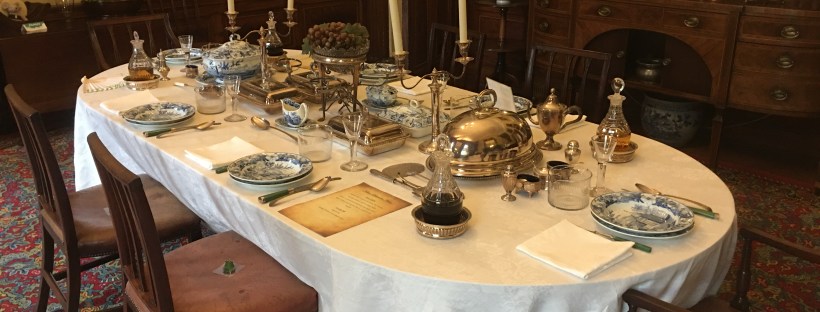
This was taken in the Museum of the American Revolution in Philadelphia, during my trip to visit my step-sister there in October 2019

Also, I wanted to let you know that this will be the last Madeira Mondays for 2020. But I’ll only be away for two weeks, and then back on Monday January 4th, with a whole new batch of these posts for 2021!

If you’ve enjoyed this series, please do recommend this blog to a friend, or share with them any of the posts you’ve enjoyed! That really means a lot to me, as our little community of curious minds grows. And if you want to further support me and my work, a great way to do that is to order one of my books! There is more information about all of them on my publications page, and you can order my latest, Anastasia, Look in the Mirror, on the publisher’s website here.

Most of all, I want to thank you all SO MUCH for reading. Many of you have blogs yourselves and thank you for writing those, as they’ve provided so much solace and entertainment for me during this really difficult time.

Have a wonderful holiday season, and see you all in 2021 my friends!

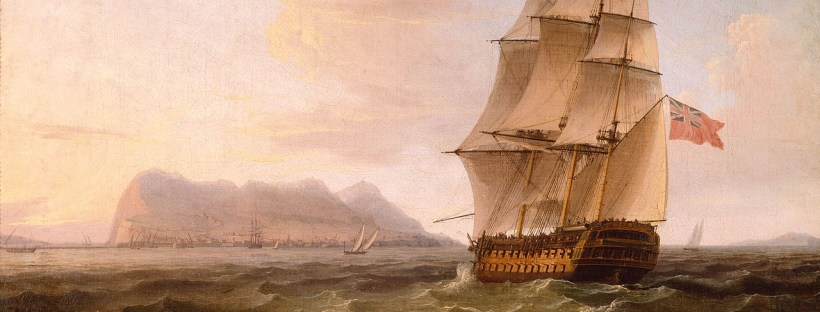
PS Today’s Featured Image is: ‘A British man of war before the Rock of Gibraltar’, By Thomas Whitcombe. (This ship represents us sailing off, towards 2021 and new adventures together in the new year!)

‘Madeira Mondays’ is a series of blog posts exploring 18th century history and historical fiction. Follow the blog for a new post every Monday and thanks for reading!


‘I hope yet I fear’: John and Abigail Adams on living through turbulent times

‘I feel anxious for the fate of our Monarchy or Democracy or what ever is to take place. I soon get lost in a Labyrinth of perplexities, but whatever occurs, may justice and righteousness be the Stability of our times – and order arise out of confusion. Great difficulties may be surmounted, by patience and perseverance.’ – Abigail Adams to John Adams, November 27, 1775

John and Abigail Adams were, in many ways, an unlucky couple. They had to spend a lot of their married lives apart: when John was serving in the Continental Congress (which declared the American colonies independent from Great Britain), when he was later serving as an Ambassador to England. Although this time apart is unlucky for them, it is quite lucky for us, because they wrote some of the most beautiful, profound, romantic, and insightful letters to each other during those turbulent times.

Although Abigail’s gender kept her from engaging in the public sphere directly, she was hugely intelligent and followed the developments of the American Revolution closely (as well as experiencing, first hand, the effects of the war: the loss of friends, food shortages, the constant threat of violence). She wrote about all of this.

These were two amazing people who shaped their world and ours. Adams and his peers wrote many of the laws and established the system of government that everyone in America still lives under today. John and Abigail were also quite progressive people by our modern standards (they were both, for instance, very against slavery). Like so many of the founding generation, it’s very easy for them to take on a sort of mythic quality in our imaginations now. But what I love about reading their letters to each other, and Adams’ journal entries, is seeing how freaked out and anxious they were…pretty much all the time.

They were deeply religious people and trusted in God, and they were early New England people so they were gritty and used to physical and mental hardship. But they were also human beings who were, quite understandably, nervous wrecks a lot of the time. Abigail worried about John’s safety, of course, but also about the fate of the war against Great Britain and about what would happen after, even if the colonies won. Who would write the new laws? What sort of government would there be?

Adams greatly missed his family when he was away and worried constantly about the ‘Ocean of Uncertainties’ before him and the thirteen colonies. He worried about the safety of his family, as well as his own safety (although he doesn’t mention this directly, once he’d signed the Declaration of Independence, he knew he’d committed high treason and would be executed for it if the revolution failed). He ends one letter, on May 22, 1776, with the simple sentence: ‘I hope yet I fear.’

In a diary entry from two years earlier, June 25, 1774, he wrote about his fears and his feelings of inadequacy:

I muse, I mope, I ruminate (…) The Objects before me, are too grand, for me and multifarious for my Comprehension. – We have not Men, fit for the Times. We are deficient in Genius, in Education, in Travel, in Fortune – in every Thing. I feel unutterable Anxiety. – God grant us Wisdom, and Fortitude!

‘We have not Men, fit for the Times.’ AKA ‘we’re not up for this challenge’, the challenge of the present. He worries there aren’t people smart enough, cultured enough, good enough to meet the historic moment. This is a peek behind the curtain, as it were, to the very human worries going on backstage, as America was moving towards becoming the first ever colony to break from its mother country and towards becoming a republic that would last for centuries. John Adams was so worried.

The reason I chose to write about the Adams family (the 18th century one, not the TV one!) today is because this past week can be summed up, for me, in those words that John Adams wrote: ‘I hope yet I fear.’

Although it seems like things are moving in the direction which I believe, with my whole heart, is the only way forward for the country – the election of Joe Biden and Kamala Harris – it has still been a nerve-wracking week. We’ve had a President trying to undermine and stop the voting process – that’s scary. This is, in many ways, a dark moment, and it’s tough during dark moments to find that ‘patience and perseverance’ that Abigail talked about in the opening quote of this post.

I don’t know how everyone else is feeling, but I can tell you that I’ve been nervous, on edge, fearful and have cried…more than once, mostly out of exhaustion and sheer build up of emotions. Like Adams: ‘I muse, I mope, I ruminate.’ BUT I also have so much hope that we can meet the enormous challenges of the present moment: the Covid-19 pandemic, climate change etc.

So I guess what I’m trying to say is that even if you personally feel overwhelmed right now, or like you don’t have the energy or the skills to rise to this moment and to affect positive change in the coming weeks and months and years – you are enough. You are ‘fit for the Times.’ And we, as a nation, are enough. We’ll get through this.

John and Abigail’s letters and diaries remind us that it’s very human to doubt one’s own abilities and to fear for the future. But I truly believe, as they believed, that the country is heading towards something very bright indeed.

I hope that you are keeping well during this momentous election season, and, for my readers who are not American, I hope that this post offers something for you to think about too! I am thinking of you all, and hope that you are safe and well.

I’ll be taking this upcoming Monday off from ‘Madeira Mondays’, since I anticipate needing a break from being online next week. But I’ll be back with another ‘Madeira Mondays’ post the week after, November 16th! As always, thank you for reading, my friend.

Further Reading:

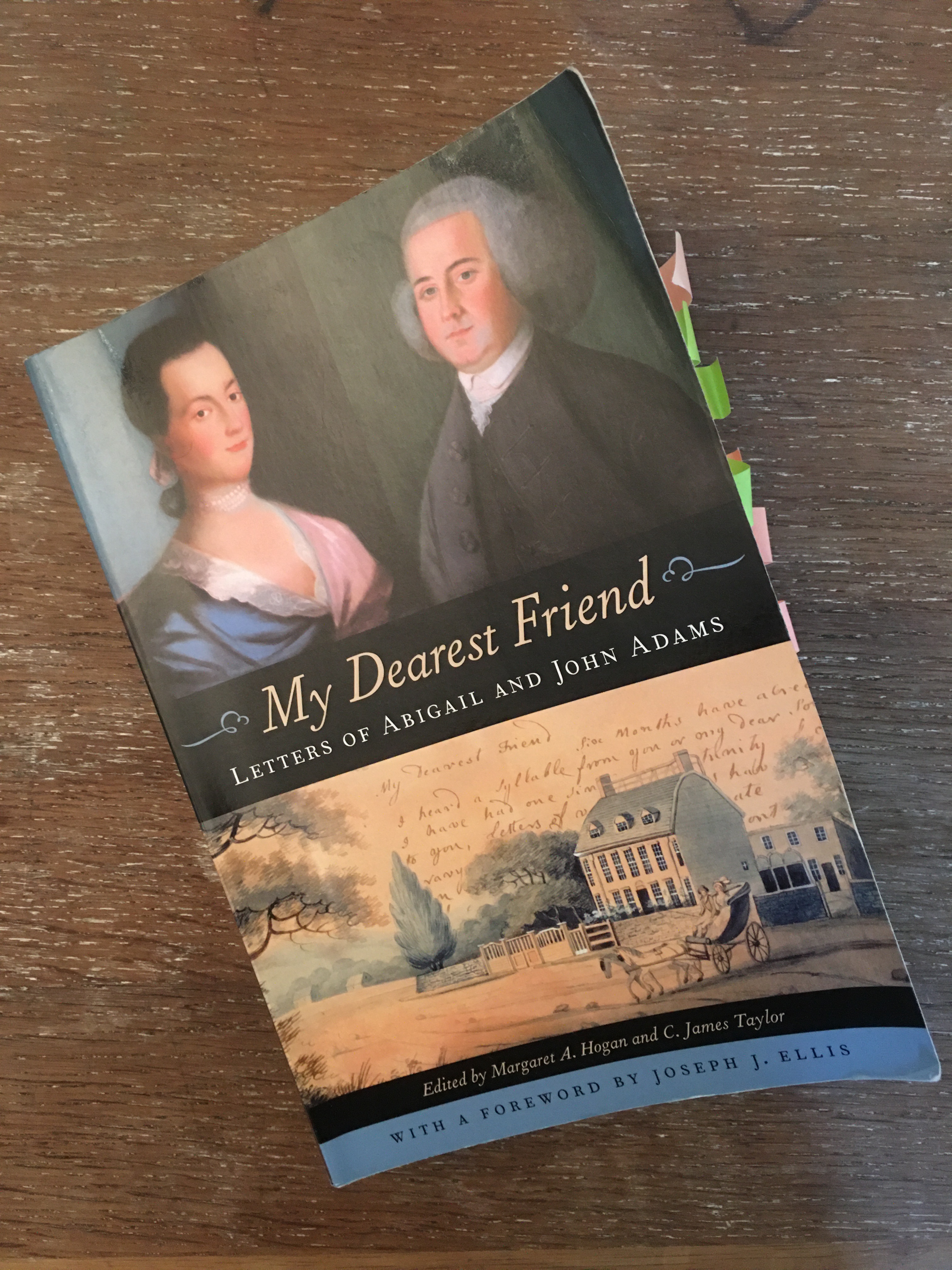
  • Most of the quotes from this post came from My Dearest Friend: Letters of Abigail and John Adams, edited by Margaret A. Hogan and C. James Taylor (which is an entertaining read and, I kid you not, more romantic and exciting than a lot of novels I’ve read)
  • My previous posts analyzing The John Adams HBO miniseries
  • My post on the TV series Grace and Frankie and its relationship to John Adams and LGBT+ activism

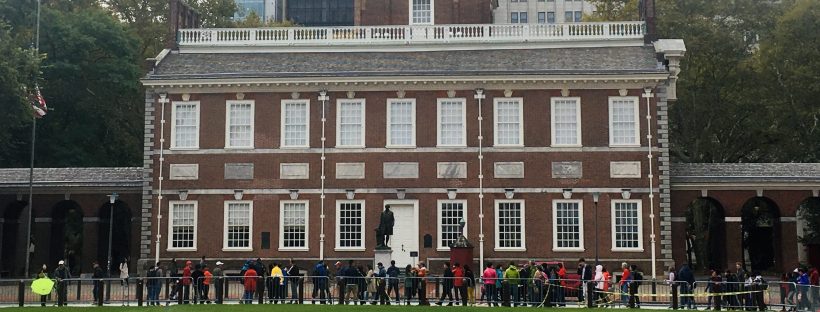
PS Today’s Featured Image is of Independence Hall in Philadelphia, taken on my trip there last year

‘Madeira Mondays’ is a series of blog posts exploring 18th century history and historical fiction. Follow the blog for a new post every Monday and thanks for reading!
 

Madeira Mondays: Tim Burton’s Sleepy Hollow (1999) Movie Review

Heads will roll. – The tagline for Tim Burton’s Sleepy Hollow

Last Halloween, I rewatched Beetlejuice (1988) directed by Tim Burton. It was zany, silly, macabre, but also quite a smart satire of ‘yuppie’ culture and a celebration of the quirky and bizarre in all of us. It was colorful and strange and (especially for the time) unique. Plus there are some simply iconic scenes in it.

I think that Beetlejuice is really an example of Burton at his best. By contrast, with 1999’s Sleepy Hollow staring Johnny Depp and Christina Ricci, we have Burton at his most…bleh.

I choose Sleepy Hollow as my Halloween viewing this year because I had recently read the source material: The Legend of Sleepy Hollow by Washington Irving. For anyone who hasn’t checked out my Madeira Mondays post about it, I look at the history of Irving’s tale, published in 1820.

Irving’s original story is actually a bit like Beetlejuice (a quirky satire of the contemporary society that Irving was living in), and I think it has more in common, in terms of tone, with Beetlejuice than with the straightforward, semi-serious gothic Sleepy Hollow movie. The original Sleepy Hollow story is spooky at times, yes, but it’s overall pretty lighthearted and (in my opinion) a bit of a joke. It’s not gory, like this movie, and it’s frankly a lot more fun to read than this was to watch.

When I turned off Sleepy Hollow, after an hour and forty odd minutes of periodic boredom (with a pick-up of pace towards the end), I was left with a very ‘meh’ feeling about the whole film. I was also left with two main questions: 1 – Does it work as an adaptation? 2 – Does it work as a film in its own right?

Johnny Depp as Ichabod Crane in Tim Burton’s Sleepy Hollow

Does it work as an adaptation?

I often listen to The Flop House podcast (which is about ‘bad movies’) and recently they were discussing what makes a good adaptation. I can’t remember which host was saying this (perhaps Dan McCoy?) but he said that a ‘good’ adaptation is one where the creator figures out what it is they like about the original and then tries to explore than in a new medium. I really like this concept. It’s not about getting every single plot detail ‘right’, because film will have different demands than a book and vice versa, but rather figuring out what quality or aspect of a thing you really like, and then trying to translate that. (So maybe, for Lord of the Rings, it’s the epic sense of adventure you want to preserve? Or, with a Harry Potter book to film, it might be a feeling of cozy whimsy, or a focus on the coming of age narrative etc.)

I think, here, Burton and company picked out ‘spooky tale about Halloween hauntings’ from The Legend of Sleepy Hollow and really leaned into that, without examining what the original Sleepy Hollow is really about. I would argue that the original story  is mostly about superstition, how you shouldn’t believe everything you hear, etc. It’s also a little bit about inheritance and the film does lean into that – it’s not giving too much away to say that the film’s plot, like so many ghost stories, does involve an inheritance.

But the decision to reimagine Ichabod Crane (Johnny Depp) as a proto-Sherlock Holmes detective here, who packs his steam-punk goggles to go and investigate murders committed by the ‘headless horseman’ in Sleepy Hollow is such a strange choice (Ichabod Crane, in the original story, is a superstitious man and his fears are exploited by others in the town). This Sherlock Holmes rational/clues-driven detective stuff is also so Victorian to me that it feels out of place in the Colonial American setting, and is totally different from the book – although perhaps they didn’t want a lead who was a foolish as Crane from the story?

All in all, it’s not a particularly ‘faithful’ adaptation (in terms of themes, plot, character etc.), nor is it one that subverts/challenges/reimagines the original in any way. It just took the bare bones of the story and ran with that. Which, you could argue, is fine…but I didn’t like where they ran.

Does it work as a film?

If we put the source aside, it’s a decent film in its own right and it overall looks very good. Everything is muted, grey and black, and it would be a good thing to put on in the background when you’re carving pumpkins or something, because it does have a lot of spooky imagery: gnarled trees, glinting Jack-o-lanterns, etc. Knowing what Burton can do though, I think he could have pushed the mis-en-scene (all the bits on screen like set, costumes, props etc.) even further and made everything look stranger.

Also, and this is a pretty specific critique, the costumes look way more 1770’s and 1780’s to me than 1799 (when the film is set)…by this time, people were wearing more empire waist dresses and there is nary an empire waist dress to be seen! But maybe the town of Sleepy Hollow, being so remote, is a bit behind, fashion wise…

Finally, be warned that it is a little gorier than I expected, but I am a bit of a baby when it comes to horror movies (I never watch them). This one wasn’t ‘scary’ at all, but there was some blood and guts, so if that’s not your thing then I’d give it a miss. (Although the tagline did promise that ‘heads will roll’ and boy, did they ever!)

*

That’s about all I have to say about Tim Burton’s Sleepy Hollow, my Monday friends! A very decent film, but nothing exceptional!

What do you think of Sleepy Hollow?

What do you think makes a ‘good’ or ‘bad’ adaptation? Do you have a favorite book to film adaptation? 

I hope you had a nice Halloween on Saturday, if you’re into that sort of thing (which, as you know, I am!).

(Also, since tomorrow is the US Presidential election, I wanted to send a gentle (yet urgent!!) reminder to all of my American readers to: VOTE. If you’ve not already…VOTE!!)

‘Madeira Mondays’ is a series of blog posts exploring 18th century history and historical fiction. Follow the blog for a new post every Monday and thanks for reading!


Madeira Mondays: The Legend of Sleepy Hollow (Book Review)

It is officially autumn, which means time to crack out the ghost stories and gothic tales (For a brilliant ghost story anthology, by the way, I’d recommend Ghost, edited by Louise Welsh!). Last week I decided that I’d check out Washington Irving’s The Legend of Sleepy Hollow for the first time and, let me tell you, this story was a delight and a surprise.

The Headless Horseman, as you probably know, is the tale of a superstitious schoolteacher called Ichabod Crane who moves into a village in rural late 18th century New York (right after the Revolutionary War). It’s a dreamy place and, when people visit, the ‘witching influence of the air’ makes them ‘begin to grow imaginative, to dream dreams, and see apparitions’. One of the apparitions that is known to haunt the town is the spirit of a Hessian soldier who lost his head to a cannon ball in a battle during the Revolution and rides out nightly looking for it. But who, or what, is the headless horseman? And what are the chances that Ichabod might have a run in with him, before this story is done?

Legend of Sleepy Hollow U.S Postage Stamp, from October 1974. Image accessed via Wikipedia

I knew a little bit about Sleepy Hollow before reading it, but what I was so surprised by was the lighthearted tone of it. I expected it to be quite serious and gothic, but I’d mostly call it a playful and affectionate satire of the New York Dutch community that Irving was raised around. In fact, by the time he wrote Sleepy Hollow, Irving, who grew up in New York, had already written A History of New York from the Beginning of the World to the End of the Dutch Dynasty by Diedrich Knickerbocker.‘Diedrich Knickerbocker’ (amazing name!) was a character that Irving created – a crusty old Dutch-American historian. Writing under the name of Knickerbocker, Irving’s A History of New York, lightly satirized self-important local histories and politics (which, you could say also applies to Sleepy Hollow!). It also chronicled Dutch-American traditions, including those surrounding Christmas. I talk about this in my blog post about the history of Christmas in America, but lots of our modern Christmas traditions come from the Dutch. Irving’s A History of New York is significant because it captures some of the Dutch traditions that would later become Christmas staples (hanging stockings by the fire, for instance, is a Dutch thing!).

Diedrich Knickerbocker, as a character, appears here in Sleepy Hollow too, in the framing story. The entire tale of Ichabod Crane and the Headless Horseman is presented as something that Knickerbocker overheard. It’s a fun and quite modern (or even post-modern?) device to have a humorous fake persona like this. Irving (the cheeky fellow!) even tried to stoke controversy and interest in his work by putting ‘missing persons’ ads in local newspapers – looking for Diedrich Knickerbocker!! People really believed that Knickerbocker existed and even offered a reward for his return. This kind of play with authorial personas and invented ‘found’ histories actually makes me think of something like His Bloody Project by Graeme Macrae Burnet, a novel which came out a few years ago and tells a story using fictional historical documents. (Burnet told me in an interview once that many people read the novel and thought it was real!)

In any case, this is a very playful way to create a story – such an unexpected delight. Another delightful aspect was all the autumnal descriptions in Sleepy Hollow:

As Ichabod jogged slowly on his way, his eye, ever open to every symptom of culinary abundance, ranged with delight over the treasures of jolly autumn. On all sides he beheld vast stores of apples; some hanging in oppressive opulence on the trees; some gathered into baskets and barrels for market; others heaped up in rich piles for the cider press.

Doesn’t that description just make you smell and feel the sights of autumn? There are ‘yellow pumpkins’ lying around and ‘turning their fair round bellies to the sun’. You can also find plenty of scrumptious descriptions of autumnal treats (the New York Dutch were known for their desserts) including ‘the doughy doughnut’, ‘apple pies, and peach pies, and pumpkin pies’ and ‘delectable dishes of preserved plums’. Irving is clearly a man after my own heart – I can never get enough descriptions of food in books.

So I’d definitely recommend Sleepy Hollow for a very fast and pleasant autumn read. It’s a short story, not a novel, so you could easily blaze through it in one sitting. It’s available online through Project Gutenberg, free and easy to access! I printed it off and read it with a cup of tea – which I’d highly recommend.

I hope that you’re having a nice start to the season and let me know what you think of Sleepy Hollow. Have you read it before? Does it seem like your type of thing? Have you seen any of the adaptations of it? I’m considering watching the Tim Burton version now – let me know what you think of that film, if you’ve seen it!

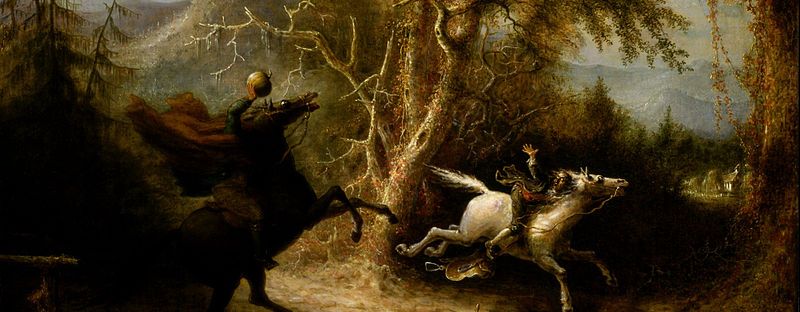
PS Today’s Featured Image is ‘The Headless Horseman Pursuing Ichabod Crane’ by John Quidor (1858).

‘Madeira Mondays’ is a series of blog posts exploring 18th century history and historical fiction. Follow the blog for a new post every Monday and thanks for reading!