Madeira Mondays: 90’s TV and Rip Van Winkle

This is a blog post about the past.

Yes, you could say that pretty much all of my posts are about the past, but, this one, in particular, is really about the past.

You see, recently I’ve been rewatching a favorite childhood show called Wishbone. Fellow children of the 90’s might also remember this show: about a cute Jack Russell Terrier called ‘Wishbone’ who imagines himself in great works of literature and then acts them out, with himself as the main character. It’s an adorable concept for a show, having a dog acting out classic stories (he wears so many cute outfits!!), and the show creator Rick Duffield explicitly said that he wanted to get kids excited about books and reading:

We believe this show can cultivate a new appetite for reading by making kids think it’s fun to get to know these books (…) it’s intended to be fun, action packed, clever and a way to get their first taste of great stories that can become a valuable educational stepping stone in their lives.

It definitely worked for me. It was one of the PBS (Public Broadcasting Service) shows, alongside Reading Rainbow with LeVar Burton, that helped me fall in love with books.

There are always two plots in every episode of Wishbone. One plot is always about something happening in real-life (perhaps with Wishbone’s owner, a boy called Joe (Jordan Wall) or one of Joe’s friends, his mom Ellen (Mary Chris Wall) who is a librarian, or his wacky neighbor Wanda (Angee Hughes)). Then one plot is always a retelling of a classic story. These two plots are intercut with each other, and there are always parallel themes. For instance, the episode about Robin Hood has Joe helping a cafeteria lady in real-life sneaking food away to give to a homeless shelter etc.

It’s an extremely wholesome show, but not cringe-worthy. It’s sweet. And apparently the show was also known for not shying away from the darker elements of the retold stories (the Joan of Arc episode, for instance, has Joan being burned alive at the stake and the Jekyll and Hyde episode is quite spooky. The episode about West African folktales also talks pretty openly about the cruelties of slavery). A uniting theme across many of the episodes is the power and importance of stories.

Another cool element is that they often have behind-the-scenes footage at the end of each episode where the lighting or sound technicians, or the director etc. explain how they made that episode – which adds another educational layer, as well.

The episode that I wanted to talk about for Madeira Mondays is called ‘Digging up the Past’ from Season 1. In it, Wishbone imagines himself in Rip Van Winkle the famous short story written by American writer Washington Irving in 1819. It’s about a Dutch-American man in Colonial America called Rip Van Winkle who falls asleep in New York’s Catskill Mountains and then wakes up twenty years later…having missed the whole American Revolution. Basically, he wakes up in a new country!

I’ll admit that I’ve never read the original Rip Van Winkle story (although Wishbone has succeeded in making me want to read it!). In the episode, the way that Wishbone addresses the themes of Rip Van Winkle in the present day storyline is by introducing the idea of Joe, the main character, having to do a report for school about something from his grandparents’ childhood that he wishes were still around today. He helpfully runs into an older woman, Dr. Brown (great name, if I do say so myself!), at the library. She is back in town after several decades away and Joe ends up figuring out that she used to live at his house, fifty years ago. Together they try to find a time capsule that she buried in the yard. So all of these intersecting plot lines parallel the story of Rip Van Winkle: a person who, like Dr. Brown, returns to his old village after decades to see that much has changed.

IMG_0551

The Talbot family and friends unearth a time capsule left behind by Dr. Brown. Characters from left to right: Ellen Talbot (Mary Chris Wall), Dr. Thelma Brown (Irma P. Hall), Joe Talbot (Jordan Wall), Wishbone (an adorable Jack Russell Terrier called ‘Soccer’ and voiced by Larry Brantley), Wanda Gilmore (Angee Hughes), Sam Kepler (Christine Abbott) and David Barnes (Adam Springfield).

The character of Rip Van Winkle is obviously played by Wishbone and to see him emerging from a bed of autumn leaves with an enormous fake beard was, obviously, very cute.

IMG_0550

Wishbone emerges as Rip Van Winkle from his long slumber

This episode, and indeed this entire series, is lovely. And, in a way, this episode itself is a time capsule for me personally, because I remember watching it as a kid. Looking at it now, it’s a bit like traveling back in time. Like unearthing something long buried that kind of looks familiar but also isn’t exactly how you recall it. But it also reminds me that while so much has changed about my life (from eight-years-old to twenty-eight – two decades, just like Rip Van Winkle!) there are some things that haven’t: I still love stories generally, especially ones about Colonial America, and I still love Wishbone.

Many of us are Rip Van Winkles right now, I think, because time is passing but we’re hibernating in our homes. And, when we emerge, the world will be different. It might be strange and a bit alien to us, like it was for Rip after his very long nap. But I think, like Rip, we’ll be able to adjust to it. Humans, and dogs, are quite resilient and adaptable. Or at least that’s what Wishbone seems to suggest.

PS Today’s Featured Image is Wishbone as Sherlock Holmes, from Mental Floss

‘Madeira Mondays’ is a series of blog posts exploring Early American history and historical fiction. Follow the blog for a new post every Monday and thanks for reading!
 

Madeira Mondays: Writing Poetry about the Salem Witch Trials

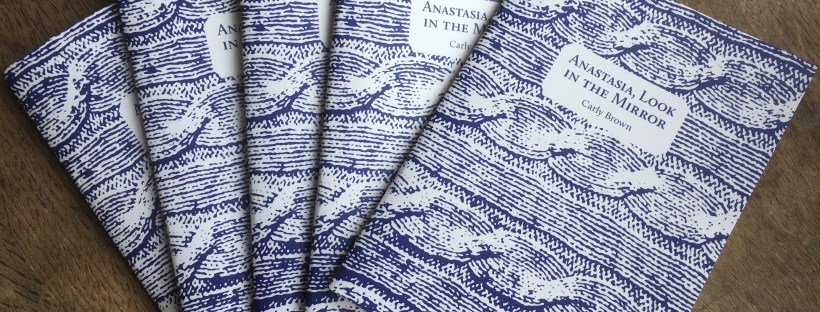
In last week’s post, I shared part-one of my poem ‘The First Afflicted Girl’, from my upcoming poetry pamphlet Anastasia, Look in the Mirror. This week, I wanted to look more closely at the story behind the poem. And I don’t just mean the historical story that inspired it, but also how I wrote the poem itself. But first: if you’ve not read last week’s post, you might want to take a look at that one first and have a wee read of the poem (this post will probably make more sense if you do!).

‘The First Afflicted Girl’ is a persona poem. A ‘persona poem’ is a poem that adopts the voice of a specific character (maybe a historical character, a fictional character, etc.). In this case, the poem adopts the voice of Betty Parris who was one of the ‘afflicted children’ during the Salem Witch Trials, who accused others of being witches. Her short entry on Wikipedia says that she, alongside her cousin Abigail, ’caused the direct death of 20 Salem residents: 19 were hanged…(one) pressed to death.’ But Betty was a child – can we really say she caused those deaths? A nine-year-old child didn’t hang those women, a community did. What I’m saying is, that’s pretty harsh, Wikipedia!

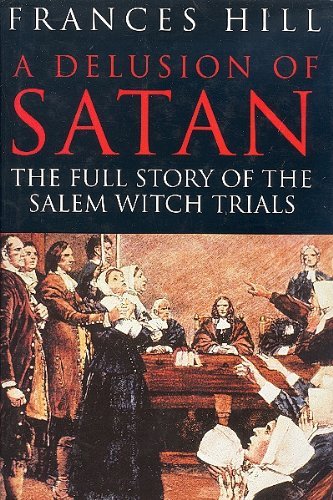
But, nevertheless, Betty played a key role in this tragic episode, and several years ago I became curious about her life after reading A Delusion of Satan by Frances Hill (a very gripping nonfiction account of the Salem Witch Trials). Hill describes Betty as ‘impressionable’ and ‘steeped in her father’s Puritan theology that made terrifying absolutes of good and evil, sin and saintliness and heaven and hell.’ Hill also writes that: ‘Unsurprisingly, (Betty) was full of anxiety.’ These descriptions drew me to her, perhaps because ‘anxious’ and ‘impressionable’ were probably two words that could have been used to describe me as a kid, alongside imaginative (we’ll get to imagination in a moment).

Frances Hill

Who was Betty?

For starters, Elizabeth ‘Betty’ Parris was the daughter was the daughter of Salem Village Reverend Samuel Parris. In 1692, she lived in Puritan Massachusetts in her father’s home with her eleven year old cousin Abigail (who plays a part in my poem). She also lived with an enslaved couple of Caribbean origins, Tituba and John Indian. It was unusual for a New England family at the time to keep slaves, and, at least from Hill’s account, it seems that Tituba was a constant presence in Betty’s life (maybe even more so than her mother, who I chose to make absent entirely from my poem). Betty would have known Tituba since infancy. It’s impossible to know the complex dynamic between little Betty and Tituba, but both Betty and Abby were certainly dependent on her – which is why Tituba’s presence is woven subtly throughout the poem. She’s always there, usually doing household chores to keep the home running (in part-one, for instance, she’s blowing air from the bellows into the fire).

What was Betty’s life like?

The days were quite monotonous for young Puritan children. Endless chores (sewing, helping with the cooking, spinning etc.). Families were mostly self-reliant (making many items there at home, like candles and clothes). Hill writes about how there was ‘little play or amusement’ for kids and, as they grew older, no entertainment or hobbies. The only books they had were religious ones. Most strikingly to me, there were few outlets for the little girls to imagine. Hill writes:

Young women of that time and place had nothing to feed the imagination, to expand understanding or heighten sensitivity. There were no fairytales or stories to help order and make sense of experience. Were was no art or theatre (…) boys enjoyed hunting, trapping, and fishing, carpentry and crafts. For girls there were no such outlets for animal high spirits or mental creativity.

This made me wonder: what would it have been like to be a little girl like Betty? What might the mind conjure up, if you had no outlet for your imagination? What might I have done, if I had been born in this environment?

So how did that research contribute to the poem?

The monotony of Betty’s existence is something I wanted to convey with the language of the poem, which uses frequent repetition (‘days and days and days/of lighting fires’). And if a young girl like Betty were to feel anything but content with these days of boredom and drudgery, then they would probably have interpreted these feelings as sinful and wicked. That’s why I bring in Betty’s repeated thoughts: ‘I am not wicked/I do not want to be wicked.’ These lines come immediately after she talks about ‘wanting/to be in bed instead of/sewing, washing, sweeping.’ ‘I do not want sunshine’, she tries to assure herself, but already, from a few stanzas back, we know that she ‘dream(s) her cheeks are burned by sunlight’.

A few lines later, when Betty says the ‘outside is not different/from the in’, that line refers to the house being dark inside and out because it’s the dead of winter. But, on another level, it’s also her hope that her internal world and what she presents outwardly are the same. Of course, they’re not the same. Inside, it’s tumultuous and full of conflicting desires and self-chastisement, even if on the ‘outside’ she’s playing the part of an obedient child who doesn’t ‘want sunshine’.

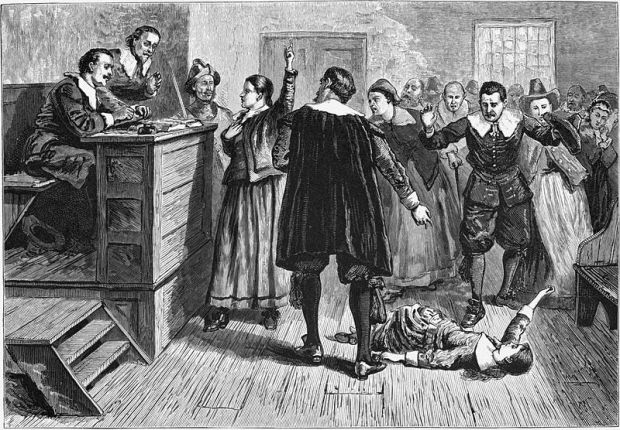
The final three lines of part-one, ‘We burn the candles/and keep them/burning’, also works on two levels (I hope!). This is a physical description of the setting meant to convey just how dark it was during those bleak winter months, but also ending that section on the word ‘burning’, and isolating the word like that, on its own line, is suggestive of the witch trials that are to come (keep them burning). Although no women or men were burned alive in Salem, this imagery does evoke witch trials generally, I think. It’s a sinister note to end on, suggesting bad things to come, and the poem definitely takes a turn for the increasingly more sinister and strange in parts two and three, as Betty becomes more physically, emotionally and psychologically distressed. In the poem, as in life, she begins speaking incoherently, having violent convulsions, and eventually causing everyone around her to conclude that she has been ‘bewitched’.

800px-Witchcraft_at_Salem_Village

‘Witchcraft at Salem Village’ engraving from 1876, accessed here

*

Of course, each reader will get something different from the poem, and just because I intended for something to be read a certain way, that doesn’t mean that it will be! Overall, in the first section, I really wanted to convey Betty’s fear of being ‘wicked’, the physical discomforts of her life, and the fervent religion beliefs of her time. Section two explores Betty’s dabbling with fortune telling (and her increasingly morbid thoughts) and finally her descent into ‘hysteria’. My poem ends before the Witch Trials actually begin. (I won’t say exactly how it ends! For that, you’ll need to read the full poem in the book!)

In reality, what happened was that Betty and Abby accused three (vulnerable) women of being witches: Sarah Good, a homeless woman; Sarah Osborne, an elderly impoverished woman and (perhaps most tragically and most predictably) the woman who had cared for them, Tituba.

Tituba survived, but many people did die as a result of the ensuing witch trials (nineteen hanged and one man pressed to death). I don’t have an answer as to ‘why’ the real historical Betty behaved the way she did. There were probably numerous contributing factors that led to her odd behavior. There are certainly many factors that led to the Salem Witch Trials generally, including long-standing superstitions (witch trials had been going on in Europe for years) and complex relationships and rivalries between members of Salem Village and Salem Town. As for the girls’ affliction: there’s a theory (put forward by psychologist Linnda Caporael in the 1970’s) that blamed their abnormal behavior on the fungus ergot, which can be found in rye and might have caused hallucinations. But this theory is not really supported by historians, as explained very well in this blog post from a history student and tour guide in Salem.

In any case, my poem is not trying to explain exactly what happened to the girls, and it’s certainly not delving into the complex origins of the trials themselves. What I am trying to do is explore a certain state of being, a state of boredom, fear and anxiety that might have taken hold of this ‘impressionable’ nine-year-old girl. Hill also notes, and I agree with this argument, that this is a time when women weren’t allowed any sort of public voice, and had little to no power in their homes, so even feigning this kind of ‘affliction’ would have given the girls a kind of power. People would have listened to them, taken them seriously, an intoxicating prospect for a Puritan girl, even if it had deadly consequences.

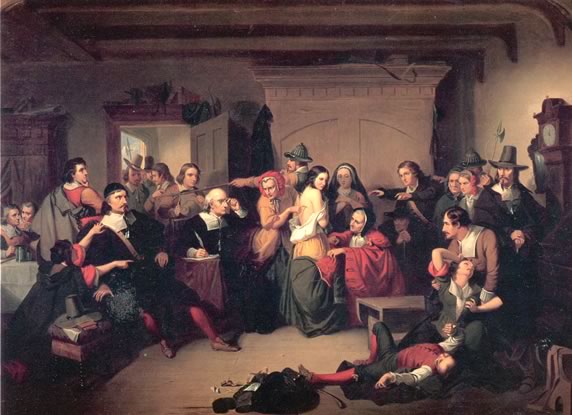
Matteson-witch

Examination of a Witch (1853) by T.H. Matteson, accessed via Wikipedia

*

Within my book, this poem is also positioned right before a poem about my own experience of ‘Abstinence Only’ sexual education in a Texas public high school, very much an anxiety-inducing experience and one more aimed, in my experience, at scaring young people than educating them. Through this ordering of poems, I’m trying to draw (unsettling) parallels between past and present, and to raise questions about how young people are ‘educated’ then and now. 

So that’s a bit of insight into the research and thinking behind this poem! (There are much cheerier poems in the pamphlet too, I should add! The aforementioned ‘Sex Ed’ poem is actually really funny – I hope!). If you’d like to read more, the whole poem is in Anastasia, Look in the Mirror (available for pre-order here).

And if you’d like to learn more about Salem generally, here are a few ideas:

Recommended Further Reading/Listening/Viewing:

Books:

Movies:

  • The Witch directed by Robert Eggers (one of my favorite films! I wrote about it last Halloween here)

Podcasts:

‘Madeira Mondays’ is a series of blog posts exploring Early American history and historical fiction. I’m not a historian, but an author and poet who is endlessly fascinated by this time period. I am also currently writing/researching a novel set during the American Revolution and recently finished a Doctorate of Fine Art looking at how creative writers access America’s eighteenth-century past. 

Follow the blog for a new post every Monday and thanks for reading!
 

Madeira Mondays: Mid-Year Wrap-Up

It’s the middle of the year (June) and the middle of the month (the 15th), so I figured what better time to do a mid-year recap of all the ‘Madeira Mondays’ that I’ve posted so far this year, as well as a look ahead at what topics I’m hoping to cover in the second half of 2020.

This blog series is all about early American history and historical fiction, but the topics I’ve looked at range pretty far and wide, so I’ve organized this list in terms of category (‘On Films and TV Shows’ ‘On books’ ‘Recipes’ etc). You can easily scroll down to the category that might be of most interest to you. I’d also love any suggestions and feedback on which topics you’d be curious about as I move forward – more on that at the end of the post!

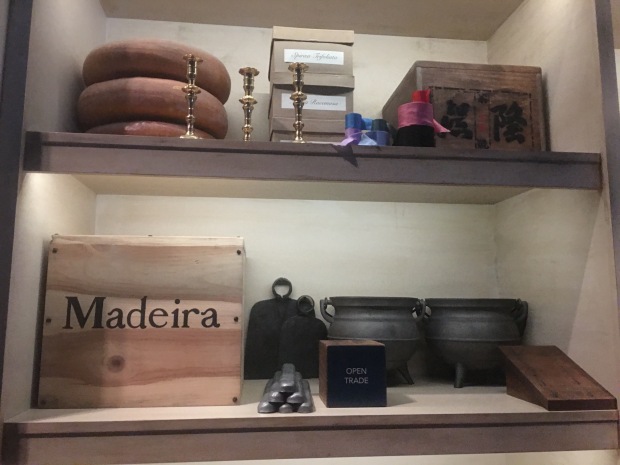
IMG_9441

Display of items that would have been found in an 18th century American shop, at the Museum of the American Revolution in Philadelphia (November, 2019)

Madeira Mondays January-June 2020

On Films and TV Shows

Washington miniseries Episode 1; Washington miniseries Episodes 2-3 (Reviews of The History Channel’s new miniseries about the life of America’s first President, George Washington)

Behind the Mask (Review of film set in Revolutionary War Philadelphia, directed by Chad Burns)

Grace and Frankie and…John Adams (A look at the popular TV series Grace and Frankie and its surprising links to early American history and John Adams)

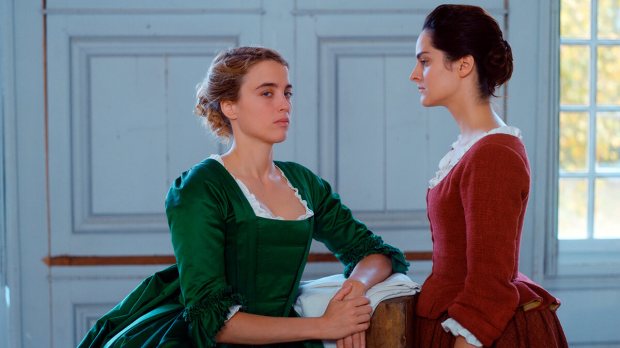
Portrait of a Lady on Fire (Film review of Celine Sciamma’s 2019 film about a romance between two women in 18th century France)

18th century Fashion on RuPaul’s Drag Race (A look at how drag queen Gigi Goode incorporates 18th century fashion into her outfits)

portait of a young girl

Scene from Portrait of a Lady on Fire, featuring Noemie Merlant as Marianne (right) and Adele Haenel as Heloise (left)

On Books

Thomas Jefferson, James Hemings, and French Cooking (Book review of Thomas Jefferson’s Creme Brûlée by James Craughwell, about how Jefferson and his enslaved cook James Hemings brought French cuisine to America)

Historical Short Stories (On Karen Russell and her historical fiction short stories)

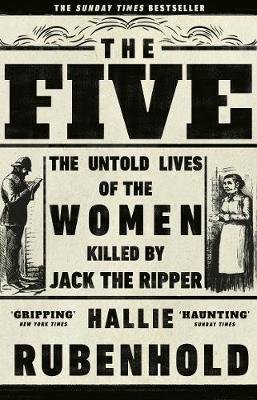
The Five by Hallie Rubenhold (Book review of non-fiction book about the lives of the five women who were killed by Jack the Ripper)

Celia Garth (Book review of this novel by Gwen Bristow, first published in the 1950’s and set in Revolutionary Charleston, South Carolina)

Emily Dickinson’s Poem about Waiting (Analysis of a poem by Dickinson)

Recipes

A Forgotten 18th Century Drink (Making ‘flip’, an 18th century warmed rum drink)

A Cheap and Delicious 18th Century Recipe (Making potato cakes from an 18th century recipe)

Discovering an 18th Century Energy Drink (Making ‘switchel’, a refreshing summertime drink popular in early America)

Historical Research

Dictionary of the Vulgar Tongue (A-F); The Dictionary of the Vulgar Tongue (G-P); Dictionary of the Vulgar Tongue (R-Z) (A series of posts about the best words from Francis Grose’s Dictionary of the Vulgar Tongue, a compendium of 18th century slang)

Hamilton wasn’t wearing any underwear (An in-depth look at 18th century men’s underwear)

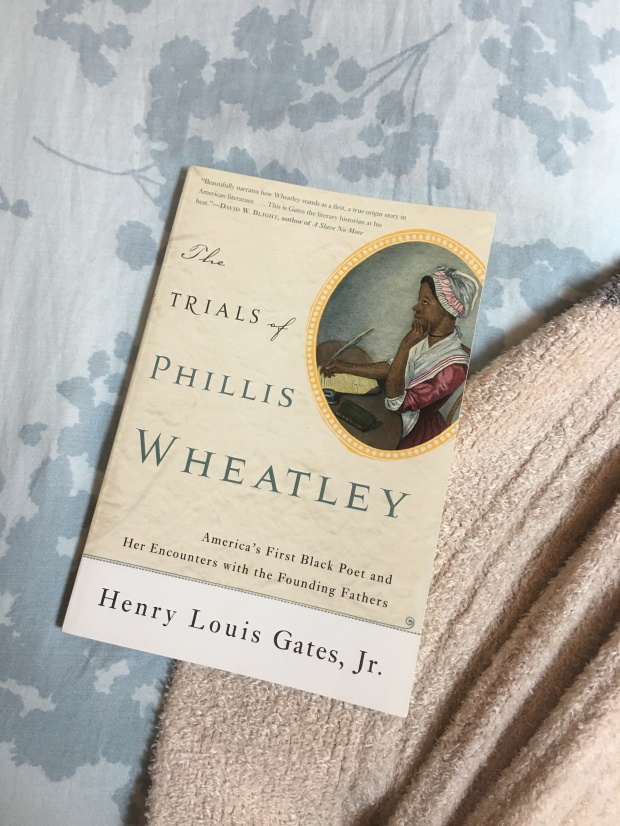
The Poetry of Phillis Wheatley (A look at the life of Phillis Wheatley, a young African-American writer who was a celebrity in 18th century Britain and America and one of the first American poets)

The Surprisingly Interesting History of Tomato Ketchup (A look at ketchup’s history, from ancient China through to today)

IMG_0442

Exhibitions and Historic Sites

Runaway Slaves in 18th Century Louisiana (A visit to The Cabildo museum in New Orleans Louisiana in January 2020, and a look at their exhibition Le Kèr Creole (The Creole Heart): Runaway Slaves, Music, and Memory in Louisiana)

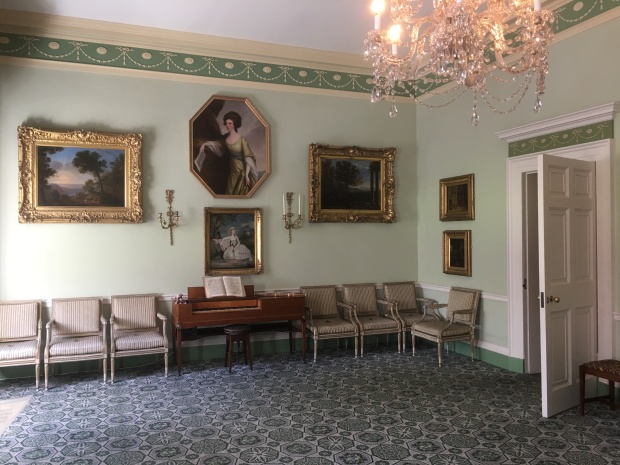
Inside a Georgian Drawing Room (A visit to The Georgian House in Edinburgh, run by The National Trust of Scotland, where I volunteer as a costumed historical guide)

IMG_8950

The Drawing Room at The Georgian House where I volunteer in Edinburgh, Scotland

*

I’ve really enjoyed writing and researching these posts and I hope you’ve enjoyed reading them. So what’s next for Madeira Mondays? Since I have a new book coming out next month, there will be a couple of posts on the research I did for that and how I went about writing some of the poems (many of the poems are inspired by history). I also have plans to read two books by Laurie Halse Anderson in the near future. One of these I’ve read before – Chains – about an enslaved young girl in 18th century New York City who gets involved with the Revolution. The other book – Fever, 1793 – is about the outbreak of yellow fever in Philadelphia in the late 18th century, and I’ve never read this one. But I know Anderson is a brilliant writer (she’s most famous for her 1999 novel Speak, which is a really harrowing but beautifully written book about a teenager’s experience with sexual assault).

In terms of shows, I plan to watch Dickinson (the new TV series loosely inspired by the life of Emily Dickinson, which looks like a lot of silly fun). And, in honor of the upcoming 4th of July, I’d like to do a post or two about the musical 1776, about the signing of the Declaration of Independence (I also researched this musical as part of my PhD, so I’ve got a lot to say about it!).

Which posts have been your favorites thus far? Are there any historical fiction books/TV series/films that I should know about? I’ve also toyed with the idea of asking some of the Early American historians that I met through my PhD to do a guest post (or perhaps an interview) for the blog, so let me know if that’s something you’d be curious to see!

As always, thanks so much for reading. Hope to see you next Monday! x


My New Poetry Pamphlet: ‘Anastasia, Look in the Mirror’

Big announcement today, my friends: I’m delighted to introduce you to my new poetry pamphlet – Anastasia, Look in the Mirror – which will be published by Stewed Rhubarb Press on July 2nd, 2020!!

For those who might be new to the blog, HELLO! I’m happy you’re here. I’m Carly, an author, spoken word poet and academic. Here on this blog, I mostly write about random historical tidbits (like the history of ketchup or 18th century fashion on RuPaul’s Drag Race), review books and occasionally muse about the writing process. But TODAY I wanted to tell you a little bit about my new poetry pamphlet, which has been four years in the making…

So, what’s this book about?

Here’s the description of Anastasia, Look in the Mirror from the Stewed Rhubarb website:

This pamphlet from Scottish Slam Poetry champion Carly Brown explores acts of looking out of and in to oneself. The heroine of an erotic novel stares at her own reflection and doesn’t recognise herself. Scottish painters look for inspiration in fin-de-siècle Paris, and a girl in 17th-century America goes looking for trouble and inadvertently kicks off the Salem Witch Trials.

In these lyrical and witty poems, Carly Brown deftly mixes personal histories, introspection and political truths, bringing new, surprising and necessary images into sharp focus.

If you’re curious to see a sample poem or two, you can read three of the poems from the collection here in the Glasgow Review of Books. Or you can check out this spoken word poetry video for my poem ‘Reading Fifty Shades of Grey’ which is the first poem in the pamphlet (the pamphlet title is actually taken from a line in this poem).

Basically, this is a pamphlet jam-packed with topics that I love – poems about early American history and Scottish history, about sex, about literature – all brought together in a gorgeous package. I can’t thank Stewed Rhubarb enough for the beautiful design. Just take a gander at the cover!

IMG_0519

Here are some really lovely things that people have said about my poetry in the past:

Brian Donaldson, The Scotsman: Wit, warmth and wisdom aplenty [] The future health of spoken word seems safe in their hands.

Haley Jenkins, Selcouth Station: With each poem there is a refreshing comedic integrity but also a brilliant truth that both enlightens and terrifies.

Maria Sledmere, US Studies OnlineHer poems delivered sass and wit, while using lush imagery and spirited accents to render themes of identity, politics and belonging […] Brown’s performance gave a sense of reaching across discourses, time, and space to invite empathy, understanding, and productive cultural exchange.

Aug 2019 Pic 3 LP Perry Jonsson

Me performing at the Scottish Storytelling Center at the Loud Poets Fringe Show, August 2019. Photo by Perry Jonsson.

What exactly is a poetry ‘pamphlet’?

In the USA, pamphlets are also referred to as ‘chapbooks’. This means a short poetry collection, usually under 30 pages, rather than a full length collection, which are more like 50-100 pages. It’s common for new poets to release a pamphlet or two before putting out a debut full-length collection (More about the distinction between pamphlets and collections here if you’re curious).

This is actually my second pamphlet. My first one – Grown Up Poetry Needs to Leave Me Alone – was published back in 2014. That book was a collaboration between myself and American artist Lydia Cruz. It sold out its first edition, but copies of the second edition are still available online in the Loud Poets’ Etsy shop here.

Who is publishing it?

Stewed Rhubarb is a spoken-word and literary publisher based in Edinburgh.

I wanted this pamphlet to be published by them, because I’d been reading and admiring their books for years. They’ve published Jo Clifford, Harry Josephine Giles, Hannah Lavery, Rachel McCrum and many other brilliant writers. I love that Stewed Rhubarb is Scotland based (like me), that they champion spoken word (many of their writers perform live in some capacity), that their list is diverse, and also (quite frankly) that they make very beautiful books.

How am I feeling about the fact that soon Anastasia will be out in the world?

In a word: excited! Of course, it’s strange to be launching this book during a pandemic. There was meant to be a launch party here in Edinburgh, and one in Glasgow, next month to celebrate but of course that can’t happen. But I’m still looking forward to sharing this book with you – even if I can’t do that in person, just yet!

I also want to take this time here to thank my diligent and creative editor Katie Ailes, as well as James Harding and Charlie Roy at Stewed Rhubarb. I’d also like to sincerely thank everyone who joined ‘The Fellowship of the Stewed Rhubarb‘, the successful crowdfunding campaign that Stewed Rhubarb ran last year to help cover the costs of publishing my pamphlet as well as three others. If you supported that, I can’t thank you enough.

*

Over the next few weeks, I’ll be publishing a few different blog posts here about the historical research and inspiration behind the book, as well as the editing and publication process. So be sure that you’re following the blog to receive those! And do let me know if there’s a particular aspect of the book, or the poetry writing process, that you’re curious about and I’ll see if I can do a post on that too. In the meantime…

You can pre-order the book now: Link HERE

Avid readers and writers will know that pre-ordering is a great way to support authors, because it shows publishers that there is a demand for their book. So if the book sounds like your cup of tea and you’d like a copy, now would be a perfect time to grab one! 🙂

Thanks and happy reading xx

IMG_0514

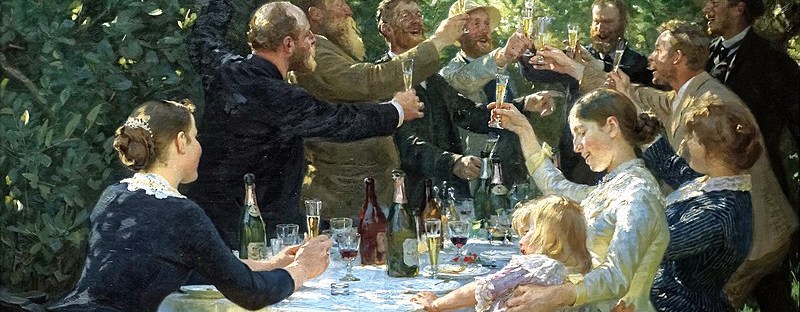
PS The Featured Image for this post is a painting entitled ‘Hip, Hip, Hurrah! Artist Festival at Skagen’ by Peder Severin Krøyer c. 1888

Madeira Mondays: Emily Dickinson’s Poem about Waiting

This isn’t the post I planned on writing today. I planned on writing about the (surprisingly fascinating!) history of ketchup and how it links to international travel and trade in the 18th century. BUT last week was a very full week for me work-wise. So instead of spending today researching ketchup (and don’t worry – that post is coming!), I wanted to share a lovely and timely poem from one of my favorite early American writers: Emily Dickinson.

Emily Dickinson (1830-1886) lived in Amherst Massachusetts and led a quiet, isolated life at home. Although she had only a handful of poems published in her lifetime, she is widely regarded now as one of the great American poets. I wanted to share her poem with you which begins ‘Will there really be a morning?’ (It doesn’t have a title. None of Dickinson’s poems were titled in her original manuscript, so if you ever see one of her poems printed with a title, that was added by an editor).

daguerreotype-cropped-corrected-1

Emily Dickinson, at about the age sixteen or seventeen, in the only authenticated portrait of her after childhood

I’ve not studied Dickinson’s life and work academically, and I’m not sure if there is any known ‘origin’ of this poem (if, for instance, some event in her life is known to have inspired it). But what I do know is that ever since I read it for the first time, it has seemed to me a poem full of yearning, of waiting, of unanswerable questions (‘Will there really be a morning? Is there such a thing as day?’). As the speaker waits for ‘morning’ to arrive, they wonder what morning even is (‘has it feathers like a bird?’). It strikes me that it is the perfect poem to read right now when it seems like we are all waiting: for news, for lockdown to end, for…something. It’s an impatient poem, where the speaker seems desperate for information, calling out for wiser, more experienced people, to reassure them (‘Oh, some scholar! Oh, some sailor!’). And I think all of us can relate to at least some of those feelings and emotions right now.

Here’s the poem:

Will there really be a morning?

Is there such a thing as day?

Could I see it from the mountains

If I were as tall as they?


Has it feet like water-lilies?

Has it feathers like a bird?

Is it brought from famous countries

Of which I’ve never heard?


Oh, some scholar! Oh, some sailor!

Oh, some wise man from the skies!

Please tell a little pilgrim

Where the place called morning lies!

IMG_0481

I hope you enjoyed the poem, and that you’re having a good start to the week.

Would you be curious to have more posts about Emily Dickinson? I was thinking of reviewing the new TV series about her – Dickinson – which came out last year in 2019, and also the comedy film Wild Nights with Emily (2018) which is a queer reinterpretation of her life.

Recommended Further Reading/Viewing:

  • Emily Dickinson: Collected Poems (I’d suggest trying to find an edition where the poems aren’t titled, if possible!)
  • The Poetry Foundation’s page on Emily Dickinson has a lot more info about her life
  • A Quiet Passion, the 2016 film from Terence Davies about Dickinson’s life was pretty good!
  • The Emily Dickinson Museum’s website has lots of info about her too

‘Madeira Mondays’ is a series of blog posts exploring Early American history and historical fiction. I’m not a historian, but an author and poet who is endlessly fascinated by this time period. I am also currently writing/researching a novel set during the American Revolution and recently finished a Doctorate of Fine Art looking at how creative writers access America’s eighteenth-century past. 

Follow the blog for a new post every Monday and thanks for reading!
 

Madeira Mondays: Celia Garth by Gwen Bristow (Book Review)

On the cover of Celia Garth, there is a beautiful blonde woman peering out at you serenely. Behind her, there’s a harbor front (presumably Colonial Charleston, where this book is set). The woman on the cover is lovely, but she also has a definite Mean Girls vibe – she knows she is good-looking and well-dressed and there’s a strong possibility she’s not gonna invite you to sit at her lunch table. But she also looks sharp and observant, like she sees things.

I love this cover, because to me it incapsulates what I liked most about Celia Garth – the titular main character. Celia Garth’s main strength is its characterization, particularly its depiction of Celia herself who, as this cover image suggests, is attractive, vain, serene, and intelligent. An interesting young woman who proves an captivating viewpoint character as we explore the turbulent final years of the Revolutionary War in British-occupied Charleston.

IMG_0450

My copy of Celia Garth

Celia Garth was published in 1959 and it follows the story of Celia, a young orphan in Colonial South Carolina who comes from money but finds herself needing to work in a dress shop to pay the bills. She’s a talented seamstress and, wanting to prove her worth, she accepts a commission from a Mrs. Vivian Lacy – a glamorous older woman with exacting requirements and expensive taste (I pictured Glenn Close, because that’s who I would cast if I was going to make this a movie!). But soon her career goals are overshadowed by the trauma of the Revolutionary War. The British army arrives to Charleston and some quite grizzly disasters befall Celia and people she loves. The book becomes a story of survival – how to survive mortal danger, but also grief. And there are parts of it that are genuinely quite moving.

As I mentioned earlier, the real strength of this book is the characters. Celia herself is wholly believable and complex from the start. I enjoyed how she takes a lot of pride in her appearance and is judgmental of people who are less conventionally attractive than her (this is kind of unpleasant to read but it’s realistic, especially for a naive, pretty young woman). She’s also whip smart, stubborn, and always making bold choices with consequences (an ‘active’ character, as it were). But her client Vivian was my favorite character by far. She had a very Dowager Countess of Downton Abbey vibe, if you’ve seen that show, and she was always throwing out sassy little aphorisms. To a pregnant acquaintance, Vivian says: ‘I know these nine months seem endless. But Nature takes her time. You cannot hurry a tree, or a baby, or a hard boiled egg.’ Aside from Vivian and Celia, you get a whole host of other colorful characters: the laid-back and good-natured Captain Jimmy Rand (who had ‘an ugly, engaging face, scooped at the temples, bony at the jaw, with a wide mouth and a look of being amused by life in general’), the witty daredevil Luke who fights with Francis Marion’s men in the swamps, and a whole bunch of other people besides.

In fact, one of my main criticisms of the book was that there were simply too many characters. I couldn’t keep track a lot of the time or remember who was related to who. These wealthy southern planter families were often inter-related, sure, but I think a family tree would have been useful to remember everything. That simple addition would have made a big difference.

IMG_5712

A lovely Colonial house in Charleston, South Carolina, taken during a research trip I took to Charleston in 2017

While I had no major issue with the overall historical accuracy of the book (which is saying something, because my whole PhD project looked at the lives of women in South Carolina during the Revolutionary War), it should be noted that slavery simply isn’t a concern in the book at all. There are enslaved characters (Marietta, Vivian’s enslaved maid, is a prominent secondary character and I got a good sense of who she was), but the institution as a whole is simply…there.

Now, that could have been a choice on author Gwen Bristow’s part to show the past through Celia’s eyes, and Celia (a white woman from a wealthy background living in the early South) would have accepted slavery as a fact of life (abolition doesn’t really become a big thing until the next century). But the knowledge of what is happening to these enslaved people hovered just out of sight, like a strange specter, as I was reading the book. There’s one moment when Vivian is meeting Celia for the first time and Celia feels like ‘something put up for auction.’ I don’t think Bristow was trying to evoke slavery here at all, but this line only served to remind me that, just a few streets away, not only were things being put on auction, but people were too. The book just doesn’t address slavery at all, so if that’s a topic that you want explored in more depth, in fiction, then I’d say look elsewhere (look to, for instance, Beloved by Toni Morrison. Or if you want something about this time period, why not try Chains by Laurie Halse Anderson, or even the poetry collection I reviewed last year, Mistress by Chet’la Sebree?).

Another aspect of the book I didn’t love is that it majorly glorifies American officer Francis ‘Swamp Fox’ Marion and majorly attacks the infamous British officer Banastre Tarleton. I’ve talked about these figures in my post about the movie The Patriotbut suffice it to say here that Tarleton’s legacy as a ‘butcher’ might be more grounded in legend than in fact. But I was more inclined to accept the Evil Aristocratic British Baddies v. Noble American Farmers dichotomy here than in The Patriot, because this is the war as CELIA sees it. And Celia is furious at Tarleton and psyched about Marion, as many South Carolinian patriots were at the time. So, fair enough.

My final critical comment is that the book kind of peters out, rather than building to a strong climax. I won’t give anything away, but Celia gets involved with helping the rebels and this doesn’t develop in a satisfying way, I thought. But the ending itself (as in, the last few pages) was quite moving.

I would compare this book to one that came out last year – City of Girls by Elizabeth Gilbert. Although that’s set in 1930’s and 1940’s New York City, it also features a young seamstress coming of age during wartime and all the colorful characters she meets.  There are even similar sorts of characters in both books. But books also have fun frivolous moments but also deal with the trauma of war. I would also recommend Celia if you enjoy things like Outlander (which I’ve not actually read, but I’ve seen a bit of the show and I understand that parts of it are set in colonial Charleston!).

It does not surpass Johnny Tremain as my favorite book I’ve read set during the Revolutionary War, but overall I quite enjoyed it. The prose is solid, and the characters are vivid and memorable. It was predictable, but I still cried twice while reading it, which is a testament to Bristow’s characterization. I wanted the best for Celia and her pals. And I would quite happily pick up another historical novel by Bristow, and there are apparently several!

IMG_5690

An iconic South Carolina sight – the live oaks twisting together in a sort of tunnel/roof. I believe I took this photo near Magnolia Planation.

Do let me know what you think about this book. Does Celia sound like something you’d be curious to read? Any other recommendations for historical novels that I should pick up? (Speaking of other novels, I have some exciting news about the one I’m working on, so stay tuned for that, later this month. AND stay tuned for more news about my new poetry book, which will be published by Stewed Rhubarb Press in July!).

PS Today’s Featured Image is from the cover of Celia Garth. If you buy this edition, from the 1950’s, please PLEASE don’t read the book jacket. The synopsis there gives so much away about the plot and even though it’s a fairly predictable story, you don’t want to spoil it!

‘Madeira Mondays’ is a series of blog posts exploring Early American history and historical fiction. I’m not a historian, but an author and poet who is endlessly fascinated by this time period. I am also currently writing/researching a novel set during the American Revolution and recently finished a Doctorate of Fine Art looking at how creative writers access America’s eighteenth-century past.

Follow the blog for a new post every Monday and thanks for reading!


Madeira Mondays: The Poetry of Phillis Wheatley

Many of America’s most famous poets lived during the 19th century: Emily Dickinson (1830-1886), Edgar Allan Poe (1809-1849), and Walt Whitman (1819-1892), for example. But there was already a literary tradition beginning to blossom in America in the 18th century as well and one of the literary darlings of colonial America, celebrated both nationally and internationally, was Phillis Wheatley (1753-1784).

Phillis Wheatley rose to prominence as a popular poet in early America, despite the fact that she was a woman, an African-American and a slave. Phillis Wheatley had a remarkable and in many ways quite a tragic life. She’s not a figure that I know a lot about, but I’ve always been curious to learn more, especially since I saw a first edition of one of her books at the Museum of the American Revolution last year. So, in honor of her upcoming birthday – May 8, 1753 – I’ve done a little bit of research into her life and writings, so that I could introduce you (or perhaps re-introduce you!) to this important figure in American literature.

IMG_9434

Phillis Wheatley’s book, Poems on Various Subjects, Religious and Moral, published in 1773. I took this photo during a trip to the Museum of the American Revolution in Philadelphia last autumn.

Who was she?

Born in 1753, Wheatley was kidnaped from her home in West Africa at a young age, brought to America and sold into slavery to the Wheatley family. The Wheatleys, noticing that she was very bright, taught her to read and write. Sondra A. O’Neale of Emory University writes, in her short biography of Phillis Wheatley on The Poetry Foundation’s website, about Phillis’ classical education at the Wheatley house:

Soon (Phillis Wheatley) was immersed in the Bible, astronomy, geography, history, British literature (…) and the Greek and Latin classics of Virgil, Ovid , Terence, and Homer. In “To the University of Cambridge in New England” (probably the first poem she wrote but not published until 1773), Wheatley indicated that despite this exposure, rich and unusual for an American slave, her spirit yearned for the intellectual challenge of a more academic atmosphere.

She wrote an elegy for a reverend, George Whitefield, which brought her first national acclaim (as it was published in Boston, Newport and Phildelphia) and then international acclaim, as it was published in London too.

Shortly after that, she travelled to London, where she was welcomed by prominent artists and dignitaries. Her book was published soon after: Poems on Various Subjects, Religious and Moral (1773), the first volume of poetry by an African American.

What did she write about?

Her poetry is very 18th century in its style, for sure. She writes in rhyming couples mostly, with a lot of allusions to classical themes and literature. A lot of her poems were celebratory of America and America’s victory over Great Britain in the Revolutionary War. In 1776, she wrote a letter and poem in support of George Washington, and he replied with an invitation to visit him (he was in Massachusetts at the time), saying that he would be ‘happy to see a person so favored by the muses.’

She also comments on slavery from a Christian perspective in her poem: ‘On Being Brought from Africa to America’. In the same article by Sondra A. O’Neale I quoted from above, O’Neale talks about Wheatley’s influence on fledgling abolitionist movements of the 18th century: ‘Wheatley was the abolitionists’ illustrative testimony that blacks could be both artistic and intellectual (…) her achievements a catalyst for the fledgling antislavery movement.’

What happened to Wheatley?

She was eventually freed from slavery in the mid 1770’s.

She was so incredibly young when she became famous and unfortunately some difficult years lay ahead of her, despite her connections to the rich and famous of her time. She married a free black man who ran a grocery store and experienced years of poverty during the Revolutionary War. She had been struggling with poor health all her life and died at the age of just 31.

*

So had you heard of Phillis Wheatley before? If you grew up in the USA, did you study her in schools? I never did, which seems a shame because she was one of the country’s earliest poets and has such a unique personal history.

As an American poet myself and someone who loves 18th century history, it was fascinating for me to learn a bit more about who she was and I hope you found it interesting too! I definitely plan on reading more about her in the future.

IMG_0442

Recommended Reading:

PS Today’s Featured Image is by Edward Colyer, ‘Still Life’ ca. 1696, accessed via Wikimedia

‘Madeira Mondays’ is a series of blog posts exploring Early American history and historical fiction. I’m not a historian, but an author and poet who is endlessly fascinated by this time period. I am also currently writing/researching a novel set during the American Revolution and recently finished a Doctorate of Fine Art looking at how creative writers access America’s eighteenth-century past. Follow the blog for a new post every Monday and thanks for reading!
 

Stay in and Read: The 13 1/2 Lives of Captain Bluebear by Walter Moers

‘People usually start their lives with being born. Not me, though. That’s to say, I don’t know how I came into the world (…) I could have emerged from the foam on the crest of a wave or developed inside a seashell, like a pearl. Then again, I might have fallen from the sky like a shooting star.’ – from The 13 1/2 Lives of Captain Bluebear by Walter Moers

Several weeks ago, when this quarantine began, I promised to post some recommendations here for fun and immersive books to read during this period of isolation. I’m here today with another one of those recommendations! I just finished reading The 13 1/2 Lives of Captain Bluebear, one of the most imaginative books I’ve ever read.

IMG_0411

It’s a fantasy adventure story for children about the adventures of a blue bear as he travels through an extraordinary land, filled with giants, trolls, hobgoblins, tiny pirates and giant evil spiders! Bluebear recounts his adventures of getting trapped inside a tornado, crossing a desert made of sugar, and even traveling to other dimensions. If that sounds ludicrous, it’s because this book is ludicrous. It’s an epic adventure story that manages to be both exciting and a satire on adventure stories. Take, for instance, when Bluebear is about to die and he is rescued at the last moment by a flying reptilian creature named ‘Deus X. Machina’ or ‘Mac’, for short. (Deus ex machina is the literary term for when a plot problem is suddenly solved by an unlikely occurrence).

The humor in this book actually reminded me a bit of Douglas Adams’ Hitchhiker’s Guide to the Galaxy. It’s smart, zany and often satirical, usually poking fun at literary tropes (like deus ex machina). But it’s also so incredibly light-hearted and silly, so it manages to work as a simply a fun tall-tale! I loved meeting all the wacky characters that Bluebear encounters.

But what really makes the book special is all the artwork. The author, Walter Moers, is also a cartoonist, and it really shows because these drawings are alive with emotions and sometimes take up an entire page spread – like this one, when Bluebear is trapped inside a giant’s brain!

IMG_0437

The Featured Image for this post is of a marvelous map, at the start of the book.

And you also get to see illustrations of many of the wacky characters Bluebear meets. Here’s an illustration of his friend Fredda, a hairy imp:

IMG_0439

By now you’ve hopefully gotten a good sense of what this book is like and if it’s up your alley or not! I will say that it’s very episodic, and doesn’t have much of a ‘plot’. It’s a series of tales and adventures, although it is loosely structured as an autobiography of Bluebear himself, as he recounts his first 13 lives (Blue bears have exactly 27 lives, of course!).

I would recommend this one if you enjoy witty adventure stories, like Hitchhiker’s Guide to the Galaxy, or even The Hobbit, or if you’re looking for a fun and unusual children’s book, although I’d say this is for slightly older children, not really little kids, because it does have some scarier bits. It’s a similar scariness level to The Hobbit, I think. So if you’re looking for a fun, smart, and zany adventure story – then Bluebear is your man. Or, rather, your bear.

Moers is actually a German writer and, from what I’ve gathered, this is a famous book in Germany. But growing up in the US, I never heard of it! Which is a shame because I would have loved it as a kid. Ah well, it’s never too late!

*

If you enjoyed this recommendation, you might want to stick around and check out the other great books I’ve suggested for this period of quarantine: Dracula by Bram Stoker, The Girls by Emma Cline and a series of spoken word poetry videos!

And let me know what you think of BluebearDoes it seem like your cup of tea? Have you read it already? Is it really famous but I’m just now finding out about it (possible)? 

As always, thanks for reading!


Madeira Mondays: The Five by Hallie Rubenhold review

Several years ago, I went to visit a friend of mine who lived in London. I got off the train at Liverpool Street station and set off to find her flat amidst the many pubs and red brick buildings crowded around Spitalfields market. I was surprised to see a tour group, led by someone in a top hat and cane. Then a second tour group walked by. Why were there so many tours? Then I was handed a flyer and it all became clear: Jack the Ripper tour. This area was the site of the infamous White Chapel murders, back in the 1880’s.

800px-The_Illustrated_Police_News_-_20_October_1888_-_Jack_the_Ripper

The Police News from October 20, 1888, featuring the death of Elizabeth Stride (one of Jack the Ripper’s victims). The Illustrated Police News was an early British tabloid. Image accessed via the Wikimedia Commons.

You probably know this already, but for any who might not: in Victorian London there was a string of five brutal killings in the East End by a man whose identity is still unknown today. Jack the Ripper.

I didn’t end up going on any of these tours, however, and I found the whole idea of a Jack the Ripper tourism industry a little disquieting. I still do. Are we mythologizing and, in a way, celebrating this evil guy who butchered women?

I do understand the gothic Victorian allure of an unknown serial killer though and I totally get why people would be curious to learn more about the murders. But, even though I’m interested in history (as you know if you read this blog!) and especially 18th and 19th century history, I’m not a big fan of ‘true crime’ and I’ve never had any interest in learning more about the Jack the Ripper killings. That is: until I heard about Hallie Rubenhold’s book The Five: The Untold Lives of the Women Killed by Jack the Ripper

the five

This book is not about the grizzly details of the murders and it is not about Jack the Ripper at all. It’s about the five women whose lives were lost. What starts as a case study of their five lives, emerges as a fascinating social history of working class Victorian London itself. It is also an attempt to restore the humanity of five people who have been dismissed for a hundred and fifty years as ‘just prostitutes’ (By the way, Rubenhold’s research reveals that the majority of them were not sex workers at all).

It’s a fascinating and heart-breaking non-fiction account of how five very different women came to find themselves impoverished and vulnerable to attack. We follow the five victims – Polly, Annie, Elizabeth, Kate and Mary Jane – who each get their own sections of the book. What becomes clear over the course of The Five is how precarious life was for working class women at the time. Many of them start out in relatively safe and stable situations, but through one or two twists of fate, find their fortunes reversed. While they were not all prostitutes, what Rubenhold does highlight is the fact that they were all alone when they were killed and sleeping outside. They were homeless. Throughout the book, Rubenhold reveals just how challenging their lives were:

The cards were stacked against Polly, Annie, Elizabeth, Kate and Mary Jane from the day of their births. They began their lives in deficit. Not only were most of them born into working class families, but they were born female. Before they had even spoken their first words, they were regarded as less important than their brothers, and more of a burden on the world than their wealthier female counterparts. Their worth was compromised before they had even begun to prove it.

This book has been very hyped, but I think it lives up to the praise and popularity it has garnered. The research is detailed and it’s very well-written. And I agree with its mission of focusing on the forgotten lives of these women, tragically cut short by a brutal murderer. As this review in The Guardian points out: ‘Forests have been felled in the interests of unmasking the murderer, but until now no one has bothered to discover the identity of his victims.’ It is, quite frankly, appalling that it has taken us this long to bother looking into these women’s lives.

The Five is literally dedicated to the women who were killed by Jack the Ripper, but it’s figuratively dedicated to them as well. Dedicated to piecing together portraits of their lives and characters, dedicated to revealing how dangerous and unstable life was for London’s working poor, and dedicated to reminding the modern reader that no woman is deserving of violence. I was really impressed with it as a project and as an act of historical research, so I hope you’ll excuse the fact that it is technically about 19th century history (not 18th, like we would typically focus on for ‘Madeira Mondays’!). I was compelled to tell you about it, and hope that you will find it similarly interesting.

Let me know if you’ve heard of The Five in the comments below and if it sounds like something you might want to read! Next Monday, we’re going inside an 18th century home. I’ll be starting a string of ‘Madeira Mondays’ focused on different rooms in a Georgian household and what went on in each one: bedroom, parlor, kitchen etc.!

‘Madeira Mondays’ is a series of blog posts exploring Early American history and historical fiction. I’m not a historian, but an author and poet who is endlessly fascinated by this time period. I am also currently writing/researching a novel set during the American Revolution and recently finished a Doctorate of Fine Art looking at how creative writers access America’s eighteenth-century past. Follow the blog for a new post every Monday and thanks for reading!


Stay in and Watch: Spoken Word Poetry

I’ve recently been recommending some great books to check out during this period of lockdown. But, as a poet myself, I would be remiss if I didn’t throw some poetry recommendations in there too! And as a spoken word poet, I was especially keen to recommend to you some poetry that you could watch (instead of just read) right from the comfort of your couch!

So here are live performance of four brilliant poems. I tried to create a varied list in terms of subject, style and delivery. I hope you enjoy!

1 – ‘Dinosaurs in the Hood’ by Danez Smith

I have watched some of Danez Smith‘s poetry performances, I kid you not, dozens of times.

Their blend of humor and lyricism and social criticism and dynamic performance style has inspired me as a performer for years. This particular poem, ‘Dinosaurs in the Hood’, gives me chills – it’s about the representation of people of color in mainstream cinema and it is searing, but it’s so SO funny: ‘I want scenes of grandmas taking out raptors with the guns they hid in the walls.’ It’s about today, but it’s also about a hope for the future where ‘nobody kills the black boy’. And that ending! Wow. They end the poem at exactly the right moment.

2 – ’59’ by Harry Baker

A fun, witty poem from a mathematician/poet: Harry Baker. Lots of clever wordplay (which Harry is really known for). I’m a sucker for a good pun. Puts a smile on my face each time I see it.

3 – ‘Polos’ by Katie Ailes

This video from American poet Katie Ailes (who, like me, has made her home in Scotland!) is really special because it blends poetry and dance.

It’s about beauty standards and the unintentional ‘lessons’ about perfection that a beloved ballet teacher instilled in her pupils.

Ailes_2017_CreditPerryJonsson2

Katie Ailes, photo by Perry Jonsson

4 – ‘It’s amazing what you can get on the internet these days’ by Jemima Foxtrot 

‘Come with me baby. Your lips taste like anchovies. And thankfully for you, they’re my favorite food.’ 

Jemima Foxtrot is a hugely innovative performer and one of the things I love about her work is the mixture of poetry and song. You can see that here, in this short poem about a crummy internet hook-up, which, like all her work, manages to stay grounded in the day-to-day while soaring past that also to speak to other issues, like wealth and isolation in a big city.

*

So there we have it, friends! Hopefully there was something in that list for you. This is a teeny tiny sample of poets whose work I enjoy (being a spoken word poet myself, I’ve had the great opportunity to see/meet brilliant poets at festivals, gigs, and literary events for the last few years and have lots to recommend!).

And, on a serious note, there are a lot of amazing performance poets out there (and performance-based artists period: actors, dancers, musicians etc.) who are struggling at this time, due to the cancellation of all public events. So if you like any of these poets, do give them a like or a share, because it does help these artists and for more people to see their work! Or better yet – buy their books and support the arts. All of the poets I’ve linked above have books out and I’m sure would appreciate your support at this difficult time. Plus, you would get some great poetry to read – a win-win!

IMG_0322

Thanks for reading and let me know what you thought of these poems!