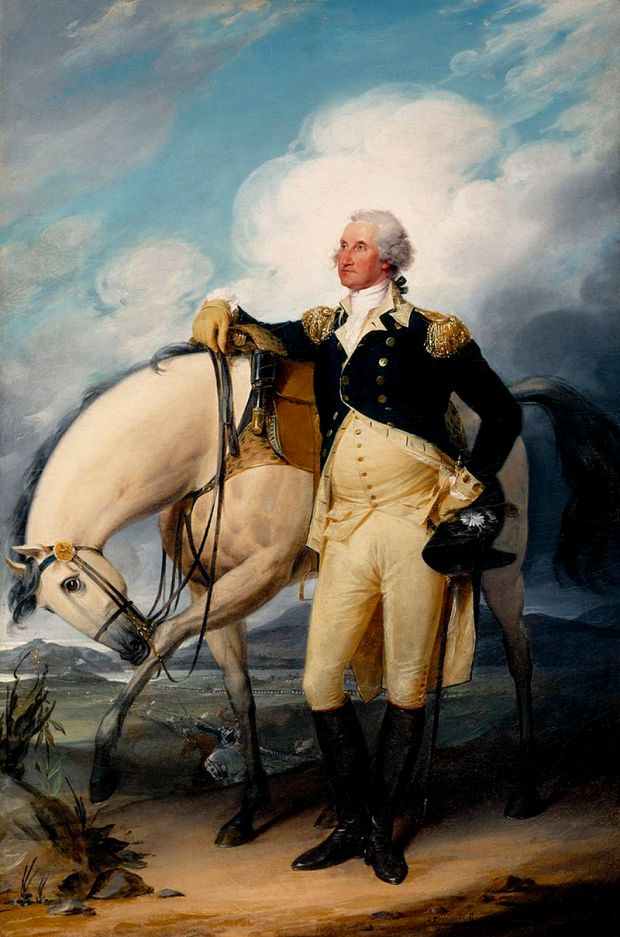
Madeira Mondays: Celia Garth by Gwen Bristow (Book Review)

On the cover of Celia Garth, there is a beautiful blonde woman peering out at you serenely. Behind her, there’s a harbor front (presumably Colonial Charleston, where this book is set). The woman on the cover is lovely, but she also has a definite Mean Girls vibe – she knows she is good-looking and well-dressed and there’s a strong possibility she’s not gonna invite you to sit at her lunch table. But she also looks sharp and observant, like she sees things.

I love this cover, because to me it incapsulates what I liked most about Celia Garth – the titular main character. Celia Garth’s main strength is its characterization, particularly its depiction of Celia herself who, as this cover image suggests, is attractive, vain, serene, and intelligent. An interesting young woman who proves an captivating viewpoint character as we explore the turbulent final years of the Revolutionary War in British-occupied Charleston.

IMG_0450

My copy of Celia Garth

Celia Garth was published in 1959 and it follows the story of Celia, a young orphan in Colonial South Carolina who comes from money but finds herself needing to work in a dress shop to pay the bills. She’s a talented seamstress and, wanting to prove her worth, she accepts a commission from a Mrs. Vivian Lacy – a glamorous older woman with exacting requirements and expensive taste (I pictured Glenn Close, because that’s who I would cast if I was going to make this a movie!). But soon her career goals are overshadowed by the trauma of the Revolutionary War. The British army arrives to Charleston and some quite grizzly disasters befall Celia and people she loves. The book becomes a story of survival – how to survive mortal danger, but also grief. And there are parts of it that are genuinely quite moving.

As I mentioned earlier, the real strength of this book is the characters. Celia herself is wholly believable and complex from the start. I enjoyed how she takes a lot of pride in her appearance and is judgmental of people who are less conventionally attractive than her (this is kind of unpleasant to read but it’s realistic, especially for a naive, pretty young woman). She’s also whip smart, stubborn, and always making bold choices with consequences (an ‘active’ character, as it were). But her client Vivian was my favorite character by far. She had a very Dowager Countess of Downton Abbey vibe, if you’ve seen that show, and she was always throwing out sassy little aphorisms. To a pregnant acquaintance, Vivian says: ‘I know these nine months seem endless. But Nature takes her time. You cannot hurry a tree, or a baby, or a hard boiled egg.’ Aside from Vivian and Celia, you get a whole host of other colorful characters: the laid-back and good-natured Captain Jimmy Rand (who had ‘an ugly, engaging face, scooped at the temples, bony at the jaw, with a wide mouth and a look of being amused by life in general’), the witty daredevil Luke who fights with Francis Marion’s men in the swamps, and a whole bunch of other people besides.

In fact, one of my main criticisms of the book was that there were simply too many characters. I couldn’t keep track a lot of the time or remember who was related to who. These wealthy southern planter families were often inter-related, sure, but I think a family tree would have been useful to remember everything. That simple addition would have made a big difference.

IMG_5712

A lovely Colonial house in Charleston, South Carolina, taken during a research trip I took to Charleston in 2017

While I had no major issue with the overall historical accuracy of the book (which is saying something, because my whole PhD project looked at the lives of women in South Carolina during the Revolutionary War), it should be noted that slavery simply isn’t a concern in the book at all. There are enslaved characters (Marietta, Vivian’s enslaved maid, is a prominent secondary character and I got a good sense of who she was), but the institution as a whole is simply…there.

Now, that could have been a choice on author Gwen Bristow’s part to show the past through Celia’s eyes, and Celia (a white woman from a wealthy background living in the early South) would have accepted slavery as a fact of life (abolition doesn’t really become a big thing until the next century). But the knowledge of what is happening to these enslaved people hovered just out of sight, like a strange specter, as I was reading the book. There’s one moment when Vivian is meeting Celia for the first time and Celia feels like ‘something put up for auction.’ I don’t think Bristow was trying to evoke slavery here at all, but this line only served to remind me that, just a few streets away, not only were things being put on auction, but people were too. The book just doesn’t address slavery at all, so if that’s a topic that you want explored in more depth, in fiction, then I’d say look elsewhere (look to, for instance, Beloved by Toni Morrison. Or if you want something about this time period, why not try Chains by Laurie Halse Anderson, or even the poetry collection I reviewed last year, Mistress by Chet’la Sebree?).

Another aspect of the book I didn’t love is that it majorly glorifies American officer Francis ‘Swamp Fox’ Marion and majorly attacks the infamous British officer Banastre Tarleton. I’ve talked about these figures in my post about the movie The Patriotbut suffice it to say here that Tarleton’s legacy as a ‘butcher’ might be more grounded in legend than in fact. But I was more inclined to accept the Evil Aristocratic British Baddies v. Noble American Farmers dichotomy here than in The Patriot, because this is the war as CELIA sees it. And Celia is furious at Tarleton and psyched about Marion, as many South Carolinian patriots were at the time. So, fair enough.

My final critical comment is that the book kind of peters out, rather than building to a strong climax. I won’t give anything away, but Celia gets involved with helping the rebels and this doesn’t develop in a satisfying way, I thought. But the ending itself (as in, the last few pages) was quite moving.

I would compare this book to one that came out last year – City of Girls by Elizabeth Gilbert. Although that’s set in 1930’s and 1940’s New York City, it also features a young seamstress coming of age during wartime and all the colorful characters she meets.  There are even similar sorts of characters in both books. But books also have fun frivolous moments but also deal with the trauma of war. I would also recommend Celia if you enjoy things like Outlander (which I’ve not actually read, but I’ve seen a bit of the show and I understand that parts of it are set in colonial Charleston!).

It does not surpass Johnny Tremain as my favorite book I’ve read set during the Revolutionary War, but overall I quite enjoyed it. The prose is solid, and the characters are vivid and memorable. It was predictable, but I still cried twice while reading it, which is a testament to Bristow’s characterization. I wanted the best for Celia and her pals. And I would quite happily pick up another historical novel by Bristow, and there are apparently several!

IMG_5690

An iconic South Carolina sight – the live oaks twisting together in a sort of tunnel/roof. I believe I took this photo near Magnolia Planation.

Do let me know what you think about this book. Does Celia sound like something you’d be curious to read? Any other recommendations for historical novels that I should pick up? (Speaking of other novels, I have some exciting news about the one I’m working on, so stay tuned for that, later this month. AND stay tuned for more news about my new poetry book, which will be published by Stewed Rhubarb Press in July!).

PS Today’s Featured Image is from the cover of Celia Garth. If you buy this edition, from the 1950’s, please PLEASE don’t read the book jacket. The synopsis there gives so much away about the plot and even though it’s a fairly predictable story, you don’t want to spoil it!

‘Madeira Mondays’ is a series of blog posts exploring Early American history and historical fiction. I’m not a historian, but an author and poet who is endlessly fascinated by this time period. I am also currently writing/researching a novel set during the American Revolution and recently finished a Doctorate of Fine Art looking at how creative writers access America’s eighteenth-century past.

Follow the blog for a new post every Monday and thanks for reading!


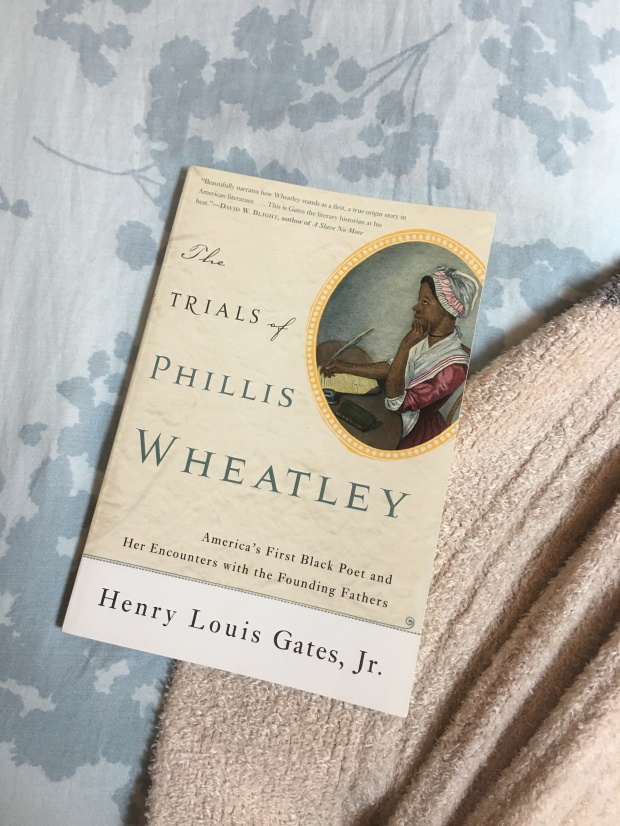
Madeira Mondays: The Poetry of Phillis Wheatley

Many of America’s most famous poets lived during the 19th century: Emily Dickinson (1830-1886), Edgar Allan Poe (1809-1849), and Walt Whitman (1819-1892), for example. But there was already a literary tradition beginning to blossom in America in the 18th century as well and one of the literary darlings of colonial America, celebrated both nationally and internationally, was Phillis Wheatley (1753-1784).

Phillis Wheatley rose to prominence as a popular poet in early America, despite the fact that she was a woman, an African-American and a slave. Phillis Wheatley had a remarkable and in many ways quite a tragic life. She’s not a figure that I know a lot about, but I’ve always been curious to learn more, especially since I saw a first edition of one of her books at the Museum of the American Revolution last year. So, in honor of her upcoming birthday – May 8, 1753 – I’ve done a little bit of research into her life and writings, so that I could introduce you (or perhaps re-introduce you!) to this important figure in American literature.

IMG_9434

Phillis Wheatley’s book, Poems on Various Subjects, Religious and Moral, published in 1773. I took this photo during a trip to the Museum of the American Revolution in Philadelphia last autumn.

Who was she?

Born in 1753, Wheatley was kidnaped from her home in West Africa at a young age, brought to America and sold into slavery to the Wheatley family. The Wheatleys, noticing that she was very bright, taught her to read and write. Sondra A. O’Neale of Emory University writes, in her short biography of Phillis Wheatley on The Poetry Foundation’s website, about Phillis’ classical education at the Wheatley house:

Soon (Phillis Wheatley) was immersed in the Bible, astronomy, geography, history, British literature (…) and the Greek and Latin classics of Virgil, Ovid , Terence, and Homer. In “To the University of Cambridge in New England” (probably the first poem she wrote but not published until 1773), Wheatley indicated that despite this exposure, rich and unusual for an American slave, her spirit yearned for the intellectual challenge of a more academic atmosphere.

She wrote an elegy for a reverend, George Whitefield, which brought her first national acclaim (as it was published in Boston, Newport and Phildelphia) and then international acclaim, as it was published in London too.

Shortly after that, she travelled to London, where she was welcomed by prominent artists and dignitaries. Her book was published soon after: Poems on Various Subjects, Religious and Moral (1773), the first volume of poetry by an African American.

What did she write about?

Her poetry is very 18th century in its style, for sure. She writes in rhyming couples mostly, with a lot of allusions to classical themes and literature. A lot of her poems were celebratory of America and America’s victory over Great Britain in the Revolutionary War. In 1776, she wrote a letter and poem in support of George Washington, and he replied with an invitation to visit him (he was in Massachusetts at the time), saying that he would be ‘happy to see a person so favored by the muses.’

She also comments on slavery from a Christian perspective in her poem: ‘On Being Brought from Africa to America’. In the same article by Sondra A. O’Neale I quoted from above, O’Neale talks about Wheatley’s influence on fledgling abolitionist movements of the 18th century: ‘Wheatley was the abolitionists’ illustrative testimony that blacks could be both artistic and intellectual (…) her achievements a catalyst for the fledgling antislavery movement.’

What happened to Wheatley?

She was eventually freed from slavery in the mid 1770’s.

She was so incredibly young when she became famous and unfortunately some difficult years lay ahead of her, despite her connections to the rich and famous of her time. She married a free black man who ran a grocery store and experienced years of poverty during the Revolutionary War. She had been struggling with poor health all her life and died at the age of just 31.

*

So had you heard of Phillis Wheatley before? If you grew up in the USA, did you study her in schools? I never did, which seems a shame because she was one of the country’s earliest poets and has such a unique personal history.

As an American poet myself and someone who loves 18th century history, it was fascinating for me to learn a bit more about who she was and I hope you found it interesting too! I definitely plan on reading more about her in the future.

IMG_0442

Recommended Reading:

PS Today’s Featured Image is by Edward Colyer, ‘Still Life’ ca. 1696, accessed via Wikimedia

‘Madeira Mondays’ is a series of blog posts exploring Early American history and historical fiction. I’m not a historian, but an author and poet who is endlessly fascinated by this time period. I am also currently writing/researching a novel set during the American Revolution and recently finished a Doctorate of Fine Art looking at how creative writers access America’s eighteenth-century past. Follow the blog for a new post every Monday and thanks for reading!


Madeira Mondays: A cheap and delicious 18th century recipe

I love potatoes. Mashed potatoes, boiled potatoes, baked potatoes, potato chips…they’re all great.

Today I wanted to share with you a super simple recipe for potato pancakes from the 18th century which I discovered on the brilliant YouTube channel Townsendswhere they recreate 18th century recipes. As the host John Townsend says in his introduction to this recipe:

Potatoes were an important part of the diet of the 18th century in Great Britain and in North America. They were important especially for the poorer sort of folks who didn’t have those expensive foods available. 

The recipe Townsend uses is originally from 1732 and, as he mentions in the video, it was a recipe you might use if you were eating a lot of potatoes and wanted to vary up how you cooked them. Or if you had old potatoes lying around. Or if wheat was too expensive. Apparently this recipe shows up in lots of different cookbooks of the time (he quotes from Primitive Cookery from 1767, which was a recipe book filled with inexpensive recipes).

Like everyone else, I’ve been in quarantine and thought now would be the perfect time to give this super affordable and tasty looking recipe a go!

If you’ve been reading this blog for a while you’ll know that I love making 18th century food and drink, partly for book research and partly because it’s fun! Sometimes that turns out really well, like the time I made syllabub. Sometimes, the results are less appetizing, like the time I made ‘Flip’!

These potato pancakes were a moderate success (I’ll tell you more on that below), but, for now, let’s get into how I made these. This is my version of the recipe, inspired by the 18th century recipe I mentioned above and from Townsend’s video. Enjoy!

Potato Pancakes from 1732

Ingredients:

  • Some potatoes (it really depends on how many cakes you want to make. We used three medium sized potatoes)
  • Salt
  • Milk (about 1/4 cup)
  • Butter

And that’s it. If you think it sounds like we’re making mashed potatoes, you’re pretty much right!

How to make them

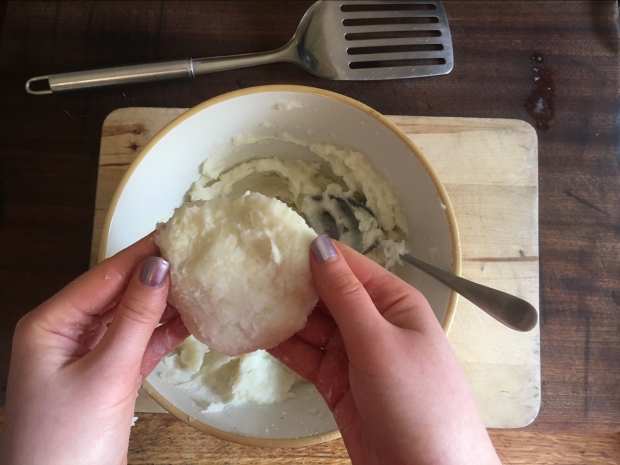
Step 1: Peel the potatoes and cut into bite-sized pieces.

IMG_0352

Step 2: Boil the potato pieces for about 15 minutes or until they’re tender. Then drain and let them cool.

Step 3: Mash them!

IMG_0357

Step 4: Add a big pinch of salt and a splash of milk (maybe like 1/4 cup or a teeny bit more, depending on how many potatoes you have). NB Don’t put too much milk here. You want the potatoes to retain a doughy consistency and if you add too much milk, they’re gonna be too runny).

Step 5: Add butter to a hot pan (like you’d do for typical pancakes)

Step 6: Flatten the potatoes into little pancakes.

IMG_0358

Step 7: Then put them into the pan. Flip them like pancakes after a minute or two on each side. They should be golden brown.

And that’s it! Serve hot.

IMG_0363

*

As you can see, they turned out pretty well in the end! They were a bit like hash browns, only more compact. We ate them with mustard, which wasn’t especially period appropriate for a poorer sort of 18th century person’s diet, but it was delicious. You could of course have them with ketchup. Or any sort of dipping sauce. I really wanted to try eating them with apple sauce and I realized that was because they reminded me a bit of latkes which I always ate with apple sauce at a friend’s for Hanukkah.

So the trickiest thing about cooking this, we found, was trying to keep the potatoes together when they were frying in the pan. Now, I grew up in the USA and I’ve had some experience flipping good ol’ American style breakfast pancakes, so I didn’t have as much trouble with this. But if you’re not as used to flipping pancakes, it might take some practice. I’d say: don’t flip too soon. And it’s a process of trial and error (our first few were definitely the messiest).

The real problem is that they don’t have flour to keep them all stuck together and make a heartier dough. But that was ‘authentic’ to the recipe, which was eaten by folks who would have made cakes like these if flour wasn’t something that they could afford. This is not like the sweet, rich and decadent syllabub recipe I made. This is hearty, simple food that will fill you up.

For me, these pancakes were, overall, pretty good. But my partner seemed to really enjoy them. So they’re worth trying out one afternoon if you fancy it and definitely let me know if you do!

Recommended Reading/Viewing:

‘Madeira Mondays’ is a series of blog posts exploring Early American history and historical fiction. I’m not a historian, but an author and poet who is endlessly fascinated by this time period. I am also currently writing/researching a novel set during the American Revolution and recently finished a Doctorate of Fine Art looking at how creative writers access America’s eighteenth-century past. Follow the blog for a new post every Monday and thanks for reading!


Madeira Mondays: Portrait of a Lady on Fire (Film Review)

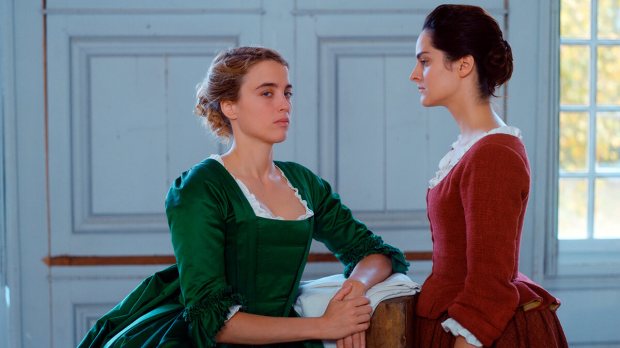
France, 1770. A tale of forbidden love, same-sex desire and painting. Sign me up! From the moment a friend of mine sent me the trailer for Céline Sciamma’s new film, Portrait of a Lady on Fire (or Portrait de la Jeune Fille En Feu, in its original French), I knew I would enjoy this movie. It ticks so many boxes of things I enjoy. It’s historical, it’s a bit gothic, it’s about female experiences and patriarchal limitations. I’m also a sucker for art about art. So I went into it with pretty high expectations. But what I did not expect was just how good this film was: it’s a subtle, sensuous, and frankly pretty faultless movie. It’s also just so. darn. romantic. And tragic. But we’ll get to that in a second.

portait of a lady

As I mentioned, the film takes place in France in the 1770’s (which, by the way, is the exact same time period in which the novel I am working on is set – so I loved seeing the costumes in this!). It follows a small cast of characters. Marianne (Noémie Merlant) is a painter, newly arrived to a drafty old mansion on the Brittany coast. She has been called there to paint Héloise (Adèle Haenel), a young aristocratic woman who will soon be married off to a Milanese nobleman. The painting will be a gift to this man, a lovely portrait of his new French bride. The only catch is: Héloise doesn’t want to have her portrait painted at all. She doesn’t want to be married off, either. So Marianne must paint her subject in secret, observing her with furtive glances on their walks on a windswept beach, or by the steep cliffs. Is there tension? You bet there is! Are those pauses pregnant with longing and unspoken words? You bet they are.

This is a film that is especially suited to its medium and by that I mean it’s a very visual film. Don’t get me wrong: the dialogue, when it happens, is excellent. Funny and specific and gives a great sense of character. But it’s a lot about looks, as slowly Marianne’s portrait of the surly but also surpassingly sweet Héloise emerges. But Héloise is also looking back at Marianne, observing this young woman who, unlike herself, has a professional career as a painter and has decided not to marry. Marianne wears masculine clothes and smokes a pipe (although this is not entirely uncommon for women of the time). Marianne is well-travelled. She’s heard symphonies. Héloise is entranced. They’re entranced with each other.

portait of a young girl

Marianne (Noemie Merlant), right, and Heloise (Adele Haenel), left.

I don’t think it’s giving too much away to say that these two fall in love (it’s made obvious in the trailer). At its heart, this film is a love story. But what I like most about the film is that we are made constantly aware – through their romance, through Marianne’s career (which is limited due to her sex), and through a sub-plot with Sophie (Luàna Bajrami), Héloise’s servant who falls pregnant on accident – that their lives are governed by patriarchal rules. Marianne casually mentions that she cannot draw nude male models, only female ones, because female artists are not allowed to observe naked men. ‘Is it a matter of modesty?’ Héloise asks. Marianne replies: ‘It’s mostly to prevent us from doing great art. Without any notion of male anatomy, the major subjects escape us.’

This is great. Sciamma doesn’t have to make Marianne say: ‘We’re oppressed! We’re women! It’s an unequal society!’ We just know from these examples.

I don’t want to come down too hard on Greta Gerwig’s recent adaptation of Little Women, which I liked for certain reasons, but it’s also concerned with limitations faced by women of the past, when trying to enter the public, professional world. And it definitely hits you over the head with these sorts of inequalities more overtly than Portrait does. Think of the speech that progressive artist Jo March makes in Gerwig’s Little Women:

I just feel that women, they have minds, and they have souls, as well as just hearts. And they’ve got ambition and they’ve got talent, as well as just beauty. And I’m so sick of people saying that love is all a women is fit for. I’m so sick of it. But I’m so lonely.

This is a good speech and delivered exceptionally well by Saoirse Ronan, but all of those same sentiments were encapsulated in Portrait, without needing to be directly said. This film is subtle and understated in all of the ways that I felt Little Women was not. And, granted, Little Women was a much cheerier, lighter, brighter, film overall. Whereas Portrait is more turbulent, moody, subtler, holds a lot more back. (Little Women is an American film, after all, and Portrait is a French one haha!). But still. They came out at almost the same time and explore many of the same themes, which is why I’m comparing them.

ANYWAYS, if you like these types of stories (about women who are ‘ahead of their time’, about forbidden passions, about slightly creepy mansions on windswept coasts), then you’re gonna LOVE Portrait of a Lady on Fire. While Portrait didn’t blow my mind – I don’t think it was doing anything exceptionally innovative or treading on especially new territory – I still think it was an excellent film. I cried several times. It’s also definitely one of the best films I’ve ever seen set during this time period, so if you’re looking for a brilliant, subtle, well-crafted historical film, then do check it out!

(PS All of the images in this post, including the gorgeous waves-crashing Featured Image, were accessed via IMDB)

‘Madeira Mondays’ is a series of blog posts exploring Early American history and historical fiction. I’m not a historian, but an author and poet who is endlessly fascinated by this time period. I am also currently writing/researching a novel set during the American Revolution and recently finished a Doctorate of Fine Art looking at how creative writers access America’s eighteenth-century past. Follow the blog for a new post every Monday and thanks for reading!


Madeira Mondays: Inside a Georgian Drawing Room

The novel Jane Eyre begins with young Jane sitting in the ‘drawing room’ of her aunt’s house. When I first read Jane Eyre as a kid, I remember pausing on that phrase – ‘drawing room’ – and wondering what exactly it meant. I gathered from context that a drawing room was some sort of living room, but why was it called a ‘drawing’ room? Was it a room where you went to draw stuff? I genuinely had no idea.

If you’ve ever heard the phrase before and been similarly confused – fear not! For today’s Madeira Mondays, we’re going inside a recreated 18th century drawing room, and I’ll tell you a little bit more about what these rooms were for, what sort of things you might find in them, and, yes, why the heck they are called drawing rooms in the first place! (Hint: it doesn’t have anything to do with drawing pictures!)

800px-The_Langford_Family_in_their_Drawing_Room)_by_James_Holland,_RWS

A middle-class drawing room in London in 1841, painted by James Holland. Accessed via Wikipedia.

As a bit of background: before the Covid-19 shut-downs, I was volunteering weekly at The Georgian House in Edinburgh, sometimes even in costume (more on this in my posts about 18th century Christmas celebrations)! The Georgian House is a beautiful, restored 18th century town home: recreated to look as it did in 1800, when the Lamont family lived there, and it’s filled with furniture, art, and objects from the period. I cannot recommend enough a visit, once everything is open and running again, if you’re ever in town and at all interested in this time period (or simply want to learn more about how people of the past lived their daily lives!).

So let’s step into the Lamont’s drawing room at The Georgian House and learn about what this room was for!

IMG_8950

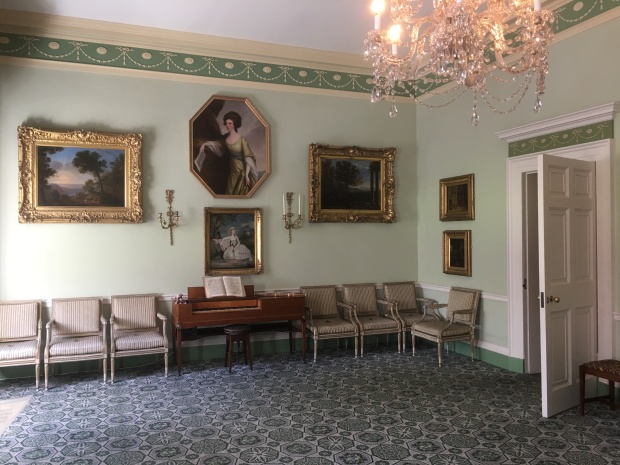
The drawing room at The Georgian House

Firstly, what is a ‘drawing room’?

Historically, a drawing room was a room in a large private house where visitors could be entertained. In the case of The Georgian House, the drawing room is the largest room in the home (30 ft x 18 ft and 14 ft high) and definitely the grandest – it was a formal entertaining space, furnished grandly to impress the guests of the Lamont family. The family would have spent the most money on furnishing this room in particular.

(For context about the family, John Lamont was a wealthy landowner. The square where The Georgian House is located, Charlotte Square, was home, in the Georgian period, to wealthy families but they were not necessarily all from the aristocracy. Some were prosperous lawyers, bankers, merchants etc.)

Why is it called a drawing room?

The name ‘drawing room’ comes from the word ‘withdrawing’. After a formal dinner, the ladies would all withdraw from the dining table to the drawing room upstairs, to socialize. The gentlemen would stay at the table and continue to drink (heavily), before rejoining the ladies later in the evening.

Processed with VSCO with 5 preset

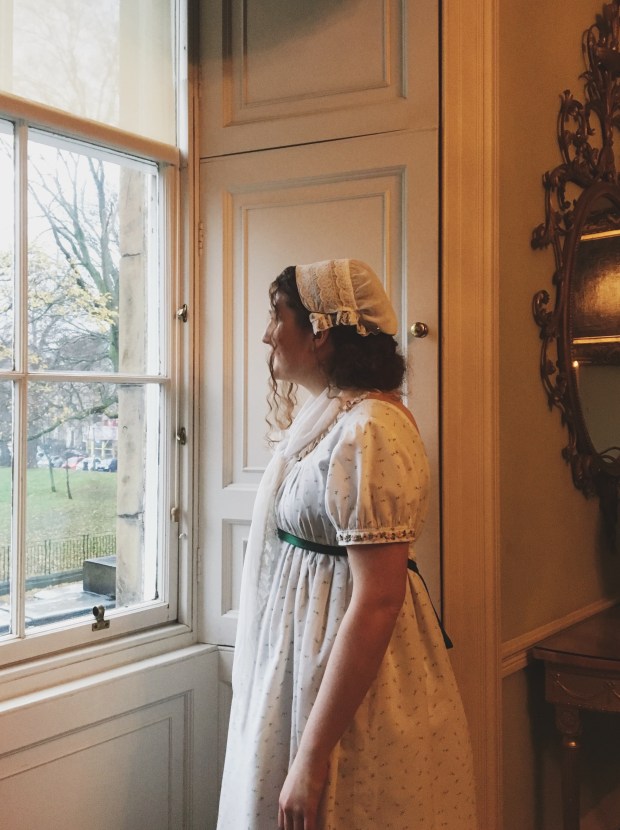
Yours truly (in costume) gazing out the window of the drawing room at The Georgian House. (Ignore the not very period appropriate cars parked outside the window!)

What sort of activities would happen in the drawing room?

This space was more for evening activities, such as balls or larger gatherings, but the lady of the house might have used the room during the day, if she had some friends over for tea.

IMG_9890 2

Me (right) in costume as Georgina Lamont (the family’s oldest daughter), next to fellow volunteers portraying John Lamont and a visiting guest, in the drawing room during our ‘Meet the Lamonts’ event last December. (BTW the Christmas tree, while lovely, was not Georgian and didn’t come into popular use until the Victorian period!)

At a party, the chairs would have all been pushed to the walls, to make space for dancing. When the ladies were rejoined by the men, there might have been card playing, or chess. In addition to dancing! Someone also might want to sing. Playing an instrument was an important social accomplishment of the time for the upper classes, and men and women might get up and sing a song or two. It’s my understanding that it didn’t matter so much how well you sang – this was more an opportunity for young people of marriageable age (and their families) to get a good long look at each other! But this was also a time when you had to really make your own fun (and, often, your own music!) so playing the piano could provide entertainment as well.

486px-Anastasia_Robinson

Portrait of Anastasia Robinson, circa 1727, via Wikimedia

There is so much more to say about the ornate drawing room at The Georgian House, and so many objects there to delve into, but I’ll save that for another time. I had hoped to do a series of posts where I look at different rooms in a Georgian household – parlor, dining room, kitchen etc., using The Georgian House as an example. But unfortunately I don’t have all the pictures I wanted, to be able to show you all that I’d like, so we’ll have to wait until the house has opened back up again and I can get in there and take some more photos! I promise it’ll be worth the wait.

If you’re looking for more reading in the meantime, check out The Georgian House’s blog which featured another fellow volunteer (and mega talented costumer!), Emma Harvey, talking about 18th century women’s fashions.

(PS today’s Featured Image is by Jean-Baptiste Charpentier the Elder, ‘The Family of the Duke of Penthièvre (“The Cup of Chocolate”)’, circa 1768, accessed via Wikipedia)

‘Madeira Mondays’ is a series of blog posts exploring Early American history and historical fiction. I’m not a historian, but an author and poet who is endlessly fascinated by this time period. I am also currently writing/researching a novel set during the American Revolution and recently finished a Doctorate of Fine Art looking at how creative writers access America’s eighteenth-century past. Follow the blog for a new post every Monday and thanks for reading!


Madeira Mondays: The Five by Hallie Rubenhold review

Several years ago, I went to visit a friend of mine who lived in London. I got off the train at Liverpool Street station and set off to find her flat amidst the many pubs and red brick buildings crowded around Spitalfields market. I was surprised to see a tour group, led by someone in a top hat and cane. Then a second tour group walked by. Why were there so many tours? Then I was handed a flyer and it all became clear: Jack the Ripper tour. This area was the site of the infamous White Chapel murders, back in the 1880’s.

800px-The_Illustrated_Police_News_-_20_October_1888_-_Jack_the_Ripper

The Police News from October 20, 1888, featuring the death of Elizabeth Stride (one of Jack the Ripper’s victims). The Illustrated Police News was an early British tabloid. Image accessed via the Wikimedia Commons.

You probably know this already, but for any who might not: in Victorian London there was a string of five brutal killings in the East End by a man whose identity is still unknown today. Jack the Ripper.

I didn’t end up going on any of these tours, however, and I found the whole idea of a Jack the Ripper tourism industry a little disquieting. I still do. Are we mythologizing and, in a way, celebrating this evil guy who butchered women?

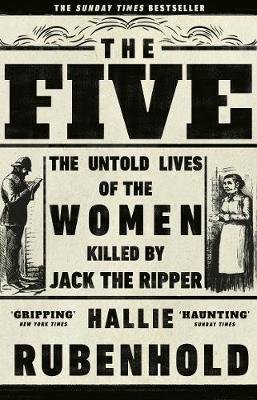
I do understand the gothic Victorian allure of an unknown serial killer though and I totally get why people would be curious to learn more about the murders. But, even though I’m interested in history (as you know if you read this blog!) and especially 18th and 19th century history, I’m not a big fan of ‘true crime’ and I’ve never had any interest in learning more about the Jack the Ripper killings. That is: until I heard about Hallie Rubenhold’s book The Five: The Untold Lives of the Women Killed by Jack the Ripper

the five

This book is not about the grizzly details of the murders and it is not about Jack the Ripper at all. It’s about the five women whose lives were lost. What starts as a case study of their five lives, emerges as a fascinating social history of working class Victorian London itself. It is also an attempt to restore the humanity of five people who have been dismissed for a hundred and fifty years as ‘just prostitutes’ (By the way, Rubenhold’s research reveals that the majority of them were not sex workers at all).

It’s a fascinating and heart-breaking non-fiction account of how five very different women came to find themselves impoverished and vulnerable to attack. We follow the five victims – Polly, Annie, Elizabeth, Kate and Mary Jane – who each get their own sections of the book. What becomes clear over the course of The Five is how precarious life was for working class women at the time. Many of them start out in relatively safe and stable situations, but through one or two twists of fate, find their fortunes reversed. While they were not all prostitutes, what Rubenhold does highlight is the fact that they were all alone when they were killed and sleeping outside. They were homeless. Throughout the book, Rubenhold reveals just how challenging their lives were:

The cards were stacked against Polly, Annie, Elizabeth, Kate and Mary Jane from the day of their births. They began their lives in deficit. Not only were most of them born into working class families, but they were born female. Before they had even spoken their first words, they were regarded as less important than their brothers, and more of a burden on the world than their wealthier female counterparts. Their worth was compromised before they had even begun to prove it.

This book has been very hyped, but I think it lives up to the praise and popularity it has garnered. The research is detailed and it’s very well-written. And I agree with its mission of focusing on the forgotten lives of these women, tragically cut short by a brutal murderer. As this review in The Guardian points out: ‘Forests have been felled in the interests of unmasking the murderer, but until now no one has bothered to discover the identity of his victims.’ It is, quite frankly, appalling that it has taken us this long to bother looking into these women’s lives.

The Five is literally dedicated to the women who were killed by Jack the Ripper, but it’s figuratively dedicated to them as well. Dedicated to piecing together portraits of their lives and characters, dedicated to revealing how dangerous and unstable life was for London’s working poor, and dedicated to reminding the modern reader that no woman is deserving of violence. I was really impressed with it as a project and as an act of historical research, so I hope you’ll excuse the fact that it is technically about 19th century history (not 18th, like we would typically focus on for ‘Madeira Mondays’!). I was compelled to tell you about it, and hope that you will find it similarly interesting.

Let me know if you’ve heard of The Five in the comments below and if it sounds like something you might want to read! Next Monday, we’re going inside an 18th century home. I’ll be starting a string of ‘Madeira Mondays’ focused on different rooms in a Georgian household and what went on in each one: bedroom, parlor, kitchen etc.!

‘Madeira Mondays’ is a series of blog posts exploring Early American history and historical fiction. I’m not a historian, but an author and poet who is endlessly fascinated by this time period. I am also currently writing/researching a novel set during the American Revolution and recently finished a Doctorate of Fine Art looking at how creative writers access America’s eighteenth-century past. Follow the blog for a new post every Monday and thanks for reading!


Madeira Mondays: Washington Miniseries Review (Episodes 2-3)

‘Within the colonies, within families, there was division. There were loyalists and patriots living within the same house. This was a civil war.’ – Alexis Coe on the American Revolution

A few weeks ago, I posted my review of Episode One of Washington, the History Channel’s new documentary series about America’s first president: George Washington. Today we’re talking Episode Two (‘Rebel Commander’) and Three (‘Father of His Country’). I’d recommend having a read of that first blog post if you want to know more general information about the series: who they interview, the format etc. I’ll be chatting more here about specific things I enjoyed about these last two episodes and things I wish they’d done differently.

800px-Gwashington

Will the real George Washington please stand up? (This is a painting of Washington by Gilbert Stuart, 1797)

Firstly, the stuff I liked!

1 – Nicholas Rowe is much better in these last two episodes

Scottish stage actor Nicholas Rowe portrays Washington in the live-action reenactments that the show uses to dramatize Washington’s life. These scenes are woven throughout the interview clips with historians, biographers, and politicians. I had some complaints about Rowe in Episode 1, where he failed to convince as the charming younger Washington who was meant to dazzle all the ladies, but he does a much better job playing the older, resolute General under stress. I especially liked his understated delivery of the orders to go and find Benedict Arnold, after he learns of Arnold’s betrayal. Rowe looks ready to scream but then says with a quiet fury: Go. Get him. Now. I got chills.

2 – Really gets across how difficult it was for Americans to win the Revolutionary War

It’s impossible to overstate now how crazy it was for a handful of disparate colonies to take on the world’s great superpower of the time. There was no guarantee that the Americans would win and, in fact, quite the opposite. Lots of people, quite reasonably, thought they would surely lose and did not support the rebellion. And, as Alexis Coe points out in the quote at the start of this post, there were often loyalists and patriots in the same family! The British army and navy were the best in the world, and the colonies literally had no army until the Continental Congress decided to try and make one. Washington’s struggle to whip these non-professional soldiers into shape, to keep their spirits up, to get supplies, to prevent mutiny, all while trying to fight the best army in the world is all conveyed well in the show.

I especially liked the scene when the British army arrives in New York in 1776 and the New Yorkers, and rebel army, look out and see all the warships. King George wanted to intimidate the colonists and he sent the largest British expeditionary force to ever be assembled. When the New Yorkers saw all the impressive warships amassing in their harbor, they were all like…shit. I remember reading an account of the time from a guy in New York who looked out over the harbor and said: ‘It looked like all of London was afloat.’ So Washington did well to highlight that moment.

3 – Also conveys how Washington set the precedent for Presidential behavior

Winning a Revolution is just step one. Then you need to establish a new government which will not devolve into a new kind of tyranny. Washington makes it clear how important it was that Washington himself did not become an emperor or a tyrant, but rather stepped down after two presidential terms. It argues that he didn’t even really want to be president in the first place, but took the job because he was a national war hero and people loved him. He wanted to be at home in Virginia. But there was nobody else who could take that role (John Adams certainly had a rough time as the second U.S President). The show makes it clear how the republic could have failed, if we didn’t have someone like Washington at the helm in those fragile, early days.

Now, for stuff I didn’t like so much…

1 – So much Benedict Arnold stuff

The story of Benedict Arnold is inherently interesting (spy craft, intrigue, betrayal etc.). And maybe it’s just because I’m pretty familiar with the story already, but I felt that we had too much of a focus on this, purely for the sake of drama. The second episode actually ends on an Arnold related cliffhanger. I think you need to make mention of Arnold, a continental officer who was secretly helping the British, but felt the amount of time devoted to this whole saga was kind of excessive.

I also felt that the amount of focus on Hamilton was a little excessive. I’m guessing it’s because of his fame from the popular musical, but I was more okay with this than the Arnold stuff, because at least Hamilton was Washington’s second in command and always with Washington during the war.

2 – ‘Can I offer you some water?’

Okay, so this is a pedantic point, but there’s a scene during one of the reenactments when Washington is meeting with one of British General Howe’s top officers and Washington offers him ‘ale or water’? I’m already skeptical that he would offer him ale. That’s something people would have in a casual tavern, probably not what a General would drink with a high ranking British officer at a formal meeting though. I’m guessing they would drink wine like Madeira (yay!) or maybe sack (a fortified white wine from Spain)? Or port? But even if he did offer him ale, he definitely wouldn’t have offered him water! Water wasn’t sanitary to drink during this time and only those who could afford nothing else would drink it. If I was that British officer guy, I would have been super insulted if the American General offered me water. I would have been like: ‘No, I don’t want your crappy sewer water! Geez, you guys are a lot worse off than I thought.’

3 – The level of violence was unnecessary

I’m not one to shrink from too much violence onscreen, but context is important and this is the sort of documentary series that could easily be shown in schools etc. (there are so many legit historians interviewed in it), if not for the overly graphic moments of violence. I was okay with this in Episode One, but it started to grate on me in Episodes Two and Three. We have another scalping in Episode Three, and a tarring and feathering. While this level of violence works great in the HBO John Adams miniseries (which also shows a tarring and feathering), it felt out of place here in an otherwise pretty sanitized, educational production. The moments of violence stand out as unnecessary.

*

Those are just a few thoughts I had on Episodes Two and Three. Overall, I found these episodes less engaging than Episode One, but that might have been because I was more familiar with the information in them. But still the balance of reenactment to interview works pretty well, the production quality of the reenactments is overall fairly high (despite Martha Washington’s awful wig in the last few scenes) and I liked how they wove in information about slavery throughout too.

I’d be curious to know what you thought of Episodes Two or Three, or indeed of the entire series? Did you learn anything new about Washington’s life? What did you think of the format: reenactment mixed with interviews? I don’t know much about Washington’s life so I’m especially curious to know if there’s anything you think Washington got wrong? Let me know!

(Today’s featured image is Washington Crossing the Delaware by Emanuel Leutze (1851), acceded via the Wikimedia Commons. I was actually fortunate enough to see this image in person at the Metropolitan Museum of Art in NYC and it was breathtaking. The real painting is enormous and you can see all the colors of dawn. And, of course, Washington wouldn’t have stood like that. It would have tipped over the boat. But it’s still a great painting!)

‘Madeira Mondays’ is a series of blog posts exploring Early American history and historical fiction. I’m not a historian, but an author and poet who is endlessly fascinated by this time period. I am also currently writing/researching a novel set during the American Revolution and recently finished a Doctorate of Fine Art looking at how creative writers access America’s eighteenth-century past. Follow the blog for a new post every Monday and thanks for reading!


Madeira Mondays: Grace and Frankie…and John Adams

I think most people have ‘their shows’, those they gravitate to when times are tough and they just want to zone out and relax. Aside from Gilmore Girls (my #1 feel-good show), I love to watch Grace and Frankie. It’s good, quality easy-watching TV, and today, I wanted to tell you a little more about it and its surprising connections to early American history! Read on, friends…

maxresdefault

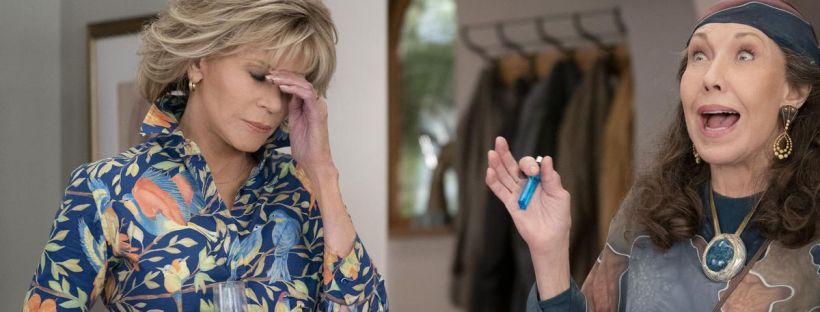
Lily Tomlin, left, and Jane Fonda, right, star as the titular Grace and Frankie

Grace and Frankie is in many ways a radical show for network TV. It features two unconventional leading ladies – older women in their 70’s and 80’s – often talking frankly about sex, relationships and (small spoiler alert) trying to start a company where they sell sex toys! The premise is basically that these two women, Grace (Jane Fonda) and Frankie (Lily Tomlin), get stuck together when their husbands, longtime business partners, announce that they are gay…and marrying each other. So it’s a bit of an Odd Couple set-up: Grace and Frankie move in together when their husbands leave them. Grace is organized, severe, Type A. Frankie is a hippie, scattered, creative. They clash. Then they become besties. It’s cute.

The show has been running now for six seasons (the 7th one comes out later this year I believe and will be the last). But it’s a very relaxing watch because it’s funny, the stakes are low, and everyone more or less gets along with and loves each other.

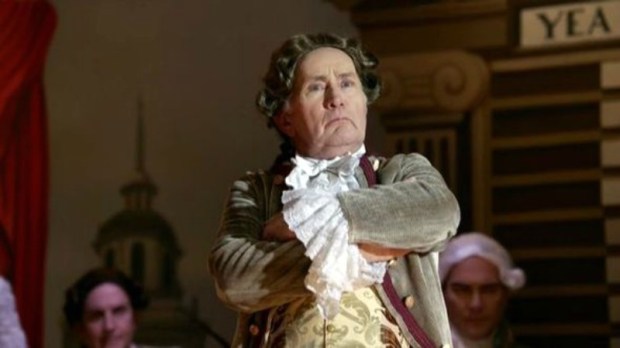
But of course there is drama in the show, which brings me to how it ties together with American history! At the end of Season 3, Grace’s ex-husband Robert Hanson (Martin Sheen) becomes involved with a gay theatre company’s production of 1776. For those of you who don’t know – 1776 is a musical set during the American Revolution. It’s about John Adams and his push for the colonies to declare independence from Great Britain. Robert is cast in the leading role as John Adams, but his theatre company is plagued by homophobic protestors who try (and fail) to shut down the play.

Later, Robert wins an acting award for his portrayal of John Adams. He uses his acceptance speech as a platform for LGBT+ activism, citing Adams as his inspiration:

It was an honor to play John Adams, a man who stood up to things that were bigger and scarier and more powerful than he was. And you know we had a little taste of that during our run of 1776. We had to stand up to bullies, who were threatening to shut us down because we are a gay theatre group. But we did stand up. Because the show of eradicating intolerance must go on…I thank the one man who truly made all of this possible. John Adams.

grace and frankie

Martin Sheen as Robert Hanson, playing John Adams in a gay community theatre production of 1776 in Grace and Frankie


Robert’s statement that Adams ‘made all of this possible’ refers not only to how Adams inspired the musical, but also that Adams made America possible, a country where he has the right to stand up and express his beliefs. I found this scene very moving and I’ll talk more about the musical 1776, and its connections to modern progressive politics, in a later post.

So I would recommend Grace and Frankie not only because it’s cute, smart, sweet and enjoyable, but also because of its fun nods to American history. I hope that it brings you joy during this troubling time. Let me know if you’ve seen it in the comments below and please do recommend other ‘feel good’ shows. What are your favorites?

‘Madeira Mondays’ is a series of blog posts exploring Early American history and historical fiction. I’m not a historian, but an author and poet who is endlessly fascinated by this time period. I am also currently writing/researching a novel set during the American Revolution and recently finished a Doctorate of Fine Art looking at how creative writers access America’s eighteenth-century past. Follow the blog for a new post every Monday and thanks for reading!

 

Madeira Mondays: Beyond the Mask film review

I have spoken in the past about how it is a shame that there are so few books and films set during the Revolutionary War. As a lover of this time period, I am always on the lookout for new ones. So when I heard about Beyond the Mask, a swashbuckling Revolutionary War era film released in 2015, I was curious to see it. And, oh boy, I was not prepared for what was in store!

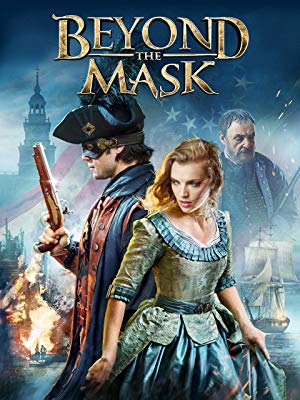
Wikipedia describes Beyond the Mask as a ‘Christian historical action-adventure’, and it follows the life of a former assassin, William Reynolds (Andrew Cheney), who wants to redeem himself and start a new life. Through a series of overly complicated mishaps which I won’t bother to explain, he finds himself in the American colonies, helping the Americans fight for independence from Great Britain while dressed as a masked vigilante called ‘The Highwayman’. Who gives Reynolds this moniker? Why, no other than Benjamin Franklin himself! There is a pretty hilarious scene where Ben Franklin, who runs the local printing press, is trying to figure out what to call this new, mysterious vigilante running around Philadelphia and says: ‘We’ll call him what he is! A highwayman.’ This makes no sense. Reynolds is not in any way a highwayman (a robber who stole from travelers, usually on country roads). But this is just one confusing detail in a film which is full of confusing details, bonkers plot twists, and tons of explosions.

beyond the mask

But, I will tell you this right now: I really enjoyed watching Beyond the Mask. It is like a zany medley of several other, better films (mostly Zorro, but there’s a bit of V for Vendetta in there and the score sounds like a crappier version of Pirates of the Caribbean). Sure, it is wildly historically inaccurate. Sure, it moves along at a break-neck pace and I was often confused about what was going on. Sure, the characters were completely empty and devoid of ANY personality (why do the main two people fall in love?? What do they like about each other?). And sure, the theology in it never makes a ton of sense or seems to really matter for the plot. BUT it was super silly and super fun. Especially John Rhys-Davies, who plays the one-dimensional villain character whose evil scheme is (spoiler alert) to blow up the Continental Congress using an electrical generator that he stole from Ben Franklin and has hidden in an underground submarine hideout! This stuff is gold.

beyondthemask

Our leads, Kara Killmer as Charlotte Holloway and Andrew Cheney as William Reynolds run away from a flaming windmill (some of the worst CGI in the film)

I expected this to be more of a wannabe Les Miserables, a story which has an overtly Christian moral about redemption. In Les Miserables, Jean Valjean, a criminal, is given a second chance of life when a priest shows him kindness and the whole book (and film and musical) is about the redemptive power of kindness and love. I think that might have been what director Chad Burns was going for here (a story about how love transforms a man from a murderous assassin to a guy who just beats people up sometimes), but all of that is lost in the sheer weirdness of the drama and the many wannabe Jackie Chan fist-fight sequences.

I’m not even going to touch on the historical accuracy of this film, but I will mention that, just like The Patriot (which I discussed here), it seems to think that only rebels were tormented and harassed by loyalist citizens and British soldiers, whereas in reality often it was those who remained loyal to the King who faced violence. But that is the least of the movie’s issues and if you’re going into it looking for any sort of historical accuracy, or even attempts at historical accuracy, then you’re looking in the wrong place, my friend.

Still, there are a couple of things that work well in the film (besides Rhys-Davies). The costumes are largely period-appropriate and look pretty good! Also I was impressed with the sets. They are obviously working with a limited budget and the 18th century Philadelphia set was particularly impressive.

So would I recommend this deeply silly movie? If you enjoy this sort of thing, then 100%! I watched it with two pals who enjoy films like this as much as me and we had a blast, giggling at all the absurdities and frequently pausing the film to ask: ‘WHAT JUST HAPPENED?’

If you are looking for an ambitious or thought-provoking or well-researched film about this period, then I would direct you to something like The Witch, or perhaps the John Adams Miniseries. But if you’re looking for a film where the main character exclaims things like ‘I live in a web of lies!!’ and leaps around in the darkness like Batman, then you’re going to enjoy Beyond the Mask. I know that I did.

Recommended Reading/Viewing:

Beyond the Mask directed by Chad Burns (so long as you know what you’re in for!)

Film Review: Beyond the Mask in Variety

‘Madeira Mondays’ is a series of blog posts exploring Early American history and historical fiction. I’m not a historian, but an author and poet who is endlessly fascinated by this time period. I am also currently writing/researching a novel set during the American Revolution and recently finished a Doctorate of Fine Art looking at how creative writers access America’s eighteenth-century past. Follow the blog for a new post every Monday and thanks for reading!


Madeira Mondays: Washington Miniseries Review (Episode 1)

‘You could argue that the British empire slowly built the man who would destroy them from the inside out.’ – Alexis Coe in Washington

This month The History Channel released a new miniseries about the life of America’s first President: George Washington. It was titled, quite simply: WASHINGTON. To be honest, I went into this series with low expectations. The History Channel screens some pretty questionable and often hilarious content (see: Ancient Aliens). Growing up, whenever I turned on this channel there was always some show about conspiracy theories involving the Illuminati or the Freemasons. So I was fairly shocked to discover that this miniseries was pretty darn good!

Thus far I’ve only seen Episode 1 (‘Loyal Subject’) which follows Washington’s early life and military career, but here are some thoughts about the pros and cons of the show – which may help you decide if you want to give it a watch too.

washington-1920x1080-all-shows

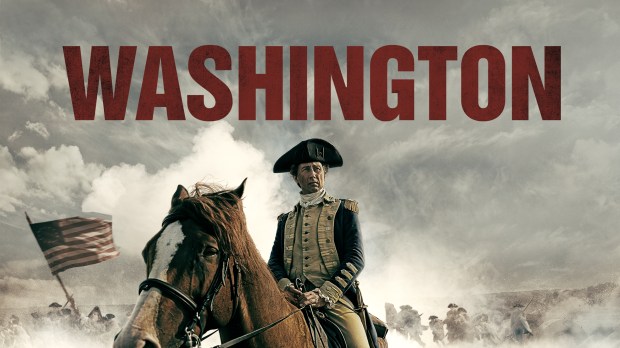
Washington released by The History Channel last month (February 2020)

Okay, let’s focus on the positives first!

1 – They interview tons of big name historians, biographers and politicians

I was surprised to see lots of famous early American historians interviewed here (Annette Gordon-Reed! Joseph J. Ellis!), in addition to people like Bill Clinton and Colin Powell. The whole series is actually produced by Doris Kearns Goodwin. It is fascinating to see all of these big name politicians and historians reflecting on Washington, and they bring so much knowledge, gravitas and, frankly, legitimacy to the whole thing. These people are the experts in their fields and I’m inherently curious about what they have to say. Well done, History Channel.

2 – Production value of reenactments

The interview clips are interspersed with short re-enactments of Washington’s life, featuring actors in period costume. So it’s almost like a little biopic film mixed with historical commentary. That could have been quite a cheesy format, but I think the balance works pretty well and keeps the whole thing quite engaging.

These reenactment scenes can get surprisingly violent (we see a Native American guy scalping someone and later there is a hanging), which is something to be aware of. The acting is passable, but I was overall impressed with the costumes and the scale of these reenactments. I can’t wait to see more of them actually!

3 – It doesn’t sugarcoat his life too much

The series isn’t overly reverential. It delves into how, early on in his career, Washington made a lot of mistakes. He makes tactical blunders, signs documents he doesn’t understand because they are in French (lol!), and misrepresents some of his military deeds in newspapers of the time. He’s human and this show is quick to point that out.

It also discusses how he was a slave owner. I especially liked the discussion of this from Erica Armstrong Dunbar of Rutgers University. She said: ‘I believe he knew that slavery was wrong but it was also crucial to his financial success.’ YES. I’m so glad they included this quote from Dunbar because there’s a big misconception that people back then didn’t think slavery was wrong, because their morals were just so different from our own. But honestly – lots of them did know it was cruel and wrong, it was just the economic system that they lived under at the time and they didn’t seen an alternative. That’s a crucial thing for modern audiences to comprehend and I like that the show addressed it.

4 – There’s a focus on his character/personality

I took some notes for this post while I was watching the show and I wrote down: ‘he was tall and women were into it’. I also wrote: ‘self-control but with fire crackling inside.’ The historians interviewed talk about contemporary accounts of Washington (who was really tall for the time, like 6’2”) and by all accounts had a very restrained but commanding presence. He was also apparently very disciplined with his men and very quietly ambitious. It was his feelings of being snubbed by the British army early in his career that, the series argues, sets him on the path to becoming a Revolutionary. So we really get to know the guy a bit through the series: his temperament, his personal goals etc.

Washington_at_Verplanck's_Point_by_John_Trumbull

Washington at Verplanck’s Point by John Trumbull (1790)

Now, for the cons:

1 – Not a great introduction to the entire Revolutionary War

Because of the limited scope of the show, they have to gloss over a lot of stuff. So everything apart from Washington’s life feels really rushed. We hop from the Boston Massacre to Lexington and Concord, with very little explanation for what those things are or how they impacted the colonies. So this isn’t the best thing to watch for a general introduction to the revolutionary war.

2 – The actor who plays Washington

I’m sorry to say that Nicholas Rowe, the actor who plays Washington in the reenactments, doesn’t really exhibit some of the gravitas and personal magnetism that the historians are saying that the real Washington had. There’s a somewhat unintentionally funny bit where the interviewees are quoting from period accounts of how charming Washington was, how he had a fire behind his eyes etc., and it cuts to Rowe dancing with some ladies with just a mildly engaged look on his face. He isn’t really bringing that gravitas to the table.

This stuff wouldn’t usually bother me – after all, this is a documentary and not a feature film! These scenes are just to dramatize what the interviewees are talking about. BUT since they go on and on about how much unusual gravitas Washington had, I think most actors would fail to live up to that build-up. Most people don’t have that kind of quiet charisma – that was part of what made Washington special! But Rowe overall does an okay job and I’m curious to see how he does as the older Washington.

*

All in all, I’d recommend the show so far! Definitely worth a watch if you’re interested in this time period, if only to see the all-star historians and biographers line-up. Also, at a time of such great political division in the USA, I do think it’s important to focus on our shared history, which is so unique.

Have you seen Washington? If so, I’d be very curious to hear your thoughts! I’m looking forward to Episodes 2 and 3.

PS Two pieces of poetry news!

Last week I was at StAnza Poetry Festival in St Andrews, introducing and chairing some poetry events. I’ve been volunteering for this festival for almost 9 years (!) and for several years have served as their in-house Festival blogger. This year, I was mainly introducing events, but they asked me to do one blog post as well. You can read my post, ‘Moonlight and Mermaids’, here if you’re interested in learning about StAnza (the biggest poetry festival in the UK), which takes place every year in a little Scottish town by the sea. The post also features some discussion of late 18th century gothic women poets.

Also, I have a poem in the Scottish Writers Centre’s new chapbook ‘Island and Sea’, published last week. If you happen to be Scotland-based (I know that some ‘Madeira Mondays’ readers are!), the chapbook is launching tomorrow (March 10th) at the Centre for Contemporary Arts (CCA) in Glasgow. Several poets from the book will be reading on the night. I’m hoping to make it through to read. If that sounds like your cup of tea, here’s the event page!

(Today’s featured image is of, you guessed it, George Washington, by Charles Wilson Peale in 1772, accessed via the Wikimedia Commons. It is the earliest authenticated portrait of Washington.)

‘Madeira Mondays’ is a series of blog posts exploring Early American history and historical fiction. I’m not a historian, but an author and poet who is endlessly fascinated by this time period. I am also currently writing/researching a novel set during the American Revolution and recently finished a Doctorate of Fine Art looking at how creative writers access America’s eighteenth-century past. Follow the blog for a new post every Monday and thanks for reading!