Friday Finds: American Wife by Curtis Sittenfeld (book review)

Welcome to the first Friday Finds: where I share mostly book recommendations (or recommendations of other cool things I’ve come across). For this week I wanted to chat about American Wife by Curtis Sittenfeld. This book came out in 2008 and it’s a novel inspired by the life of the former first lady Laura Bush. A friend of mine handed me the book when I visited York recently and while I was initially a bit unsure – I have no particular interest in Laura Bush and I don’t read a lot of political biographies or autobiographies – once I started it, I was totally swept away. It reminded me more of a sweeping 19th century novel – something like Anna Karenina maybe – that encompasses a coming-of-age story, explorations and reflections on love and marriage, a good bit of melodrama and tragedy, a smattering of politics, and a whole lot else in between.

Continue reading

Madeira Mondays: changes ahead!

Almost two years ago, I sat down to write the first ‘Madeira Mondays’ post. I had just finished my Doctorate of Fine Arts (which was looking at 18th century historical fiction and forgotten women in the early American South), was working on a historical fiction novel, was volunteering as a costumed historical guide…basically my life was: all 18th century, all the time. This blog series was meant to be a fun way to share my research and passion by writing about all the cool (and bizarre) stuff I’d learned about during my PhD. I would share 18th century recipes and strange facts about 18th century underwear! My first post was on one of my favorite novels about this period of early American history: Johnny Tremain by Esther Forbes.

Continue reading

Madeira Mondays: A Witch in Time by Constance Sayers (Book Review)

This book was such a pleasant surprise! I should say immediately that when I received it as part of my subscription to ‘How Novel’, which sends you a mystery book each month, I was a bit turned off by the ridiculous and goofy title: A Witch in Time.

The UK paperback version of it that I received had a lovely cover with intricate gold designs but the title…my initial reaction was to roll my eyes. I personally struggle with titles so – I get it. Titles are hard. And I know that titles should, ideally, from a marketing perspective, reveal something about the content of the book to those who haven’t read it. But to title a book about a time traveling witch…’A Witch in Time’? It’s actually a little bit insulting to this rather well written, well researched and overall interesting novel – to give it such a goofy title based on a bad pun! I am convinced the author did not pick this silly title!

That being said – I really enjoyed A Witch in Time (arg! I can barely write it!), which tells the story of a woman reincarnated in four different time periods (ranging from the 1890s through to the mid 2000s) and cursed to relive a doomed love affair in each. A lot of the book is about art (we meet several artists, painters, photographers, writers) and also about breaking the (sometime self-destructive) patterns of behavior that we find ourselves in – more on that in a second.

Continue reading

Madeira Mondays: The best songs from ‘1776’

Before there was Hamilton, there was 1776.

I honestly can’t believe that I’ve been posting on this blog regularly for about a year and a half and I’ve never once dedicated a whole post to the musical 1776. This makes no sense to me. Surely I’ve written about this before? But I looked back at my records and while I’ve definitely mentioned 1776 (for example in this post about queer activism and Grace and Frankie), I haven’t done a whole post about it. It’s time for that to change! Especially since this is one of my favorite films and 100% falls into the ‘Madeira Mondays’ remit (it’s historical fiction AND it’s about one of the most significant political events of the 18th century: the signing of the Declaration of Independence in America).

Continue reading

Madeira Mondays: Reflections on the Stay-at-Home Literary Festival

As some of you may know, I’ve been working for a literary festival this spring called the Stay-at-Home! Festival.

The festival is entirely virtual and was founded last year by CJ Cooke: a professor at Glasgow Uni (I met her during my Masters and PhD there) and an author of popular psychological thrillers and poetry as well. She founded the festival last year during the first lockdown: at a time when few people knew what Zoom was, let alone how to use it! It was really well attended in year one (145 events, 220 authors over 2 weeks) and debuted as one of the biggest literary festivals in the UK. This year, the festival received some generous funding from various sources and was able to run again for a second year and Carolyn (aka CJ Cooke!) invited me to join the core festival team.

Throughout the two-week festival, which ended last week, I kept thinking about Madeira Mondays and what aspect of it I wanted to share with you. There were writing workshops, talks on all sorts of topics (fossils, motherhood, death and grieving, monsters, the environmental crisis, happiness, the body…) with a focus on diversity in the publishing industry as our central theme this year. Since most of our events are now available to watch on our YouTube Channel, I have decided to pick out a couple of events that are inspired by and centered on history or historical fiction to share with you.

Continue reading

Madeira Mondays: These Shallow Graves by Jennifer Donnelly (Book Review)

”I merely wish to smoke. Sparky can forgive that. You, on the other hand, wish to know things. And no one can forgive a girl for that.” – These Shallow Graves

One of my favorite films growing up was Martin Scorsese’s Gangs of New York. Not typical fare for a teenage girl, sure, but I liked seeing old New York – the glitzy and the grimy. I don’t have any particular desire to live in New York City but it really is a fascinating place, isn’t it? A little Colonial Dutch outpost that slowly became a commercial mecca and now a world center of finance, culture, food, fashion, you name it. And seeing old New York (specifically 1890’s New York) was one of the coolest things about reading These Shallow Graves by Jennifer Donnelly. The book is a Young Adult mystery novel, published in 2015, which follows an upper class society girl who dreams of becoming a reporter and gets mixed up in the city’s underworld when she starts investigating her father’s mysterious death. 

Continue reading

Madeira Mondays: The Devil and the Dark Water by Stuart Turton (Book Review)

What if Sherlock Holmes boarded a 17th century ship? What if, on this ship, there was a series of dark and unexplained happenings: animals slaughtered, strange marks appearing, and, eventually, people murdered. How would Holmes go about solving these crimes and unmasking, as it were, the ‘devil’ lurking in the ‘dark water’?

While Stuart Turton’s novel, The Devil and the Dark Water, of course doesn’t actually feature Sherlock Holmes, it’s obvious that’s what he’s referencing with his central character of Samuel Pipps (who calls himself a ‘problematary’ because, as Turton clearly knows, the whole concept of ‘detective’ wasn’t around in the 17th century, when this book is set). Pipps, and the other characters in the novel, use deductive reasoning to solve the mysterious murders happening on their ship, as it travels from Batavia (present day Jakarta), in the Dutch East Indies, back to Amsterdam. They follow clues, they speak and think very much like Holmes himself. Continue reading

Madeira Mondays: Fever, 1793 (Book Review)

Ever since Covid-19 broke out across the world, there’s been a lot of talk about the Spanish Flu pandemic of 1918. I’ve also heard historians, especially medievalists, called upon to talk about the bubonic plague of the 1300’s, and I’ve seen Daniel Defoe’s 1722 book, A Journal of the Plague Year, added to many people’s reading lists! All of this makes sense. People are curious about pandemics of the past and how people coped (spiritually, physically, psychologically) with rampant infectious diseases.

That curiosity is what drove me to read Fever, 1793 by Laurie Halse Anderson. This is a YA (Young Adult) novel published originally twenty years ago, but it definitely has a lot of relevance today. It’s about an epidemic that you may not have heard of: the outbreak of yellow fever in Philadelphia in 1793. Continue reading

Madeira Mondays: 2020 Recap

I’ve had several discussions with friends recently about time and our perception of it during this very strange year.

It feels, to me, that January 2020 was about a thousand years ago – so much has happened since (a global pandemic, a turbulent US Presidential race, an altered state of life for everyone)! But it also feels that January 2020 was only a minute or two ago, considering that also so little has happened since (vacations canceled, jobs lost, a string of blurring and indistinct days as we’re all stuck inside).

Whether you feel like time has passed slowly or quickly for you – or if (like me!) you feel that it has passed quickly AND slowly – I’d encourage you to look backwards and think on anything you’re proud of this year. Even if what you’re proud of is quite simply just making it through this year!

For me, one of those things I’m proudest of is all of these Madeira Mondays posts. It’s brought me joy to write them, and the consistency of it has kept me sane during the ups and downs of the creative freelancer’s life. Some weeks are full of exciting creative work – writing, editing, researching, teaching, performing – while some weeks are full of the not-so-nice side of this work – constant rejections, negotiating contracts (thankfully with the help of my union!), tedious funding applications, and oh, did I mention the constant rejections?

Through all the highs and lows of this year, including launching a new poetry book, Madeira Mondays has been there for me. And I’ve heard from several of you that it’s been there for you too! A couple of you have reached out and said that it’s something you look forward to starting your week with, and that makes me so happy to hear – especially this year, when we quite desperately need things to look forward to!

I’ve done some reflecting on the year that has passed and pulled out just a handful of my personal favorite Madeira Mondays posts from 2020. We’ve covered so many topics, from 18th century underwear, to swear words, to the surprisingly interesting history of ketchup. I’ve reviewed tons of historical books, films and TV shows, as well as visited historic sites in Scotland and the US. We’ve covered so much ground this year despite, well, literally not covering that much ground!

*

The Best of ‘Madeira Mondays’ (2020)

Most unexpectedly delicious recipe…

That would be absolutely be switchel! This ’18th century energy drink’ with lemon and ginger was delicious, and I’ve made it several times since. If you want to learn the recipe and how I made it, check out the post from June.

A very tasty glass of Switchel!

Best film I’ve watched set in the 18th century…

I’ve watched quite a few historical films this year, but my personal favorite (and this is quite subjective) was: Portrait of a Lady on Fire. It’s a queer love story set in 18th century France, and while it wasn’t perfect, I thought it was pretty darn good. Lots of broody, moody, melancholy shots of girls standings on cliffs staring out into the horizon. Yup, I loved it.

My ‘most read’ post…

This one wasn’t actually decided by me but by you and all the people who read Madeira Mondays, but by far and away one of my posts has been the most viewed this year: my analysis, from July, of Tracy K. Smith’s poem ‘Declaration’, which is an erasure poem based on the Declaration of Independence. The post talks about slavery and its ‘erasure’ from the declaration, as well as the power of poetry to explore historical silences and this has by far been the most viewed post of 2020.

Something that is especially meaningful about this is the fact that I can see that several people who read the post actually clicked the link to read the Declaration itself, from the US national archives. This brings me joy because if you’re an American, this document belongs to you, in a sense. I’m thrilled that my post is encouraging further engagement with it!

My favorite site visit…

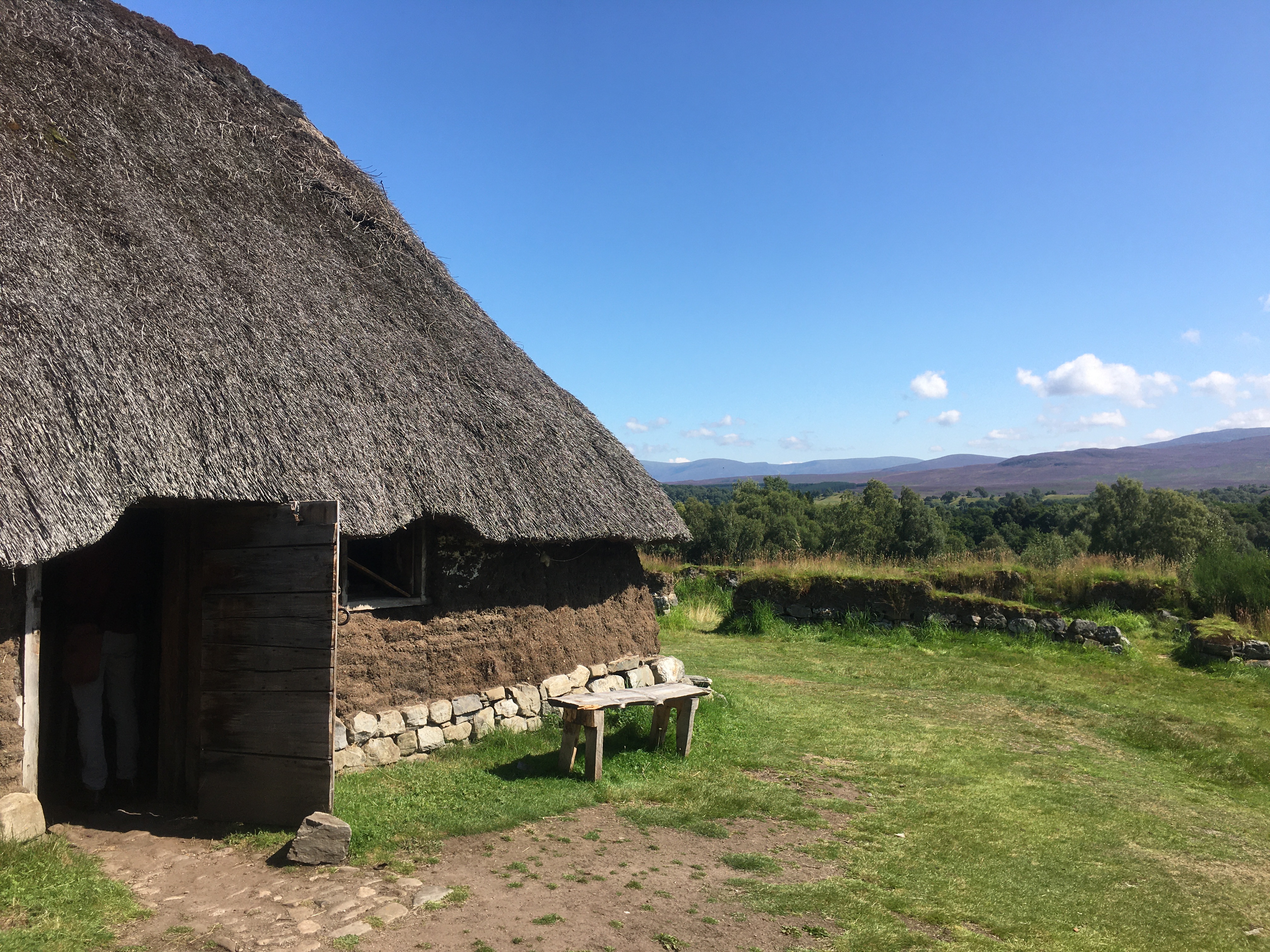
I love visiting historical sites (if you work at or run one in the UK and would like to chat about the possibility of me visiting, please do get in touch!), but of course this year didn’t allow for many! I think my favorite site visit though was from this summer, when I went to the Highland Folk Museum, and saw a recreated rural 18th century village. I was glad to be able to provide a sort of virtual ‘tour’ of it, for you.

One of the turf houses we explored on our visit to the Highland Folk Museum!

My favorite historical fiction novel I read this year…

This is, again, purely down to personal tastes. I don’t know if this book is objectively the STRONGEST (in terms of style, structure, etc.) but it’s certainly the one that has stuck with me most and that’s: Celia Garth by Gwen Bristow. This was written back in the 1950’s and while it has its limitations, it’s suspenseful, punchy, and totally sucked me in. I really enjoyed this sweeping drama about a plucky young seamstress in Revolutionary War South Carolina. It’s got some good characters and thinking of the last line still gives me chills (I’ve actually got chills as I’m writing this now!).

Best non-fiction history book I read this year…

I’d say that’s: The Five by Hallie Rubenhold. This popular book (which I believe came out in 2019 or 2018) follows the lives of the five women who were killed by Jack the Ripper in Victorian London. It’s an excellent portrait not just of them, but also of the society in which they lived. I think the historical research also seemed pretty sound (I’m not a historian, but I’ve worked with historians and read many books by both historians and journalists about history, and this was just my impression!).

Most fun post to write…

That would probably be my post talking about how I researched/wrote one of the poems from my second poetry pamphlet, which was released in July: Anastasia, Look in the Mirror. These posts looked at how I researched the Salem Witch Trials, and what influence had had on my poem, ‘The First Afflicted Girl’. Since I wrote this poem a while ago, it was fun to reflect back on how it was built. Much of my PhD focused on how creative writers access the early American past (through primary sources, like letters and diaries, but also secondary sources, other media etc) and so it was great to reflect on that poem and its beginnings. Hopefully that post is inspiring for fellow historical fiction writers, especially.

*

And that’s it, folks! My favorite posts from 2020.

What have been your favorite ‘Madeira Mondays’ from this year? 

What are you proud of having accomplished this year, even if (especially if!) it’s something ‘small’ (i.e. keeping a plant alive, talking regular walks, learning a new skill etc.)?

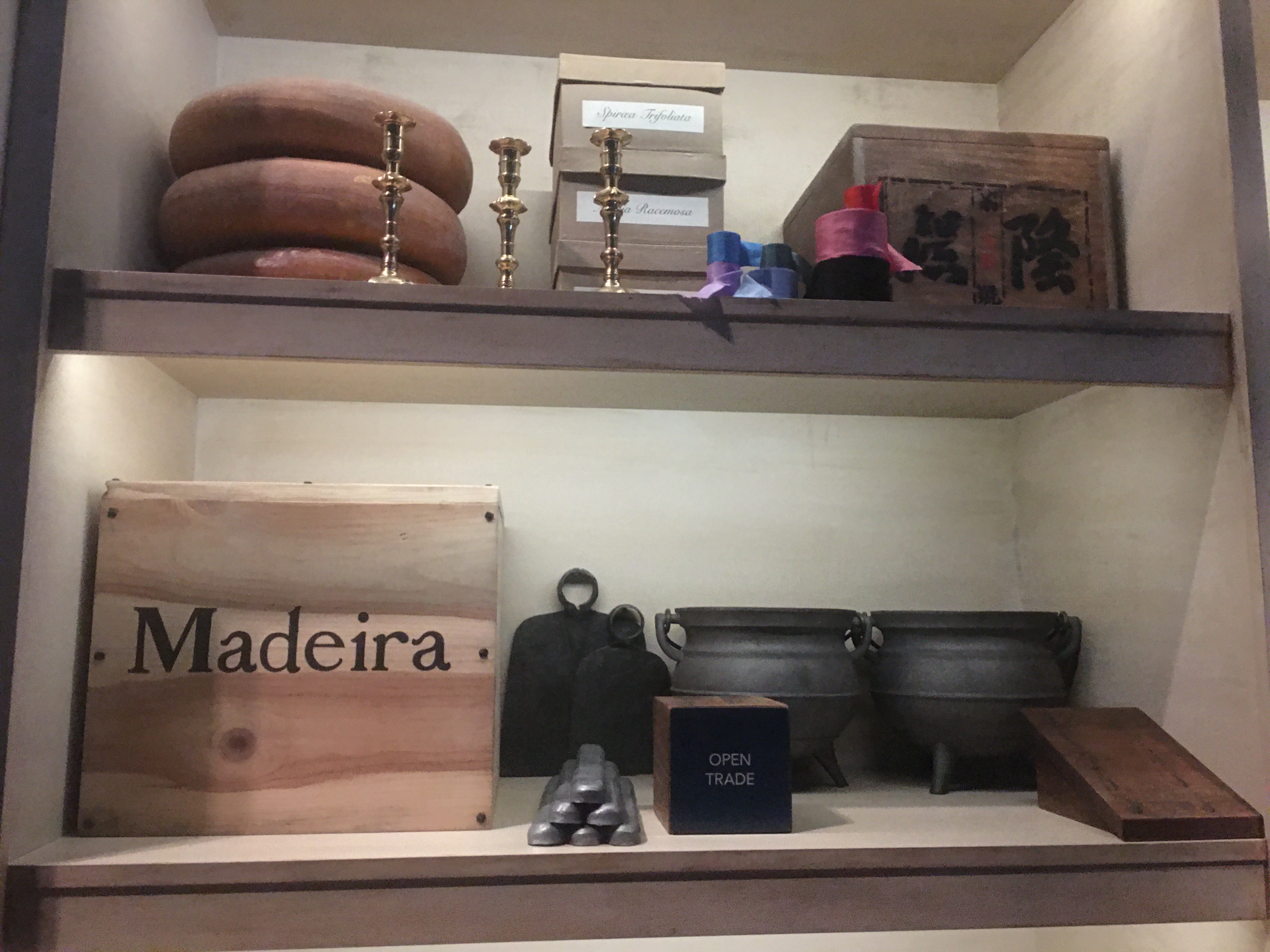
This was taken in the Museum of the American Revolution in Philadelphia, during my trip to visit my step-sister there in October 2019

Also, I wanted to let you know that this will be the last Madeira Mondays for 2020. But I’ll only be away for two weeks, and then back on Monday January 4th, with a whole new batch of these posts for 2021!

If you’ve enjoyed this series, please do recommend this blog to a friend, or share with them any of the posts you’ve enjoyed! That really means a lot to me, as our little community of curious minds grows. And if you want to further support me and my work, a great way to do that is to order one of my books! There is more information about all of them on my publications page, and you can order my latest, Anastasia, Look in the Mirror, on the publisher’s website here.

Most of all, I want to thank you all SO MUCH for reading. Many of you have blogs yourselves and thank you for writing those, as they’ve provided so much solace and entertainment for me during this really difficult time.

Have a wonderful holiday season, and see you all in 2021 my friends!

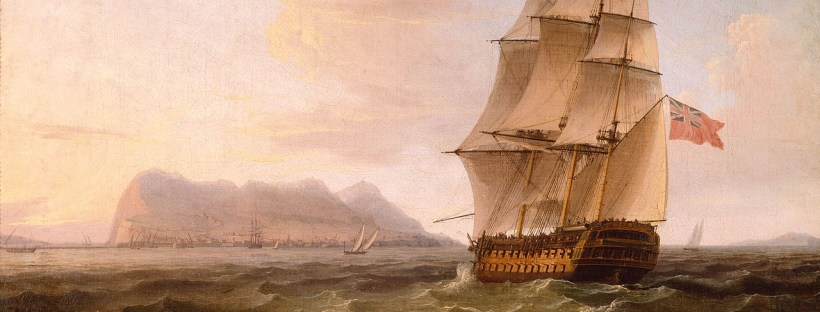
PS Today’s Featured Image is: ‘A British man of war before the Rock of Gibraltar’, By Thomas Whitcombe. (This ship represents us sailing off, towards 2021 and new adventures together in the new year!)

‘Madeira Mondays’ is a series of blog posts exploring 18th century history and historical fiction. Follow the blog for a new post every Monday and thanks for reading!
 

Madeira Mondays: Benjamin Franklin and the ‘respectable’ turkey

There’s a song in the musical 1776, which features Benjamin Franklin, Thomas Jefferson and John Adams arguing about what what bird should be used as America’s national symbol. Adams suggests it should be an eagle, Jefferson suggests a dove, and Ben Franklin suggests…a turkey. This song – called ‘The Egg’ – is such a delight, like the rest of the musical. There are some lovely three-part harmonies from the three men as they bicker good-naturedly about what bird it should be.

Adams argues passionately for the eagle, saying it’s a ‘majestic bird’. Franklin disagrees, saying the eagle is ‘a scavenger, a thief and a coward, a symbol of over ten centuries of European mischief.’

‘The turkey is a truly noble bird,’ Franklin argues in the song. ‘Native American, a source of sustenance for our original settlers, an incredibly brave fellow…’

Of course, in real life, as in the song, it was decided that the bald eagle would be the national bird. But, with Thanksgiving coming up, this song got me wondering if Franklin really did want our national bird to be a turkey…rather than an eagle?

Well the short answer, my friends, is that it’s a myth.

The Franklin Institute writes this:

The story about Benjamin Franklin wanting the National Bird to be a turkey is just a myth. This false story began as a result of a letter Franklin wrote to his daughter criticizing the original eagle design for the Great Seal, saying that it looked more like a turkey. In the letter, Franklin wrote that the “Bald Eagle…is a Bird of bad moral Character. He does not get his Living honestly…[he] is too lazy to fish for himself.”

However, while the story as a whole might be a myth, as you can see from that quote, Franklin didn’t seem to like eagles very much, calling the eagle a bird of ‘bad moral character’ because he’s a scavenger. Franklin also writes that the turkey is “a much more respectable Bird, and withal a true original Native of America…He is besides, though a little vain & silly, a Bird of Courage.” So, the Franklin Institute explains, while Franklin didn’t suggest the turkey for one of American’s national symbols, he did defend the turkey against the bald eagle.

Franklin goes so far as to say: ‘For my own part I wish the Bald Eagle had not been chosen the Representative of our Country.’

A painting featuring turkeys, and other birds, the 17th century, accessed via Wikimedia

So 1776 gets it ‘wrong’ in the sense that Franklin didn’t actually suggest the Turkey for the national bird, BUT they also get it quite right in the sense that Franklin did say turkeys would have been a better symbol for the country. I’m not sure how seriously we should take Franklin’s musings – it seems like he was, in typical Ben Franklin fashion (and fashion of the time), kind of intelligently waffling. But maybe he was actually disappointed, I don’t know!

A lot of the lyrics of the song ‘The Egg’ are quite evidently paraphrases from Franklin’s letter to his daughter. For example, in ‘The Egg’, fictional Franklin calls the turkey ‘an incredibly brave fellow who would not flinch at attacking a regiment of Englishmen single-handedly.’ And, in the real letter, Franklin says the turkey is ‘a Bird of Courage, and would not hesitate to attack a Grenadier of the British Guards who should presume to invade his Farm Yard with a red Coat on.’ The writers are clearly playing off the real quote. (And I love this image of a turkey attacking a British red coat – it’s just so goofy and also so Ben Franklin to me somehow!)

So, as with most historical fiction, it’s quite hard to draw clear cut lines between something being ‘accurate’ and ‘inaccurate’. This small example from 1776 just goes to show that something can, in a way, be accurate and inaccurate at the same time!

I wish a happy Thanksgiving to my American readers – whether you eat turkey or not. If you do, you can tell your family about this story! (I don’t eat meat, as I mentioned in my last blog post, so I usually eat something called ‘Tofurkey’ if I’m celebrating Thanksgiving/Christmas in the USA – it’s actually really good! I know that sounds impossible, given the silly name, but it is! This year I’m in Scotland and will be having a nut roast, which is another good option for those of us who don’t wish to eat Ben Franklin’s ‘respectable’ bird!)

‘A Turkey in a Landscape’ by Peter Wenceslaus, accessed via Wikimedia

What do you think about the turkey vs. the eagle as a national symbol? What is the bird (or national animal/flower etc.) of your country/state and do you think it was a good pick?

PS If you find yourself in the mood for some poetry tomorrow, I’ll be doing a reading at the American University of Dubai tomorrow (Tuesday November 24). It’s at 6 pm Dubai time, so you’d have to calculate what time that is for you! It’ll be a one hour poetry reading over Zoom, and it’s free and open to the public. I’ll mostly be reading poems out of my new poetry pamphlet published this summer, Anastasia, Look in the Mirror. If you fancy coming along – here is the Zoom registration link!

Further Reading/Viewing:

Today’s Featured Image is Alfred Schönian (1856-1936) — ‘Colorful Feathered, 1936’, accessed via Wikimedia.

‘Madeira Mondays’ is a series of blog posts exploring 18th century history and historical fiction. Follow the blog for a new post every Monday and thanks for reading!