Madeira Mondays: Is A Tale of Two Cities worth reading?

Charles Dickens was very much a man of his time.  Much of his fiction (almost all) was inspired by the world around him: specifically, the plight of the London poor. One of his most famous works (which happens to be a favorite of mine!), A Christmas Carol, was partly inspired by a visit to the Field Lane Ragged School, one of several homes for London’s destitute children. He famously used to take long walks alone, all around London, and observe the world around him, getting inspiration for his books. Dickens and his characters – Oliver Twist, Ebenezer Scrooge, David Copperfield etc. – are basically synonymous with 19th century London. Which is why I think it’s so interesting that one of his most famous novels – A Tale of Two Cities – isn’t set in Dickens’ familiar stomping ground, but rather in the late 18th century, during the French Revolution and The Terror.

A Tale of Two Cities is a work of historical fiction, and it takes place between London and Paris (those are the titular ‘two cities’) in the 1780’s and 90’s. I was drawn to it because I love A Christmas Carol (the book) and also because I was curious to see what Dickens, a man writing in the 1850’s, had to say about the late 18th century. The equivalent would be someone now writing about the 1960’s. There’s still a removal of time, but a much smaller one than if it were me or you writing about the 18th century.

A Tale of Two Cities is also considered a ‘classic’ and while I think that one shouldn’t feel any pressure to read any book simply because it’s well-known and famous – that goes for ‘classic’ as well as contemporary lit – I do think Dickens (like Shakespeare) is an author whose work has endured for a reason. Or several. One reason, I think, is that Dickens (again, like Shakespeare) can be read on two levels – for entertainment value (if you purely want a rollicking good read!) and also on a more analytical, thematic level. His books are amusing but also rich and thought-provoking. He’s a bit over-the-top sometimes, but he also writes with so much empathy and with close observation of humor behavior. And his outage at societal inequalities is sadly still quite relevant, just as it was in the 19th century.

So now you know what I think of Dickens generally, but how was A Tale of Two Cities specificially? A ‘classic’ worth checking out, or one to skip?

Overall, I really liked this novel. No surprise, because I like Dickens’ writing and I like the 18th century (as you know!). But there’s a lot to like here even if you aren’t crazy about either of those things.

It tells the story of one family that is caught up in the events of the French Revolution, and it asks a lot of questions about justice and guilt. One man is basically asked to pay for the crimes committed by his cruel, aristocratic family on the Parisian poor. He has rejected his family long ago and deplores their actions, but the revolution is imminent and the oppressed want blood. How do we make amends, when our ancestors and sometimes even our close relatives, have committed atrocities or acts of oppression? And how far is ‘too far’ when it comes to gaining justice and retribution for the crimes of the past?

My copy had brilliant black and white illustrations – like this one.

These questions are always interesting and I think they’re especially interesting in Dickens’ hands because this is a man who really fought for the rights of the London poor and has a clear empathy for the oppressed French poor and makes it clear why they revolted. We see that, to certain aristocratic nobles, these poor people’s lives are meaningless and expendable  A boy is crushed to death under a nobleman’s cart wheel and the noble doesn’t bat an eye. A noble looks down at one of his tenant farmers, on the verge of death, ‘as if he were a wounded bird, or hare, or rabbit; not at all as if he were a fellow creature.’

Yet Dickens also condemns the violence of the Revolution fairly explicitly. The primary antagonist of the story, the sinister Madame Defarge, is an embodiment of the Revolutionaries’ desire for revenge and for heads to roll (quite literally). She is a ‘ruthless woman’ with an ‘inveterate hated of a class’ which has turned her into a ‘tigeress.’ She’s violent, excessive and without mercy, but we do see why she’s this way and how she personally has been abused by members of the upper class. So her behavior is, at least, understandable. It’s this keen sense of specifically class-based oppression throughout that makes Dickens a good writer for this subject, because he’s quite ambivalent – the violence is reprehensible, but he gets why it happened. And he’s aware that it could happen again.

Crush humanity out of shape once more, under similar hammers, and it will twist itself into the same tortured forms.

One of my favorite things about the book was Dickens’ descriptions of people. No surprise, the characters were super vivid and easy to visualize, down to the smallest player. A random jailer is described as: ‘so unwholesomely bloated, both in face and person, as to look like a man who had been drowned and filled with water.’ And all of the main characters are vivid, and relatively complex, except one: Lucie Manette. She’s worse than Mina in Dracula. She has no personality or life outside of her self-sacrificing devotion to her husband and father. Dickens seems to have no interest in either her bodily or intellectual reality – she has a child and it grows to the age of a toddler in the space of about a paragraph or two. (How do these events change her?!) She’s gorgeous, everyone loves her and would do anything for her – in short, she’s a very silly and unexamined character. With another author I’d let it slide but there’s no excuse for it when Dickens can create a character like Sydney Carton – the sarcastic, drunken, intelligent, self-loathing, spiteful yet surprisingly tender character who plays a central role in the novel’s climax.

Sydney Carton is great and, quite frankly, the whole book is pretty great too. It asks if a man, a family, even a society, can be redeemed. It isn’t spoiling much to say that, for Dickens, the answer is yes. I’m a bit more cynical, but even so, it’s nice to hope.

It would be perfect reading if you enjoy things like Poldark, or other dramas set in this period revolving around one family. I cried a lot at the end of the book, actually. Dickens can be a bit melodramatic, but his earnestness gets me every time.

Let me know what you think of A Tale of Two Cities: have you read it before? Did you read it in school? Do you plan on reading it in the future? I’d love to have any reading recommendations from you as well, particularly any spookier books as autumn approaches!

PS Today’s Featured Image is ‘Bonaparte aux Tuileries – 10 August 1792’, a painting depicting Napoleon (who would later become Emperor of France) witnessing a mob attack on the Tuileries Palace.

‘Madeira Mondays’ is a series of blog posts exploring 18th century history and historical fiction. Follow the blog for a new post every Monday and thanks for reading!


Madeira Mondays: Rob Roy (Film Review)

I rewatched Rob Roy (1995) yesterday for the first time in about twenty years. As readers of this blog will know, I recently went on a trip to the Highlands and toured the Highland Folk Museum, as well as Culloden Battlefield. During this trip, one of my friends kept bringing up the film Rob Roy. She insisted that it was full of gorgeous Highland scenery and that it touched on a lot of the topics that we’d been learning about during our museum explorations – the Jacobite uprisings, the dissolution of the Highland Clans etc. I’d seen Rob Roy as a kid, but couldn’t remember much about it.

After returning from our trip, I hesitated, at first, to re-watch this film because the only thing that I did remember about it was that it contained a very hard-to-watch rape scene. This particular scene has really stuck with me since I first viewed it, perhaps because it was one of the earliest depictions of sexual violence that I saw on screen. (I’m honestly not sure why my dad let me watch Rob Roy – I think he had probably forgotten this scene was in it!) But, in any case, I was missing the Highlands and I was curious to see how all these topics that we’d been learning about played out in the film. So I watched it.

One of the gorgeous sights from our recent Highland trip. This was taken on the drive from Fort William up to Mallaig (where you catch the ferry to Skye).

The best and the worst thing that I can say about Rob Roy is that it does what it says on the tin. It’s a sweeping adventure story about a Robin Hood-like figure who fights to retain his family’s ‘honor’ in the changing landscape of early 18th century Scotland. The film even begins with effectively a thesis statement that explains exactly that to the viewer. The opening text reads:

At the dawn of the 1700’s famine, disease and the greed of great Noblemen was changing Scotland forever.

With many emigrating to the Americas, the centuries-old Clan system was slowly being extinguished.

This story symbolizes the attempt of the individual to withstand these processes and, even in defeat, retain respect and honor.

Not many films start out with such a precise thesis statement, or baldly admit that their story ‘symbolizes’ anything. I don’t actually think that this explanation was necessary either, because all of that becomes quite clear as the film transpires.

This is a story (based on stories about a historical figure turned folk hero) where wider societal change is, in a sense, embodied in the struggles of one ‘traditional’ Highland man (Rob Roy aka Liam Neeson) who refuses to cope with the ‘modern’ avarice, corruption and greed of those around him (as if greed was a new thing haha!).

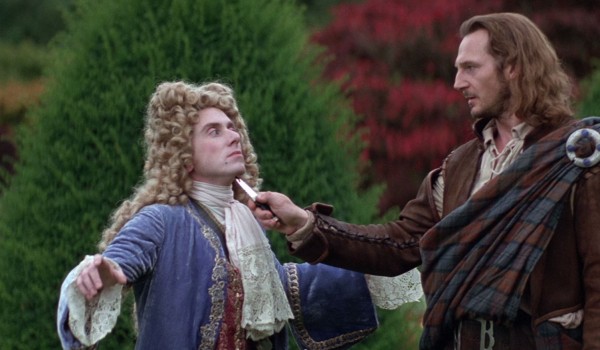
Tim Roth as Archibald Cunningham (left) and Liam Neeson as Rob Roy (right). I can’t remember precisely when this moment is from in the film, but it’s a safe bet that Rob Roy is ‘defending his honor’ from the smarmy Englishman.

This film is all about ‘honor’, which was quite an important concept to 18th century men -remember that the signers of the Declaration of Independences pledge their ‘lives, fortunes and sacred honor‘ to the cause. ‘Honor’ is actually the last word of the Declaration of Independence. (There’s a very interesting article here on Mount Vernon’s website exploring the changing concepts of honor in Colonial America, from something that was linked explicitly to upper classes, to something that ordinary citizens could have, as well).

In writing this blog post, I’ve realized that ‘honor’ is actually a rather tricky concept to explain or to define. In the 18th century, I think it sort of equates to ‘reputation’. But the way that it was defined also depends a lot on gender. When we think of a woman’s ‘honor’ there’s a sexual connotation and we think of chastity, ‘purity’.

‘Honor’ is defined by Rob Roy in the film as something like morality and ethical conduct. Rob Roy explains to his sons that his ‘honor’ prevents him from ever ‘mistreat(ing) a woman or malign(ing) a man’. It is ‘what no man can give you and none can take away’. It is, in short, his moral compass and system of personal ethics.

Throughout the film, Rob Roy’s code of honor is set against the dishonorable behavior of the nobles who effectively cheat him out of quite a lot of money and engage in other sneaky and also violent actions against him, most notably the aforementioned rape of Rob’s wife Mary MacGregor (Jessica Lange). Yet even that horrific act is part of this larger narrative of ‘honor’. The principal reason that the glib aristocrat Archibald Cunningham (Tim Roth) rapes Mary is to drag Rob Roy out of hiding. Now that his wife has been assaulted, Rob Roy’s ‘Highland honor will have to be satisfied,’ Cunningham remarks.

I actually quite liked this emphasis on ‘honor’ as a theme and how, at every turn, Mary MacGregor’s approach to life is much more sensible and pragmatic. In a way, she’s the foil to Rob and his obsession with honor, even more so than the amoral Cunningham. She sees that Rob’s inability to do or say anything bad about anyone ever, or to do anything sneaky or under-handed at all, will get their family into trouble one day. And, indeed, it does.

Lange gives a dignified and emotive performance as Mary – I really believed that she was a sturdy lady who had borne several children, survived rough Scottish winters and was more than capable of stabbing people in the throat (no spoilers, but she may or may not stab someone in the throat).

When the film succeeds, it does so based on the performances of Lange and also Roth, whose despicable character of Cunningham is far more interesting to watch than Rob Roy ever is, because – unlike Rob – he has flaws (quite a lot of flaws – he’s a murderer, rapist, thief, abandons his pregnant girlfriend, only cares about money etc.). Rob seems to already BE a folk hero – always doing good, always caring for others – not someone whose actions inspired legend.

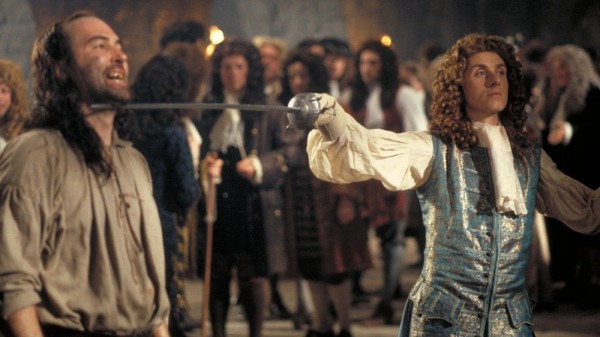
Another area in which the film succeeds is the choice to show extended sword fighting sequences which were really marvelous to watch. Roger Ebert apparently called one of these sword fighting scenes ‘one of the great action sequences in movie history’ and I’d buy that. The final climactic sword fight is long (ten minutes?) and tense – lots of intricate choreography.

Tim Roth as Archibald Cunningham (right) shows off his fancy sword fighting skills

The landscape is also, of course, breathtaking and it gets plenty of screen time. The whole thing was shot on location in the Highlands and you can absolutely tell. I can’t fault Michael Caton-Jones on the direction – he gets good performances out of his cast and really lets the setting shine.

So would I recommend it? Well, if you’re a fan of Braveheart or Outlander or be-kilted dudes, you’ll certainly like this. And if you’re someone, like me, who enjoys 18th century history and sweeping period dramas, in general, then there’s plenty here to like. It’s just nothing special, largely because of the lack of humanity in the central character. When someone is such a good person, a righteous person, a caring person, they eventually stop seeming like a person, at all.

Let me know what you think of this movie, if you’ve seen it. If not, let me know if it sounds like your cup of tea (or dram of whisky)!

Recommended Reading:

‘Madeira Mondays’ is a series of blog posts exploring 18th century history and historical fiction. Follow the blog for a new post every Monday and thanks for reading!
 

Madeira Mondays: A Vist to Culloden Battlefield

There’s a misty moor in the Scottish Highlands where, over 250 years ago, a battle took place that shaped the course of world history forever. I’m talking about Culloden, the site where Jacobite forces clashed with British government troops in a harrowing fight and one that would ultimately mark the end of the 1745 Jacobite Rising and the dissolution of the Scottish clan system. It was also, interestingly, the last battle fought on British soil.

When you go to visit Culloden yourself, there are ultimately two key elements to see: the battlefield itself and a shiny new visitor center, which explains the lead up to the battle, how the fighting went down, and also the legacy of Culloden. I have to admit, when we went to see this site two weeks ago, I knew very little about the battle, or anything leading up to it. Even though the 18th century is the time period I study, and even though I have to know about Scottish history to engage knowledgeably with guests in my volunteer job as tour guide at The Georgian House in Edinburgh, I didn’t know very much about Culloden in particular. I know more about 18th century social history and  the American Revolution (which took place about 30 years after Culloden).

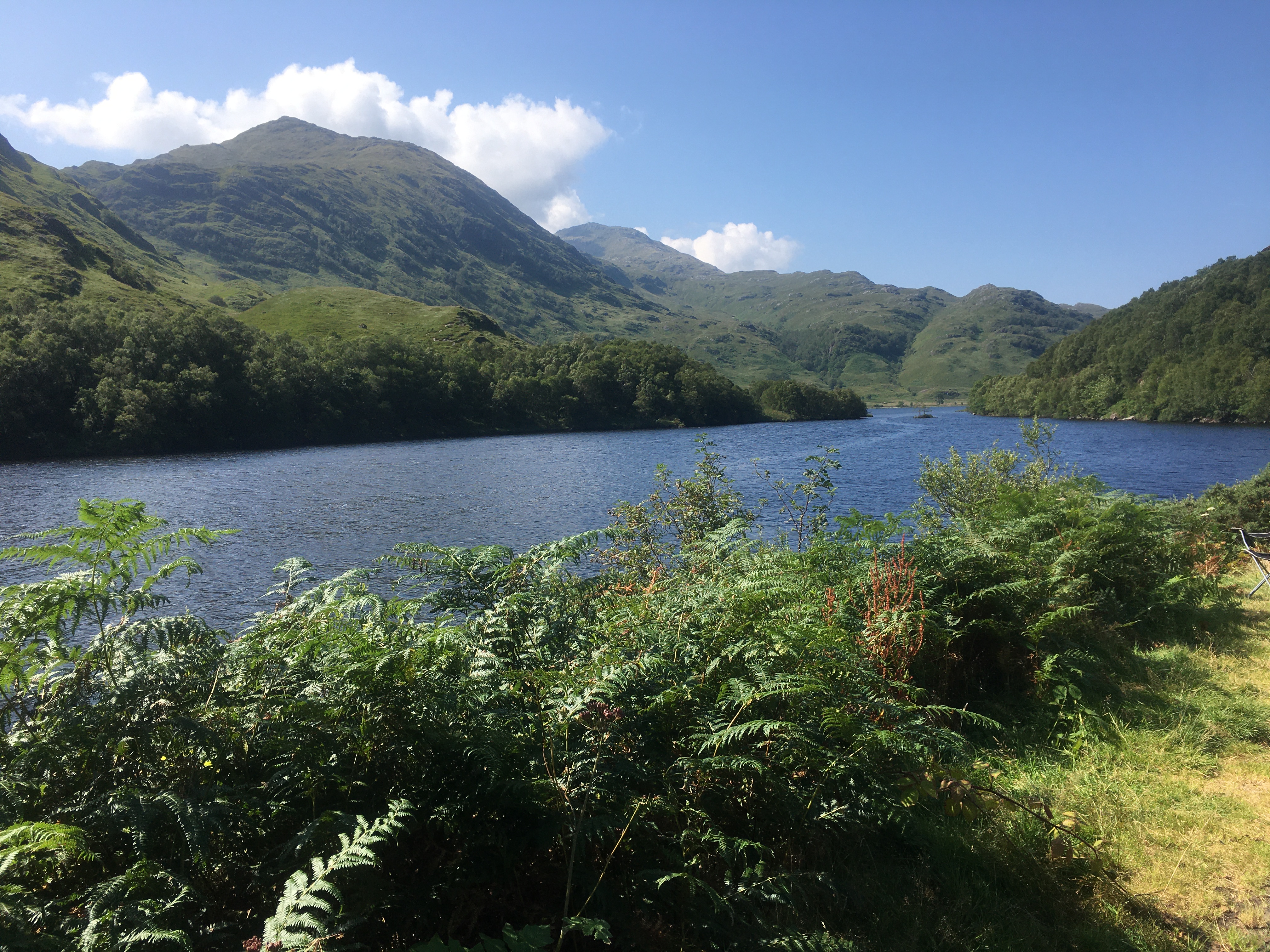
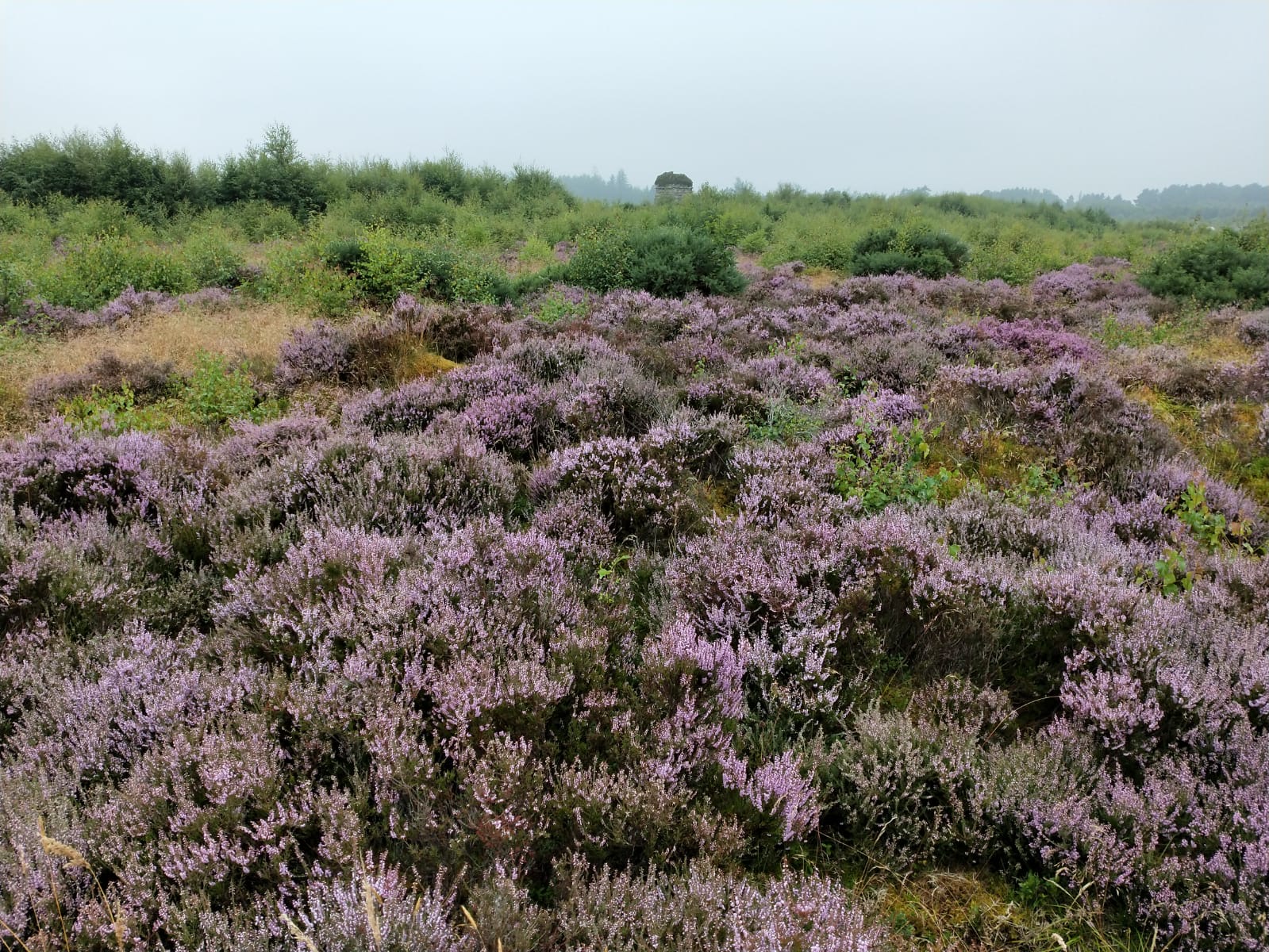
So when I arrived to Culloden (which is overseen by the National Trust for Scotland, the same organization that runs The Georgian House – yay!), I was ready to learn. What I did not expect was quite how atmospheric it would be. On the morning we arrived, the fog was thick and the grass still slick from a storm that had passed the night before. The air was gray but the green field littered with bursts of purple heather. It was quiet, solemn and verging on spooky.

Culloden Battlefield, shrouded in mist

Our group split up and while my partner and my friend explored the battlefield itself, I went into the Visitor Centre (which is basically like a small museum, although there’s also a gift shop and cafe). We all wanted to go inside the museum portion, but we’d waited until the night before to book slots and could only get one, which my group graciously let me have (as the resident 18th century enthusiast). I also got in for free as a National Trust volunteer, which was a nice perk.

The museum is set up more or less chronologically, so that you can go through it and see what happened before and during the Jacobite uprising, from both a Jacobite and ‘government’ perspective. Who were the Jacobites? They were a group of mostly Scottish people who believed that the Catholic Stuart family had a right to the British throne. The Jacobite army comprised a lot of Highland clansmen and it was led by Charles Edward Stuart, or ‘Bonnie Prince Charlie’. They had achieved some successes fighting British government troops before Culloden, but at Culloden they were roundly defeated by the Duke of Cumberland. Their rebellion was over.

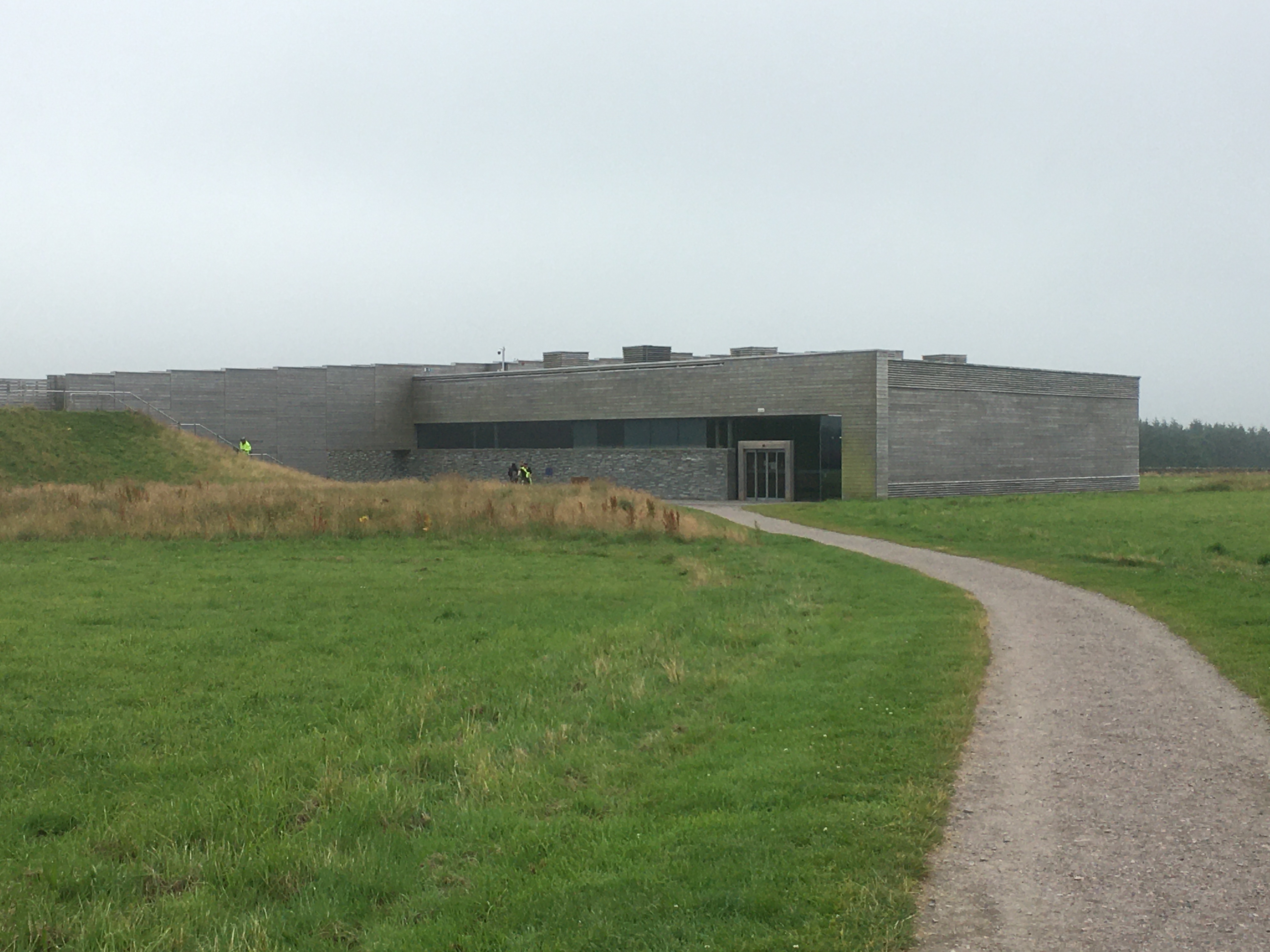
The museum does a really fantastic job of explaining this complex time period and the battle itself. The building is quite somber and looks almost like a military fortress, which adds to this atmosphere of seriousness – after all, 1,600 men were killed in this battle (1,500 of them Jacobites). And, from what I learned, there was a lot of brutality in the aftermath of the battle too, when the government troops were searching for the fleeing, defeated Jacobites – killing, pillaging, etc. along the way. So it is a somber site.

The Culloden Vistor Centre

It’s a very engaging museum though and one of the elements that I liked most was the room where you could ‘immerse’ yourself in the battle itself. There were four screens, one on each wall, that featured re-enactors depicting the battle and it is quite immersive. To be in the middle of four screens, all full of heavily-armed dudes shouting, is overwhelming and does give a sense of the intensity of the fighting.

I also loved seeing the artifacts of the time. One disturbing item that stuck with me is a sampler from a young girl in a London. A ‘sampler’ was a piece of fabric where girls practiced their embroidery – maybe their ABCs, or they might sew images of a house or a bible quote or something. This girl had sewn a picture of a British redcoat stabbing a Jacobite soldier (I think the little girl had someone in her family who fought in the British army) and her caption was something like, ‘Killing the Highlanders!’ Apparently propaganda was rampant in London about how the ‘unruly’ highlanders in Scotland were rampaging and needed to be crushed etc., but there was something very sad about seeing this image on a little girl’s sampler, which is usually something full of benign images like birds, houses, trees.

Unfortunately, we didn’t have enough time for me to do a full exploration of the battlefield itself, but I was assured by the rest of my group that it was a fascinating sight. There are markers throughout about troop movements, flags marking where different army front lines were and where exactly the fighting took place. So it would be a particularly interesting sight for anyone who is keen on military history. There are also memorials too, for different clans that took part in the fighting.

All in all I was very impressed with Culloden as a historical site and have pretty much nothing critical to say about it! The only bummer of our visit (the fact that we couldn’t all get into the museum) was very much our fault for not being more organized about booking the tickets – so anyone looking to visit, especially during Covid, do book your museum visit in advance online. It’s very easy to do.

I hope that was an interesting little jaunt into Scotland’s past. I would highly recommend a visit if/when you’re ever in the area. Like the Highland Folk Museum featured in my last post, I think Culloden has a special significance to fans of Outlander (which I’ve never read, but have seen a couple of episodes of!), but it would be an interesting place to visit even if you don’t know anything about Scottish history and if you have no connection to Diana Gabaldon’s sweeping time-travel romance series. It’s a carefully created and even-handed museum, and a striking Scottish geographical landmark. Let me know if you do visit, or have visited before, and what you thought about it – I’d be curious to know!

‘Madeira Mondays’ is a series of blog posts exploring 18th century history and historical fiction. Follow the blog for a new post every Monday and thanks for reading!
Madeira Mondays: A Visit to the Highland Folk Museum

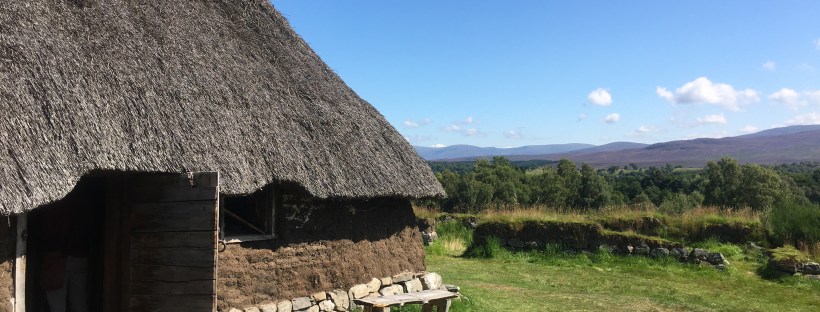
Nestled in the Cairngorms National Park, about an hour east of Fort William, you’ll find the Highland Folk Museum, a site dedicated to exploring domestic life and culture in the Scottish highlands. It’s an 80 acre open-air museum full of replica buildings, recreating different eras of Scottish history from the 1700’s through to the 1960’s, including an entire 18th century village (where an episode of Outlander was shot).

I’m a sucker for these sorts of open-air, living history museums and I’ve visited several of them: Colonial Williamsburg in Virginia, USA, Skansen in Stockholm, Sweden, and the ATSTRA Museum in Transylvania, Romania (more on that another time perhaps). I’m so passionate about social history (the academic way of saying the study of how people lived), so on our recent trip to the Highlands, we decided to stop off at the Highland Folk Museum to learn more about the region and its history. And I’m so glad we made the stop because, honestly, this place provides quite a unique experience!

The Highland Folk Museum was the brainchild of Dr. Isabel F. Grant, who studied British folk life in the Highlands, and was inspired by the Scandinavian open air museum movement to start a museum of her own. This museum was first opened in 1944, the first open-air museum on mainland Britain.

It’s a truly unique place. First of all, the setting itself is unbeatable. 

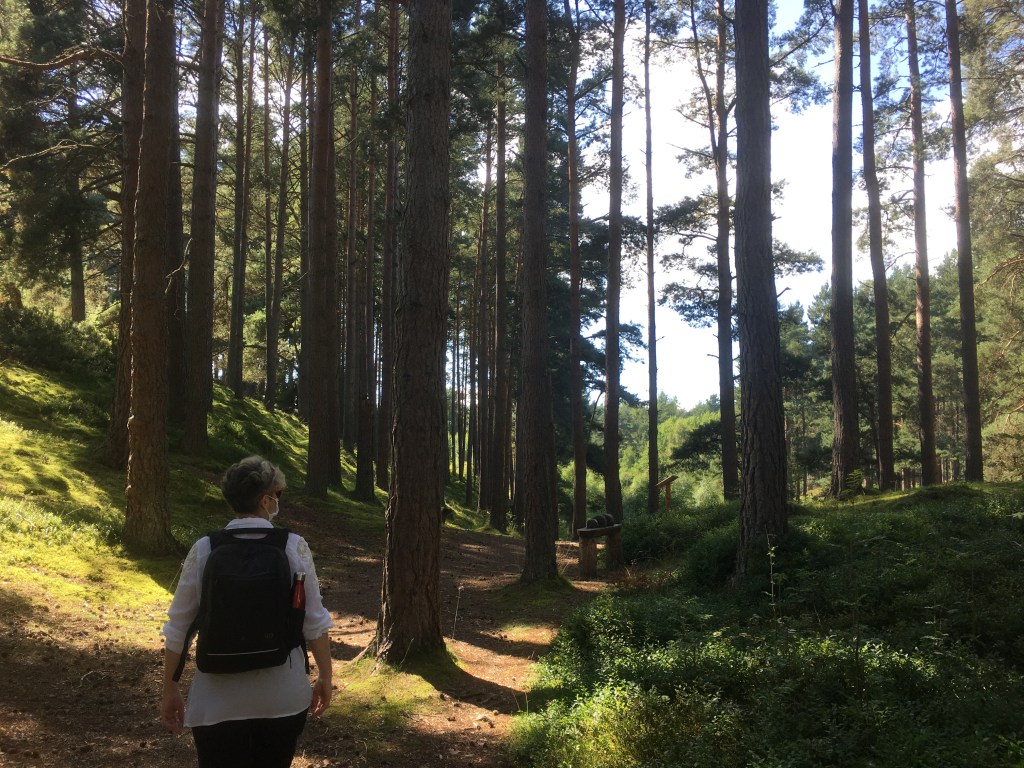
My friend Margherita exploring the pine woods on the folk museum grounds
The recreated 18th century village, ‘Baile Gean’, Gaelic for ‘Township of Goodwill’

The 80 acres of the museum are verdant and lush, with sweeping views of the surrounding highland countryside. We visited on a sunny day, but even if you encountered typical Scottish fog or light rain, it would still be a pretty spectacular landscape to explore.

We unfortunately only had about an hour and 45 minutes for our visit and, ideally, we would have had more. We had to prioritize and since one of our party (*waves*) studies and writes about 18th century history, we knew we had to see the 1730’s village, which meant that we skipped tons of great looking stuff in other parts of the park: a recreated 1930’s sweets shop, a 19th century school house, and a post office from the 1910’s, to name just a few!

But the 18th century village was well worth seeing even if, during Covid times, it was a rather different experience, I’m guessing, than what you’d usually get.

My understanding is that there are typically several costumed historical interpreters about, showing you how to make crafts or telling you more about life from the period they are portraying, but, in this case, we were met with only one (very knowledgable and friendly!) interpreter in the recreated village.

Also, I think that more of the buildings are typically open, but several had to be shut due to (as I understood it) there not being proper ventilation inside them, to comply with safety standards. Buildings were made back then to keep in heat, and these ones had no windows, which would have been good for insulation, but not so good when you’re trying to prevent the spread of a pandemic!

Still, despite these necessary restrictions, it was very cool to see ‘Baile Gean’ and how the museum had depicted rural life in the highlands in the 18th century.

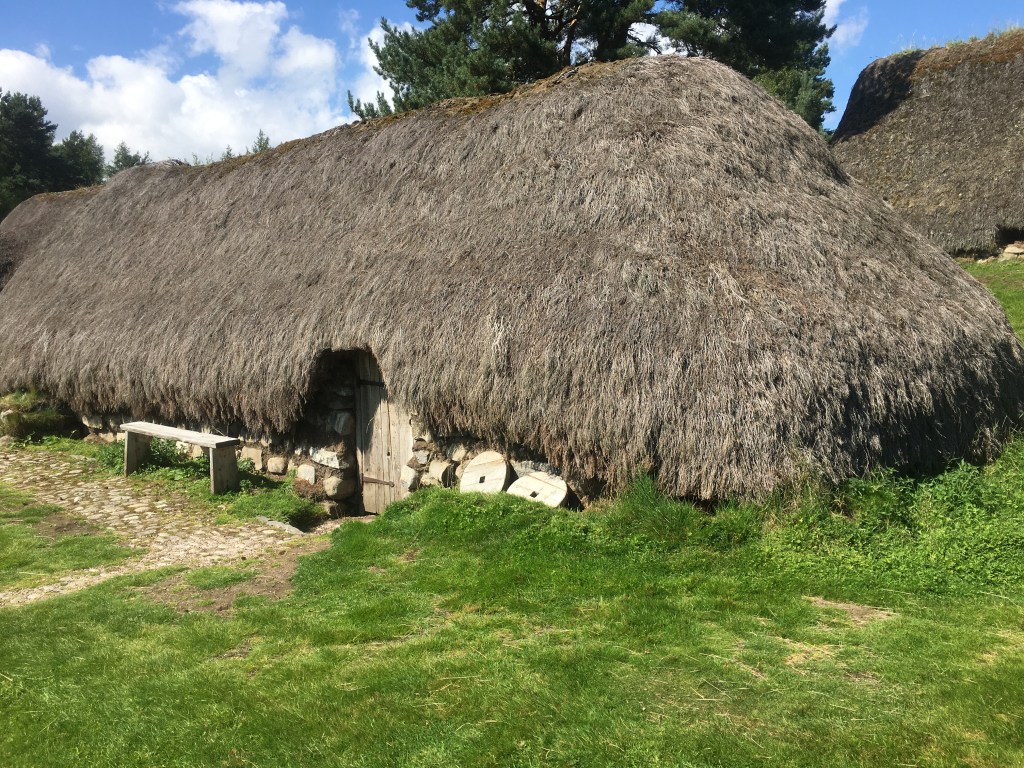
The buildings were made from natural materials, as they would have been then: timber frames, walls of turf, a thatched roof of locally collected vegetation like heather, bracken or reeds.

One example of a 1730’s house. This was one of the larger houses, which was interpreted as the home of the Tackman, or the principal tenant. The Tackman collected rent from the other tenants to pay to the local laird, their landlord.
Another home in the village. This one was built into the side of the hill.
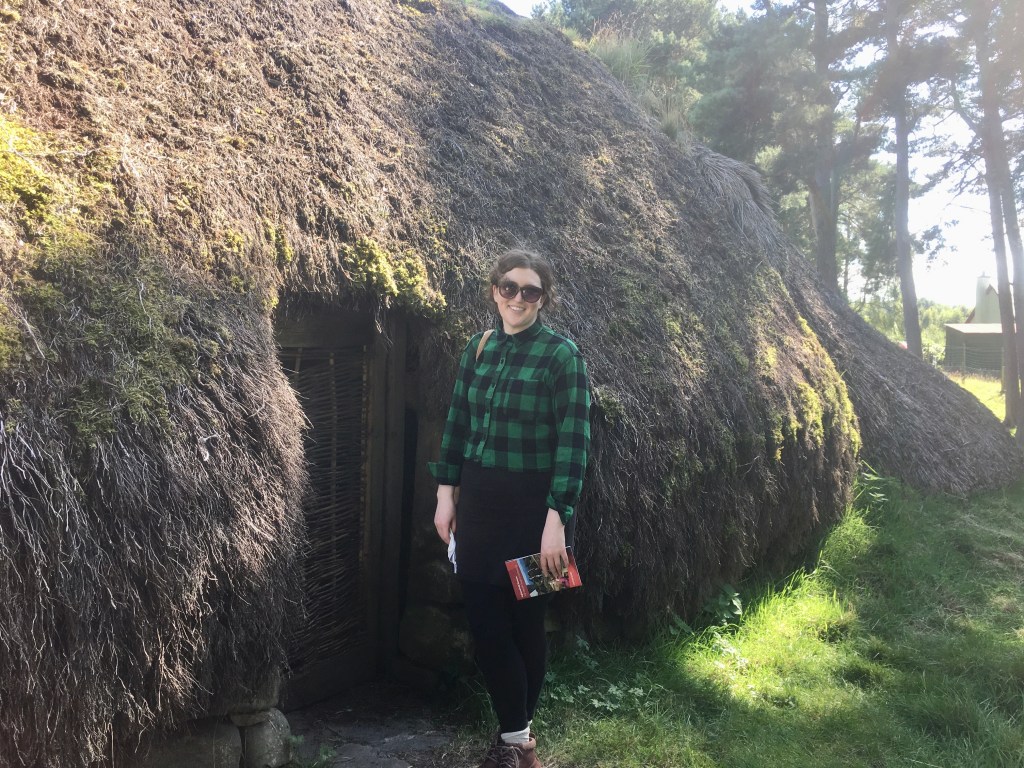
Me outside another house in Baile Gean. (I was wearing a mask, but took it off briefly for the pic, since we were outside.)

I’d definitely love to come back and see this village again, because I do think that it would be a very different experience. For this trip, I’d purchased a guidebook at the entrance of the museum, which proved more or less essential in learning more about these buildings. If I hadn’t had that, it would have been quite difficult to figure out what I was looking at – given the lack of signs around the buildings themselves. So I’d definitely recommend grabbing a guidebook, especially if you’re visiting during Covid, when fewer interpreters will be about. The book was only a fiver and considering that entrance to the park is FREE, it’s well worth it, to get that extra bit of information.

Overall, I was surprised that my favorite thing about my visit to The Highland Folk Museum actually wasn’t the 18th century portion of the museum, but some of the 1930’s and 1950’s buildings (which were recreated in much more detail, possibly because these artifacts are simply so much easier to come by than ones from the 18th century).

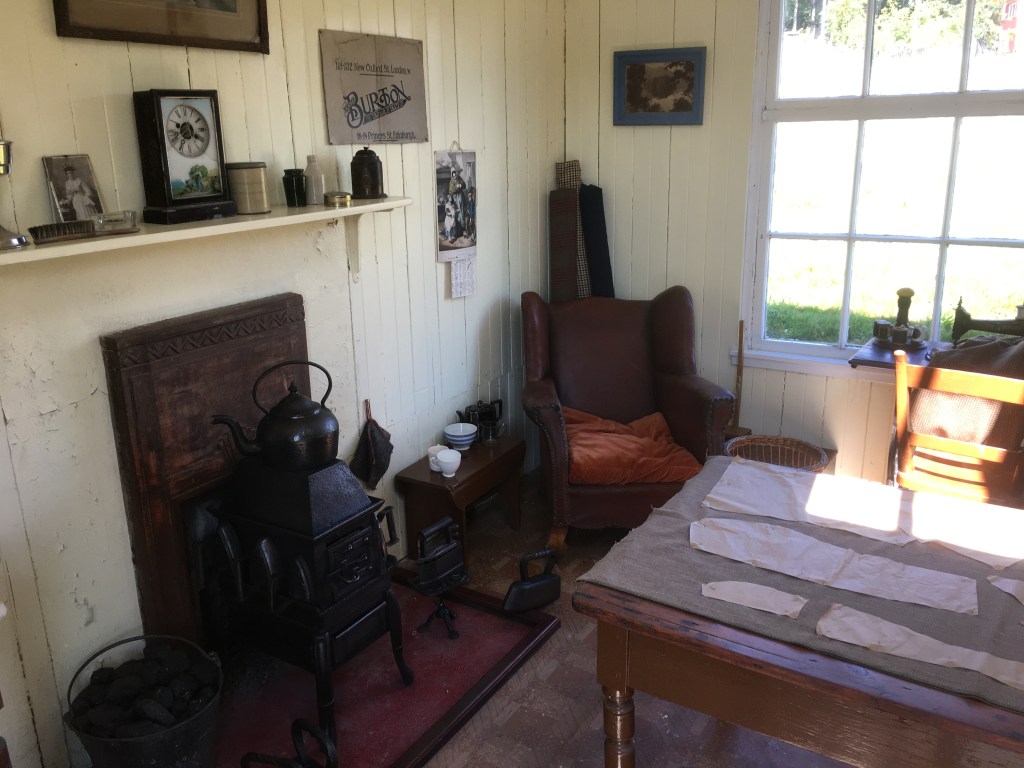
The tailor’s shop was a particular highlight for me (As a side note, I’ve been watching a lot of Star Trek Deep Space Nine recently and the tailor’s shop also made me think of my favorite fictional ‘tailor’, Garak. And if you understand my Deep Space Nine reference, then you’re amazing and we definitely should be friends). The tailor’s shop was originally build by Andrew MacPhearson for his son Donald on his return, wounded, from WWI. It was recreated to look as it had in the 1930’s.

The front room of the tailor’s shop
The office/construction room of the shop

All in all, it was a fascinating visit and, as I mentioned earlier, I would love to go back and see it again. There was so much stuff I missed! If you go yourself, I’d really recommend allowing at least three hours to explore. It’s a massive property and there’s so much to discover. It would make a great day or half-day trip, if you’re staying in Fort William, like we were. Plus, it’s free to visit!

More information about the museum and how to book a time slot to visit can be found here.

Thanks so much for reading and I hope you enjoyed seeing the photos of the trip. Let me know which elements you liked best and stay tuned for more 18th century explorations coming up, as I’ll be chatting about a visit to Culloden Battlefield in a future post!

‘Madeira Mondays’ is a series of blog posts exploring 18th century history and historical fiction. Follow the blog for a new post every Monday and thanks for reading!
Madeira Mondays: Edinburgh’s Royal Botanic Garden

One of the things that I love most about living in Edinburgh is that there are always more historical sites to visit. Even though I volunteer as a tour guide at The Georgian House and have visited most of the major historical sites in the city (Edinburgh Castle, Holyrood Palace etc.), I’m a little embarrassed to admit that, until last week, I’d never been to Edinburgh’s Royal Botanic Garden.

This is a particularly striking omission on my part given that 1 – I love learning about Edinburgh’s history and 2 – I love gardens. I used to spend lots of time in Glasgow’s Botanical Gardens, when I lived there, and I’ve even co-led a writing workshop there, a couple years back. Basically, it was high time that I checked out ‘the Botanics’ (as everyone here calls the garden) and as soon as they opened back up after lock-down, I booked a slot to go and visit. (Side note: It’s free to visit, but you do have to book a time slot at the moment).

The history of the garden dates back to 1670, when it began as a small patch of ground in Holyrood Park, overseen by two intellectually curious and well-travelled doctors, Robert Sibbald and Andrew Balfour (Sibbald was also the first professor of medicine at the University of Edinburgh). As you might know, Edinburgh was a site of Enlightenment learning and particularly medical expertise in the 17th and 18th centuries.

In 1683, James Sutherland wrote a catalogue of all the species of plants in the garden at that time: Hortus Medicus Edinburgensis : or, a catalogue of the plants in the Physical Garden at Edinburgh.

Edinburgh Plant Catalogue

The Royal Trust / Copyright: Her Majesty Queen Elizabeth II 2020 (Photo accessed via The Royal Trust Collection Website)

If there’s one thing that I know about the Enlightenment, it’s that those guys loved – for better or for worse – to find and catalogue stuff. So it’s really no surprise that, as the British Empire expanded, the gardens expanded too. It changed locations twice and ended up at its current location, at Inverleith, in 1820. Imagine having to transport all those plants!

I wish that I could tell you that I learned lots more about the Botanics’ history during my trip there, but, quite frankly, I was too busy enjoying being surrounded by all the diverse plant life and catching up with the friends I met, who I hadn’t properly seen for months (we had a long period of strict quarantine in Scotland). It is truly an immense garden – and you could easily spent a half-day (or full day!) wandering around.

IMG_0599

A hedge maze in the gardens. Apparently the little building on the other side of it is full of all kinds of shells (my friends told me), but it’s closed at the moment.

I particularly enjoyed seeing the enormous tree fossil, outside a Victorian greenhouse (which was, wisely, still closed!).

Another highlight for me was the Chinese garden and I found the bridge and the tranquil waterfall so relaxing.

IMG_0606

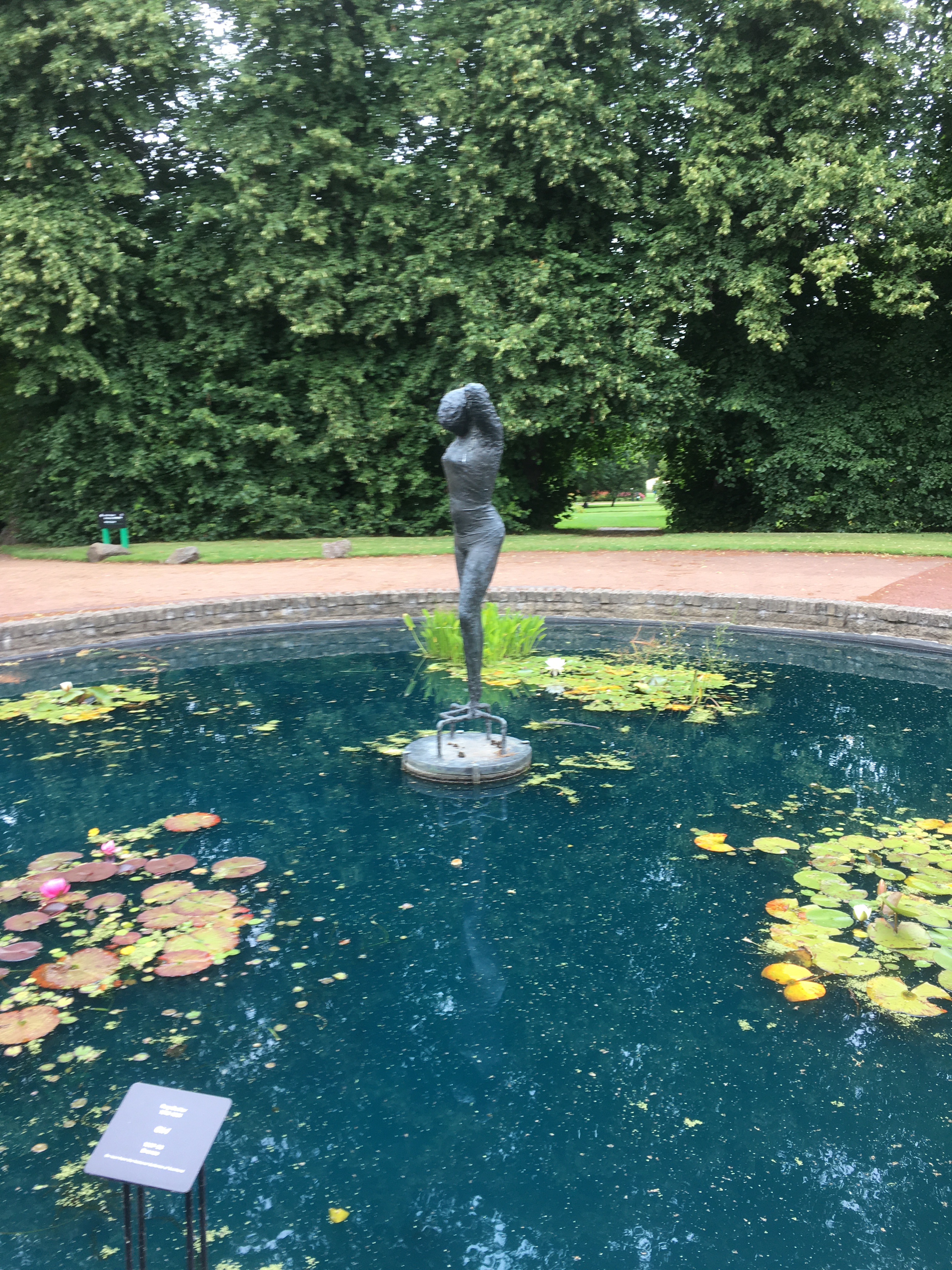
There were plenty of benches for sitting and socially-distanced chatting, as well as some lovely fountains.

IMG_0610

And you could also find helpful historical tidbits scattered throughout too, for those, like me, who enjoy that kind of thing.

IMG_0603

I’m certain that I only scratched the surface of the garden (the top layer of soil, if you will) and its 350-year-old history, so I’ll definitely be going back soon. I also have a historian friend who studies 18th century botany, so let me know if there’s anything in particular you’d be curious to learn about.

If you’re ever in Edinburgh in the future, it’s well-worth a visit and I know I’ll be taking the next group of friends or family who come to visit me here.

IMG_0613

Hello from the Botanics!

I hope that you’re keeping well and that you’ve been finding things to take solace in and enjoy, during this strange time.

Recommended Reading:

‘Madeira Mondays’ is a series of blog posts exploring 18th century history and historical fiction. Follow the blog for a new post every Monday and thanks for reading!


Madeira Mondays: The Unbinding of Mary Reade (Book Review)

Let’s talk about pirates!

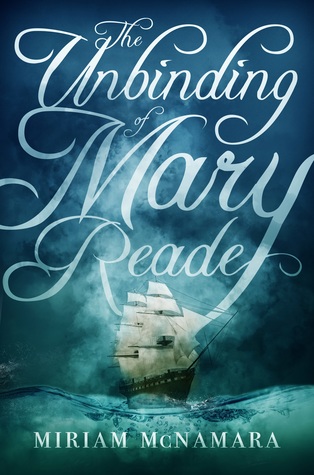
I was super excited when I checked out The Unbinding of Mary Reade from my local library a couple of weeks ago. This historical fiction novel by Miriam McNamara came out in 2018 and it’s inspired by the life of a real 18th century (female!) pirate by the name of Mary Read. I knew nothing about Mary Read going into the book, but I’ve since learned a little bit about her and her status as one of the legendary English pirates of the early 18th century, the so-called ‘Golden Age of Piracy’.

We’ll come back to the real historical Mary’s life in a moment, but I went into this book without any of that knowledge and I’m reviewing it now as a novel. And, unfortunately, as a novel, I don’t think that it wholly succeeded, despite the super exciting premise of a queer lady pirate going on an adventure in the Caribbean (cue Pirates of the Caribbean theme music…).

I’ll start with some of what works about the book. At its core this book is really a romance, between Mary Reade and another female pirate called Anne Bonny (also a real person). And some of the sensual scenes are really well written without being explicit – it’s a Young Adult book, so it’s still appropriate for that audience. Bodies melt into each other like ‘candle wax’ and the characters are always covered in gritty sand (okay, so maybe that’s not sensual, but it is specific and probably realistic). In general, the setting was well described – colorful parrots fly overhead, the sea is shining under the hot sun etc.

I also liked the character of Anne Bonny, the female pirate who our protagonist Mary becomes enamored with. Anne was an excellent combination of manipulative and vulnerable, capable and helpless, totally over-confident at times and totally self-pitying the next. She’s gorgeous and bold and brash. As a poor woman in the 18th century, the odds were not in her favor and she has learned to manipulate the men around her and play the system, using her sexuality to gain safety and favors, but we see her coming up against the pervasive lack of fairness and unequal treatment of women at that time, which all works great.

Unfortunately though, the cons outweighed the pros for me with this book. My main issue is that there wasn’t a lot of pirate stuff in it. No buried treasure? Maps? Sword fighting? None of that? These are things we expect from the genre. I wanted a queer pirate treasure island, I guess – whether or not that’s historically accurate is another matter (it probably wasn’t) but you come to expect some of those trappings from pirate stories. A lot of pirate life probably was waiting around for opportunities to arise, as the characters do in this book, but that’s not as fun to read about.

Also I wasn’t a fan of the book’s structure. It flashes back from past to present, in alternating chapters, which was often confusing and didn’t add much. I think those flashbacks would have been better if they had simply been woven into the main body of text, not set off in separate chapters.

Additionally, the dialogue was often a little clunky and on-the-nose (there’s a bit when two characters scream at each other: ‘You don’t understand what it’s like to be me!’ ‘Well you don’t understand what it’s like to be me!’). And throughout the text there didn’t seem to be much of an attempt at taking on an 18th century manner of speaking. Often I prefer a lighter hand when it comes to adopting a historical voice, but I didn’t feel like McNamara was enjoying or reveling in any of the amazing language of this time period, which was full of very distinctive and colorful phrases.

Overall though I think my main criticism was quite simply the lack of adventure. I think buried treasure is mentioned but then it’s dropped. I would have preferred the primary driver of the plot to be something non-romantic (Mary wants to find treasure and get rich, for instance) and then have the romance with Anne Bonny growing slowly throughout their adventure together. But that’s also an entirely different book. 

When I went to read a bit about the real Mary Read after finishing this book, I was also a bit taken aback by all the changes McNamara made to her life. Not because the author doesn’t have license to change whatever she wants (of course she does!), but because I just don’t understand why some of these changes were made. Why change so much? The real Mary was married before she became a pirate, for instance, which I think could have made for quite an interesting backstory (although possibly not as appropriate for YA?).

Also, as a side note, I’m unclear why the character’s name is spelled with an ‘e’ in this book (Reade) but most sources I’ve found online refer to her as Mary Read (without the ‘e’). I’m guessing these are just variations of the spelling of her name (it was fairly common in the early modern period, especially when many people still couldn’t write, to have multiple spellings of your name). But I’m just curious!

To sum it all up, in the end I’d still recommend this book if you’re after an unconventional love story between two women, but not if you’re looking for a pirate story. It was a disappointing read because I just have this writerly feeling (I could be wrong!) that McNamara was one or two drafts away from this book being really great, but that what we’re reading just isn’t quite finished yet. Which is sad because it’s such a fascinating story about a really unique historical person. I’d certainly pick up another book by her in the future.

What have you been reading recently? Any suggestions?

PS Today’s Featured Image is ‘Capture of the Pirate, Blackbeard, 1718’, accessed via Wikipedia

‘Madeira Mondays’ is a series of blog posts exploring Early American history and historical fiction. Follow the blog for a new post every Monday and thanks for reading!


Madeira Mondays: The Surprisingly Interesting History of Ketchup

Ketchup is a staple in many American households. As someone who grew up in the States, I can attest to its ubiquity and our fridge always contained at least one half-used bottle of Heinz. And we were not alone – surveys show that 97% of kitchens in the US contain a bottle. That’s a lot of ketchup! It’s clearly a household staple for many and it’s also a well-known component of American fast food (burgers and fries and ketchup).

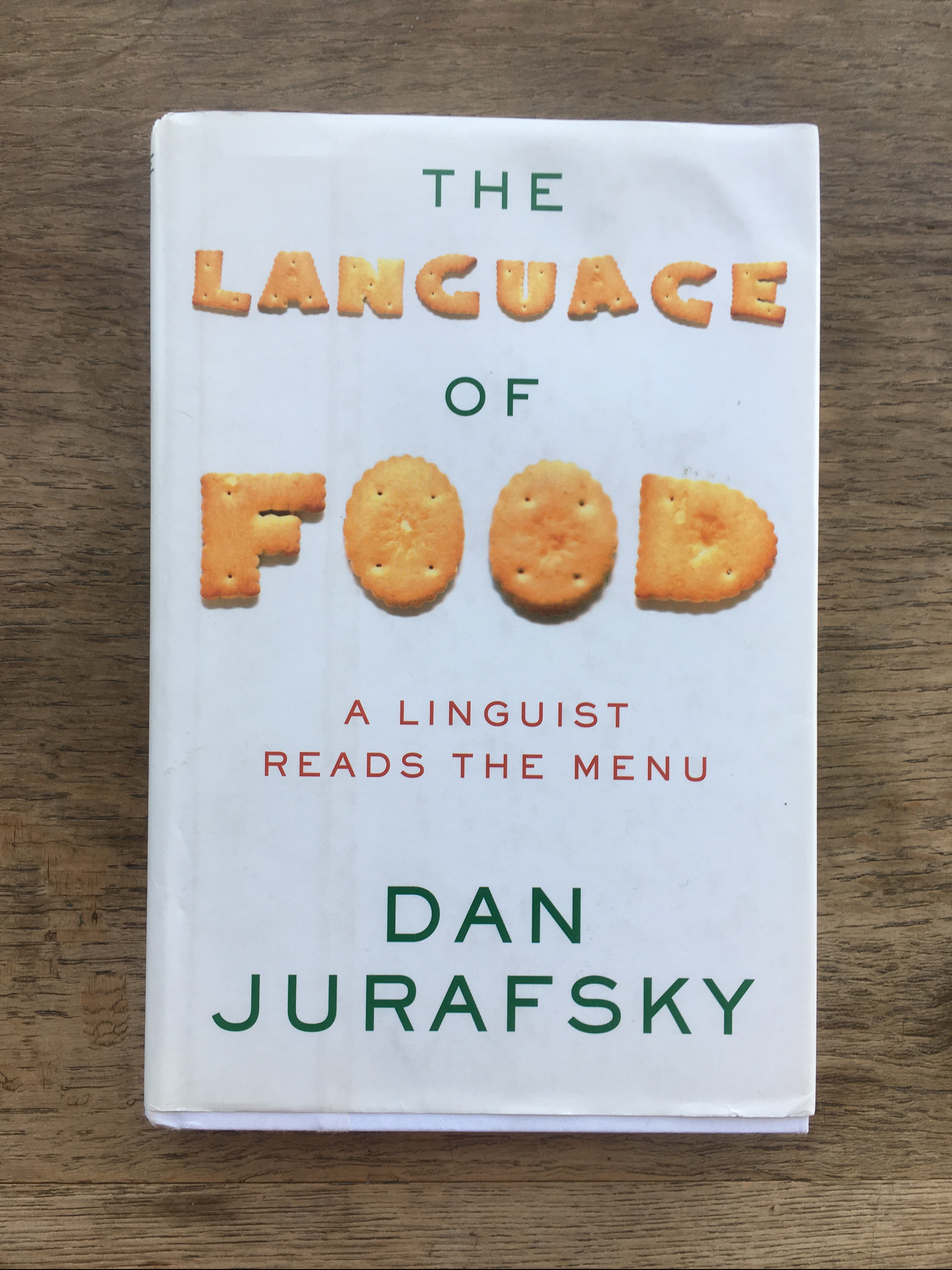
But while I was reading Dan Jurafsky’s book The Language of Food a few weeks ago, I learned about the interesting global historical origins of American tomato ketchup, a history involving international trade, exploration and a heck of a lot of fish.

IMG_0488

Jurafsky is an American linguist at Stanford University and his book overall looks at how the language we use to describe food has evolved, and also how the foods themselves have evolved over time. ‘A surprising history of culinary exchange-a sharing of ideas and culture as much as ingredients and flavors-lies just beneath the surface of our daily snacks, soups and suppers,’ the blurb promises. As a lover of food, language and random historical trivia that you can use to annoy people at dinner parties (just kidding, kind of), I wanted to read it. It’s a fun read and there are chapters on, for instance, ‘Why Ice Cream and Crackers Have Different Names’, but the story that really caught my eye was the history of ketchup. I couldn’t believe it had such a complex and fascinating origin! So where does ketchup come from?

Our story begins in Ancient China (bet you weren’t expecting that!)…

Thousands of years ago, the people living in Southern China had to come up with a solution to preserve the fish and shrimp they caught. So they salted and fermented the seafood into rich, savory pastes. This fermented fish became widely adopted throughout ancient China and people even started fermenting other things too (like soybeans, which led to an ancient version of miso).

Fast forward to the 16th century, when Southern China was a trade center and a bustling port region, with traders coming and going. As Fujianese traders (Fujian is a province in Southern China) and seamen set out, they took their ke-tchup (‘preserved-fish sauce’ in Hokkien – the language of southern Fujian and Taiwan) with them. These Fujinese people went to Indonesia, Malaysia, and the Philippines. Then British and Dutch merchants arrived to Southeast Asia, looking for spices, textiles and porcelain – things they could sell at a high price back in Europe. There, the traveling Brits and Dutch developed a taste for arrack, an early ancestor of rum (made from fermented rice together with molasses and palm wine), and also for this new food called ke-tchup. 

The stuff those European sailors were eating at sea was bland (salt pork, dry crackers) so they livened it up with this new tasty sauce, bought off Chinese merchants. (There are a lot of different spellings of ketchup, by the way, as a result of the English, Dutch and Portuguese speakers trying to write down the Chinese word with our Roman alphabet. So we get ‘ke-tchup’, ‘catsup’ ‘catchup’ etc.)

By the early 18th century, the British were making and selling ketchup themselves. Charles Lockyer, a trader for the East India Company who went to Asia in 1703, writes in his Account of the Trade in India: 

Soy comes in tubs from Japan, the best Ketchup from Tonqueen [Northern Vietnam]; yet good of both sorts, are made and sold very cheap in China…I know not a more profitable Commodity.

He doesn’t know ‘more profitable Commodity’!

So this guy would buy tubs and tubs of ketchup (which is still fish sauce at this point, by the way!), bottle it and sell it for high prices to rich people in England. So now ketchup has arrived to England. But because it was too expensive for ordinary people in England and the colonies to afford, people started to make their own.

Here’s a recipe that Jurafsky has found from a 1742 London cookbook, in which (Jurafsky points out), the fish sauce has already taken on a British flavor, by adding shallots (‘eschallots’) and mushrooms into the mix. But there is still fish in it – note the anchovies!

Mushrooms soon became the MAIN ingredient.

This other recipe, demonstrated by historical interpreter John Townsend on his YouTube channel, shows you an example of an 18th century ‘mushroom ketchup’.

From 1750-1850, the word ketchup meant a dark sauce typically made of mushrooms (like the one Townsend makes in the video!). So the fish is starting to fade away, but we still don’t have any tomatoes. THAT comes in in the 19th century and probably starts in Britain. Jurafsky has found a recipe from 1817 for ‘Tomato Catsup’ (and, of course, tomatoes originated in the New World, so effectively this British recipe blends a food from the Americas into a dish first invented in China).

By the mid-1850s, a uniquely American ketchup started to develop (thicker and sweeter than the British version). By the 1910’s Heinz was making and selling it. (Their spelling of ‘ketchup’ instead of ‘catsup’ also consolidated that as the most popular spelling in America). Heinz dramatically increased the amount of vinegar to preserve it longer.

IMG_0494

So there you have it! Our modern tomato ketchup…with its origins in Ancient China.

So what does this all…mean? Like, why does this stuff matter?

Well, if you’re me, it matters simply because it’s interesting! The foods that we eat, that we might think of as typically ‘American’, for instance, are often the product of complex human migrations and a variety of factors and influences that we don’t even know about. We’re eating history. Global history, at that.

According to Jurfasky, it matters also because ‘ketchup’s history offers us new insights into global economic history’. He explains that, if you subscribe to a traditional Western model of Asian economics, China turned inward around 1450 and became isolated and economically unimportant, until the West brought Asia into the world economy in the 19th and 20th centuries. But, Jurafsky says: ‘the vast production of trade of ke-tchup (not to mention arrack and less delicious goods like textiles and porcelain) well into the eighteenth century tell a different tale’. While the Chinese government might have officially banned sea travel, these bans were ignored and Chinese sailors continued to go out and trade on a massive scale. British merchants (like our friend Charles Lockyer from before) talked of fierce competition with Chinese traders and harbors crowded with Chinese ships. China was an economic powerhouse by the late 17th century and European sailors went to Asia generally because that’s where most of the world’s trade took place. Europeans merchants flocked there to buy silks, porcelain, arrack, and ketchup.

So, in effect, every time that you put ketchup on your hamburger, you’re a part of that story. A story of European and Chinese merchants, of British cooks and American companies. A story of Ancient Chinese fisherman who wanted a way to preserve their catch of the day. I don’t know about you, but I think that’s pretty cool.

Recommended Further Reading/Viewing:

PS Today’s Featured Image is ‘Trout, Grouse, Tomatoes’ from Robert D. Wilkie, 1877. It can be found in the Boston Public Library and I accessed it via Wikimedia.

‘Madeira Mondays’ is a series of blog posts exploring Early American history and historical fiction. I’m not a historian, but an author and poet who is endlessly fascinated by this time period. I am also currently writing/researching a novel set during the American Revolution and recently finished a Doctorate of Fine Art looking at how creative writers access America’s eighteenth-century past. 

Follow the blog for a new post every Monday and thanks for reading!


Madeira Mondays: 18th century fashion on RuPaul’s Drag Race

Every Saturday morning, I watch RuPaul’s Drag Race.

I look forward to it all week and the campiness, silliness and joy that the show brings has really given me a lot of happiness during this difficult time. My partner will attest to this, but I get very into the show as I am watching it – usually curled up with a blanket and a cup of coffee – cheering on my favorite queens as they ‘lip sync for their lives’. These performers can sing, dance, act, design clothing, write song lyrics etc. etc. And one of my favorite aspects of the show is seeing all the clothes! So imagine my happiness when one of my favorite queens, Gigi Goode, rocked not one but TWO 18th century inspired outfits this season!

In this post, I wanted to take a closer look at these outfits and reflect a bit on how Gigi’s fashion interprets the 18th century for a modern drag/theatrical context. (Also I just want to talk about how cool these outfits are!!)

For those who haven’t seen it, RuPaul’s Drag Race is an American TV show where drag queens vie for the title of ‘America’s Next Drag Superstar’. The contestants have to compete in a series of challenges including singing challenges, acting challenges, fashion and design challenges etc. It’s at once a parody of other reality TV shows (e.g Project Runway, America’s Next Top Model), or at least that’s how I’ve always read it, AND very much its own thing.

Now drag as an art form has a rich history and while it’s something that I’m interested in, I don’t pretend to have a vast knowledge of modern drag culture (I did take a class during my undergrad degree which was mostly about drag and gender on the Renaissance stage though, so if you want to talk drag in SHAKESPEARE’S day, I can do that!). But Drag Race combines lots of elements I love: theatricality, humor, sly satire, etc. It’s deeply fun while at the same time deeply subversive. And it often references pop culture and occasionally history, which brings me back to Gigi’s outfits!

Gigi is known as a ‘look queen’ which means her strengths lie primarily in her fashion choices (although she is a very multifaceted performer, as we’ve seen throughout the season). I knew from the moment that she appeared on the show in a chic pirate outfit, complete with tricorne hat, that I was going to enjoy her theatrical style.

IMG_0459

Gigi reprises her pirate outfit on last week’s episode

Gigi’s outfits always have a sense of drama and story about them. In fact, her mother is a costume designer and they often collaborate on Gigi’s looks. Gigi’s inspiration comes not only from the fashion world but from elsewhere too, as she discusses in this Vulture interview:

I like to think that my drag is inspired by things that aren’t necessarily in the world of fashion. I’m really heavily inspired by intangible women, cartoon women like Daphne from Scooby Doo, who I just did a look on. Things like careers, and household objects, anything can inspire me.

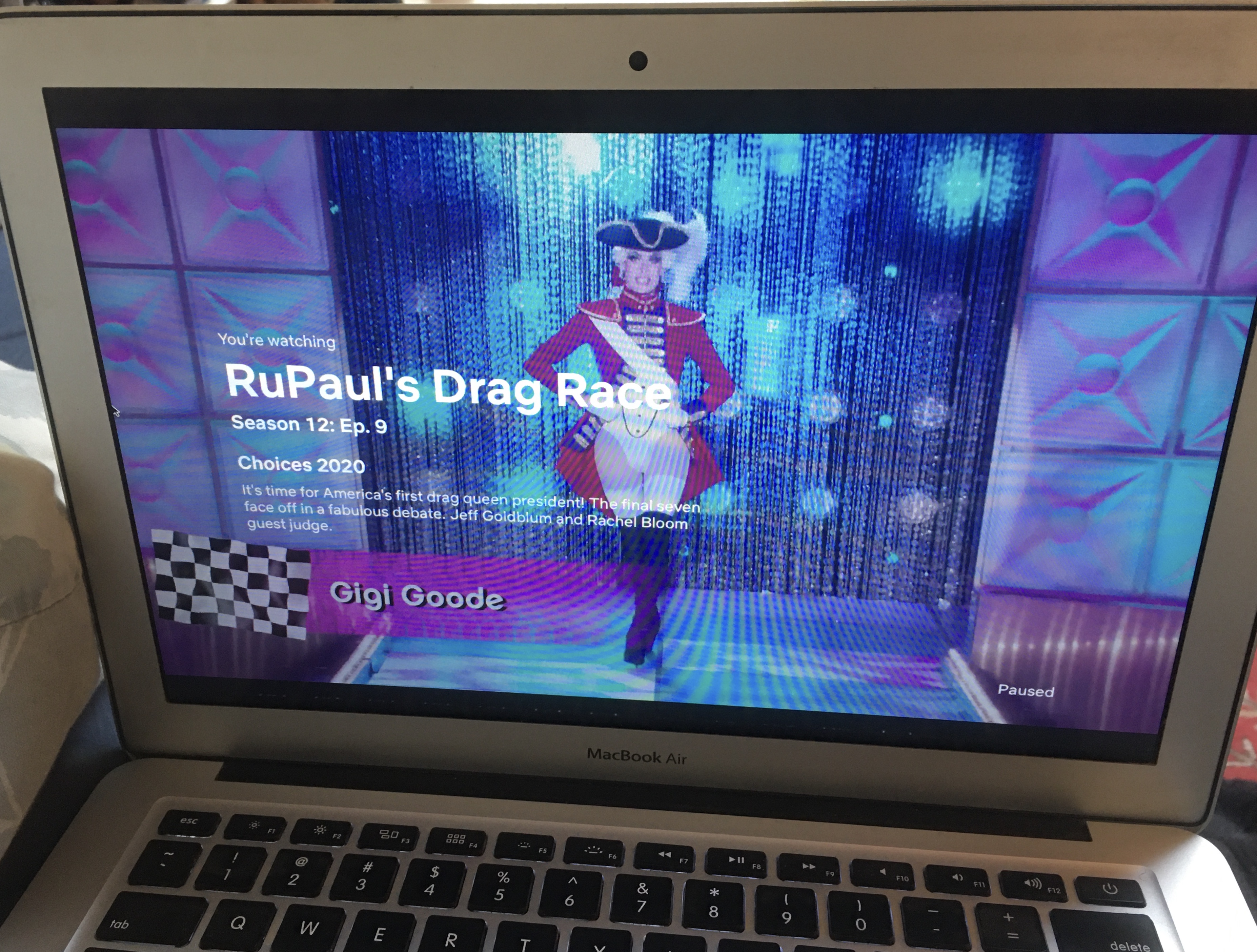
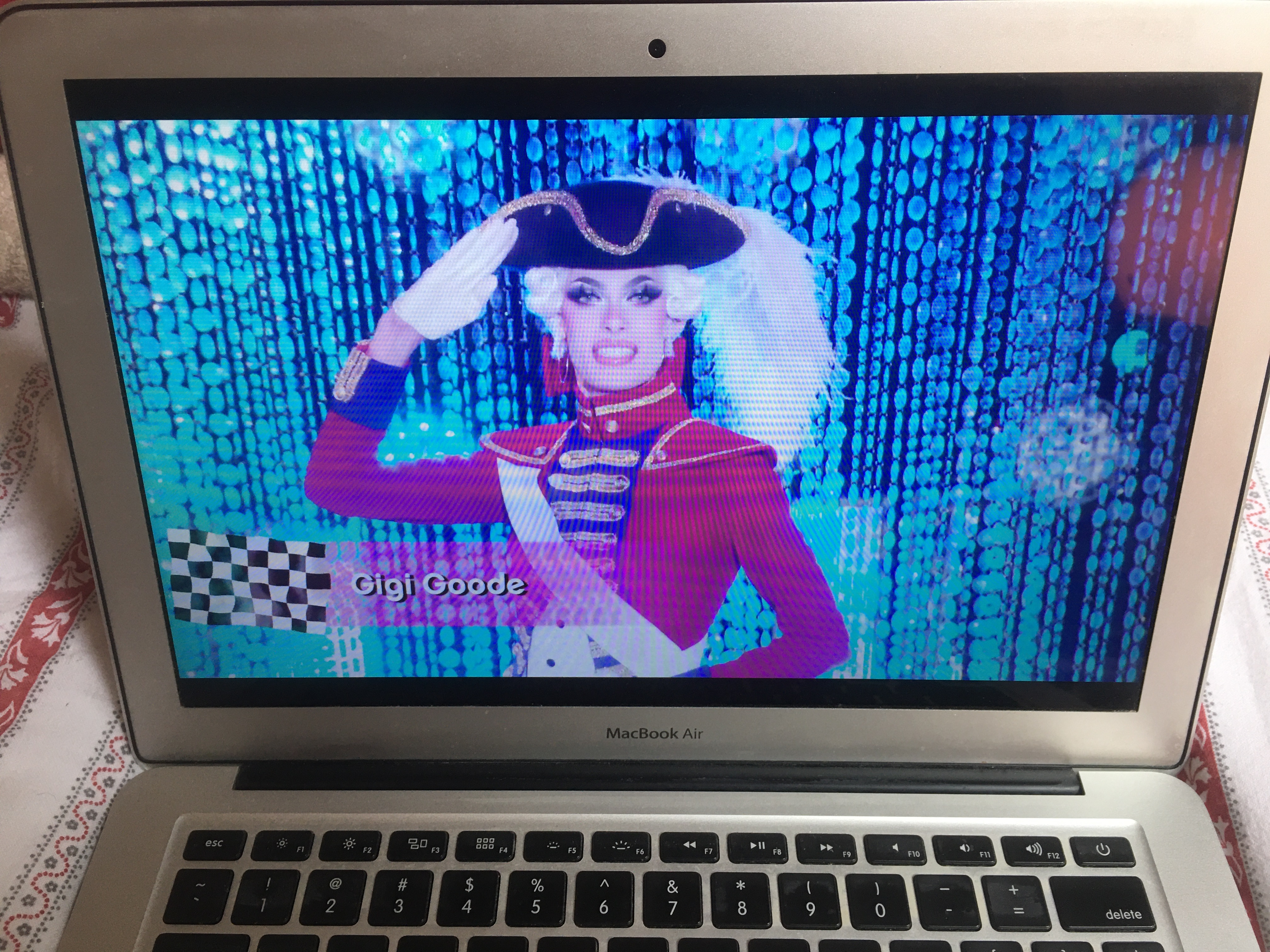
And apparently the Revolutionary era provided one of those inspirations. In Season 12’s Episode 9, ‘Choices 2020’, on the runway Gigi strutted out dressed like an 18th century redcoat soldier. In her voiceover, she says: ‘I’m giving you head-to-toe Quaker Oat’s fantasy’ which made me chuckle (she’s referencing, I presume, the label of this brand of oatmeal). ‘My hair is period, historically accurate,’ she adds. ‘I’ve got a red velvet coat. Bitch, I am it.’ The judges made their quips. The fabulous Rachel Bloom, guest judge for that week, said: ‘Talk about a John Hancock. Or lack thereof.’ ‘She’s crossdressing the Delaware,’ Ru remarked.

IMG_0416 2

Gigi in Season 12, Episode 9: ‘Choices 2020’

Bloom also wondered, during her critique at the end of the show, if Gigi was dressed as an American officer or as a redcoat. ‘Maybe you’re Benedict Arnold,’ she mused, referencing the infamous American officer who defected to the British.

These are the sorts of outfits that Gigi’s look is alluding to, and I’m guessing you can see the resemblance! (The fellow on the left is not in military regalia, whereas the guy on the right – British General Burgoyne – is. But you get the overall look!)

I enjoyed so many things about Gigi’s outfit, but in particular the enormous white feather sticking out of the tricorne hat. In general, I think it was quite cool that Gigi designed the outfit based on 18th century men‘s fashion, not women’s, because this was a time period when much more flamboyant, colorful and ornate outfits were the norm for men, as opposed to now, when the black and white suit still reigns supreme. Why can’t we bring back looks like these for men’s fashion, I ask?

I also liked the little nods to period details in Gigi’s look, such as the ribbons tying up her stockings (that’s really how people kept their stockings up) and, of course, the white wig. Men at this time would have often worn wigs and, as Gigi notes, this one perfectly suits the period style. I also liked the enormous red bow tying back the wig. An 18th century gentleman probably wouldn’t have worn an enormous red bow like that, but rather a simple black ribbon tying back his wig, but it all contributes to the sense of heightened theatricality (an 18th century gentleman wouldn’t have worn black stiletto boots either!).

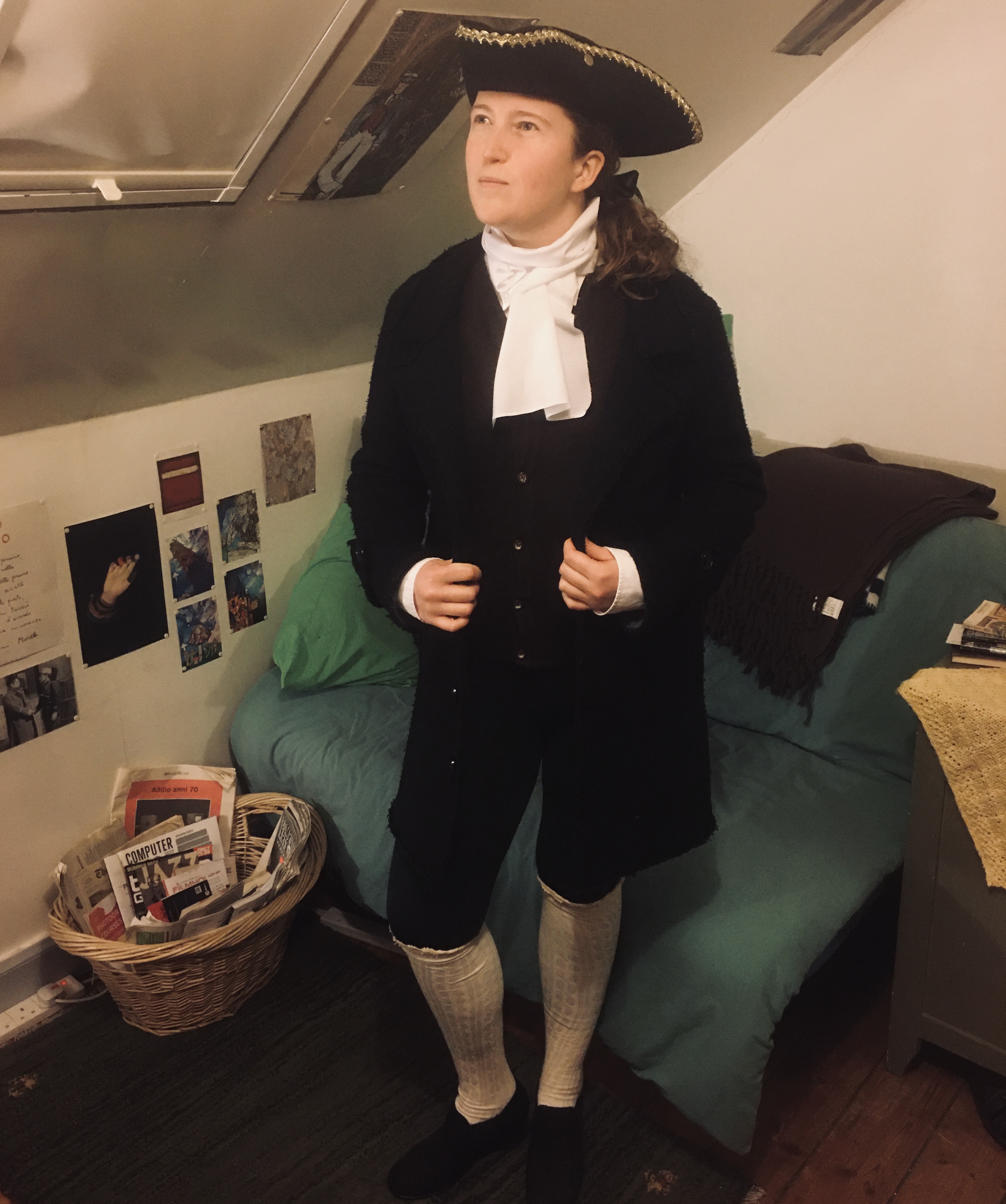
Seeing Gigi’s outfit also made me think of the time that I crossdressed to give an academic presentation at Trinity College Dublin last year, on representations of John Adams in popular media.

IMG_9715

My ‘John Adams’ outfit last autumn for Trinity College’s HistoryCon 2019

Anyways, I tip my three-cornered hat to Gigi, for making this history nerd’s day, and if my historical fiction ever gets adapted into film, I think that Gigi should play everyone.

IMG_0462

Any other fans of Drag Race out there remember this outfit? Which has been your favorite outfit (or favorite Queen?) of the season? Who are you rooting for in the finale? (I think it’s obvious who I’m rooting for!)

Recommended Reading/Viewing:

‘Madeira Mondays’ is a series of blog posts exploring Early American history and historical fiction. I’m not a historian, but an author and poet who is endlessly fascinated by this time period. I am also currently writing/researching a novel set during the American Revolution and recently finished a Doctorate of Fine Art looking at how creative writers access America’s eighteenth-century past. 

Follow the blog for a new post every Monday and thanks for reading!
 

Madeira Mondays: A cheap and delicious 18th century recipe

I love potatoes. Mashed potatoes, boiled potatoes, baked potatoes, potato chips…they’re all great.

Today I wanted to share with you a super simple recipe for potato pancakes from the 18th century which I discovered on the brilliant YouTube channel Townsendswhere they recreate 18th century recipes. As the host John Townsend says in his introduction to this recipe:

Potatoes were an important part of the diet of the 18th century in Great Britain and in North America. They were important especially for the poorer sort of folks who didn’t have those expensive foods available. 

The recipe Townsend uses is originally from 1732 and, as he mentions in the video, it was a recipe you might use if you were eating a lot of potatoes and wanted to vary up how you cooked them. Or if you had old potatoes lying around. Or if wheat was too expensive. Apparently this recipe shows up in lots of different cookbooks of the time (he quotes from Primitive Cookery from 1767, which was a recipe book filled with inexpensive recipes).

Like everyone else, I’ve been in quarantine and thought now would be the perfect time to give this super affordable and tasty looking recipe a go!

If you’ve been reading this blog for a while you’ll know that I love making 18th century food and drink, partly for book research and partly because it’s fun! Sometimes that turns out really well, like the time I made syllabub. Sometimes, the results are less appetizing, like the time I made ‘Flip’!

These potato pancakes were a moderate success (I’ll tell you more on that below), but, for now, let’s get into how I made these. This is my version of the recipe, inspired by the 18th century recipe I mentioned above and from Townsend’s video. Enjoy!

Potato Pancakes from 1732

Ingredients:

  • Some potatoes (it really depends on how many cakes you want to make. We used three medium sized potatoes)
  • Salt
  • Milk (about 1/4 cup)
  • Butter

And that’s it. If you think it sounds like we’re making mashed potatoes, you’re pretty much right!

How to make them

Step 1: Peel the potatoes and cut into bite-sized pieces.

IMG_0352

Step 2: Boil the potato pieces for about 15 minutes or until they’re tender. Then drain and let them cool.

Step 3: Mash them!

IMG_0357

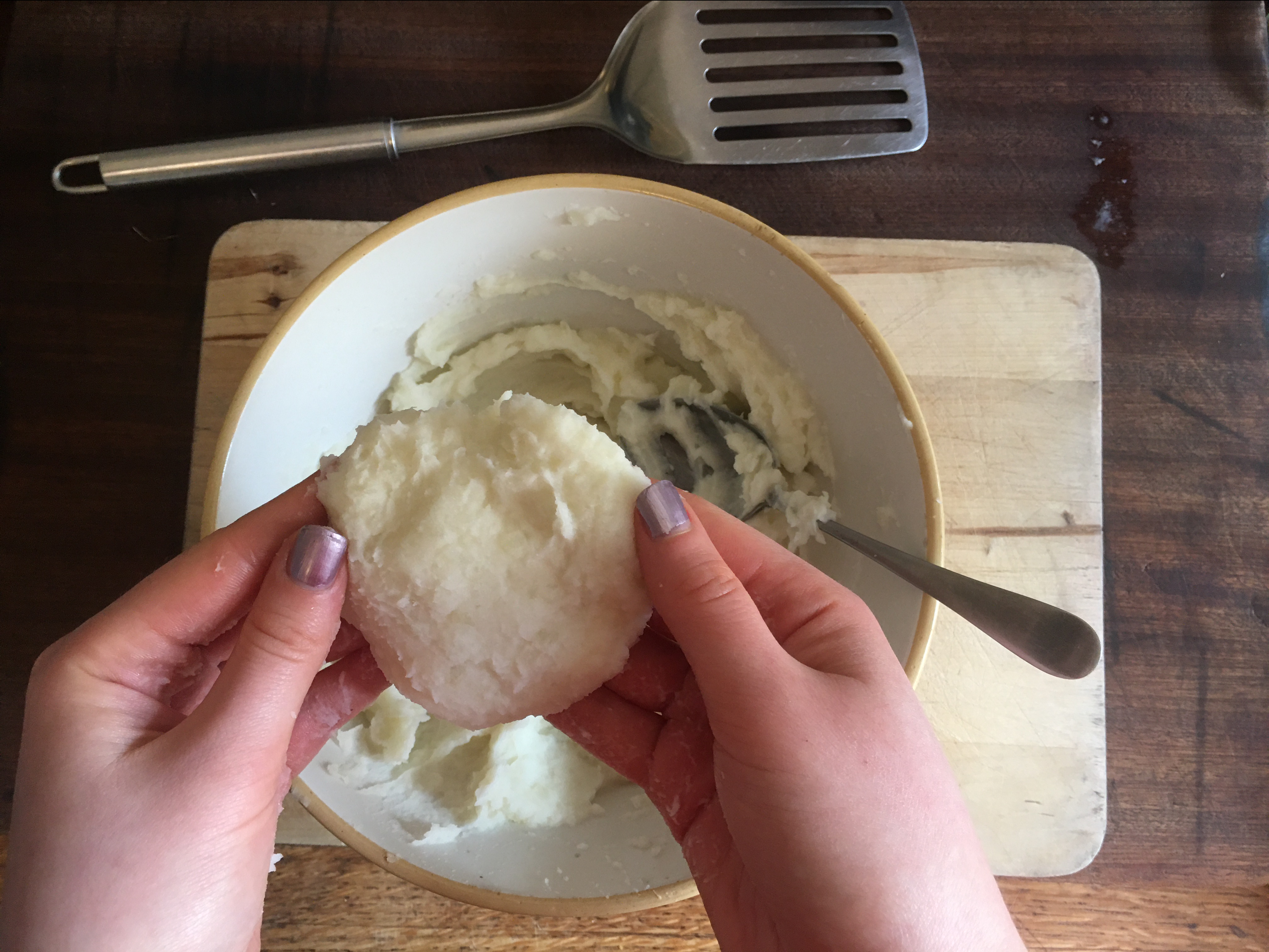
Step 4: Add a big pinch of salt and a splash of milk (maybe like 1/4 cup or a teeny bit more, depending on how many potatoes you have). NB Don’t put too much milk here. You want the potatoes to retain a doughy consistency and if you add too much milk, they’re gonna be too runny).

Step 5: Add butter to a hot pan (like you’d do for typical pancakes)

Step 6: Flatten the potatoes into little pancakes.

IMG_0358

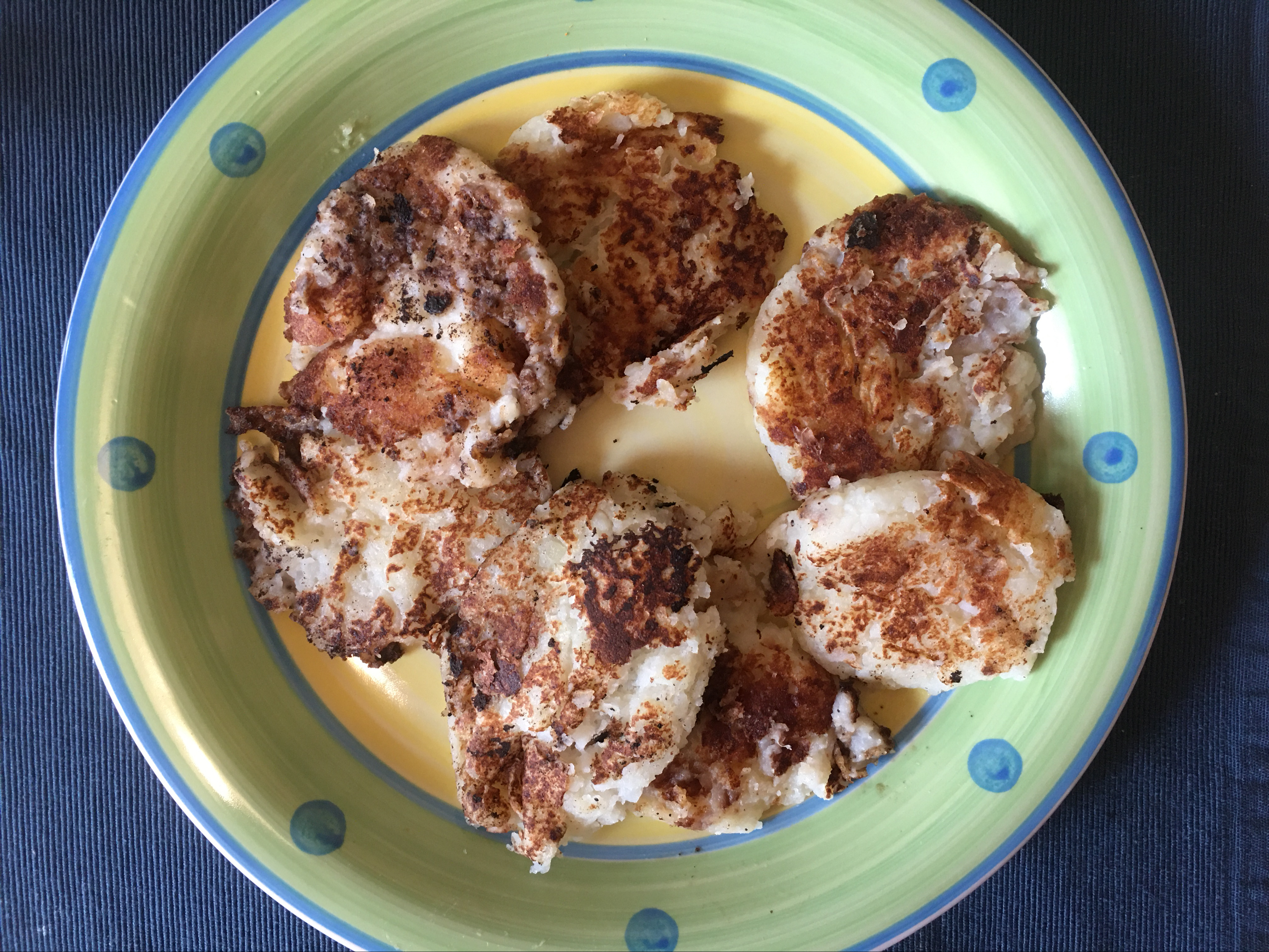
Step 7: Then put them into the pan. Flip them like pancakes after a minute or two on each side. They should be golden brown.

And that’s it! Serve hot.

IMG_0363

*

As you can see, they turned out pretty well in the end! They were a bit like hash browns, only more compact. We ate them with mustard, which wasn’t especially period appropriate for a poorer sort of 18th century person’s diet, but it was delicious. You could of course have them with ketchup. Or any sort of dipping sauce. I really wanted to try eating them with apple sauce and I realized that was because they reminded me a bit of latkes which I always ate with apple sauce at a friend’s for Hanukkah.

So the trickiest thing about cooking this, we found, was trying to keep the potatoes together when they were frying in the pan. Now, I grew up in the USA and I’ve had some experience flipping good ol’ American style breakfast pancakes, so I didn’t have as much trouble with this. But if you’re not as used to flipping pancakes, it might take some practice. I’d say: don’t flip too soon. And it’s a process of trial and error (our first few were definitely the messiest).

The real problem is that they don’t have flour to keep them all stuck together and make a heartier dough. But that was ‘authentic’ to the recipe, which was eaten by folks who would have made cakes like these if flour wasn’t something that they could afford. This is not like the sweet, rich and decadent syllabub recipe I made. This is hearty, simple food that will fill you up.

For me, these pancakes were, overall, pretty good. But my partner seemed to really enjoy them. So they’re worth trying out one afternoon if you fancy it and definitely let me know if you do!

Recommended Reading/Viewing:

‘Madeira Mondays’ is a series of blog posts exploring Early American history and historical fiction. I’m not a historian, but an author and poet who is endlessly fascinated by this time period. I am also currently writing/researching a novel set during the American Revolution and recently finished a Doctorate of Fine Art looking at how creative writers access America’s eighteenth-century past. Follow the blog for a new post every Monday and thanks for reading!


Madeira Mondays: Portrait of a Lady on Fire (Film Review)

France, 1770. A tale of forbidden love, same-sex desire and painting. Sign me up! From the moment a friend of mine sent me the trailer for Céline Sciamma’s new film, Portrait of a Lady on Fire (or Portrait de la Jeune Fille En Feu, in its original French), I knew I would enjoy this movie. It ticks so many boxes of things I enjoy. It’s historical, it’s a bit gothic, it’s about female experiences and patriarchal limitations. I’m also a sucker for art about art. So I went into it with pretty high expectations. But what I did not expect was just how good this film was: it’s a subtle, sensuous, and frankly pretty faultless movie. It’s also just so. darn. romantic. And tragic. But we’ll get to that in a second.

portait of a lady

As I mentioned, the film takes place in France in the 1770’s (which, by the way, is the exact same time period in which the novel I am working on is set – so I loved seeing the costumes in this!). It follows a small cast of characters. Marianne (Noémie Merlant) is a painter, newly arrived to a drafty old mansion on the Brittany coast. She has been called there to paint Héloise (Adèle Haenel), a young aristocratic woman who will soon be married off to a Milanese nobleman. The painting will be a gift to this man, a lovely portrait of his new French bride. The only catch is: Héloise doesn’t want to have her portrait painted at all. She doesn’t want to be married off, either. So Marianne must paint her subject in secret, observing her with furtive glances on their walks on a windswept beach, or by the steep cliffs. Is there tension? You bet there is! Are those pauses pregnant with longing and unspoken words? You bet they are.

This is a film that is especially suited to its medium and by that I mean it’s a very visual film. Don’t get me wrong: the dialogue, when it happens, is excellent. Funny and specific and gives a great sense of character. But it’s a lot about looks, as slowly Marianne’s portrait of the surly but also surpassingly sweet Héloise emerges. But Héloise is also looking back at Marianne, observing this young woman who, unlike herself, has a professional career as a painter and has decided not to marry. Marianne wears masculine clothes and smokes a pipe (although this is not entirely uncommon for women of the time). Marianne is well-travelled. She’s heard symphonies. Héloise is entranced. They’re entranced with each other.

portait of a young girl

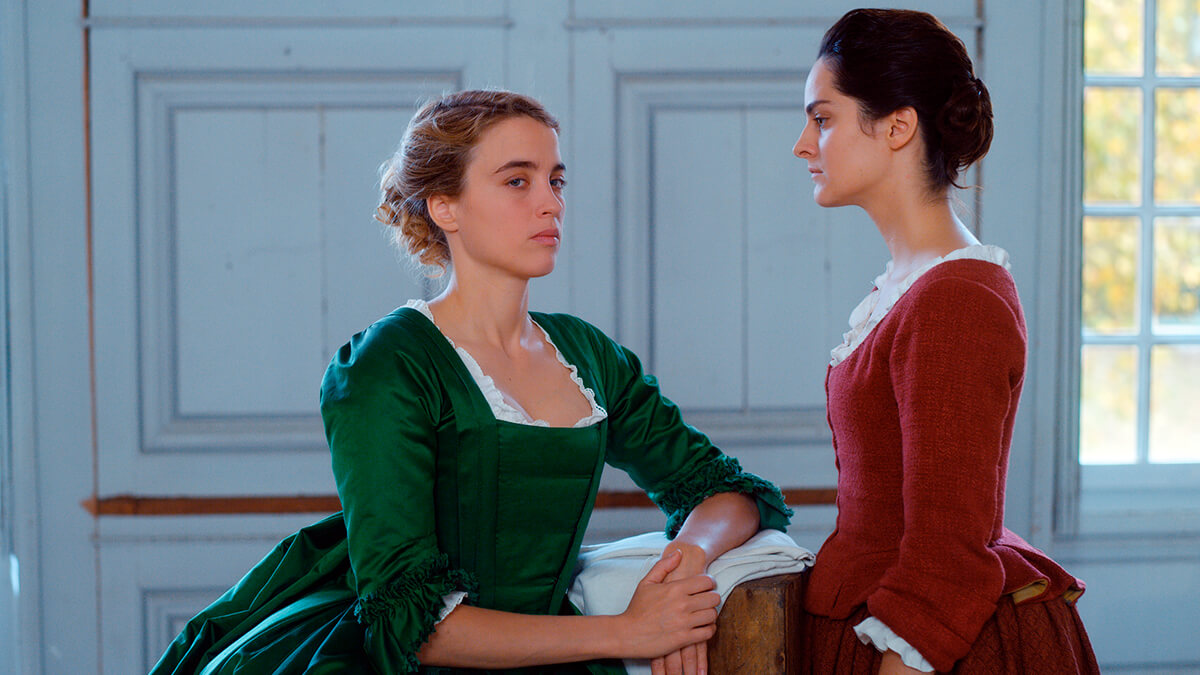
Marianne (Noemie Merlant), right, and Heloise (Adele Haenel), left.

I don’t think it’s giving too much away to say that these two fall in love (it’s made obvious in the trailer). At its heart, this film is a love story. But what I like most about the film is that we are made constantly aware – through their romance, through Marianne’s career (which is limited due to her sex), and through a sub-plot with Sophie (Luàna Bajrami), Héloise’s servant who falls pregnant on accident – that their lives are governed by patriarchal rules. Marianne casually mentions that she cannot draw nude male models, only female ones, because female artists are not allowed to observe naked men. ‘Is it a matter of modesty?’ Héloise asks. Marianne replies: ‘It’s mostly to prevent us from doing great art. Without any notion of male anatomy, the major subjects escape us.’

This is great. Sciamma doesn’t have to make Marianne say: ‘We’re oppressed! We’re women! It’s an unequal society!’ We just know from these examples.

I don’t want to come down too hard on Greta Gerwig’s recent adaptation of Little Women, which I liked for certain reasons, but it’s also concerned with limitations faced by women of the past, when trying to enter the public, professional world. And it definitely hits you over the head with these sorts of inequalities more overtly than Portrait does. Think of the speech that progressive artist Jo March makes in Gerwig’s Little Women:

I just feel that women, they have minds, and they have souls, as well as just hearts. And they’ve got ambition and they’ve got talent, as well as just beauty. And I’m so sick of people saying that love is all a women is fit for. I’m so sick of it. But I’m so lonely.

This is a good speech and delivered exceptionally well by Saoirse Ronan, but all of those same sentiments were encapsulated in Portrait, without needing to be directly said. This film is subtle and understated in all of the ways that I felt Little Women was not. And, granted, Little Women was a much cheerier, lighter, brighter, film overall. Whereas Portrait is more turbulent, moody, subtler, holds a lot more back. (Little Women is an American film, after all, and Portrait is a French one haha!). But still. They came out at almost the same time and explore many of the same themes, which is why I’m comparing them.

ANYWAYS, if you like these types of stories (about women who are ‘ahead of their time’, about forbidden passions, about slightly creepy mansions on windswept coasts), then you’re gonna LOVE Portrait of a Lady on Fire. While Portrait didn’t blow my mind – I don’t think it was doing anything exceptionally innovative or treading on especially new territory – I still think it was an excellent film. I cried several times. It’s also definitely one of the best films I’ve ever seen set during this time period, so if you’re looking for a brilliant, subtle, well-crafted historical film, then do check it out!

(PS All of the images in this post, including the gorgeous waves-crashing Featured Image, were accessed via IMDB)

‘Madeira Mondays’ is a series of blog posts exploring Early American history and historical fiction. I’m not a historian, but an author and poet who is endlessly fascinated by this time period. I am also currently writing/researching a novel set during the American Revolution and recently finished a Doctorate of Fine Art looking at how creative writers access America’s eighteenth-century past. Follow the blog for a new post every Monday and thanks for reading!