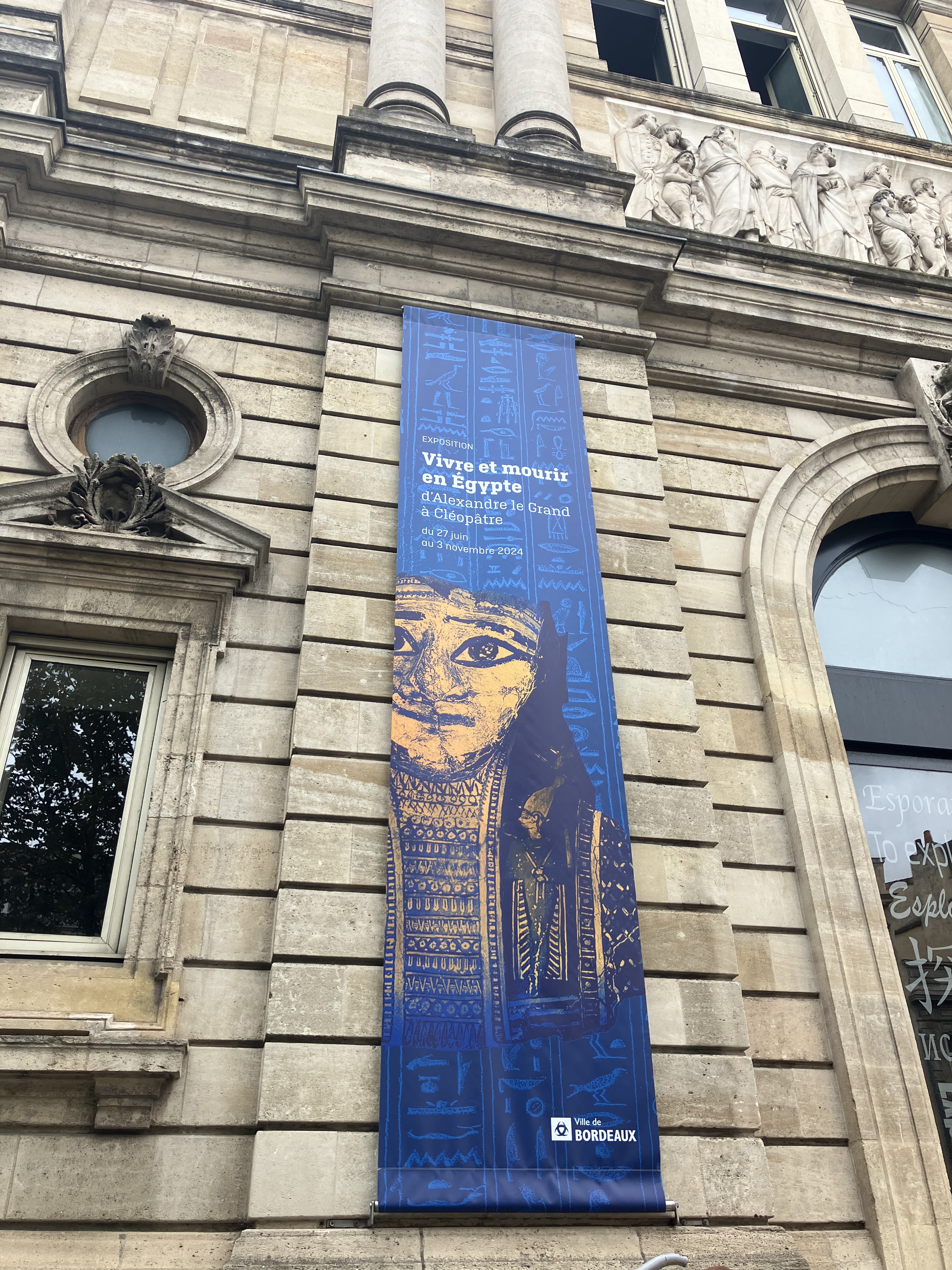
Madeira Mondays: Meeting the mummies (Bordeaux, France)

Mummies are a staple in Halloween movies. I remember a particular episode of Are You Are of the Dark? (a spooky kids’ show in the 90’s) that featured a centuries-old mummy accidentally brought back to life! The concept was never particularly frightening for me, and I wasn’t riveted (as some kids are) by adventure tales of exploring ancient tombs, pyramids, and the like. Though of course I saw the Indiana Jones movies and The Mummy (1999), for some reason it didn’t ignite that spark of imagination inside me. However I was still curious, when we recently visited Bordeaux, France, to check out an exhibition at a local museum: Living and Dying in Egypt. Apparently, they had real mummies to see!

And what I found wasn’t a spooky experience but more of a spiritual one. I really enjoyed learning about death rituals in ancient Egypt and getting to see a mummy up close wasn’t scary, but oddly moving.

Continue reading

Madeira Mondays: The National Museum of Cinema (Turin, Italy)

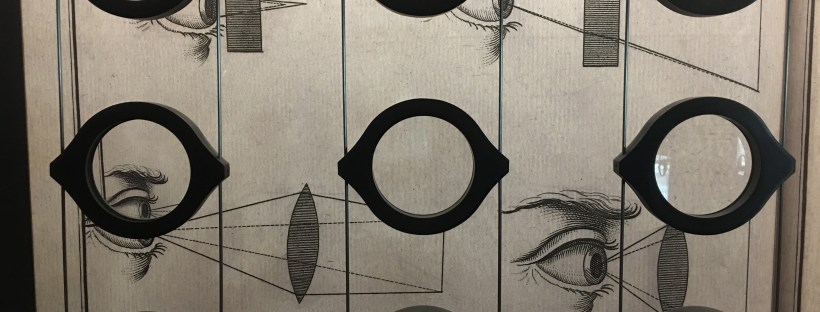
Madeira Mondays is hitting the road for this one, folks! In early January, I headed to Italy to visit my partner’s family (he’s from a town outside Milan). We spent a few days in the nearby city of Turin. Turin is a beautiful northern Italian city, nestled at the base of the Alps, and it’s home to a unique museum: The National Museum of Cinema.

While I was impressed with several aspects of the museum, the coolest thing about it was its collection of old pre-cinema devices, the 18th and 19th century inventions that were popular right BEFORE cinema became a thing. So if you’re wondering what sort of moving images people watched before they went to the movies, then step on into the museum with me…

Continue reading

Madeira Mondays: A Visit to the Hill House (Helensburgh, Scotland)

Keeping historic houses in good condition isn’t always an easy job. And the folks at The Hill House in Helensburgh have had a particularly challenging time. This quirky and unique house – designed by the wildly creative Charles Rennie Mackintosh in 1900 – has been threatened recently by water damage. You’ll know if you’ve been to Scotland, but it can get pretty wet here!! Water got into the walls of this beautiful house and was threatening its existence. So that led them to a drastic and very inventive solution to save the house.

Continue reading

Madeira Mondays: changes ahead!

Almost two years ago, I sat down to write the first ‘Madeira Mondays’ post. I had just finished my Doctorate of Fine Arts (which was looking at 18th century historical fiction and forgotten women in the early American South), was working on a historical fiction novel, was volunteering as a costumed historical guide…basically my life was: all 18th century, all the time. This blog series was meant to be a fun way to share my research and passion by writing about all the cool (and bizarre) stuff I’d learned about during my PhD. I would share 18th century recipes and strange facts about 18th century underwear! My first post was on one of my favorite novels about this period of early American history: Johnny Tremain by Esther Forbes.

Continue reading

Madeira Mondays: Reflections on the Stay-at-Home Literary Festival

As some of you may know, I’ve been working for a literary festival this spring called the Stay-at-Home! Festival.

The festival is entirely virtual and was founded last year by CJ Cooke: a professor at Glasgow Uni (I met her during my Masters and PhD there) and an author of popular psychological thrillers and poetry as well. She founded the festival last year during the first lockdown: at a time when few people knew what Zoom was, let alone how to use it! It was really well attended in year one (145 events, 220 authors over 2 weeks) and debuted as one of the biggest literary festivals in the UK. This year, the festival received some generous funding from various sources and was able to run again for a second year and Carolyn (aka CJ Cooke!) invited me to join the core festival team.

Throughout the two-week festival, which ended last week, I kept thinking about Madeira Mondays and what aspect of it I wanted to share with you. There were writing workshops, talks on all sorts of topics (fossils, motherhood, death and grieving, monsters, the environmental crisis, happiness, the body…) with a focus on diversity in the publishing industry as our central theme this year. Since most of our events are now available to watch on our YouTube Channel, I have decided to pick out a couple of events that are inspired by and centered on history or historical fiction to share with you.

Continue reading

Madeira Mondays: Yellow Fever in Colonial Philadelphia

“The horrors of this memorable affliction were extensive and heart rending.” – Samuel Breck, 18th century merchant, on Philadelphia’s 1793 yellow fever epidemic

In mid August, 1793, the first Philadelphian died from what would become a devastating epidemic of yellow fever. By the end of October, the city had lost nearly 5,000 people – 10% of the entire population.

In the last Madeira Mondays, we looked at 18th century medicine in general – how people thought diseases spread and what they did to try and fight them – and this week we’re going to be diving into how that looked in practice with one specific and fascinating example: Philadelphia’s infamous yellow fever outbreak.

What was the disease? Who were the major players trying to combat and contain it? And how did it change the city afterwards? Continue reading

Madeira Mondays: A (very brief) intro to 18th century medicine

In the last Madeira Mondays post, we looked at a really riveting Young Adult novel: Fever, 1793 by Laurie Halse Anderson. If you didn’t catch that post, this great little book is historical fiction, inspired by the outbreak of Yellow Fever in Philadelphia in…1793 (as it says in the title!). For this week’s post, I had planned on diving into the real history behind yellow fever: what it is, how it spread in the 18th century, and what doctors used to treat it. However, I realized that I couldn’t really talk about that without first doing a brief overview of 18th century medical knowledge in general. Which is a really fascinating and complex subject in itself! Continue reading

Madeira Mondays: Fever, 1793 (Book Review)

Ever since Covid-19 broke out across the world, there’s been a lot of talk about the Spanish Flu pandemic of 1918. I’ve also heard historians, especially medievalists, called upon to talk about the bubonic plague of the 1300’s, and I’ve seen Daniel Defoe’s 1722 book, A Journal of the Plague Year, added to many people’s reading lists! All of this makes sense. People are curious about pandemics of the past and how people coped (spiritually, physically, psychologically) with rampant infectious diseases.

That curiosity is what drove me to read Fever, 1793 by Laurie Halse Anderson. This is a YA (Young Adult) novel published originally twenty years ago, but it definitely has a lot of relevance today. It’s about an epidemic that you may not have heard of: the outbreak of yellow fever in Philadelphia in 1793. Continue reading

Madeira Mondays: Great Expectations (Book Review)

‘I never had one hour’s happiness in her society, and yet my mind all-round the four-and-twenty hours was harping on the happiness of having her with me unto death.’ – Charles Dickens, Great Expectations

I was meant to read Great Expectations at university. I know that because I have a distinctive memory of one of my professors, who was also my undergraduate dissertation supervisor, Phillip Mallet, discussing and dissecting the ending of this book in front of our Victorian novel class. I nodded along like I knew what he was talking about (It was not the first time I had sat through a lecture on a book I hadn’t read!). And while Phillip Mallet was an excellent lecturer, I’m glad I remember very little of what he said because this book was so full of twists and turns, it would have been a shame to learn about them all secondhand.

Which is why I will try – for today’s Madeira Mondays – to discuss this book without spoiling it. What I can spoil is that: I thought it was amazing. I enjoyed it even more than A Tale of Two Cities, which I reviewed last summer. What makes it so great, you ask? Well I shall endeavor to tell you (spoiler free!!), so you can decide if it sounds like a book you’d enjoy too!

What’s the book about?

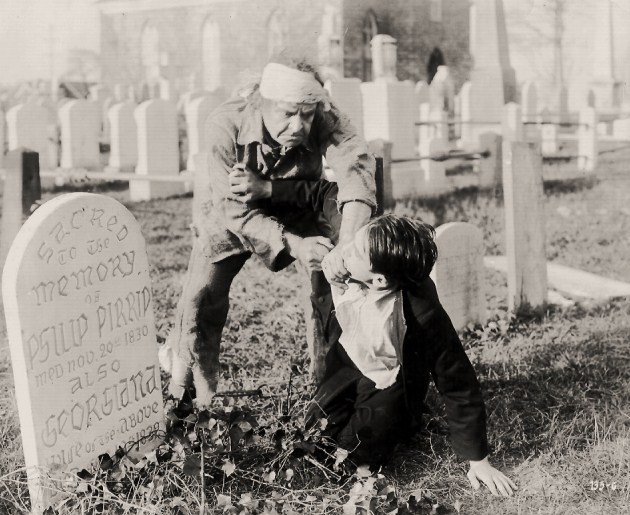
Great Expectations (1860) is a coming-of-age story. It’s probably one of the most famous coming-of-age stories in the English language, I’d say? It tells the story of a young orphan called Phillip, nickname ‘Pip’, who, in the famous first scene, encounters a terrifying escaped convict in a graveyard, demanding Pip’s help. ‘Keep still, you little devil,’ the convict cries, ‘or I’ll cut your throat!’ The convict is described as vividly as you would expect from Dickens, who is a MASTER at character descriptions, and zooming in on little details of people’s clothing or physicality to give you an amazing picture of who they are. The convict, who we later learn is called Magwitch, is described as:

A fearful man, all in course grey (…) A man who had been soaked in water, and smothered in mud, and lamed by stones, and cut by flints, and stung by nettles, and torn by briars; who limped, and shivered, and glared and growled; and whose teeth chattered in his head as he seized me by the chin.

Can’t you see the convict? I can. And, again without giving anything away, this book is populated throughout with many similarly vivid characters – from the terrifying and tragic Miss Havisham, jilted at the altar and who still, many years later, wears her wedding dress and haunts her own dilapidated manor house, to her beautiful, serene, cold-hearted protegee Estella.

Pip meets Magwitch in the graveyard. A publicity still from a 1917 adaptation of the book from Paramount Pictures, accessed via Wikimedia Commons

Pip must navigate complicated and, at times, heart breaking interactions with all these people as he grows up and tries to ‘better’ himself and improve his social class in Victorian England. Along the way, he makes mistakes (so many), which leads me on to why I think this is probably the best Dickens book I’ve read so far. Pip is probably the most believably human character I’ve encountered in a Dickens novel (keep in mind, I’ve only read A Christmas Carol, A Tale of Two Cities and this one). I love Dickens, as you know, but usually he’s one for larger than life characters, who sort of STAND for something (greed, corruption, etc.) rather than having characters who just feel like people. Great Expectations certainly has a lot of those larger than life figures, but because it’s a first-person narrative (this is Pip telling his story), and Pip just feels so human and fallible, I thought it was the most complex and involving of his books I’ve read.

What does Pip do that is so human and realistic? Well, he makes a lot of bad choices. Namely, and this doesn’t give too much away, he immediately falls in love with Estella who is, to put it bluntly, an asshole. We (the readers) know it. Pip knows it too. Dickens knows it. Everyone knows it. She’s so mean to him, for years, and yet…he’s infatuated with her, dreams of marrying her etc. I totally believed this. It’s such a poor choice to pursue her, and yet. People do this kind of thing in real life all the time. They become enamored with people who aren’t nice to them, they idealize their beloved and they let people become symbols, in a sense, making them more than what they are. For example, Pip loves Estella because in many ways she represents the refined, upper class life he so craves. If he can have her, he can have that, etc.

Again, I don’t want to reveal too much, but Pip makes so many selfish and short-sighted decisions, while, overall, being a fairly decent person. He’s never so awful or so cruel that you strongly dislike him, he’s mostly just a bit careless and self-centered (as people often are!). By the end, I totally believed in his humanity and I very much wanted him to be happy. But what is happiness? Is he going to have to learn to redefine what it means to him over the course of the book…who knows?? (hehe)

Also, as a bit of an aside, Dickens gets a lot of flak for his portrayal of women. I can understand that. In the three books of his I’ve read, none of the women reach near the complexity of a character like Pip, or A Tale of Two Cities‘ wonderfully compelling Sydney Carton. His women are interesting – no-one can say that Miss Havisham isn’t interesting!! – but they’re extremes. They’re extremely eccentric, or extremely angelic, or extremely violent, etc. I’m not sure we can entirely blame Dickens for this. Did his society encourage him to consider the internal complexities of the women around him? Probably not. Did he speak openly and candidly with women (his wife, friends, sisters) about their lives? Probably not. I’m just saying that Dickens in many ways was an author who wrote what he knew, and I don’t think that he knew, or could possibly even imagine, what sort of fears, hopes, desires, dreams would be in the heart of a little girl like Estella, versus a little boy like Pip. It’s a limitation of his writing, but not one that ruins it for me, by any means. I loved this book.

‘I entreated her to rise’, an illustration of a scene between Pip and Miss Havisham towards the end of the book, from an 1877 edition of Great Expectations. Image via Wikimedia Commons

One final other ‘flaw’, in my opinion, is that the middle of the book drags a bit, but the first section and the final section were incredibly paced and made up for a bit of a lull in the middle.

I’d recommend Great Expectations if you’re into character-led stories, whereas I’d recommend A Tale of Two Cities if you’re into more action-led stories. That book was a lot about justice, redemption, protests, mercy, whereas this one is a lot about inheritance, class, and how, as we grow up, our values and our priorities change. Even though Cities was set in the 18th century (my time period!), I think I preferred this one. I’m a sucker for a good first-person story and this is probably one of the best I’ve ever read.

‘Madeira Mondays’ is a series of blog posts exploring 18th century history and historical fiction. Follow the blog for a new post every Monday and thanks for reading!


Madeira Mondays: Revisiting ‘A Christmas Carol’

As an author, I’m often asked: ‘What are your favorite books?’ Interviewers ask this, school children ask this, my undergraduate students ask this. People even ask it if you’re not an author, as a sort of get-to-know-you question at parties or on dates. For us book lovers, this is an impossible question, which is why it’s best to memorize a few authors/books you can rattle off whenever you’re asked, a sampling of your tastes. If you’re an author, it’s also a chance, I think, to give people a sense of what your writing will be like, by citing people who have inspired you. I often preface it with something like, ‘Oh, I love so many books. I couldn’t pick a favorite!’

But this is a lie, my dear Madeira Mondays friends. I do have a favorite book, but I’m usually shy to mention it. Because mentioning it makes people think of awkward school plays and also the muppets. But my favorite book – the one that brings me the most joy and satisfaction and warmth when I read it – is definitely A Christmas Carol by Charles Dickens.

You’re probably familiar with the story of A Christmas Carol, because there have been SO many adaptations of it – from modernizations (see: Scrooged) to classic ‘straightforward’ adaptations (see the aforementioned: The Muppet Christmas Carol). But in case you’re not, this was a novella published by Charles Dickens in 1843 (so we’re deviating from our 18th century remit a bit today, dipping into the mid 19th century!). It follows the story of a greedy, isolated old man called Ebenezer Scrooge who is visited by three ghosts (the ghosts of Christmas past, present and future) who show him the error of his ways. Over the course of the story, Scrooge learns about the values of charity and compassion and emerges from the experience transformed into a kinder, more giving, person.

One of the things that makes this book so brilliant is that it is hilarious. Yes, the themes in it are serious and Dickens takes them seriously. His concerns about poverty in London and social injustice motivated him to write the book at all. He considered writing a political pamphlet about the plight of London’s poor, but instead settled on exploring his concerns in a Christmas narrative because he thought this would reach more people. (Dickens also needed the money. When he started writing A Christmas Carol, sales of his previous book Martin Chuzzlewit were falling off.)

Yet he takes these very serious themes and crafts the most lighthearted, lovely, engaging and, as I mentioned, funny story. We see that humor from the very beginning of this story. The first paragraph ends with ‘Old Marley (Scrooge’s former business partner) was dead as a doornail’. Then the entire second paragraph is just a funny musing about why exactly we say, ‘dead as a doornail’, when we really should probably say ‘coffin-nail’:

Mind! I don’t mean to say that I know, of my own knowledge, what there is particularly dead about a door-nail. I might have been inclined, myself, to regard a coffin-nail as the deadest piece of ironmongery in the trade. But the wisdom of our ancestors is in the simile; and my unhallowed hands shall not disturb it, or the Country’s done for. You will therefore permit me to repeat, emphatically, that Marley was as dead as a door-nail.

We know right away that we’re in good hands and this is going to be a bit of a silly romp, rather than a polemic. And it’s not just that the narrative voice is splendid. This is Dickens we’re talking about so the characters’ dialogue is also brilliant – vivid and fun. Take this exchange between the ghost of Jacob Marley, the first apparition to appear, and Scrooge.

“You don’t believe in me,” observed the Ghost.

“I don’t,” said Scrooge.

“What evidence would you have of my reality beyond that of your senses?”

“I don’t know,” said Scrooge.

“Why do you doubt your senses?”

“Because,” said Scrooge, “a little thing affects them. A slight disorder of the stomach makes them cheats. You may be an undigested bit of beef, a blot of mustard, a crumb of cheese, a fragment of an underdone potato. There’s more of gravy than of grave about you, whatever you are!”

I love that line: ‘There’s more of gravy than of grave about you, whatever you are!’ You hopefully get my point by now – the book is a lot of fun.

Jacob Marley visits Scrooge in one of the original illustrations from the book’s first publication in the 1840s (The image is public domain, from the British Library)

But it’s also got such striking and vivid descriptions, which I promise will surprise you, even if you’ve already seen a version of it on film or at the theatre. Take Dickens’ surreal and strange descriptions of the Ghost of Christmas Past:

For as its belt sparkled and glittered now in one part and now in another, and what was light one instant, at another time was dark, so the figure itself fluctuated in its distinctness: being now a thing with one arm, now with one leg, now with twenty legs, now a pair of legs without a head, now a head without a body: of which dissolving parts, no outline would be visible in the dense gloom wherein they melted away.

Is it too much to say that the murky, morphing figure of the ghost represents our dim and ever-fluctuating understanding of the past? No. No it’s not. I’m saying it.

Not only is A Christmas Carol full of humor and genuine surprises, but it’s also full of compassion. There is never a time, since it’s publication, when its themes haven’t been relevant to us: the importance of caring for those around us (our family, our work colleagues), but also those we might never meet. It’s also quite revolutionary, in a sense, because Scrooge actually does give money away, at the end of the book. He merrily tells his employee Bob Crachit, at the end of the book: ‘I’ll raise your salary, and endeavour to assist your struggling family (…)’. It’s not just a book about being generally nice to people, but rather about someone who puts their money where their mouth is, as it were, and endeavors to better the lives of those around him through financial assistance.

Charles Dickens in 1842, the year before he wrote A Christmas Carol, painted by Francis Alexander and accessed via Wikipedia. (He looks so different from the bearded, older version we’re most familiar with now, right?)

I called this post ‘Revisiting A Christmas Carol’ because it’s something I do every winter. I’m serious. I reread the book pretty much every year. (It’s short! You could easily read it in a day!) I also liked the reference to the ghosts ‘visiting’ Scrooge, but ALSO I called it that because most people are already familiar with the book, or think they’re familiar with it, but it’s well-worth a revisit. Or a read for the first time. There’s a reason it has stayed around for this long.

And yes, it’s a bit over-the-top. Yes, it can be cheesy! But I love it, and like all types of love, it can’t always be explained. But, if you read it, I hope you love it too.

Have you ever read A Christmas Carol? Or what’s your favorite version of it that you’ve seen in film/TV/live theatre?

And do you have a favorite Christmas tale in any genre (Love Actually? A Christmas Story? How the Grinch Stole Christmas? Die Hard? etc.)?

Recommended Further Reading:

PS Today’s featured image is of the title page of the first edition of the book

‘Madeira Mondays’ is a series of blog posts exploring 18th century history and historical fiction. Follow the blog for a new post every Monday and thanks for reading!