
I’m not a big fan of true crime. I have several friends who love nothing more than listening to podcasts and watching shows about serial killers, or mysterious disappearances, or unexplained grisly crimes. Occasionally one will suck me in (one of the first podcasts I ever listened to was This American Life’s original Serial series, back in 2014), but in general this kind of media isn’t for me. Maybe it’s because I’m already a bit of a scaredy cat. Maybe it’s because of the morally confused way I always feel when I’m “enjoying” stories about real people’s suffering (for a darkly comedic take on the ethics of true crime podcasts, I’d highly recommend the movie Vengeance written and directed by B.J. Novak. It’s underrated and very thought-provoking!).
Nevertheless, there are some famous crimes and criminals that seep into the public consciousness whether you seek them out or not. And, if you live in Edinburgh, you’ve definitely heard the names Burke and Hare. They are often referred to as “body snatchers”, but I’ll talk below about why I think that term is misleading and also about my recent experience of seeing the actual faces of Burke and Hare (ek!) at the National Portrait Gallery a couple of weeks ago…
Okay – so there are a couple of things that you should know before I jump into a (very abbreviated) version of the Burke and Hare story, and show you their faces! For one thing, you need to know that Edinburgh in the 18th and 19th century was a centre of medical knowledge and research. And how did all the doctors-in-training learn about bodies? They dissected them. But that created another problem in the city. A need for dead bodies. As this BBC article explains:
“To practice their anatomy skills, doctors were largely limited to dissecting the bodies of executed criminals. As more medical schools developed, the demand for bodies grew and could not be met by the number of executions. When bodies became scarce, some people took to stealing bodies from graves, or worse, to sell to medical schools.“
Enter Burke and Hare.
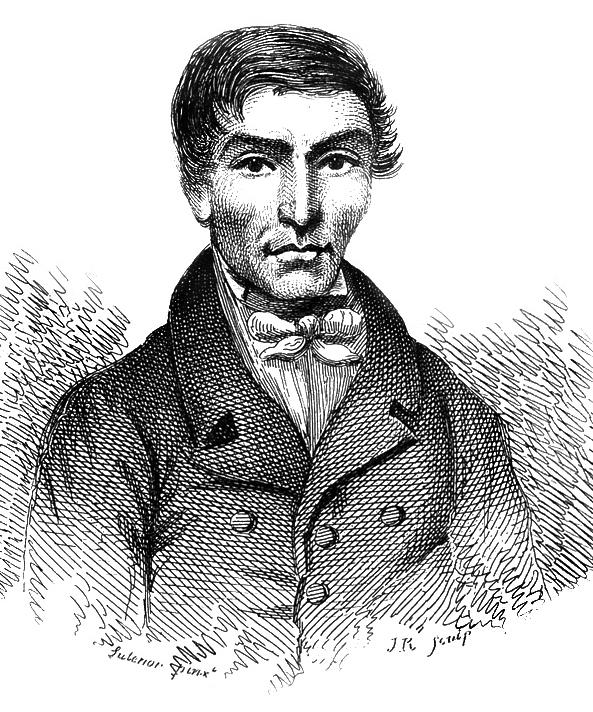

In terms of their early lives, both men were from Ireland and they both ended up in Edinburgh, Scotland. Both held various jobs at different points (coincidentally, it seems both worked on the Union Canal), but they ended up becoming friends in 1827 and living together at Hare’s lodging house (a boarding house).
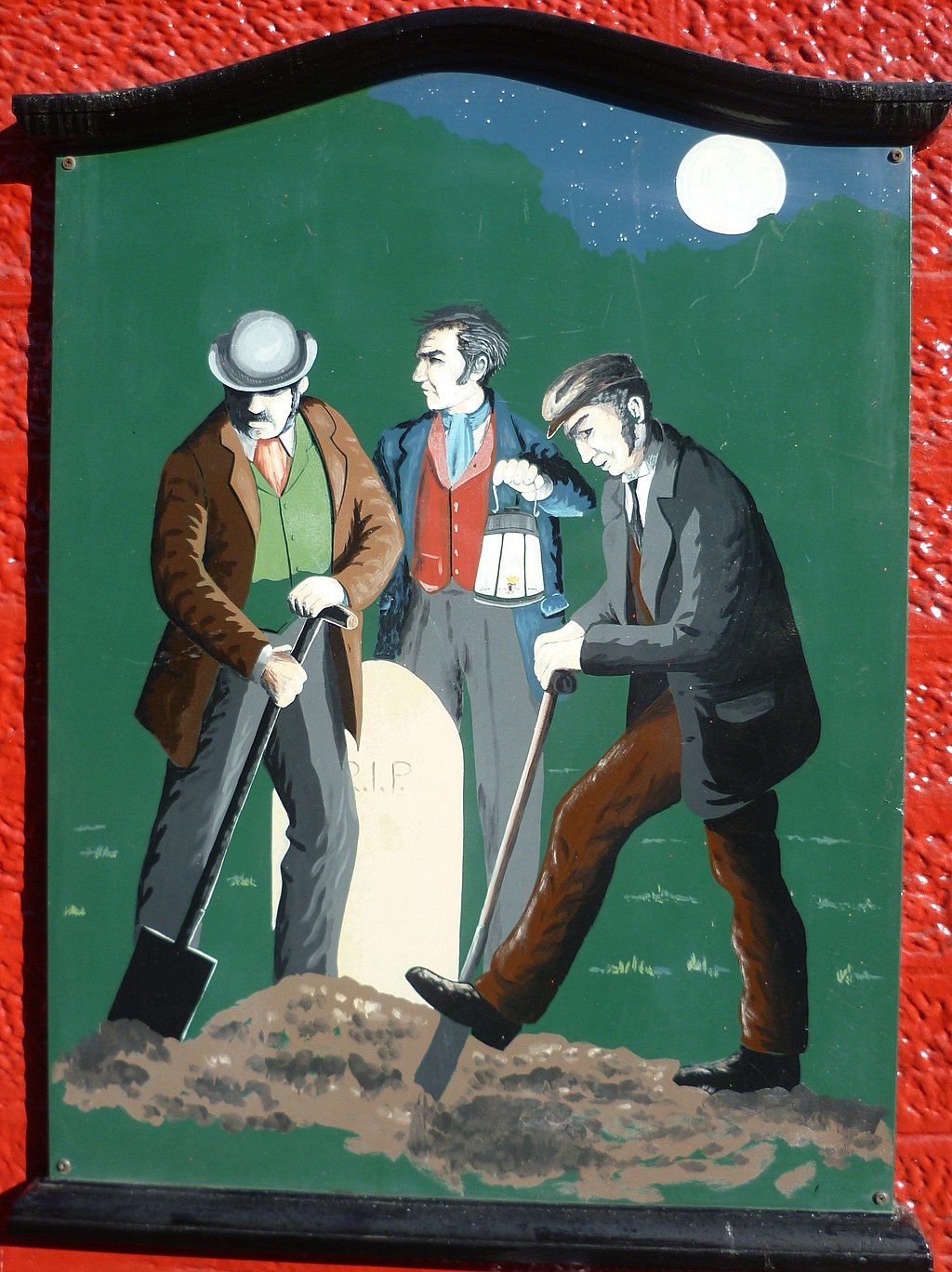
Around this time, like I mentioned, Edinburgh medical schools were in need of bodies and willing to pay a good price for them. Usually, the bodies that got sent to these schools were criminals who had been executed and denied a Christian burial. But supply couldn’t keep up with demand. So a trade started up: bodysnatching. These “Resurrectionists” went into graveyards, dug up bodies, and sold them to medical schools (who didn’t ask questions). Surprisingly, this doesn’t seem to have been illegal. And families were, justifiably, really worried about it happening to their recently departed loved ones, so they set up mortsafes, iron cages to protect a grave.
But our “friends” Burke and Hare actually weren’t robbing graves. When I hear them called bodysnatchers, I always want to clarify that they weren’t actually snatching any bodies from cemeteries. They were murdering people and then selling the bodies directly to Robert Knox at the medical school.

The first body that the pair sold actually wasn’t a murder victim, however. It was an elderly lodger who got sick and left some debts behind so they figured: hey, let’s sell his body and get our money back!
The problem is that people don’t drop dead often enough to make much of a profit, so they started actually killing their lodgers. Several sources I found say that the pair killed sixteen people. Often, the victims were given a lot of alcohol and then smothered. At first it was going well for Burke and Hare, and they were making good money. But then they started to get careless. One of the men they killed was familiar around town because of a deformed foot which caused him to limp. Well, the medical students recognized the guy, so Knox went ahead and chopped off his head, insisting that he was nobody that the students knew.
But Burke and Hare’s scheme came totally undone on Halloween night, 1828. The two killed a middle-aged Irish woman named Margaret Docherty and the body was found by other lodgers. It was reported to the police and they were arrested. So what happened to them? The pair turned on each other immediately. Hare was offered immunity to testify against Burke and he did. Burke was executed in January 1829 in the Lawnmarket area of Edinburgh. Ironically (or appropriately?), his body was given the medical school for dissection. (You can see his skeleton at the Anatomy Museum here in Edinburgh – apparently!)
Hare left Edinburgh and we don’t know what happened to him. Knox, who was buying the bodies, was never formally charged (he could claim he didn’t know where they came from), however it does seem like he faced some significant professional backlash, even though he faced no criminal charge. He was expelled from the Royal Society of Edinburgh, for example, and also lost his job as curator at the Royal College of Surgeons’ museum.
Shortly after all of this, laws changed so that medical schools could get more access to bodies from prisons and workhouses, and people could even donate their bodies to science. So the bodysnatching trade, well, died.
I’ve given a pretty brief overview of the pair’s criminal activity (I didn’t even touch on their wives, who were involved in all this, apparently!). If you’re interested in finding out more, the Wikipedia entry on them is very detailed. There is also this post from Undiscovered Scotland and I found this audiobook called The Anatomy Murders which looks like a very interesting deep-dive. Now that you know the story – you’ll see these guys popping up in all kinds of places. There is a minor character in Harry Potter, Mr. Burke, who runs a shop in Knockturn Alley full of dark artifacts. And if the topic of 19th century anatomy in Edinburgh intrigues you, check out the fantasy novel from Dana Schwartz, Anatomy.
And I’ve saved the most interesting for last: the thing that inspired this whole post! A couple of weeks ago I visited the National Portrait Gallery with my mom and we wandered into their Phrenology exhibition. There you can see the actual faces of Burke and Hare!

Phrenology is a historical pseudoscience that basically thought skull shape could tell us things about people’s personalities. It was debunked, but it’s left us fascinating things like these masks that were made from famous people’s faces for study (criminals, thinkers, writers etc.). And maybe it’s just because I know who these two are, but I don’t like the look of them and definitely wouldn’t want to run into them in a dark alley, that’s for sure.
I’m also curious when exactly the moulds of their faces were taken, because Hare left Edinburgh (he wasn’t executed). Burke’s was probably taken after he was hung, but what about Hare’s mask? While he was in captivity? Something more to look into…
I hope that you enjoyed this “creepy” post, which I scheduled for around Halloween time, about the darker side of Edinburgh’s past!
And if you want an excellent nonfiction book about a 19th century serial killer check out my review from a few years back of The Five: The Untold Stories of the Women Killed by Jack the Ripper by Hallie Rubenhold.
Madeira Mondays are posted on the first Monday of every month and explore history and historical fiction. If you enjoyed this post please share it, subscribe to the blog, or you can support the blog by buying me a coffee on Kofi! There are many more historical adventures and journeys to share, and I thank you so much for reading!
 Carly Brown
#/media/File:Body_snatchers_at_work,_Old_Crown_Inn,_Penicuik.JPG)