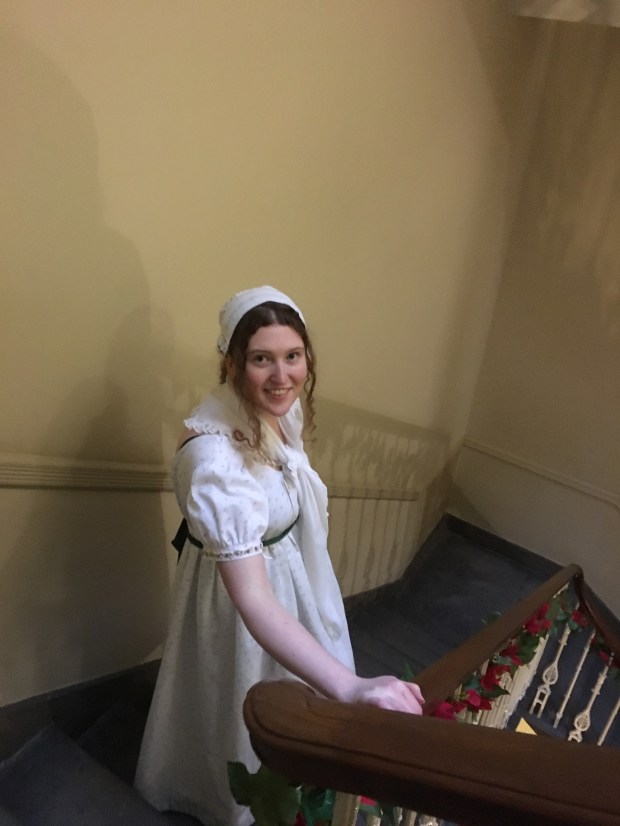
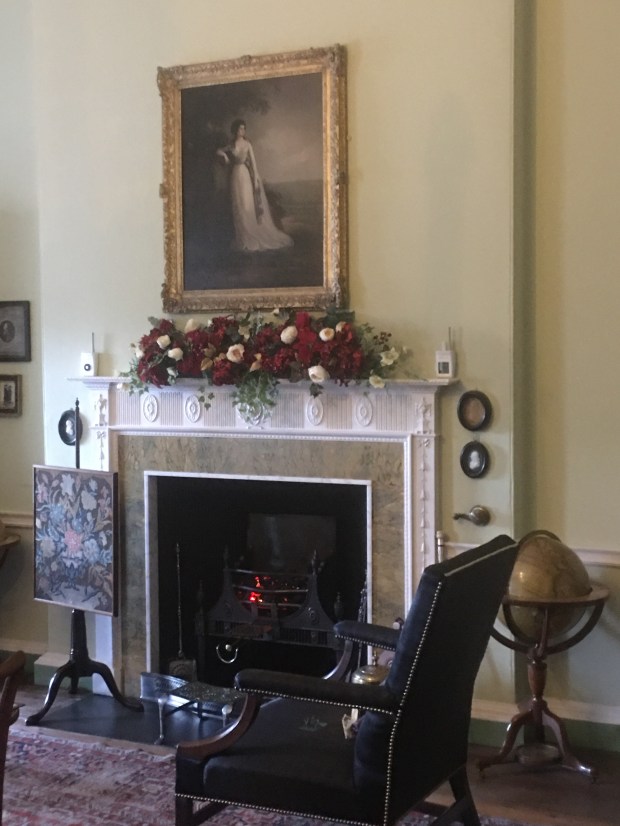
Madeira Mondays: Inside a Georgian Drawing Room

The novel Jane Eyre begins with young Jane sitting in the ‘drawing room’ of her aunt’s house. When I first read Jane Eyre as a kid, I remember pausing on that phrase – ‘drawing room’ – and wondering what exactly it meant. I gathered from context that a drawing room was some sort of living room, but why was it called a ‘drawing’ room? Was it a room where you went to draw stuff? I genuinely had no idea.

If you’ve ever heard the phrase before and been similarly confused – fear not! For today’s Madeira Mondays, we’re going inside a recreated 18th century drawing room, and I’ll tell you a little bit more about what these rooms were for, what sort of things you might find in them, and, yes, why the heck they are called drawing rooms in the first place! (Hint: it doesn’t have anything to do with drawing pictures!)

800px-The_Langford_Family_in_their_Drawing_Room)_by_James_Holland,_RWS

A middle-class drawing room in London in 1841, painted by James Holland. Accessed via Wikipedia.

As a bit of background: before the Covid-19 shut-downs, I was volunteering weekly at The Georgian House in Edinburgh, sometimes even in costume (more on this in my posts about 18th century Christmas celebrations)! The Georgian House is a beautiful, restored 18th century town home: recreated to look as it did in 1800, when the Lamont family lived there, and it’s filled with furniture, art, and objects from the period. I cannot recommend enough a visit, once everything is open and running again, if you’re ever in town and at all interested in this time period (or simply want to learn more about how people of the past lived their daily lives!).

So let’s step into the Lamont’s drawing room at The Georgian House and learn about what this room was for!
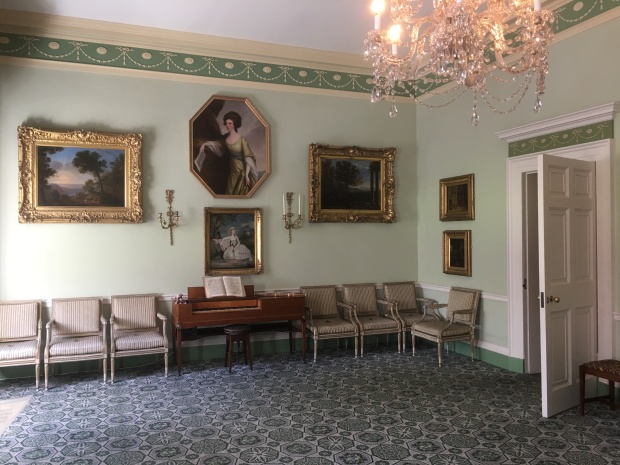
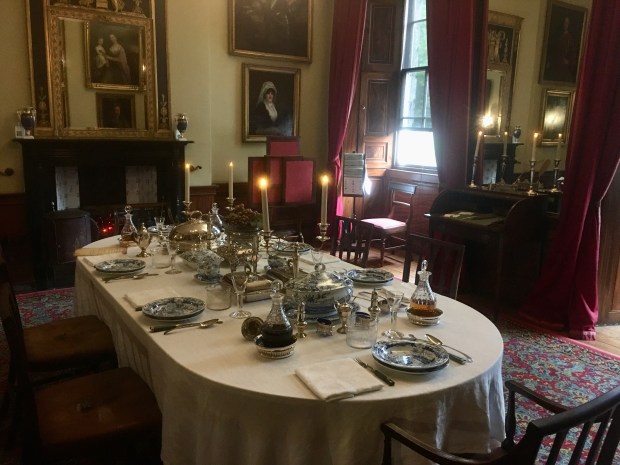
IMG_8950

The drawing room at The Georgian House

Firstly, what is a ‘drawing room’?

Historically, a drawing room was a room in a large private house where visitors could be entertained. In the case of The Georgian House, the drawing room is the largest room in the home (30 ft x 18 ft and 14 ft high) and definitely the grandest – it was a formal entertaining space, furnished grandly to impress the guests of the Lamont family. The family would have spent the most money on furnishing this room in particular.

(For context about the family, John Lamont was a wealthy landowner. The square where The Georgian House is located, Charlotte Square, was home, in the Georgian period, to wealthy families but they were not necessarily all from the aristocracy. Some were prosperous lawyers, bankers, merchants etc.)

Why is it called a drawing room?

The name ‘drawing room’ comes from the word ‘withdrawing’. After a formal dinner, the ladies would all withdraw from the dining table to the drawing room upstairs, to socialize. The gentlemen would stay at the table and continue to drink (heavily), before rejoining the ladies later in the evening.
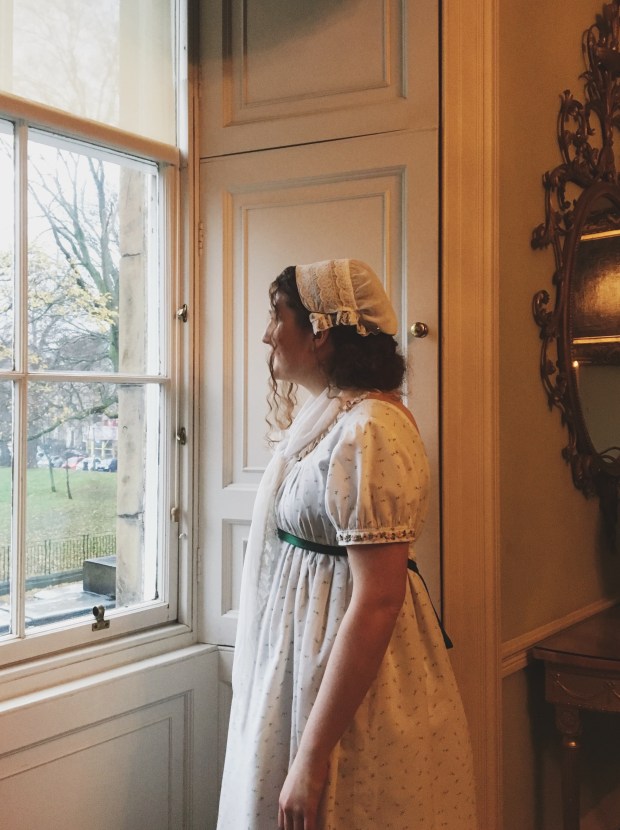
Processed with VSCO with 5 preset

Yours truly (in costume) gazing out the window of the drawing room at The Georgian House. (Ignore the not very period appropriate cars parked outside the window!)

What sort of activities would happen in the drawing room?

This space was more for evening activities, such as balls or larger gatherings, but the lady of the house might have used the room during the day, if she had some friends over for tea.

IMG_9890 2

Me (right) in costume as Georgina Lamont (the family’s oldest daughter), next to fellow volunteers portraying John Lamont and a visiting guest, in the drawing room during our ‘Meet the Lamonts’ event last December. (BTW the Christmas tree, while lovely, was not Georgian and didn’t come into popular use until the Victorian period!)

At a party, the chairs would have all been pushed to the walls, to make space for dancing. When the ladies were rejoined by the men, there might have been card playing, or chess. In addition to dancing! Someone also might want to sing. Playing an instrument was an important social accomplishment of the time for the upper classes, and men and women might get up and sing a song or two. It’s my understanding that it didn’t matter so much how well you sang – this was more an opportunity for young people of marriageable age (and their families) to get a good long look at each other! But this was also a time when you had to really make your own fun (and, often, your own music!) so playing the piano could provide entertainment as well.

486px-Anastasia_Robinson

Portrait of Anastasia Robinson, circa 1727, via Wikimedia

There is so much more to say about the ornate drawing room at The Georgian House, and so many objects there to delve into, but I’ll save that for another time. I had hoped to do a series of posts where I look at different rooms in a Georgian household – parlor, dining room, kitchen etc., using The Georgian House as an example. But unfortunately I don’t have all the pictures I wanted, to be able to show you all that I’d like, so we’ll have to wait until the house has opened back up again and I can get in there and take some more photos! I promise it’ll be worth the wait.

If you’re looking for more reading in the meantime, check out The Georgian House’s blog which featured another fellow volunteer (and mega talented costumer!), Emma Harvey, talking about 18th century women’s fashions.

(PS today’s Featured Image is by Jean-Baptiste Charpentier the Elder, ‘The Family of the Duke of Penthièvre (“The Cup of Chocolate”)’, circa 1768, accessed via Wikipedia)

‘Madeira Mondays’ is a series of blog posts exploring Early American history and historical fiction. I’m not a historian, but an author and poet who is endlessly fascinated by this time period. I am also currently writing/researching a novel set during the American Revolution and recently finished a Doctorate of Fine Art looking at how creative writers access America’s eighteenth-century past. Follow the blog for a new post every Monday and thanks for reading!

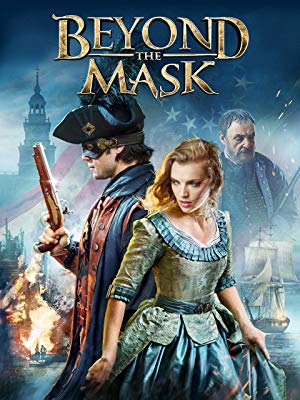


Madeira Mondays: Beyond the Mask film review

I have spoken in the past about how it is a shame that there are so few books and films set during the Revolutionary War. As a lover of this time period, I am always on the lookout for new ones. So when I heard about Beyond the Mask, a swashbuckling Revolutionary War era film released in 2015, I was curious to see it. And, oh boy, I was not prepared for what was in store!

Wikipedia describes Beyond the Mask as a ‘Christian historical action-adventure’, and it follows the life of a former assassin, William Reynolds (Andrew Cheney), who wants to redeem himself and start a new life. Through a series of overly complicated mishaps which I won’t bother to explain, he finds himself in the American colonies, helping the Americans fight for independence from Great Britain while dressed as a masked vigilante called ‘The Highwayman’. Who gives Reynolds this moniker? Why, no other than Benjamin Franklin himself! There is a pretty hilarious scene where Ben Franklin, who runs the local printing press, is trying to figure out what to call this new, mysterious vigilante running around Philadelphia and says: ‘We’ll call him what he is! A highwayman.’ This makes no sense. Reynolds is not in any way a highwayman (a robber who stole from travelers, usually on country roads). But this is just one confusing detail in a film which is full of confusing details, bonkers plot twists, and tons of explosions.

beyond the mask

But, I will tell you this right now: I really enjoyed watching Beyond the Mask. It is like a zany medley of several other, better films (mostly Zorro, but there’s a bit of V for Vendetta in there and the score sounds like a crappier version of Pirates of the Caribbean). Sure, it is wildly historically inaccurate. Sure, it moves along at a break-neck pace and I was often confused about what was going on. Sure, the characters were completely empty and devoid of ANY personality (why do the main two people fall in love?? What do they like about each other?). And sure, the theology in it never makes a ton of sense or seems to really matter for the plot. BUT it was super silly and super fun. Especially John Rhys-Davies, who plays the one-dimensional villain character whose evil scheme is (spoiler alert) to blow up the Continental Congress using an electrical generator that he stole from Ben Franklin and has hidden in an underground submarine hideout! This stuff is gold.

beyondthemask

Our leads, Kara Killmer as Charlotte Holloway and Andrew Cheney as William Reynolds run away from a flaming windmill (some of the worst CGI in the film)

I expected this to be more of a wannabe Les Miserables, a story which has an overtly Christian moral about redemption. In Les Miserables, Jean Valjean, a criminal, is given a second chance of life when a priest shows him kindness and the whole book (and film and musical) is about the redemptive power of kindness and love. I think that might have been what director Chad Burns was going for here (a story about how love transforms a man from a murderous assassin to a guy who just beats people up sometimes), but all of that is lost in the sheer weirdness of the drama and the many wannabe Jackie Chan fist-fight sequences.

I’m not even going to touch on the historical accuracy of this film, but I will mention that, just like The Patriot (which I discussed here), it seems to think that only rebels were tormented and harassed by loyalist citizens and British soldiers, whereas in reality often it was those who remained loyal to the King who faced violence. But that is the least of the movie’s issues and if you’re going into it looking for any sort of historical accuracy, or even attempts at historical accuracy, then you’re looking in the wrong place, my friend.

Still, there are a couple of things that work well in the film (besides Rhys-Davies). The costumes are largely period-appropriate and look pretty good! Also I was impressed with the sets. They are obviously working with a limited budget and the 18th century Philadelphia set was particularly impressive.

So would I recommend this deeply silly movie? If you enjoy this sort of thing, then 100%! I watched it with two pals who enjoy films like this as much as me and we had a blast, giggling at all the absurdities and frequently pausing the film to ask: ‘WHAT JUST HAPPENED?’

If you are looking for an ambitious or thought-provoking or well-researched film about this period, then I would direct you to something like The Witch, or perhaps the John Adams Miniseries. But if you’re looking for a film where the main character exclaims things like ‘I live in a web of lies!!’ and leaps around in the darkness like Batman, then you’re going to enjoy Beyond the Mask. I know that I did.

Recommended Reading/Viewing:

Beyond the Mask directed by Chad Burns (so long as you know what you’re in for!)

Film Review: Beyond the Mask in Variety

‘Madeira Mondays’ is a series of blog posts exploring Early American history and historical fiction. I’m not a historian, but an author and poet who is endlessly fascinated by this time period. I am also currently writing/researching a novel set during the American Revolution and recently finished a Doctorate of Fine Art looking at how creative writers access America’s eighteenth-century past. Follow the blog for a new post every Monday and thanks for reading!


Madeira Mondays: A Forgotten 18th Century Drink

Last week, I received two very good pieces of news. One I cannot talk about publicly yet (ohhhh secret!) but the other I can happily announce is that I have a new poetry book coming out! My second poetry pamphlet will be published later this year with Scottish indie press, Stewed Rhubarb. They specialize in publishing spoken word poetry and as a spoken word poet myself, it was the perfect fit! The book has poems about early American history, about sex, about literature…basically, all the stuff I’m interested in! (Can you tell I’m excited?). I can’t wait to work with Stewed Rhubarb, and with my fabulous editor Katie Ailes, on this book and I’ll share lots more info. when we’re closer to publication day.

But I wanted to celebrate the publication news this week by making an 18th century drink. Since it was a chilly February day, I chose a warm drink called ‘Flip’. I’m not going to include the full recipe here because (spoiler alert) I found this drink pretty vile, BUT I will tell you what it is, how I made it, and here’s a link to an excellent video with step-by-step instructions of how you can make it too, if it seems like your sort of thing (It was definitely not mine!). Jas Townsend, the re-enactor who makes it in the video, seems to really enjoy his though so…maybe it just wasn’t for me?

So, what is ‘Flip’?

The 1890’s had the gimlet. The 1990’s had the Cosmo. In the 1690’s and even the 1790’s, it was the creamy flip that ruled the bar…

Forgotten Drinks of Colonial New England by Corin Hirsch

Flip is a hot, frothy drink that is a blend of ale, rum, some sort of sweetener (molasses or sugar) and sometimes eggs and cream. It’s also usually spiced with nutmeg and/or ginger, and it was very popular in 18th century America. It popped up in American taverns in the 1690’s and was still popular during the Revolutionary War. Food writer Corin Hirsch, in the book quoted above, found one instance of a tavern in Holden, Massachusetts, who charged more during the Revolutionary War for their Flip than they did for a bed. A mug of ‘New England Flip’ was 9 Dollars, versus a bed in the common boarding room for women, 2 shillings! Either those sleeping arrangements were really bad, or their flip was really good, or both.

How do you make it?

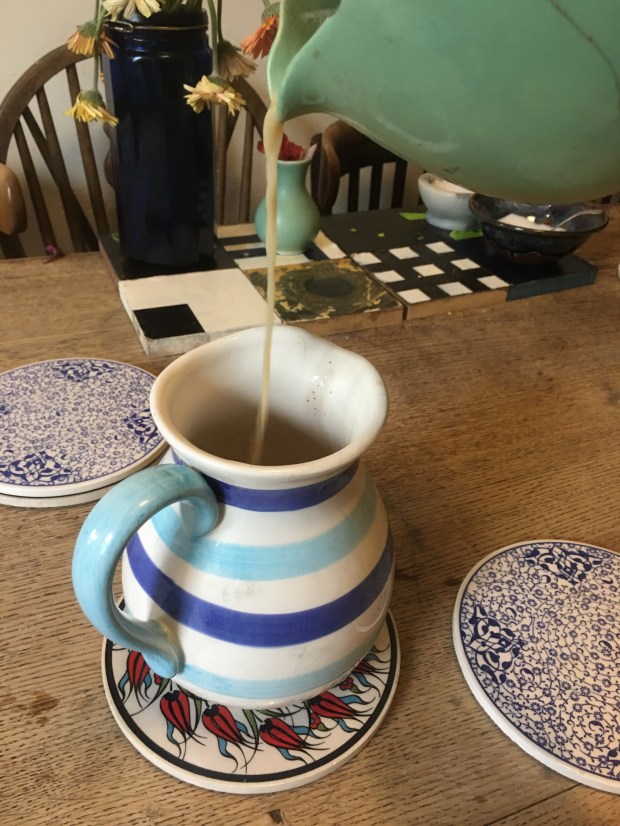
I have to admit that making Flip was kind of fun because you are meant to pour the drink between two separate pitchers until it is blended. So I mixed an egg and some spices in one bowl, then heated up some ale separately, and then added them together in these two pitchers – pouring back and forth until it was creamy.

IMG_0189

The two pitchers I used to make my (pretty dreadful) ‘Flip’

IMG_0194

Pouring the mixture from one pitcher to another to mix it. (Even the flowers in this picture look sad. They probably don’t like Flip either!)

I was vaguely following along with the Townsend video linked above and also there’s a recipe for it in Forgotten Drinks of Colonial New England. In any case, the resulting mixture was creamy-ish, but there were itty bitty chunks of cooked egg inside it, which I suppose I could have strained out. But I also did not like the smell of it: the hot, yeasty smell of the beer, mixed with the nutmeg and ginger, mixed with the egg.

But I think where I really went wrong is that in the 18th century Flip was heated up a second time (after you’d mixed the drink) by plunging a hot fire poker into the middle of it. The poker heated it (of course), but also added burnt flavors. I would imagine this might work better than what I did, which was put the whole thing back on the stovetop briefly, once I’d mixed it all together, just to get it warm again. By not using an actual fire poker, you lose some of that fire flavor, which was probably part of what made the drink special.

What did it taste like?

Not nice, you guys.

Even though I drank it from a fantastic Bernie Sanders ‘Feel the Bern’ mug, that was not enough to save this drink from tasting really, really bad to me.

IMG_0195

For one thing, it was pretty sweet. I tasted the sugar definitely and also rum has its own sweetness…all of that together made for a thick, HEAVY, brownish drink that actually turned my stomach.

Looking back on it, I’m not really sure why I picked Flip in the first place, other than the fact that it looked fun to pour the drink between the two pitchers. I’m not a beer drinker, and I don’t love rum, so I’m not sure why I thought I would enjoy those two things heated up and mixed together with an egg. I would still try it again if someone else made it who knew what they were doing, but I think this experiment was probably doomed from the outset!

Nevertheless, I am glad that I tried it, because now I will know what it is if I ever run across it in a historical source. And my stomach will turn at the memory of making this forgotten concoction from the 18th century. Which I will not be resurrecting again any time soon!

Recommended Reading/Viewing:

Forgotten Drinks of Colonial New England: From Flips & Rattle-Skulls to Switchel and Spruce Beer by Corin Hirsch

‘Popular Drink Fallen into Obscurity- ‘Flip’ from the 1820s’ on Townsends YouTube Channel

For an 18th century drink that I definitely did enjoy, check out my recipe for whipped syllabub!

(Today’s Featured Image is an 18th century oil painting, ‘Young Couple in a Rural Tavern’, by Giacomo Francesco Cipper)

‘Madeira Mondays’ is a series of blog posts exploring Early American history and historical fiction. I’m not a historian, but an author and poet who is endlessly fascinated by this time period. I am also currently writing/researching a novel set during the American Revolution and recently finished a Doctorate of Fine Art looking at how creative writers access America’s eighteenth-century past. Follow the blog for a new post every Monday and thanks for reading!


Madeira Mondays: Hamilton Wasn’t Wearing Any Underwear

As a graduation present, my mom took me to go see the musical Hamilton in London’s West End last summer. It was, predictably, fantastic. I had written about the musical as part of my Doctorate of Fine Arts project, which looked at (among other things) how contemporary fiction writers represent the American Revolution. So it was a fitting PhD grad gift! We had fabulous seats and we laughed, cried, and cheered with the rest of the audience. I also managed to keep my singing along to a minimum, which I’m pretty proud of.

Afterwards we got a drink and my ever-tolerant, encouraging mother listened to all my reflections on the show: the set, the costumes, the characterizations etc. I went on and on about how I liked the choice of using mostly period-appropriate clothes and I made a joke about how I hoped they were wearing 21st century underwear though.

‘What do you mean?’ she asked with confused laughter.

It was then that I explained what precisely the real Alexander Hamilton would most likely have been wearing as underclothes and it surprised her so much that I thought I’d do a whole post about it here!

Hamilton 4

Me and my mom in seeing Hamilton: An American Musical in London’s West End!

When it comes to visualizing clothing of the past, it’s always helpful for me to look at videos, drawings, and (if possible) real life historical artifacts in museums. But since we can’t all go to a museum together, let me direct you to National Museums Liverpool’s very helpful video ‘Getting Dressed in the 18th Century – Men’.

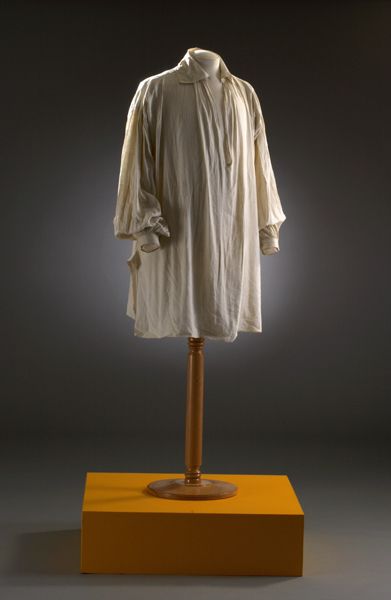
In this video, you will see that the gentleman’s first layer of clothing is a big white shirt with voluminous sleeves (imagine like a pirate shirt?). Then he puts on white stockings, which go up over the knee. A gentleman might wear drawers (which are like short trousers made of thin linen) but it’s not necessary because the white shirt was really long and you just tucked it between your legs when you put on your breeches (which are short ‘trousers’ for those in the UK, ‘pants’ if you’re in the US) and the shirt acted as modern men’s underwear would!

men's shirt

Example of Late 18th century man’s shirt. Photo from Pinterest.

So basically, the ‘underwear’ or base garment for men was just a long shirt! The quality and consistency of this shirt of course varied. A gentleman might have ruffles at the wrist, a laborer’s might have had stripes. But basically, as far as I could tell, our modern concept of men’s underwear (i.e boxers, briefs etc.) didn’t come about until around the 1930’s.

So Hamilton would have been wearing something under his outer clothing, it just probably wasn’t what you would have expected!

So what were women wearing as a form of undergarments? Let’s save that for another post…

Further Reading:

‘Underwear in the 18th Century’ from The Macaronis

‘A Colonial Gentleman’s Clothing: A Glossary of Terms’ from the Colonial Williamsburg site

‘Getting Dressed in the 18th Century – Men’, YouTube video from National Museums Liverpool

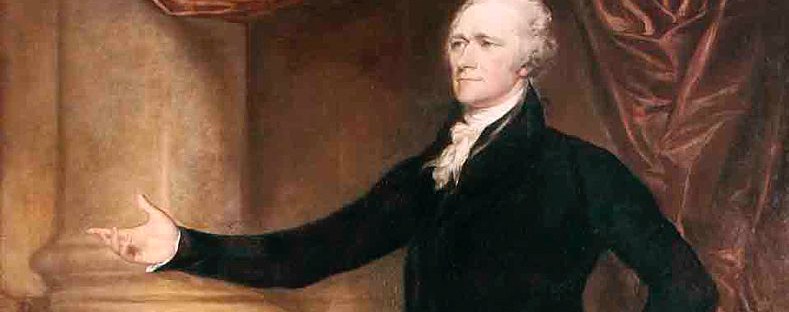
(Today’s Featured Image is of none other than, you guessed it, Alexander Hamilton! It’s from the 1805 portrait of him by John Trumbull, accessed via the Wikipedia Commons.)

Madeira Mondays is a series of blog posts exploring Early American history and historical fiction. I’m not a historian, but an author and poet who is endlessly fascinated by this time period. I am also currently writing/researching a novel set during the American Revolution and recently finished a Doctorate of Fine Art looking at how creative writers access America’s eighteenth-century past. Follow the blog for a new post every Monday and thanks for reading!


Madeira Mondays: Dictionary of the Vulgar Tongue (Letters G to P)

I used to think that the Elizabethans had the best swear words. Shakespeare in particular really knew how to pen a vivid and hilarious insult: ‘Beetle-Headed, Flap Ear’d Knave’ ‘Canker-Blossom’ ‘A Fusty Nut with No Kernel’! But after reading The Dictionary of the Vulgar Tongue by Francis Grose (1811), I’m now convinced that the Georgians might very well have had the best slang words and insults.

If you missed my first blog post about The Dictionary of the Vulgar Tongue, this book is basically a compendium of 18th century slang, which ranges from the mild to the extremely crude. In that post, I went through some of my favorite words, from Letters A-F. This time, I’ll be choosing ones from G-M, with some added commentary from me in italics for good measure.

vulgar tongue

Cover from recent (1980’s) edition of Dictionary of the Vulgar Tongue

The book is an entertaining read for those who want a peek at the saltier side of life for our 18th, and early 19th, century pals. So I hope that you enjoy these words from Grose’s peculiar ‘dictionary’ and special points to you if you manage to work any of them into conversation:

GALIMAUFREY. A hodgepodge made up of the remnants and scraps of the larder. (In all honesty, I just added this one because I like the look of the word and we don’t really have a word for this now, although we still do it, throwing together scraps/leftovers into a hodgepodge sort of meal.)

GAPESEED. Sights; any thing to feed the eye. I am come abroad for a little gapeseed. (I liked this one because the idea of ‘feed(ing) the eye’ is an interesting and bizarre mix of the two different senses…)

GIFTS. Small white specks under the finger nails, said to portend gifts or presents. (Okay, what?! Not only had I never really taken notice of those ‘small white specks’ under fingernails, although I think I know what they mean, but I had no idea they used to be thought good luck!)

GINGERBREAD. A cake made of treacle, flour, and grated ginger; also money. He has the gingerbread; he is rich. (‘He has the gingerbread!’)

GREEN. Doctor Green; i.e. grass: a physician, or rather medicine, found very successful in curing most disorders to which horses are liable. My horse is not well, I shall send him to Doctor Green. (There was something charming and kind of sassy about this one. ‘This horse looks pretty bad, Bill. Should we send for a physician?’ ‘Nah, let’s just send him to Doctor Green.’)

GRUMBLETONIAN. A discontented person; one who is always railing at the times or ministry.

HALF SEAS OVER. Almost drunk. (This book contains SO many words for different states of inebriation. It has words to describe being a little drunk, somewhat drunk, and entirely drunk. No matter what your state of drunkenness, don’t worry, there was a word for that!)

HICKENBOTHOM. Mr. Hickenbothom; a ludicrous name for an unknown person, similar to that of Mr. Thingambob.

MONKS AND FRIARS. Terms used by printers: monks are sheets where the letters are blotted, or printed too black; friars, those letters where the ink has failed touching the type, which are therefore white or faint. (This one was just interesting and kind of enlightening about problems that early modern printers had getting their print exactly right.)

POMPKIN. A man or woman of Boston in America: from, the number of pompkins raised and eaten by the people of that country. Pompkinshire; Boston and its dependencies. (I have a hard time telling if this is pejorative or not? I guess mildly so? But I just like the idea that there were so many pumpkins (which was a New World food) in America that people from Boston were called ‘pumpkin’! I also like the fact that it’s a term of endearment now.)

IMG_9623

Taken on a recent trip to Boston where there were, in fact, many pumpkins!

*

Thanks for reading and stayed tuned for future posts when more silly, confusing, and fascinating historical slang words will be revealed!

PS Who is the dashing gentleman pictured in the Featured Image? He is 18th century English explorer James Cook, painted onto the wall of the bar at Brew York Beer Hall in York, England. (At least, that’s what I remember the bar staff telling me. I visited a few months ago and I may have been ‘half seas over’ when I spotted him!)

Madeira Mondays is a series of blog posts exploring Early American history and historical fiction. I’m not a historian, but an author and poet who is endlessly fascinated by this time period. I am also currently writing/researching a novel set during the American Revolution and recently finished a Doctorate of Fine Art looking at how creative writers access America’s eighteenth-century past. Follow the blog for a new post every Monday and thanks for reading!


Madeira Mondays: Yearly Wrap-Up

Three months ago, I started a series of blog posts all about early American history and historical fiction. I am currently researching and writing a novel set during the American Revolution and, as fiction writers out there will know, writing can be a bit of a lonely and solitary process. You spend a lot of time in your own brain and sometimes it’s nice to reach out and chat to actual people with similar interests! During the research process, you also stumble across all sorts of interesting historical tidbits that don’t really have a place in the book, but are fun to share and discuss!

So that is why I started this blog series. To connect with people who might also be interested in, for instance, the history of Christmas in America or how to make a whipped syllabub. Or people who love historical books and novels as much as I do and want to swap recommendations! I started it to meet those who already had an interest in 18th century America, but also to talk with people who just simply love learning and are curious to explore the past with me.

So thanks to everyone who has read any of these blog posts! I plan on continuing this series into the new year, so any recommendations would be most welcome. You can see a wrap-up below of the posts that I’ve done thus far, but if there’s a particular topic you’re curious about, do let me know! Would you like to see more recipes for early American food and drinks? More book and film reviews? I wrote part of my PhD on the musical Hamilton, so I’d be happy to talk about that! Or perhaps more about my experience as a re-enactor in Edinburgh? Anything to do with early American history or historical fiction, I’d be up for discussing.

I hope that you have enjoyed reading ‘Madeira Mondays’ thus far and have a wonderful start to 2020! x

Processed with VSCO with 5 preset

Me in costume at The Georgian House in Edinburgh. Photo by Melissa Stirling Reid.

Madeira Mondays 2019

Film and TV Reviews

The John Adams Miniseries Part I (This post goes into the reasons why I think you should watch HBO’s miniseries John Adams, based on the life of America’s 2nd president and his role in the American Revolution!)

The John Adams Miniseries Part II

John and abby

Photo from John Adams, featuring Laura Linney as Abigail Adams and Paul Giamatti as John Adams

The Witch Film Review (In this Halloween-themed post, I analyze the atmospheric horror film The Witch, which is about isolation, superstition and fear in colonial New England!)

The Patriot Film Review Part I (I discuss the good things in Roland Emmerich’s melodramatic but fun film about the Revolution in South Carolina.)

The Patriot Film Review Part II (I talk about the things which do not work in The Patriot! I have some issues with this movie…)

Book Reviews

Johnny Tremain by Esther Forbes Book Review (For this post, I revisited a childhood favorite book about a teenage spy in Revolutionary Boston! This book really withstood the test of time.)

Mistress by Chet’la Sebree (An analysis of a beautiful new poetry collection published this year and inspired by the life of Jefferson’s enslaved mistress, Sally Hemings. The collection was written by Chet’la Sebree, who was a Visiting Fellow the same year as me at Thomas Jefferson’s home: Monticello. This collection is perfect if you want to learn about this mysterious and fascinating woman from American history.)

IMG_9790

Recipes

Syllabub Recipe (Delicious recipe for a colonial era drink, basically like an alcoholic frappuccino!)

History

Christmas in a Georgian Townhouse (All about my experiences as a re-enactor in Scotland and how the Georgians celebrated Christmas.)

Christmas in Colonial America (A very brief history of how Christmas was celebrated in the colonies. Want to learn about the origins of Santa Claus? Or how many of our modern Christmas traditions came to be? This post is for you!)

Visits to Historic Sites or Events

A Visit to the Museum of the American Revolution in Philadelphia, USA (My trip to the recently opened museum of the American Revolution and recommendations of what to see there if you visit!)

Trinity HistoryCon in Dublin, Ireland (A re-cap of an academic conference at Trinity College Dublin on the intersections of history and pop culture. I presented there on representations of John Adams in pop media!)

IMG_9441

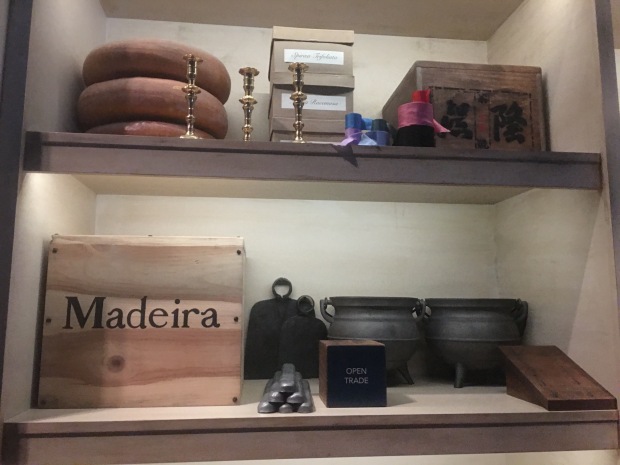
Display of recreated 18th century objects you might find in a colonial shop, at The Museum of the American Revolution in Philadelphia

Thanks for reading and see you next year! x

PS Why is it called ‘Madeira Mondays’?

Madeira is a fortified wine from Portugal and it was hugely popular with the American colonists. George Washington in particular really loved it, but it was also enjoyed by Alexander Hamilton, Benjamin Franklin and Thomas Jefferson. AND it was the wine drunk by the Continental Congress to celebrate the signing of the Declaration of Independence. Cheers!


Madeira Mondays: Christmas in Colonial America

Merry (almost) Christmas everyone! Last week’s post was about Christmas traditions in 18th century Scotland. Today we’re sailing across the Atlantic to check out how the American colonists would have celebrated the holiday. So grab a glass of mulled wine (or Madeira!) and snuggle up for some seasonal reading…

Who celebrated Christmas in Early America?

In short: some people did and some didn’t.

America was a diverse place from the very start and how/if you celebrated Christmas depended on several things. Firstly, it depends on when exactly we are talking about here. In 17th century Puritan Massachussetts, for example, Christmas celebrations were actually banned entirely because it was such a raucous holiday. These laws were later repealed.

But whether you celebrated Christmas also depended on who you were and where you lived. Some people might not celebrate it simply because they weren’t Christian (New York City, for instance, already had a Jewish population around the time of the Revolution). But many Christians didn’t observe it either. In Our Own Snug Fireside: Images of the New England Home, author Jane C. Nylander explains that for some in protestant New England, where values of stoicism and hard work reigned, festive Christmas celebrations were considered too Catholic and ‘an emblem of popery’. Yikes, not ‘popery’! So even if celebrating Christmas was technically not banned where you lived, you might still choose not to celebrate it. As historian Mary Miley Theobald writes: ‘Many early European-Americans didn’t acknowledge Christmas at all, let alone celebrate or decorate for it. These included the Puritans in New England and various denominations throughout the middle and southern colonies like Amish, Baptists, Congregationalists, Mennonite, Methodist, Presbyterian, and Quakers.’

But for some, like people of Dutch heritage in early New York, for instance, Christmas was absolutely celebrated. It was marked with the giving of gifts to children on St Nicholas Day (December 6th) and with sweet breads like Duivekater, a Dutch holiday bread baked throughout the month of December until the Epiphany (January 6th). This is a buttery, lemon flavored bread that I read all about in Peter G. Rose’s book Food, Drink and Celebrations of Hudson Valley Dutch. I even attempted to bake this delicious bread this year (see photographic evidence!).

IMG_8765

That time I tried to make a Dutch holiday bread and it turned out enormous (but also pretty tasty!)

What did they do to celebrate?

For those who did actively celebrated Christmas in the 18th century – which was mainly people from the middle and southern colonies – it was a season of merriment and visiting friends and family. This was the same over in Great Britain. It’s a party time! I’ve read about people in early New York going on fun sledging parties during the winter, but there were also feasts, balls (especially on Twelfth Night, January 5th) and in general it was a time of socializing and celebration. As well as attending Church, of course. The Christmas season was also a popular time to get married in early America, so you see a lot of weddings popping up too.

Was it a holiday for children?

Not really. Even though we might think of Christmas as a special time for kids now (visiting Santa at the mall, putting stockings by the tree, nativity plays etc.), that wasn’t the case in the 18th century. This article by Emma L. Powers from The Colonial Williamsburg Interpreter talks about how no 18th century sources highlight the importance of children at Christmastime. People in colonial Virginia, for example, talk about Christmas balls, feasting and parties, but these activities weren’t really kid friendly. ‘The emphasis on Christmas as a magical time for children came about in the nineteenth century,’ Powers writes. More on that below!

What about presents?

Gift giving wasn’t a major part of the holiday either and if it did take place it might have happened on New Years rather than Christmas Day. Sometimes small gifts were exchanged from masters to dependents (e.g parents to children, employers to servants etc.) such as a little bit of extra money or sweets.

How did they decorate?

Similar to their British counterparts, the colonists would bring in pieces of the outside to decorate their homes. We’re pre-industrial revolution, so nobody is buying mass-market Christmas decorations. You’d be making your own. Evergreens like mistletoe could be placed around (it already had the associations with kissing, by the way!), or maybe sprigs of holly or bay. Christmas trees weren’t around in the 18th century – that was a Germanic tradition that came in later!

What did they eat?

This again would vary regionally and certainly depended on class. In Virginia, beef, goose, ham and turkey would have had a place on a holiday table. And the Dutch, as I talked about above, were famous for their confectionaries and would have had gingerbread and other sweet treats served at Christmas. In fact, many aspects of our modern Christmas in America come directly from Dutch traditions. The hanging of stockings by the mantelpiece to be filled with sweets and gifts for children by St. Nicholas (Sinterklaas) was a Dutch practice. Even centering children at all in the celebrations was a Dutch thing. And speaking of St. Nicholas…

Did the colonists have Santa Claus?

They wouldn’t know our modern Santa, no. People in colonial times would not be familiar with our large, jolly fellow dressed in red and white who comes down the chimney to deliver presents and lives with the elves up at the North Pole. They might feel very perplexed if you told them about Santa (and rightfully so! He’s a pretty strange dude).

Our modern, secular Santa Claus is an American invention, inspired by the Dutch Sinterklaas and other traditions. There’s no singular origin of our Santa, but one key source that cemented the idea of Santa in the public consciousness was a poem written by New Yorker Clement Clarke Moore called ‘A Visit from Saint Nicholas’ in 1823. You probably know this poem by the title ‘Twas the Night Before Christmas’! This is the poem where we first see Santa as a ‘right jolly old Elf’ with ‘dimples so merry, and nose like a cherry’, coming to visit homes with all of his reindeer in tow. The poem gained wide popularity and inspired what we now think of as Santa Claus.

HarpersStNick001

Moore’s poem featured in Harper’s New Monthly Magazine in December 1857

(As a side note, it is a myth that Santa Claus’ red and white outfit was created by Coca-Cola for their advertisements. Coke definitely did use this image, but it was already around. Coca Cola only popularized a version of Santa Claus that already existed.)

santacoke

Santa looking quizzically at a bottle of Coca-Cola

So there you have it: some of the different ways that Christmas was celebrated and observed in early America! Did any of it surprise you? Hopefully now you’ll have some fun historical anecdotes to share over the holidays to impress and/or annoy your friends and family (welcome to my world)!

I hope that you’re having a peaceful and restorative end to the year and thank you very much for joining me for this seasonal ‘Madeira Monday’. I’ll be doing a wrap-up next week of all the ‘Madeira Mondays’ from 2019 and next year will be back with more explorations of early American history and historical fiction!

Sources Used

Books:

Food, Drink and Celebrations of The Hudson Valley Dutch by Peter G. Rose (Rose is a food historian and has several great books on the early Dutch settlers and their cuisine)

Our Own Snug Fireside: Images of the New England Home, 1760-1860 by Jane C. Nylander

The Battle for Christmas by Stephen Nissenbaum

Sites:

‘A Visit from St Nicholas’ (poem) by Clement Clarke Moore

”Christmas Customs’ by Emma L. Powers’ on the Colonial Williamsburg site

‘Did Coca-Cola invent the modern image of Santa?’ on Snopes

Image of Harper’s New Monthly Magazine comes from: ‘From the Stacks Holiday Edition: Clement C. Moore’s ‘A Visit from St Nicholas” on the Miami University’s Libraries’ Special Collections website

‘Revisited Myth #101: Colonial Americans decorated their homes at Christmas’ on History Myths Debunked blog

‘When Americans Outlawed Christmas’ on Mental Floss

Further Christmas Reading/Listening

Ben Franklin’s World podcast Episode 281: Peter G. Rose, Delicious December: How the Dutch Brought us Santa, Presents and Treats

‘Madeira Mondays’ is a series of blog posts exploring Early American history and historical fiction. I’m not a historian, but an author and poet who is endlessly fascinated by this time period. I am also currently writing/researching a novel set during the American Revolution and recently finished a Doctorate of Fine Art looking at how creative writers access America’s eighteenth-century past. Follow the blog for a new post every Monday and thanks for reading!

Madeira Mondays: Christmas in a Georgian Townhouse

For the last few months, I have been volunteering at The Georgian House. Situated in the heart of Edinburgh’s New Town, The Georgian House is a restored late 18th century townhouse, once owned by John Lamont (the 18th chief of the Clan Lamont). Today it is a show house, designed to show what life was like for those above and below stairs in 18th century Edinburgh. Each room is full of Georgian furniture, rugs, knickknacks and art, giving you the genuine feeling of stepping back in time.

IMG_8950

Step on into the drawing room at The Georgian House!

IMG_9361

The Dining Room

I have loved volunteering there and will do a longer post next year on what to expect from a visit to The Georgian House (and why you should definitely pop in to say hello if you’re ever in Edinburgh!), but I wanted to tell you about this month in particular because we’ve been doing some pretty cool stuff this Christmas! For one thing, I have been dressing up, along with some of the other volunteers, as members of the Lamont family for our event ‘Meet the Lamonts’. Visitors could interact with us (we’re in character the entire time!) and learn about life for the Lamont family and their servants. I was dressed as Georgina, the 2nd daughter of John Lamont, but we also had people portraying the butler, our housekeeper, the cook, and more.

Processed with VSCO with 5 preset

Me (as Georgina Lamont) looking out our window at Charlotte Square, which would have been under construction during the Georgian period

The house was also decorated for Christmas and part of our job was to discuss with the visitors how a family like the Lamonts would have celebrated Christmas in Georgian Edinburgh.

So how would the Georgians celebrate Christmas?

For the rest of this post, I’ll talk a bit about Christmas festivities in 18th century Edinburgh and then next week, we’ll look at how it was celebrated over in the American colonies. Let’s explore!

Carly 2

The staircase at The Georgian House, decorated for Christmas

Firstly, when is Christmas?

For the Georgians, Christmas was not two days (Christmas eve and day) but in fact an entire season. Christmas was a month long celebration that involved parties, dances, meals etc. It ran from December 6th (St Nicholas Day) until January 6th (Twelfth Night). Our modern shortened Christmas came into being when employers needed their workers to work throughout the festive period (remember how angry Scrooge gets when his employee, Bob Cratchit, wants the day off for Christmas?) So it was a festive, party-filled period for socializing and family get-togethers, which readers of Jane Austen novels might be familiar with, as the characters are always visiting friends and family (and celebrating!) during this time of year.

How was it different from modern Christmas celebrations?

A lot of the Christmas traditions that we associate with the holiday today did not come into practice until the Victorian period. The Christmas tree, for example, was not widely practiced outside of Germany until Victorian times, when Prince Albert famously introduced the tradition into English society. Christmas cards as well did not really come in until the Victorian period. We didn’t have Santa Claus as we know him yet either (more on that next week).

They did however sing Christmas carols. Elite young ladies and gentlemen would often be taught to play an instrument, and the family could gather round and sing. ‘Joy to the World’ was already around, as was ‘God Rest Ye Merry Gentlemen’. (I wonder if people got as sick of hearing these same tunes as I do of modern Christmas songs…)

People of all social classes could decorate their homes for Christmas because decorations were often natural elements brought in from the outside. People brought in evergreens (holly, mistletoe, ivy etc.) and festooned the house with them. Greenery was a symbol of the promise that life would return in spring (if that sounds vaguely pagan, then you’re right! The idea comes from pagan traditions.).

IMG_9689

The mantle in the parlor decorated for Christmas

One tradition practiced by many in this period was the Yule Candle. It was a big white candle lit by the head of the household at sunset on Christmas Eve and then allowed to burn throughout the night. It was believed to be bad luck if it burned out before Christmas morning. In Scotland, the Yule candle was not to be purchased, but given as a gift to the family and typically sat on the dining table where Christmas Eve dinner was eaten. And speaking of which…

What did they eat?

Obviously this would vary widely depending on region and social class. For a wealthy family like the Lamonts, vension might have been the meat of choice. Other typical Christmas foods were cheeses, soups, and minced pies (which were made with real mince in them! And similar spices to our modern mince pies: cloves, mace etc.). A popular drink was a Wassail bowl, similar to a mulled wine: cooked with spices and sweetened wine or brandy, served in a large bowl garnished with apples. I’ll talk a bit more about Christmas food next week, in my post about Christmas in the American colonies.

So that is a bit about Christmas festivities in Georgian times! I hope that it was informative and if you want to pay a visit to The Georgian House, I believe it will be decorated until January 5th. Be sure to check opening times on The National Trust’s Website before you go! Alas, I will not be there dressed up (our ‘Meet the Lamonts’ reenactment events are finished for the year), but there will be helpful volunteer guides in each room and it would be fun and Christmas-y nonetheless. A lot of the information from this blog post I learned from a very informative little booklet The Georgian House has made this year about Georgian Christmas traditions, including recipes, which you can pick up there for a small donation if you’re curious! I have also included some further reading below if you want to learn more about Christmas in Georgian Britain. Next week, we’re sailing across the Atlantic to British America!

Thanks very much for reading. I hope you’re having a great holiday season. Cheers!

PS

If you’re still looking for Christmas gifts, might I suggest giving the gift of poetry? I have a new poetry pamphlet coming out next year (!) and my publisher, the wonderful Edinburgh-based Stewed Rhubarb, is offering a subscription service called marvelously The Fellowship of the Stewed Rhubarb. Members of the ‘fellowship’ get each of Stewed Rhubarb’s new poetry pamphlets mailed out to them as they are published next year. That’s four, new Scottish poetry books (mine included!) which will arrive in the mail to you throughout 2020. It’s the gift that keeps on giving!

This subscription service is a new initiative to support Scottish poetry and writers like me, and if we don’t get enough subscribers, we won’t be able to go forward with the project. So if you have a literature lover in your life, or if you are one yourself, it would be lovely if you joined us! Support the arts in Scotland and get four great books out of the deal. You can find all the details here. Thanks!

Further Christmas reading:

Blogs:

‘Christmas 1819’ from All Things Georgian blog

‘Christmas in Jane Austen’s Time’ from Regina Jeffers’ blog

18th century podcast Episode 25: Christmas

Books:

Christmas: A Biography by Judith Flanders

The Keeping of Christmas: 1760-1840, published by Fairfax House in York, England, text and design by Peter Brown (I got this little book as part of Fairfax’s house exhibition ‘The Keeping of Christmas’ and it’s very useful. Can’t seem to find it online, but here’s the link to Fairfax House)

A Christmas Carol by Charles Dickens (Okay so it’s not Georgian, but I believe that everyone should read this. It’s entertaining, compassionate and timely. I re-read it every year)

‘Madeira Mondays’ is a series of blog posts exploring Early American history and historical fiction. I’m not a historian, but an author and poet who is endlessly fascinated by this time period. I am also currently writing/researching a novel set during the American Revolution and recently finished a Doctorate of Fine Art looking at how creative writers access America’s eighteenth-century past. Follow the blog for a new post every Monday and thanks for reading!