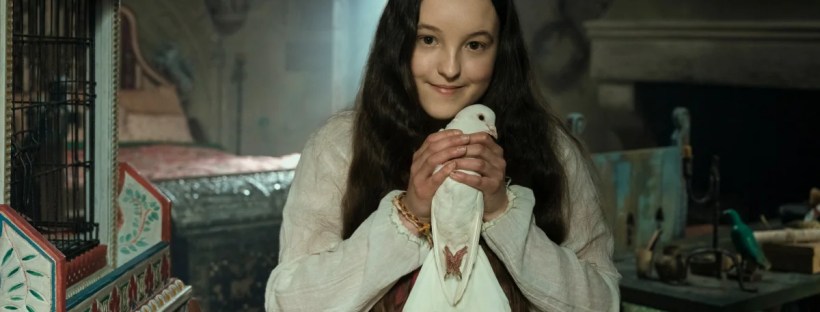
A couple weeks ago, a friend of mine came to Edinburgh for a visit and suggested that we watch Lena Dunham’s movie Catherine Called Birdy. She knew I’d enjoy the movie because a) it’s historical fiction b) it’s a comedy c ) it’s about sassy young ladies. She was right, of course. I did like the movie. But not just because it ticked all of those boxes. I liked the film because it was actually funny and warm and kind of quietly transgressive in a way I wasn’t expecting.
Continue readingMadeira Mondays: Sights from Edinburgh’s Past and Present
I have seen a ghost.
Well, not literally – but I’ve come pretty close!
Recently I’ve been teaching a creative writing course I designed at the University of Glasgow which is all about ‘time travel’. We looked at a few straightforwardly sci-fi books about characters actually traveling backwards and forwards in time, as well as poetry, memoir, and historical fiction books that invited us to think about memory and imagination as forms of time travel too.
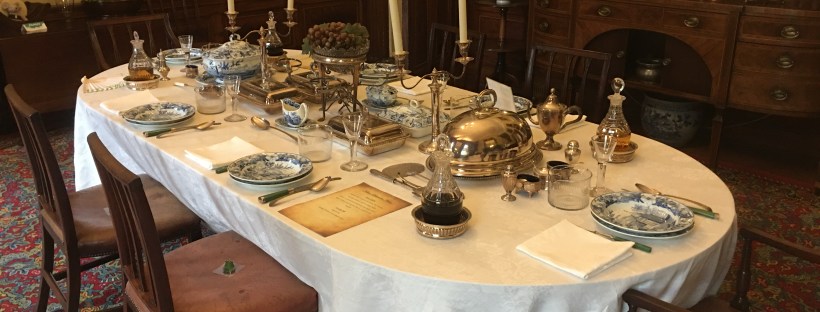
Teaching this class made me think of a walk I took a few months ago with a dear friend of mine, Alan, who I met while volunteering at The Georgian House. We walked around the Canongate area of Edinburgh (near Holyrood Palace) and he showed me some photographs of how the streets looked in times past. It was almost spooky to see the black and white images of the chaotic shop fronts, the women in their wide-brimmed hats full of flowers, and then look up at the very same street today.
Continue readingMadeira Mondays: Ridley Scott’s Napoleon (Movie Review)
What you think about a historical figure often depends on where you were educated. Take Napoleon. Growing up in the US, Napoleon was described in my schools (if he was mentioned at all) as a kind of over-ambitious conquerer. People even say ‘Napoleon complex’ for a small man who tries to overcompensate for his size. But I recently learned from my partner, who is Italian, that in Italy he’s a more positive (if still complex) figure. He conquered Italy, yes, but Italy was sort of in shambles anyway at the time and he paved the way for future revolution and the democratic ideals that would unify Italy a century later. In France I understand him to be a divisive, complex figure too, especially considering his decision to reinstate slavery after it had been abolished in France.
I personally don’t claim to know a lot about Napoleon. He’s not a person I’ve ever studied, and, beyond Waterloo, I couldn’t name one of his famous battles. My main associations with Waterloo are the ABBA song and also that it features in Vanity Fair (brilliant book btw). So I went into Ridley Scott’s Napoleon with an open heart and an open mind. I wasn’t looking for historical inaccuracies (though I’ve heard there are many). I was looking for entertainment.
I did not get it.
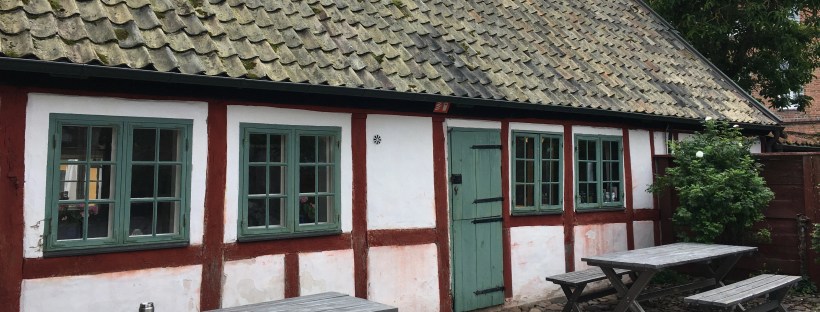
Continue readingMadeira Mondays: A Visit to Kulturen Museum (Lund, Sweden)
As regular readers of this blog will know, I’m absolutely fascinated by how people lived in the past. It’s one of the reasons I read and write historical fiction, it’s why I volunteered as a historical guide at a restored 18th century townhouse and it’s why – whenever I get the chance – I love visiting historical buildings and museums.
My favorite type of museums are open-air museums (or ‘folk museums’) where you get to go inside a collection of historical buildings, which are usually full of objects and sometimes even costumed guides. These are my favorite museums because they are immersive and really give you the feeling of ‘stepping back in time’.
I’ve been to Skansen in Stockholm (the world’s oldest open air museum, opened in 1900), Colonial Williamsburg in the USA, and even an open-air museum in Transylvania (though that’s a story for another time!). Longtime blog readers might also remember The Highland Folk Museum. Earlier this month I had the pleasure of traveling to beautiful southern Sweden (my partner’s brother lives there). When we found out there was an open air museum – Kulturen – located in the nearby university town of Lund, we knew we had to go!
Continue readingFriday Finds: B Movies (Board game review!)
Hello friends! It has been a minute. My last blog post was back in May and then life swept me up like a giant pterodactyl and deposited me – somehow – at the end of August. Where did the time go? Well, I was teaching a creative writing (fiction and poetry) class this summer at the University of Edinburgh AND finishing the edits on a new book AND hosting friends AND traveling in Sweden AND interviewing and landing a new job (!) which I’ll tell you more about soon. Phew. All of this to say: thank you for your patience during this crazy time. More Madeira Mondays will be back (the first Monday of each month), with a few ‘Friday Finds’ sprinkled in there too.
And this ‘Friday Finds’ is an exciting one for me because it’s a first: my first board game review!
Continue readingMadeira Mondays: A folk song about a Revolutionary War soldier
For today’s ‘Madeira Mondays’, I wanted to share with you one of my favorite pieces of art about the Revolutionary War. It’s a quiet little song by New Mexico-based folk musician Eliza Gilkyson. It’s called ‘Jedidiah 1777’ and it comes from her 2005 album Paradise Hotel.
It’s a song about a young American soldier called Jedidiah and it’s actually based on letters written by Gilkyson’s own ancestor, Brig. Gen. Jedidiah Huntington, who fought in the Revolutionary War!
Continue readingFriday Finds: The Poetry of Sappho
Here in garlands, goddess of love, as a sign
to our own festivities, with a graceful hand
in golden cups pour nectar out like wine.
from Sappho: Songs and Poems, translated from the Greek by Chris Preddle
I must admit: I don’t know much about antiquity. Frequent readers of this blog will know that I’m interested in 18th and 19th century history which – believe it or not – is fairly recent (when we take into account all of human history). But what I do know is that there were many complex and vibrant civilizations long before our own and we can still feel their influence today in our beliefs, our values and our art. And how cool is it that one of the most famous and lasting poets in all of Western literature was a woman?
Continue readingMadeira Mondays: My new historical short story ‘Feminine Absurdities’
“It wasn’t until my fourth or fifth sip of tea this morning that I noticed Miss Nancy Carson was missing her eyebrows. I promptly set the cup down and stared at her across the breakfast table. I wanted to make certain she had not simply hidden her brows under too much white pomade. The girl is at an age where she has begun to prepare her toilette, and painting takes practice to master. But her brows were not covered up. They were gone.”
That’s the opening paragraph from my new historical short story – ‘Feminine Absurdities’! It was published last month in CALYX magazine. You can listen to an audio recording of the full story right here.
‘Feminine Absurdities’ is set in 18th century New York City during America’s Revolutionary War. As many of you will know, that’s the war when the American colonies fought for independence from Great Britain. But that’s not what my story is about. My story is about a schoolteacher who notices that something is wrong with one of her pupils. Her eyebrows are gone! But what’s actually wrong with the girl might be deeper and darker than it first appears…
Continue readingMadeira Mondays: A Visit to Greyfriars graveyard in Edinburgh
Some of you may recall the walk that I took with Alan, my friend and fellow Georgian House volunteer, back in December. He very generously led me on a walk through The Royal Mile – the famous street that cuts through the city of Edinburgh – from the Castle down to Holyrood palace. During our walk, he shared with me tales of forgotten Edinburgh residents, catastrophic fires and years upon years of fascinating history.
A couple of weeks ago, my partner and I joined Alan for another walk, this time around Grassmarket which, locals will know, is a lively area of the city’s ‘old town’ that is full of pubs and cafes. We saw a lot on our walk, but instead of trying to cram everything into one post, I thought I’d focus instead on one of my favorite elements of the walk: our exploration of Greyfriars Kirkyard! (A ‘kirk’ is a Scottish word for church, by the way!)
Continue readingMadeira Mondays: The National Museum of Cinema (Turin, Italy)
Madeira Mondays is hitting the road for this one, folks! In early January, I headed to Italy to visit my partner’s family (he’s from a town outside Milan). We spent a few days in the nearby city of Turin. Turin is a beautiful northern Italian city, nestled at the base of the Alps, and it’s home to a unique museum: The National Museum of Cinema.
While I was impressed with several aspects of the museum, the coolest thing about it was its collection of old pre-cinema devices, the 18th and 19th century inventions that were popular right BEFORE cinema became a thing. So if you’re wondering what sort of moving images people watched before they went to the movies, then step on into the museum with me…
Continue reading