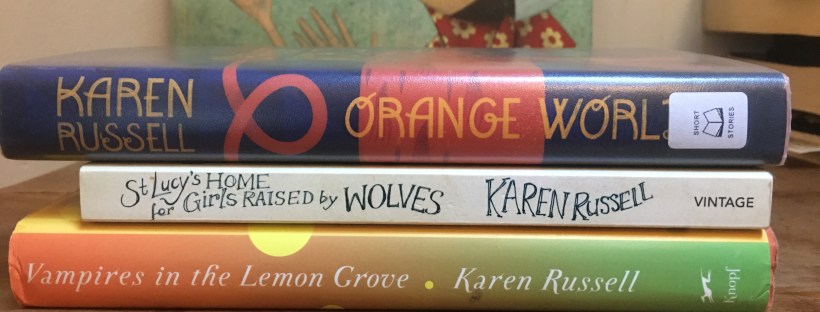
Madeira Mondays: Historical Short Stories

When we think of historical fiction, we tend to think about novels. It seems like a collective decision was made, somewhere down the line, that fiction set in the past should be EPIC in its scope. That historical tales were best suited to sprawling tomes with many sequels. Now, don’t get me wrong. I love a good historical novel (I’m writing one as we speak!). And I understand the appeal of getting wholly immersed in another time period, which one can do with a novel: learning about the minutia of life, meeting a big cast of characters, covering several years etc. BUT there is also something to be said for the short story as a medium for exploring history too.

Why are short stories such a brilliant form for historical fiction?

Well, for one thing, they reflect the way that the past often comes to us, which is in brief, fragmented, incomplete bursts. An old photograph discovered in an attic. A torn out page from a diary. Pieces of historical evidence often provide tiny windows to another world, but so much is left unknowable. Similarly, short stories are tiny windows into another world. A brief flash, a glimpse, but with much that you have to fill in and guess for yourself.

Also, maybe I am greedy, but sometimes I would rather read a collection with many different settings and characters, rather than commit to a whole book with just one time period and one setting. Enter Karen Russell. One of my absolute favorite writers. She writes both short stories and novels and many of her stories take place in the past – whether that is the old American West, 17th century Greece, or 19thcentury Japan. Lots of her stories are set in the present too. But all of her tales have fantastical or magical realism elements to them and they are all ridiculously well written. I actually feel wiser after reading her stories, like I have understood something new about human nature. Or, at least, have recognized something that I had not thought about before.
IMG_0205

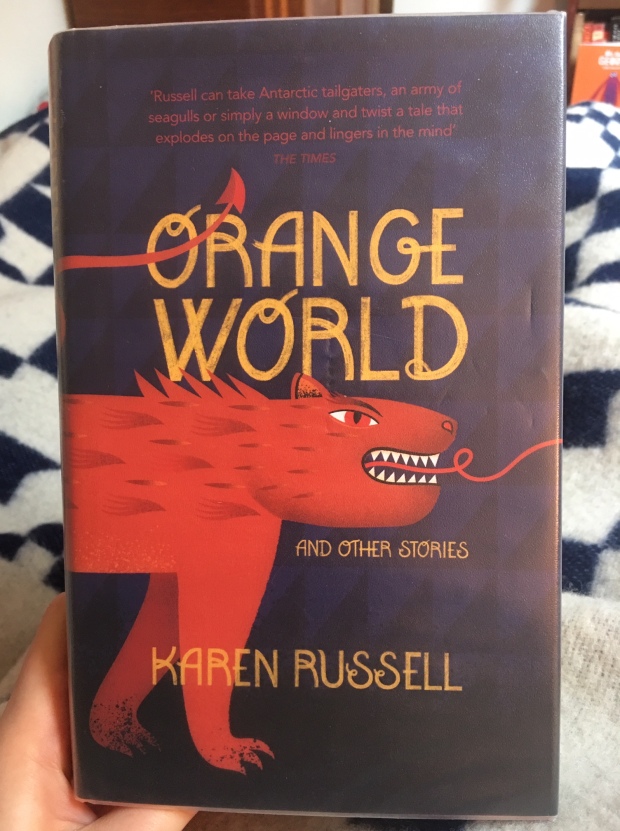
I was so excited to read her new collection last week – Orange World – and it exceeded my (very high!) expectations. So, for today’s ‘Madeira Mondays’, I wanted to point you towards some of my favorite, historical fiction stories by Karen Russell! Even though, regrettably, none of her short stories are set in 18th century America (Please write a story set in 18th century America, Karen! Please!!), lots of them explore other periods of American history and the American landscape. Here are four of her stories that I recommend reading ASAP.

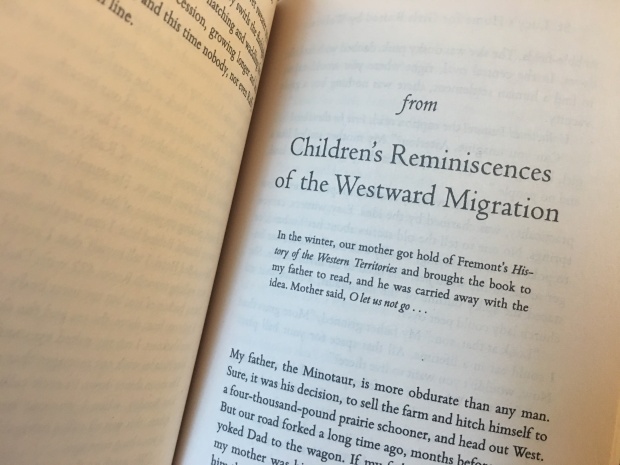
1 – ‘from Children’s Reminiscences of the Westward Migration‘, in St Lucy’s Home for Girls Raised by Wolves

Russell is an American writer originally from Florida, and many of the stories in her first collection, St Lucy’s Home for Girls Raised by Wolves, take place in a weird, heightened version of a Florida swamp. But she’s also clearly interested in the landscape of the American West and one of my favorite stories from that collection is titled: ‘from Children’s Reminiscences of the Westward Migration‘.  The title suggests a historical document, that the story we’re about to read is one from a larger collection of children looking back on their experience moving out west. But this expectation is playfully subverted in the very first line when we release that our boy narrator has a father who is a MINOTAUR. Yup. A Minotaur. Half-man, half-bull.

Thus begins a story that is really about myths: the myth of the American West (versus the harsh reality of life there), the myth of the Minotaur, the myth of this particular Minotaur character who, our narrator tells us, was once a famous rodeo star, AND about how parents seem like myths to their children, until we start to see their flaws.

You can hear Russell reading the beginning of the story here, to see if it might be your cup of tea!
IMG_0216

2 – ‘Proving Up’ from Vampires in the Lemon Grove

Russell’s second collection, Vampires in the Lemon Grove, is my personal favorite and there’s another story about the American West in it, although this one is much darker than ‘Westward Migration’. It is about the rapacious desire for land and ownership, and this dark greed manifests itself as a very dark force that threatens the characters, who are settlers on the American frontier. The ending is so sinister it took my breath away! Apparently it has also been turned into an opera.

3 – ‘The Barn at the End of Our Term’ from Vampires in the Lemon Grove

This is a goofy story which is dear to my heart, about US Presidents reincarnated as horses. Yes. Horses.

I actually wrote about it for part of my PhD thesis, which looked at different iterations of John Adams in fiction, because Adams the horse is a central character in the story. He tries to lead the other Presidents-turned-horses to rebel and break out of the barn. Sure, it’s a silly and fun concept, but it’s really about legacy and what kind of ‘afterlife’ these Presidents have in our imaginations. So it’s not so much ‘historical fiction’ as fiction ABOUT history. It’s also funny as hell and insightful.

4 – ‘Black Corfu’ from Orange World and other stories

Okay, so this story is definitely historical, but not set in America. The setting is the island of Corfu, 1620. I included it on this list because it is my favorite story from her latest collection and I’ve read it twice already. This story is about an ambitious, intellectual physician whose job it is to cut the hamstrings of corpses so that they do not rise from the dead and become zombies. He once aspired to be a great doctor, but his dark skin color and his class have prevented him from rising in his profession. When rumors start to spread that a dead woman has been seen roaming the island, the doctor is blamed and chaos ensues.

This story, like all of her stories, is about many things at once. Its themes are super relevant to us today, although they are explored in a historical context: class, race, science, superstition, ambition and the power of fear.

*

Have I convinced you to read her yet? I hope so! And I hope that you will enjoy these strange historical stories as much as I do.

Recommended Reading:

Orange World and Other Stories; Vampires in the Lemon Grove and St Lucy’s Home for Girls Raised by Wolves by Karen Russell (obviously!)

Voices Against the Wall: The Hilarious Terror of Karen Russell’s “Orange World and Other Stories” (in-depth review of Orange World and other stories) from the LA Times

‘Bog Girl’ by Karen Russell in The New Yorker (also featured in Orange World)

‘Madeira Mondays’ is a series of blog posts exploring Early American history and historical fiction. I’m not a historian, but an author and poet who is endlessly fascinated by this time period. I am also currently writing/researching a novel set during the American Revolution and recently finished a Doctorate of Fine Art looking at how creative writers access America’s eighteenth-century past. Follow the blog for a new post every Monday and thanks for reading!


Madeira Mondays: A Forgotten 18th Century Drink

Last week, I received two very good pieces of news. One I cannot talk about publicly yet (ohhhh secret!) but the other I can happily announce is that I have a new poetry book coming out! My second poetry pamphlet will be published later this year with Scottish indie press, Stewed Rhubarb. They specialize in publishing spoken word poetry and as a spoken word poet myself, it was the perfect fit! The book has poems about early American history, about sex, about literature…basically, all the stuff I’m interested in! (Can you tell I’m excited?). I can’t wait to work with Stewed Rhubarb, and with my fabulous editor Katie Ailes, on this book and I’ll share lots more info. when we’re closer to publication day.

But I wanted to celebrate the publication news this week by making an 18th century drink. Since it was a chilly February day, I chose a warm drink called ‘Flip’. I’m not going to include the full recipe here because (spoiler alert) I found this drink pretty vile, BUT I will tell you what it is, how I made it, and here’s a link to an excellent video with step-by-step instructions of how you can make it too, if it seems like your sort of thing (It was definitely not mine!). Jas Townsend, the re-enactor who makes it in the video, seems to really enjoy his though so…maybe it just wasn’t for me?

So, what is ‘Flip’?

The 1890’s had the gimlet. The 1990’s had the Cosmo. In the 1690’s and even the 1790’s, it was the creamy flip that ruled the bar…

Forgotten Drinks of Colonial New England by Corin Hirsch

Flip is a hot, frothy drink that is a blend of ale, rum, some sort of sweetener (molasses or sugar) and sometimes eggs and cream. It’s also usually spiced with nutmeg and/or ginger, and it was very popular in 18th century America. It popped up in American taverns in the 1690’s and was still popular during the Revolutionary War. Food writer Corin Hirsch, in the book quoted above, found one instance of a tavern in Holden, Massachusetts, who charged more during the Revolutionary War for their Flip than they did for a bed. A mug of ‘New England Flip’ was 9 Dollars, versus a bed in the common boarding room for women, 2 shillings! Either those sleeping arrangements were really bad, or their flip was really good, or both.

How do you make it?

I have to admit that making Flip was kind of fun because you are meant to pour the drink between two separate pitchers until it is blended. So I mixed an egg and some spices in one bowl, then heated up some ale separately, and then added them together in these two pitchers – pouring back and forth until it was creamy.

IMG_0189

The two pitchers I used to make my (pretty dreadful) ‘Flip’

IMG_0194

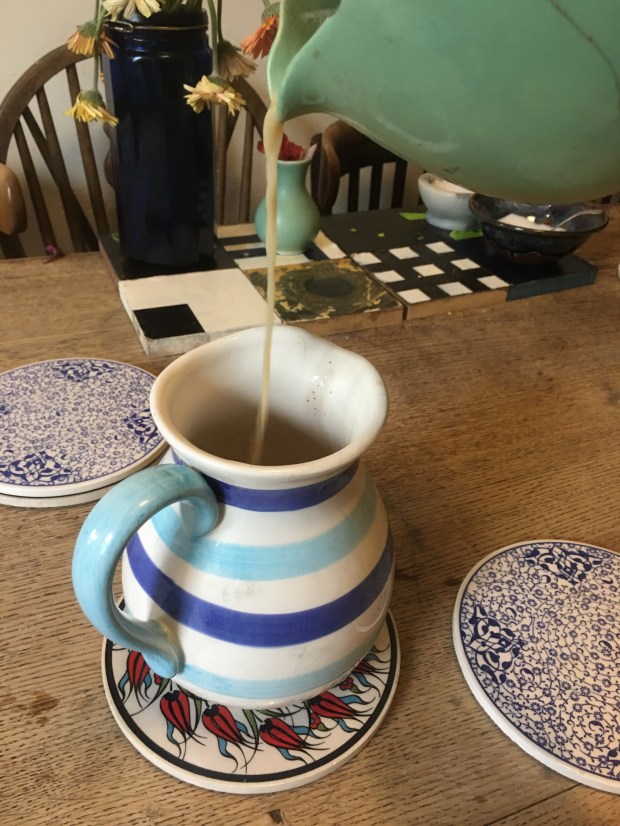
Pouring the mixture from one pitcher to another to mix it. (Even the flowers in this picture look sad. They probably don’t like Flip either!)

I was vaguely following along with the Townsend video linked above and also there’s a recipe for it in Forgotten Drinks of Colonial New England. In any case, the resulting mixture was creamy-ish, but there were itty bitty chunks of cooked egg inside it, which I suppose I could have strained out. But I also did not like the smell of it: the hot, yeasty smell of the beer, mixed with the nutmeg and ginger, mixed with the egg.

But I think where I really went wrong is that in the 18th century Flip was heated up a second time (after you’d mixed the drink) by plunging a hot fire poker into the middle of it. The poker heated it (of course), but also added burnt flavors. I would imagine this might work better than what I did, which was put the whole thing back on the stovetop briefly, once I’d mixed it all together, just to get it warm again. By not using an actual fire poker, you lose some of that fire flavor, which was probably part of what made the drink special.

What did it taste like?

Not nice, you guys.

Even though I drank it from a fantastic Bernie Sanders ‘Feel the Bern’ mug, that was not enough to save this drink from tasting really, really bad to me.

IMG_0195

For one thing, it was pretty sweet. I tasted the sugar definitely and also rum has its own sweetness…all of that together made for a thick, HEAVY, brownish drink that actually turned my stomach.

Looking back on it, I’m not really sure why I picked Flip in the first place, other than the fact that it looked fun to pour the drink between the two pitchers. I’m not a beer drinker, and I don’t love rum, so I’m not sure why I thought I would enjoy those two things heated up and mixed together with an egg. I would still try it again if someone else made it who knew what they were doing, but I think this experiment was probably doomed from the outset!

Nevertheless, I am glad that I tried it, because now I will know what it is if I ever run across it in a historical source. And my stomach will turn at the memory of making this forgotten concoction from the 18th century. Which I will not be resurrecting again any time soon!

Recommended Reading/Viewing:

Forgotten Drinks of Colonial New England: From Flips & Rattle-Skulls to Switchel and Spruce Beer by Corin Hirsch

‘Popular Drink Fallen into Obscurity- ‘Flip’ from the 1820s’ on Townsends YouTube Channel

For an 18th century drink that I definitely did enjoy, check out my recipe for whipped syllabub!

(Today’s Featured Image is an 18th century oil painting, ‘Young Couple in a Rural Tavern’, by Giacomo Francesco Cipper)

‘Madeira Mondays’ is a series of blog posts exploring Early American history and historical fiction. I’m not a historian, but an author and poet who is endlessly fascinated by this time period. I am also currently writing/researching a novel set during the American Revolution and recently finished a Doctorate of Fine Art looking at how creative writers access America’s eighteenth-century past. Follow the blog for a new post every Monday and thanks for reading!
 

Madeira Mondays: Hamilton Wasn’t Wearing Any Underwear

As a graduation present, my mom took me to go see the musical Hamilton in London’s West End last summer. It was, predictably, fantastic. I had written about the musical as part of my Doctorate of Fine Arts project, which looked at (among other things) how contemporary fiction writers represent the American Revolution. So it was a fitting PhD grad gift! We had fabulous seats and we laughed, cried, and cheered with the rest of the audience. I also managed to keep my singing along to a minimum, which I’m pretty proud of.

Afterwards we got a drink and my ever-tolerant, encouraging mother listened to all my reflections on the show: the set, the costumes, the characterizations etc. I went on and on about how I liked the choice of using mostly period-appropriate clothes and I made a joke about how I hoped they were wearing 21st century underwear though.

‘What do you mean?’ she asked with confused laughter.

It was then that I explained what precisely the real Alexander Hamilton would most likely have been wearing as underclothes and it surprised her so much that I thought I’d do a whole post about it here!

Hamilton 4

Me and my mom in seeing Hamilton: An American Musical in London’s West End!

When it comes to visualizing clothing of the past, it’s always helpful for me to look at videos, drawings, and (if possible) real life historical artifacts in museums. But since we can’t all go to a museum together, let me direct you to National Museums Liverpool’s very helpful video ‘Getting Dressed in the 18th Century – Men’.

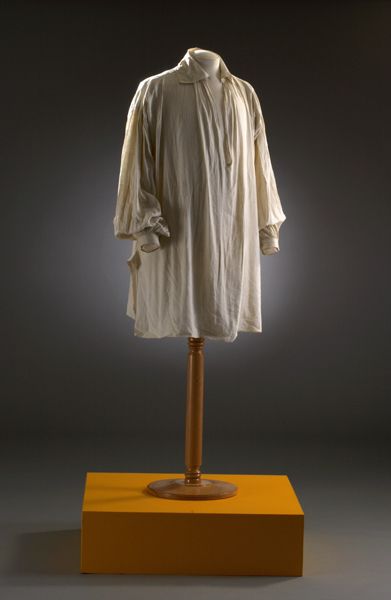
In this video, you will see that the gentleman’s first layer of clothing is a big white shirt with voluminous sleeves (imagine like a pirate shirt?). Then he puts on white stockings, which go up over the knee. A gentleman might wear drawers (which are like short trousers made of thin linen) but it’s not necessary because the white shirt was really long and you just tucked it between your legs when you put on your breeches (which are short ‘trousers’ for those in the UK, ‘pants’ if you’re in the US) and the shirt acted as modern men’s underwear would!

men's shirt

Example of Late 18th century man’s shirt. Photo from Pinterest.

So basically, the ‘underwear’ or base garment for men was just a long shirt! The quality and consistency of this shirt of course varied. A gentleman might have ruffles at the wrist, a laborer’s might have had stripes. But basically, as far as I could tell, our modern concept of men’s underwear (i.e boxers, briefs etc.) didn’t come about until around the 1930’s.

So Hamilton would have been wearing something under his outer clothing, it just probably wasn’t what you would have expected!

So what were women wearing as a form of undergarments? Let’s save that for another post…

Further Reading:

‘Underwear in the 18th Century’ from The Macaronis

‘A Colonial Gentleman’s Clothing: A Glossary of Terms’ from the Colonial Williamsburg site

‘Getting Dressed in the 18th Century – Men’, YouTube video from National Museums Liverpool

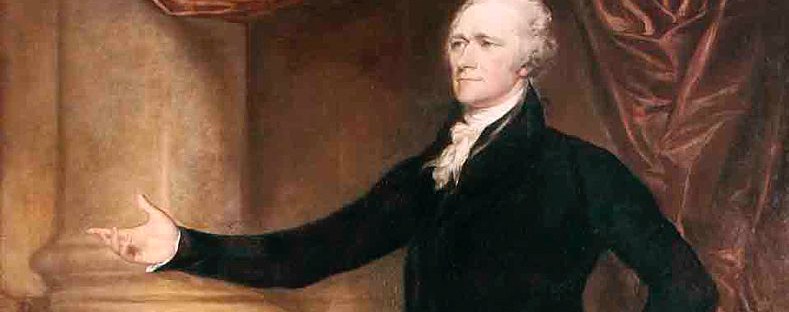
(Today’s Featured Image is of none other than, you guessed it, Alexander Hamilton! It’s from the 1805 portrait of him by John Trumbull, accessed via the Wikipedia Commons.)

Madeira Mondays is a series of blog posts exploring Early American history and historical fiction. I’m not a historian, but an author and poet who is endlessly fascinated by this time period. I am also currently writing/researching a novel set during the American Revolution and recently finished a Doctorate of Fine Art looking at how creative writers access America’s eighteenth-century past. Follow the blog for a new post every Monday and thanks for reading!


Madeira Mondays: The Dictionary of the Vulgar Tongue (R through Z)

This is the final installment in my series of three posts looking at historical slang words! The Dictionary of the Vulgar Tongue by Francis Grose (1811) has been an endlessly entertaining historical source, a compendium of ‘vulgar’ phrases, swears, oaths, insults, drinking games and much more. If you missed the first two posts in this series, you can find them here and here.

vulgar tongue

Now I’m pulling out the best words in this unusual little dictionary from the letters R-Z. I hope that you enjoy them and let me know which is your favorite. Mine is probably ‘sea lawyer’ and ‘spoil pudding’. Happy reading!

RIGMAROLE. Roundabout, nonsensical. He told a long rigmarole story. (Good to see that this one has stuck around! Although I often hear it used more in the context of something being long and complicated, e.g. ‘signing up for that thing required filling in lots of papers, it was a huge rigamarole!’)

SAINT GEOFFREY’S DAY. Never, there being no saint of that name: tomorrow-come-never, when two Sundays come together. (See you on St Geoffrey’s Day aka NEVER!)

SANDWICH. Ham, dried tongue, or some other salted meat, cut thin and put between two slices of bread and butter: said to be a favourite morsel with the Earl of Sandwich. (I thought it was interesting that a sandwhich was a recent enough food that they felt they had to include a definition of it, plus the fact that this definition pretty much still holds!)

SEA LAWYER. A shark. (I guess back then people were already poking fun at lawyers a lot. But I mostly included this one because it makes me picture a shark in a business suit.)

TO SHOOT THE CAT. To vomit from excess of liquor; called also catting.

SLY BOOTS. A cunning fellow, under the mask of simplicity.

SPOIL PUDDING. A parson who preaches long sermons, keeping his congregation in church till the puddings are overdone. (I’ve certainly been to some lectures given by ‘spoil puddings’!)

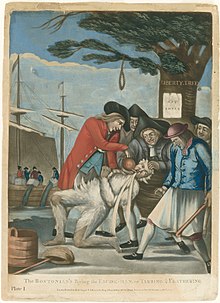
TARRING AND FEATHERING. A punishment lately inflicted by the good people of Boston on any person convicted, or suspected, of loyalty: such delinquents being “stripped naked”, were daubed all over with tar, and afterwards put into a hogshead of feathers. (I included this one mostly because of its connection to the American Revolution. This was something that Patriot mobs did to Loyalist citizens.)

tarring and feathering

British propaganda print from 1774: The Bostonians Paying the Excise-Man. The print depicts a customs official being tarred and feathered by a Patriot mob.

VICE ADMIRAL OF THE NARROW SEAS. A drunken man that pisses under the table into his companions’ shoes. (You will recall from my first post about this dictionary that an ‘Admiral of the Narrow Seas’ is one who throws up on someone across from him from drunkenness. So the VICE admiral is someone who pees on someone’s shoes. Both are oddly specific and I wouldn’t want to go drinking with either of these ‘admirals’, I have to say.)

WHIPT SYLLABUB. A flimsy, frothy discourse or treatise, without solidity. (This entertained me because syllabub was a popular dessert drink which involved whipped cream. So this phrase obviously alludes to that!)

WOLF IN THE STOMACH. A monstrous or canine appetite.

YANKEY, or YANKEY DOODLE. A booby, or country lout: a name given to the New England men in North America. A general appellation for an American.

*

Thanks for reading and stay tuned for more discussion of this book in a future post when I talk about the origins of the Revolutionary War-era song ‘Yankee Doodle’.

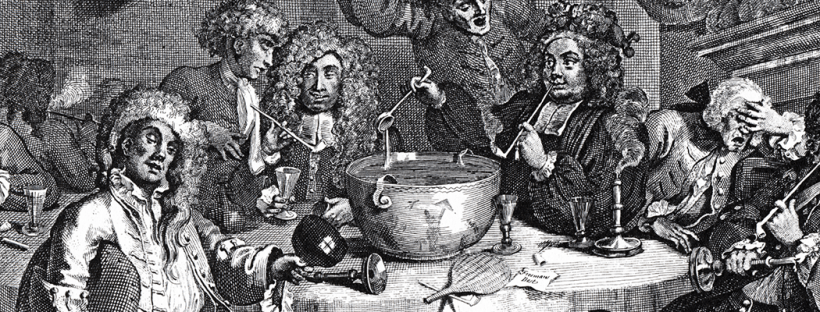
(Featured Image: ‘A Midnight Modern Conversation’ by William Hogarth c. 1730 via Wikipedia Commons)

Madeira Mondays is a series of blog posts exploring Early American history and historical fiction. I’m not a historian, but an author and poet who is endlessly fascinated by this time period. I am also currently writing/researching a novel set during the American Revolution and recently finished a Doctorate of Fine Art looking at how creative writers access America’s eighteenth-century past. Follow the blog for a new post every Monday and thanks for reading!
Madeira Mondays: Thomas Jefferson, James Hemings and French Cooking

Thomas Jefferson is known for several things.

He is considered one of America’s ‘Founding Fathers’ and is probably most famous for writing The Declaration of Independence in 1776, a list of grievances that the American colonies sent to King George III which kicked off the American Revolution.  He’s also been in the press recently as Monticello, his home (which is now a museum and research center), grapples with how to represent the more uncomfortable truths about Jefferson’s life: namely that he kept hundreds of slaves (despite expressing a belief that slavery was morally repugnant) and fathered several children with an enslaved mistress, Sally Hemings.

So, he was a complicated man. And an endlessly interesting one.

I was actually fortunate enough to live at Monticello for a month in 2016 as a visiting research fellow while I was working on my PhD. During that time, I got to know Jefferson pretty well. And one of the most interesting aspects of his life that very few people know about is that he was a major foodie. This guy LOVED his wine and his culinary experimentation; he tried growing all kinds of things at his home in Virginia.  So it is no surprise that when he went to France in 1784, as an Ambassador of the new United States of America, he was keen that one of his slaves, James Hemings, go with him and be trained up as a French chef. So Jefferson and Hemings struck a bargain. If Hemings learned how to become a French chef in Paris and returned to Virginia to teach another slave the skills of French cookery, then Jefferson would free him. Hemings agreed.

This story, of James Hemings and Thomas Jefferson, their intertwined lives and culinary journeys, forms the basis of Thomas J. Craughwell‘s book Thomas Jefferson’s Creme Brûlée: How a Founding Father and His Slave James Hemings Introduced French Cuisine to America

book cover

It’s a fascinating story and Craughwell’s short, entertaining book covers their time in France as well as their return to the early Republic, when Jefferson became President and attempted to introduce French cuisine to the United States. Some of the foods that Jefferson and Hemings brought back included things we consider staples now, like macaroni and cheese and ice cream. Although they can’t be solely credited with introducing these to America, these foods certainly weren’t popular at the time, so Hemings and Jefferson were some of the first.

IMG_5103

Photo taken in the kitchens at Monticello in Virginia

One of the best things about Craughwell’s book is its informal, highly-readable style, from a non-fiction author who apparently wrote about many different historical subjects (from President Lincoln to Urban Legends). It’s an easy and accessible overview for those who aren’t too familiar with the time period. As someone who studies this period, I also learned some new things too, namely about the origins of modern French cooking (good and simple sauces, fresh ingredients sourced daily) and how its emphasis on simplicity was actually a reaction to the excesses of the Court of Versailles.

IMG_9361

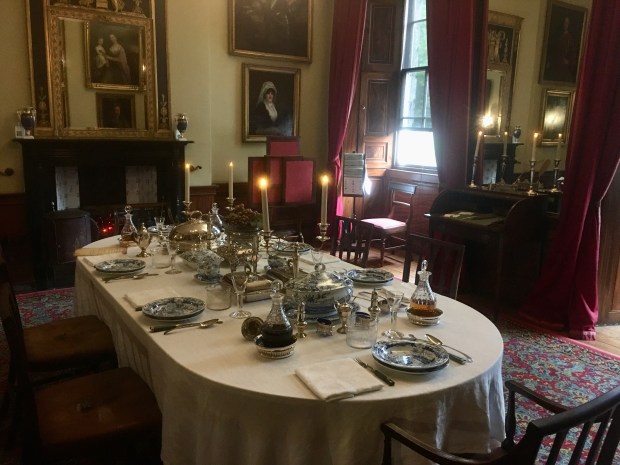
From The Georgian House, recreated 18th century townhouse where I volunteer in Edinburgh

But as a whole the book felt a little too short and superficial. I wanted more description of the food James learned to prepare in Paris, and more about James in general as a person. Craughwell isn’t a historian and he does acknowledge that it’s difficult to find information about James, who did become a chef de cuisine, a master of French cooking, in Paris and was eventually freed by Jefferson. His story has a tragic end however: he committed suicide while drinking at the age of just 36.

Of course it’s significantly harder to learn about James’ character than about Jefferson. Jefferson was a U.S President and a wealthy white landowner who left an enormous amount of documents behind him: things he bought, letters he wrote, etc. James was born into slavery and although he ended up being free and self-employed as a cook in Baltimore, his life is, understandably, much harder to trace. I talk about this in my post about Juan San Malo from New Orleans, but it is a challenge trying to uncover the lives of those like James who don’t leave behind the paper trail of men like Jefferson.

Yet perhaps more information about how other French chefs were trained at the time in Paris (What their daily rituals were like? What sort of recipes they were learning?) would have given more insight into James’ situation. This would have been a good way to bulk out the James sections and wouldn’t have required gaining more information about him specifically. I just felt that there wasn’t enough about his life, or enough about the food he made, honestly. A lot of it focused on Jefferson’s life and his family, which is fine but there are other books which cover this and in much greater depth. With this book, I wanted to learn about French cooking and James Hemings.

That being said, Craughwell has clearly hit on a fascinating story and if you’re looking for a fun and fast-paced read about food and Early American history, then this wouldn’t be a bad one to choose. I’m a sucker for stories about food and am of the firm belief that someone should make a movie about James and his culinary adventures in Paris, his complicated relationship with Jefferson, his bringing French cuisine to America etc. It’s an interesting and unusual story. So get cracking, Hollywood!

Recommended Further Reading/Watching

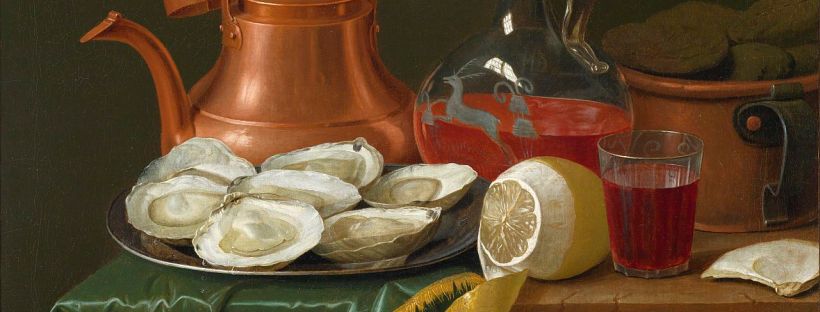
The Featured Image of today’s post is a still-life painting with oysters and wine from Flemish painter Peter Jacob Horemans, c. 1769, accessed via the Wikipedia Commons.

‘Madeira Mondays’ is a series of blog posts exploring Early American history and historical fiction. I’m not a historian, but an author and poet who is endlessly fascinated by this time period. I am also currently writing/researching a novel set during the American Revolution and recently finished a Doctorate of Fine Art looking at how creative writers access America’s eighteenth-century past. Follow the blog for a new post every Monday and thanks for reading!


Madeira Mondays: Dictionary of the Vulgar Tongue (Letters G to P)

I used to think that the Elizabethans had the best swear words. Shakespeare in particular really knew how to pen a vivid and hilarious insult: ‘Beetle-Headed, Flap Ear’d Knave’ ‘Canker-Blossom’ ‘A Fusty Nut with No Kernel’! But after reading The Dictionary of the Vulgar Tongue by Francis Grose (1811), I’m now convinced that the Georgians might very well have had the best slang words and insults.

If you missed my first blog post about The Dictionary of the Vulgar Tongue, this book is basically a compendium of 18th century slang, which ranges from the mild to the extremely crude. In that post, I went through some of my favorite words, from Letters A-F. This time, I’ll be choosing ones from G-M, with some added commentary from me in italics for good measure.

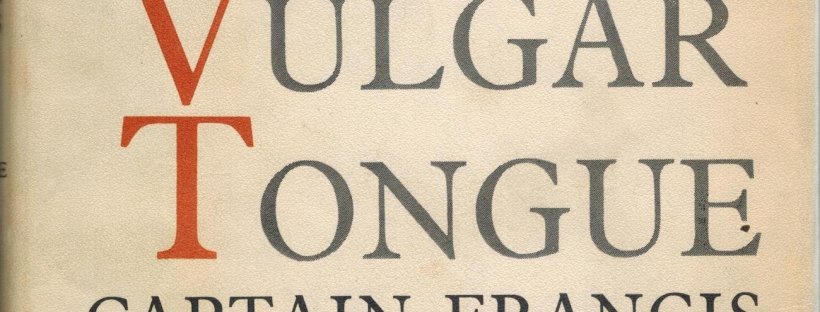
vulgar tongue

Cover from recent (1980’s) edition of Dictionary of the Vulgar Tongue

The book is an entertaining read for those who want a peek at the saltier side of life for our 18th, and early 19th, century pals. So I hope that you enjoy these words from Grose’s peculiar ‘dictionary’ and special points to you if you manage to work any of them into conversation:

GALIMAUFREY. A hodgepodge made up of the remnants and scraps of the larder. (In all honesty, I just added this one because I like the look of the word and we don’t really have a word for this now, although we still do it, throwing together scraps/leftovers into a hodgepodge sort of meal.)

GAPESEED. Sights; any thing to feed the eye. I am come abroad for a little gapeseed. (I liked this one because the idea of ‘feed(ing) the eye’ is an interesting and bizarre mix of the two different senses…)

GIFTS. Small white specks under the finger nails, said to portend gifts or presents. (Okay, what?! Not only had I never really taken notice of those ‘small white specks’ under fingernails, although I think I know what they mean, but I had no idea they used to be thought good luck!)

GINGERBREAD. A cake made of treacle, flour, and grated ginger; also money. He has the gingerbread; he is rich. (‘He has the gingerbread!’)

GREEN. Doctor Green; i.e. grass: a physician, or rather medicine, found very successful in curing most disorders to which horses are liable. My horse is not well, I shall send him to Doctor Green. (There was something charming and kind of sassy about this one. ‘This horse looks pretty bad, Bill. Should we send for a physician?’ ‘Nah, let’s just send him to Doctor Green.’)

GRUMBLETONIAN. A discontented person; one who is always railing at the times or ministry.

HALF SEAS OVER. Almost drunk. (This book contains SO many words for different states of inebriation. It has words to describe being a little drunk, somewhat drunk, and entirely drunk. No matter what your state of drunkenness, don’t worry, there was a word for that!)

HICKENBOTHOM. Mr. Hickenbothom; a ludicrous name for an unknown person, similar to that of Mr. Thingambob.

MONKS AND FRIARS. Terms used by printers: monks are sheets where the letters are blotted, or printed too black; friars, those letters where the ink has failed touching the type, which are therefore white or faint. (This one was just interesting and kind of enlightening about problems that early modern printers had getting their print exactly right.)

POMPKIN. A man or woman of Boston in America: from, the number of pompkins raised and eaten by the people of that country. Pompkinshire; Boston and its dependencies. (I have a hard time telling if this is pejorative or not? I guess mildly so? But I just like the idea that there were so many pumpkins (which was a New World food) in America that people from Boston were called ‘pumpkin’! I also like the fact that it’s a term of endearment now.)

IMG_9623

Taken on a recent trip to Boston where there were, in fact, many pumpkins!

*

Thanks for reading and stayed tuned for future posts when more silly, confusing, and fascinating historical slang words will be revealed!

PS Who is the dashing gentleman pictured in the Featured Image? He is 18th century English explorer James Cook, painted onto the wall of the bar at Brew York Beer Hall in York, England. (At least, that’s what I remember the bar staff telling me. I visited a few months ago and I may have been ‘half seas over’ when I spotted him!)

Madeira Mondays is a series of blog posts exploring Early American history and historical fiction. I’m not a historian, but an author and poet who is endlessly fascinated by this time period. I am also currently writing/researching a novel set during the American Revolution and recently finished a Doctorate of Fine Art looking at how creative writers access America’s eighteenth-century past. Follow the blog for a new post every Monday and thanks for reading!


Madeira Mondays: Runaway Slaves in 18th Century Louisiana

New Orleans is one of my favorite cities in the world to visit. Not only is it jam packed with delicious, flavorful food and music on every corner, there is also such a rich history there. Just have a stroll around the French Quarter and you’ll be able to see (and taste!) aspects of the many different cultures that shaped this unique city: Spanish, Afro-Caribbean, French, Anglo-American and Creole. It’s truly a one-of-a-kind place and I was lucky enough to go back there, for the first time in about ten years, for a family holiday this winter.

While we were there, I paid a visit to the Cabildo, a building that was once the colonial Spanish city hall but is now the home of the Louisiana State History Museum.

IMG_9992.JPG

The Louisiana State Museum: The Cabildo

We went in for the afternoon and while there were lots of interesting things to see – including a whole exhibition on the battle of New Orleans during the War of 1812 and its memory in pop culture – the exhibition that really stuck with me was was called: Le Kèr Creole (The Creole Heart): Runaway Slaves, Music, and Memory in Louisiana.

IMG_0018.JPG

The exhibition at The Cabildo

This is a multimedia exhibition featuring paintings, lithographs, and songs, alongside historical artifacts such as maps and period documents. It follows the story of a man called Juan San Malo, the leader of a runaway slave community in 1780s. But what really struck me was the format of the exhibition, which the museum describes as ‘a conversation between tradition and innovation.’ It’s part of an ongoing series apparently called In Dialogue, which features both traditional history documents (maps etc.) but also contemporary responses to those documents.

I liked this approach for several reasons. For one thing, men like Juan San Malo are usually left out of the traditional historical record. Even if we could find mention of him or runaway men like him, in perhaps letters, diaries, or newspaper ads from the time looking for runaway slaves, these documents would most likely have been authored by wealthy white landowning men, not by San Malo himself.

Also, San Malo was a Creole speaker. (Louisiana Creole was a francophone language created by enslaved Africans who lived on plantations in the region). By featuring many Creole songs in the exhibition, it tells San Malo’s story not only in his own language, but in a rare and endangered language of the area. The songs we hear are like an oral history of the region, an alternative history of New Orleans.

IMG_0012

One of the striking pieces of art featured at the exhibition: Morning Mist in Colony Maron, by Francis X. Pavy, 2017. I am not a visual artist, so this description means little to me, but this piece is described as ‘augmented photographic lithophane in carved acrylic’. All I know is that lithophanes are backlit and several pieces like this were part of the exhibition. I liked the use of shadow, given how little we know about Juan San Malo.

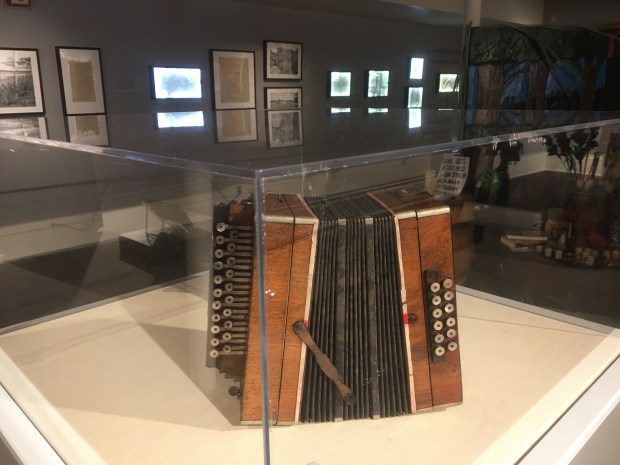
One of the historical artifacts that I especially liked seeing was the ‘diatonic accordion.’ I learned that apparently German immigrants brought accordions to Louisiana and, in the early 20th century, the instrument was adopted by Creole and Cajun musicians.

IMG_0003

German accordion from 1850

Another striking feature of the exhibition was the large altar in the center of it, where you could place offerings or write in a book about ‘a dream of freedom’. This was a fitting element, considering that San Malo, who created one of the largest runaway slave settlements in North America and was eventually hung by Spanish officials, seems to be something of a folk hero and even a saint, who people memorialized and turned to for strength. Words from a Creole song ‘Ourra St. Malo’ (Dirge for San Malo) can be read on the walls nearby.

IMG_0005

The altar in the center of the exhibition

One of the only things that I wished was different about the exhibition is that I wanted to know a bit more about the significance of the altar and how altars fit into Creole customs, because I know that Catholicism had a big influence in New Orleans (but maybe there was that information and I just missed it!). The only other thing that I wished was different was that I simply wanted more of the whole exhibition, as it was really just one room. But there is plenty to see in that room! I left feeling like I had learned something new about 18th century New Orleans and also with many ideas about how history can be communicated to the public, not just with maps and period documents, but with modern art and songs too. I thought about how this exhibition is not simply about one man’s life, but rather about the history of a language. A language which, in itself, IS history. Basically, it gave me a lot to think about! If you are in New Orleans, I would encourage a visit and do let me know what you think of it too.

‘Le Kèr Creole (The Creole Heart): Runaway Slaves, Music, and Memory in Louisiana’ runs until May 10, 2020 at The Cabildo.

Madeira Mondays is a series of blog posts exploring Early American history and historical fiction. I’m not a historian, but an author and poet who is endlessly fascinated by this time period. I am also currently writing/researching a novel set during the American Revolution and recently finished a Doctorate of Fine Art looking at how creative writers access America’s eighteenth-century past. Follow the blog for a new post every Monday and thanks for reading!
 

Madeira Mondays: Dictionary of the Vulgar Tongue (A to F)

Do you know what it means to be a ‘dog in a doublet’? Or how you can become ‘The Admiral of the Narrow Seas’? If not – you’re not alone! These are obscure late 18th and early 19th century slang words that I discovered in Francis Grose’s 1811 Dictionary of the Vulgar Tongue!

So what is The Dictionary of the Vulgar Tongue?

The British Library explains it thus:

Francis Grose’s ‘Classical Dictionary of the Vulgar Tongue’ was first published in 1785, and is a dictionary of slang words. Grose was one of the first lexicographers to collect slang words from all corners of society, not just from the professional underworld of pickpockets and bandits.

The words in this ‘dictionary’ range from the obscene to the mild. Some are creative and colorful, some are nonsensical (to us and perhaps even to people at the time!). Some are derogatory and cruel (especially many of the words describing women) and some are kind of sweet. Many of the phrases in it have to do with men’s leisure activities (e.g. drinking and card playing) or they are about sex. But there are various terms to do with practical jokes, games and a whole host of other topics too.

I found this book an entertaining read and have picked out a few choice words to share with you! But you can also have a read through the entire thing yourself here! It’s definitely NOT a suitable read for children (these are swear words, after all!) but for the adults who want a glimpse behind the curtain of propriety into the rowdier reality of 18th century language and life, it’s worth a look!

dictionary of the vulgar tongue

There were so many great words that I’ve had to split this up into several different posts, so these are my favorite slang words from The Dictionary of the Vulgar Tongue, Letters A through F! I’ve included a few of my own comments (in italics) as well, because I could not resist.

So how do you swear like an 18th century person? Read on…

ADMIRAL OF THE NARROW SEAS. one who from drunkenness vomits into the lap of the person sitting opposite him. SEA PHRASE.

AMBASSADOR. A trick to duck some ignorant fellow or landsman, frequently played on board ships in the warm latitudes. It is thus managed: A large tub is filled with water, and two stools placed on each side of it. Over the whole is thrown a tarpaulin, or old sail: this is kept tight by two persons, who are to represent the king and queen of a foreign country, and are seated on the stools. The person intended to be ducked plays the Ambassador, and after repeating a ridiculous speech dictated to him, is led in great form up to the throne, and seated between the king and queen, who rising suddenly as soon as he is seated, he falls backwards into the tub of water. (Something I learned from reading this book was that men at sea had a lot of time on their hands and loved playing tricks on each other. There were other sea games listed and they were all just as silly.)

TO AMUSE. To fling dust or snuff in the eyes of the person intended to be robbed; also to invent some plausible tale, to delude shop-keepers and others, thereby to put them off their guard.

ANKLE. A girl who is got with child, is said to have sprained her ankle.

APRIL FOOL. Any one imposed on, or sent on a bootless errand, on the first of April; which day it is the custom among the lower people, children, and servants, by dropping empty papers carefully doubled up, sending persons on absurd messages, and such like contrivances, to impose on every one they can, and then to salute them with the title of April Fool. This is also practised in Scotland under the title of Hunting the Gowke. (So they had April Fools’ Day!)

ARSY YARSEY. To fall arsy varsey, i.e. head over heels.

BEDFORDSHIRE. I am for Bedfordshire, i.e. for going to bed. (This one was perhaps my favorite phrase I encountered. I am going to start saying this.)

BOTTLE-HEADED. Void of wit.

CAT CALL. A kind of whistle, chiefly used at theatres, to interrupt the actors, and damn a new piece. It derives its name from one of its sounds, which greatly resembles the modulation of an intriguing boar cat. (So this word was already around, but its meaning has shifted in the last few centuries. Also, what is an ‘intriguing boar cat’?)

DEVIL DRAWER. A miserable painter. (How often was this used?)

DOG IN A DOUBLET. A daring, resolute fellow. In Germany and Flanders the boldest dogs used to hunt the boar, having a kind of buff doublet buttoned on their bodies, Rubens has represented several so equipped, so has Sneyders.

DOODLE. A silly fellow, or noodle. (More on this word in a later blog post about the history of the song ‘Yankee Doodle’.)

FIRING A GUN. Introducing a story by head and shoulders. A man wanting to tell a particular story, said to the company, ‘Hark! did you not hear a gun?—but now we are talking of a gun, I will tell you the story of one.’ (I love that there used to be a phrase for this, when someone brings up a topic only so that they can talk about it more e.g. ‘Did I smell food? Speaking of food, when are we going to have dinner?’)

*

I hope that you enjoyed these antiquated slang words, and let me know if you manage to squeeze any of them into conversation! Be on the lookout for the next round of ‘vulgar’ phrases in a future post.

Madeira Mondays is a series of blog posts exploring Early American history and historical fiction. I’m not a historian, but an author and poet who is endlessly fascinated by this time period. I am also currently writing/researching a novel set during the American Revolution and recently finished a Doctorate of Fine Art looking at how creative writers access America’s eighteenth-century past. Follow the blog for a new post every Monday and thanks for reading!


Madeira Mondays: Yearly Wrap-Up

Three months ago, I started a series of blog posts all about early American history and historical fiction. I am currently researching and writing a novel set during the American Revolution and, as fiction writers out there will know, writing can be a bit of a lonely and solitary process. You spend a lot of time in your own brain and sometimes it’s nice to reach out and chat to actual people with similar interests! During the research process, you also stumble across all sorts of interesting historical tidbits that don’t really have a place in the book, but are fun to share and discuss!

So that is why I started this blog series. To connect with people who might also be interested in, for instance, the history of Christmas in America or how to make a whipped syllabub. Or people who love historical books and novels as much as I do and want to swap recommendations! I started it to meet those who already had an interest in 18th century America, but also to talk with people who just simply love learning and are curious to explore the past with me.

So thanks to everyone who has read any of these blog posts! I plan on continuing this series into the new year, so any recommendations would be most welcome. You can see a wrap-up below of the posts that I’ve done thus far, but if there’s a particular topic you’re curious about, do let me know! Would you like to see more recipes for early American food and drinks? More book and film reviews? I wrote part of my PhD on the musical Hamilton, so I’d be happy to talk about that! Or perhaps more about my experience as a re-enactor in Edinburgh? Anything to do with early American history or historical fiction, I’d be up for discussing.

I hope that you have enjoyed reading ‘Madeira Mondays’ thus far and have a wonderful start to 2020! x

Processed with VSCO with 5 preset

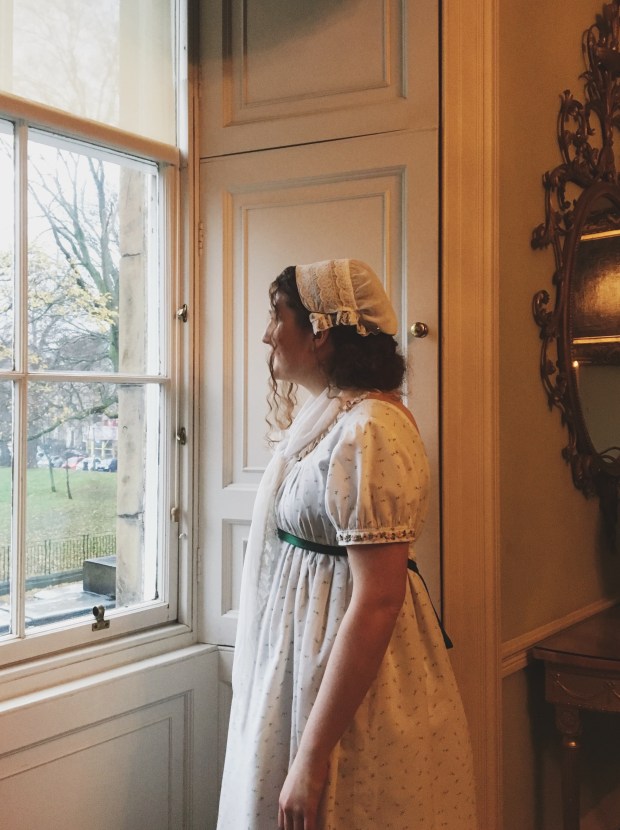
Me in costume at The Georgian House in Edinburgh. Photo by Melissa Stirling Reid.

Madeira Mondays 2019

Film and TV Reviews

The John Adams Miniseries Part I (This post goes into the reasons why I think you should watch HBO’s miniseries John Adams, based on the life of America’s 2nd president and his role in the American Revolution!)

The John Adams Miniseries Part II

John and abby

Photo from John Adams, featuring Laura Linney as Abigail Adams and Paul Giamatti as John Adams

The Witch Film Review (In this Halloween-themed post, I analyze the atmospheric horror film The Witch, which is about isolation, superstition and fear in colonial New England!)

The Patriot Film Review Part I (I discuss the good things in Roland Emmerich’s melodramatic but fun film about the Revolution in South Carolina.)

The Patriot Film Review Part II (I talk about the things which do not work in The Patriot! I have some issues with this movie…)

Book Reviews

Johnny Tremain by Esther Forbes Book Review (For this post, I revisited a childhood favorite book about a teenage spy in Revolutionary Boston! This book really withstood the test of time.)

Mistress by Chet’la Sebree (An analysis of a beautiful new poetry collection published this year and inspired by the life of Jefferson’s enslaved mistress, Sally Hemings. The collection was written by Chet’la Sebree, who was a Visiting Fellow the same year as me at Thomas Jefferson’s home: Monticello. This collection is perfect if you want to learn about this mysterious and fascinating woman from American history.)

IMG_9790

Recipes

Syllabub Recipe (Delicious recipe for a colonial era drink, basically like an alcoholic frappuccino!)

History

Christmas in a Georgian Townhouse (All about my experiences as a re-enactor in Scotland and how the Georgians celebrated Christmas.)

Christmas in Colonial America (A very brief history of how Christmas was celebrated in the colonies. Want to learn about the origins of Santa Claus? Or how many of our modern Christmas traditions came to be? This post is for you!)

Visits to Historic Sites or Events

A Visit to the Museum of the American Revolution in Philadelphia, USA (My trip to the recently opened museum of the American Revolution and recommendations of what to see there if you visit!)

Trinity HistoryCon in Dublin, Ireland (A re-cap of an academic conference at Trinity College Dublin on the intersections of history and pop culture. I presented there on representations of John Adams in pop media!)

IMG_9441

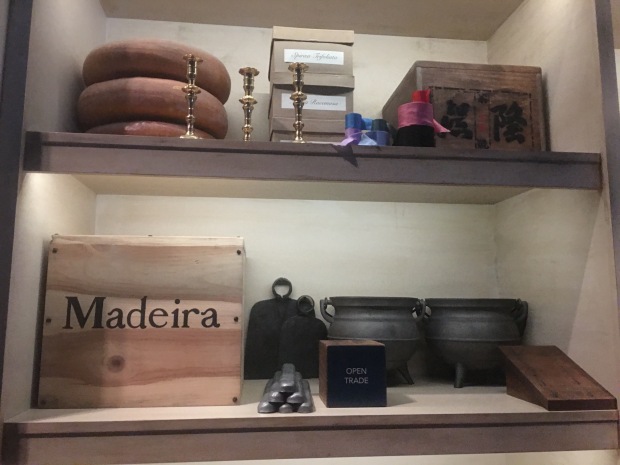
Display of recreated 18th century objects you might find in a colonial shop, at The Museum of the American Revolution in Philadelphia

Thanks for reading and see you next year! x

PS Why is it called ‘Madeira Mondays’?

Madeira is a fortified wine from Portugal and it was hugely popular with the American colonists. George Washington in particular really loved it, but it was also enjoyed by Alexander Hamilton, Benjamin Franklin and Thomas Jefferson. AND it was the wine drunk by the Continental Congress to celebrate the signing of the Declaration of Independence. Cheers!


Madeira Mondays: Christmas in Colonial America

Merry (almost) Christmas everyone! Last week’s post was about Christmas traditions in 18th century Scotland. Today we’re sailing across the Atlantic to check out how the American colonists would have celebrated the holiday. So grab a glass of mulled wine (or Madeira!) and snuggle up for some seasonal reading…

Who celebrated Christmas in Early America?

In short: some people did and some didn’t.

America was a diverse place from the very start and how/if you celebrated Christmas depended on several things. Firstly, it depends on when exactly we are talking about here. In 17th century Puritan Massachussetts, for example, Christmas celebrations were actually banned entirely because it was such a raucous holiday. These laws were later repealed.

But whether you celebrated Christmas also depended on who you were and where you lived. Some people might not celebrate it simply because they weren’t Christian (New York City, for instance, already had a Jewish population around the time of the Revolution). But many Christians didn’t observe it either. In Our Own Snug Fireside: Images of the New England Home, author Jane C. Nylander explains that for some in protestant New England, where values of stoicism and hard work reigned, festive Christmas celebrations were considered too Catholic and ‘an emblem of popery’. Yikes, not ‘popery’! So even if celebrating Christmas was technically not banned where you lived, you might still choose not to celebrate it. As historian Mary Miley Theobald writes: ‘Many early European-Americans didn’t acknowledge Christmas at all, let alone celebrate or decorate for it. These included the Puritans in New England and various denominations throughout the middle and southern colonies like Amish, Baptists, Congregationalists, Mennonite, Methodist, Presbyterian, and Quakers.’

But for some, like people of Dutch heritage in early New York, for instance, Christmas was absolutely celebrated. It was marked with the giving of gifts to children on St Nicholas Day (December 6th) and with sweet breads like Duivekater, a Dutch holiday bread baked throughout the month of December until the Epiphany (January 6th). This is a buttery, lemon flavored bread that I read all about in Peter G. Rose’s book Food, Drink and Celebrations of Hudson Valley Dutch. I even attempted to bake this delicious bread this year (see photographic evidence!).

IMG_8765

That time I tried to make a Dutch holiday bread and it turned out enormous (but also pretty tasty!)

What did they do to celebrate?

For those who did actively celebrated Christmas in the 18th century – which was mainly people from the middle and southern colonies – it was a season of merriment and visiting friends and family. This was the same over in Great Britain. It’s a party time! I’ve read about people in early New York going on fun sledging parties during the winter, but there were also feasts, balls (especially on Twelfth Night, January 5th) and in general it was a time of socializing and celebration. As well as attending Church, of course. The Christmas season was also a popular time to get married in early America, so you see a lot of weddings popping up too.

Was it a holiday for children?

Not really. Even though we might think of Christmas as a special time for kids now (visiting Santa at the mall, putting stockings by the tree, nativity plays etc.), that wasn’t the case in the 18th century. This article by Emma L. Powers from The Colonial Williamsburg Interpreter talks about how no 18th century sources highlight the importance of children at Christmastime. People in colonial Virginia, for example, talk about Christmas balls, feasting and parties, but these activities weren’t really kid friendly. ‘The emphasis on Christmas as a magical time for children came about in the nineteenth century,’ Powers writes. More on that below!

What about presents?

Gift giving wasn’t a major part of the holiday either and if it did take place it might have happened on New Years rather than Christmas Day. Sometimes small gifts were exchanged from masters to dependents (e.g parents to children, employers to servants etc.) such as a little bit of extra money or sweets.

How did they decorate?

Similar to their British counterparts, the colonists would bring in pieces of the outside to decorate their homes. We’re pre-industrial revolution, so nobody is buying mass-market Christmas decorations. You’d be making your own. Evergreens like mistletoe could be placed around (it already had the associations with kissing, by the way!), or maybe sprigs of holly or bay. Christmas trees weren’t around in the 18th century – that was a Germanic tradition that came in later!

What did they eat?

This again would vary regionally and certainly depended on class. In Virginia, beef, goose, ham and turkey would have had a place on a holiday table. And the Dutch, as I talked about above, were famous for their confectionaries and would have had gingerbread and other sweet treats served at Christmas. In fact, many aspects of our modern Christmas in America come directly from Dutch traditions. The hanging of stockings by the mantelpiece to be filled with sweets and gifts for children by St. Nicholas (Sinterklaas) was a Dutch practice. Even centering children at all in the celebrations was a Dutch thing. And speaking of St. Nicholas…

Did the colonists have Santa Claus?

They wouldn’t know our modern Santa, no. People in colonial times would not be familiar with our large, jolly fellow dressed in red and white who comes down the chimney to deliver presents and lives with the elves up at the North Pole. They might feel very perplexed if you told them about Santa (and rightfully so! He’s a pretty strange dude).

Our modern, secular Santa Claus is an American invention, inspired by the Dutch Sinterklaas and other traditions. There’s no singular origin of our Santa, but one key source that cemented the idea of Santa in the public consciousness was a poem written by New Yorker Clement Clarke Moore called ‘A Visit from Saint Nicholas’ in 1823. You probably know this poem by the title ‘Twas the Night Before Christmas’! This is the poem where we first see Santa as a ‘right jolly old Elf’ with ‘dimples so merry, and nose like a cherry’, coming to visit homes with all of his reindeer in tow. The poem gained wide popularity and inspired what we now think of as Santa Claus.

HarpersStNick001

Moore’s poem featured in Harper’s New Monthly Magazine in December 1857

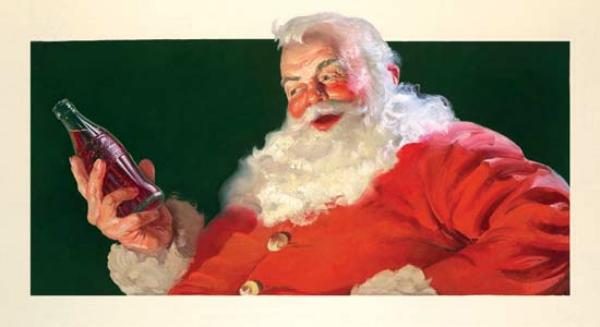
(As a side note, it is a myth that Santa Claus’ red and white outfit was created by Coca-Cola for their advertisements. Coke definitely did use this image, but it was already around. Coca Cola only popularized a version of Santa Claus that already existed.)

santacoke

Santa looking quizzically at a bottle of Coca-Cola

So there you have it: some of the different ways that Christmas was celebrated and observed in early America! Did any of it surprise you? Hopefully now you’ll have some fun historical anecdotes to share over the holidays to impress and/or annoy your friends and family (welcome to my world)!

I hope that you’re having a peaceful and restorative end to the year and thank you very much for joining me for this seasonal ‘Madeira Monday’. I’ll be doing a wrap-up next week of all the ‘Madeira Mondays’ from 2019 and next year will be back with more explorations of early American history and historical fiction!

Sources Used

Books:

Food, Drink and Celebrations of The Hudson Valley Dutch by Peter G. Rose (Rose is a food historian and has several great books on the early Dutch settlers and their cuisine)

Our Own Snug Fireside: Images of the New England Home, 1760-1860 by Jane C. Nylander

The Battle for Christmas by Stephen Nissenbaum

Sites:

‘A Visit from St Nicholas’ (poem) by Clement Clarke Moore

”Christmas Customs’ by Emma L. Powers’ on the Colonial Williamsburg site

‘Did Coca-Cola invent the modern image of Santa?’ on Snopes

Image of Harper’s New Monthly Magazine comes from: ‘From the Stacks Holiday Edition: Clement C. Moore’s ‘A Visit from St Nicholas” on the Miami University’s Libraries’ Special Collections website

‘Revisited Myth #101: Colonial Americans decorated their homes at Christmas’ on History Myths Debunked blog

‘When Americans Outlawed Christmas’ on Mental Floss

Further Christmas Reading/Listening

Ben Franklin’s World podcast Episode 281: Peter G. Rose, Delicious December: How the Dutch Brought us Santa, Presents and Treats

‘Madeira Mondays’ is a series of blog posts exploring Early American history and historical fiction. I’m not a historian, but an author and poet who is endlessly fascinated by this time period. I am also currently writing/researching a novel set during the American Revolution and recently finished a Doctorate of Fine Art looking at how creative writers access America’s eighteenth-century past. Follow the blog for a new post every Monday and thanks for reading!