Madeira Mondays: Beyond the Mask film review

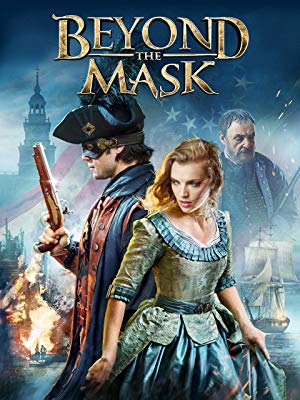
I have spoken in the past about how it is a shame that there are so few books and films set during the Revolutionary War. As a lover of this time period, I am always on the lookout for new ones. So when I heard about Beyond the Mask, a swashbuckling Revolutionary War era film released in 2015, I was curious to see it. And, oh boy, I was not prepared for what was in store!

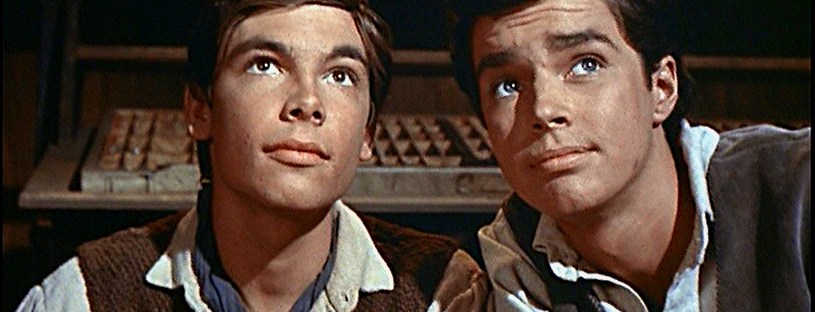
Wikipedia describes Beyond the Mask as a ‘Christian historical action-adventure’, and it follows the life of a former assassin, William Reynolds (Andrew Cheney), who wants to redeem himself and start a new life. Through a series of overly complicated mishaps which I won’t bother to explain, he finds himself in the American colonies, helping the Americans fight for independence from Great Britain while dressed as a masked vigilante called ‘The Highwayman’. Who gives Reynolds this moniker? Why, no other than Benjamin Franklin himself! There is a pretty hilarious scene where Ben Franklin, who runs the local printing press, is trying to figure out what to call this new, mysterious vigilante running around Philadelphia and says: ‘We’ll call him what he is! A highwayman.’ This makes no sense. Reynolds is not in any way a highwayman (a robber who stole from travelers, usually on country roads). But this is just one confusing detail in a film which is full of confusing details, bonkers plot twists, and tons of explosions.

beyond the mask

But, I will tell you this right now: I really enjoyed watching Beyond the Mask. It is like a zany medley of several other, better films (mostly Zorro, but there’s a bit of V for Vendetta in there and the score sounds like a crappier version of Pirates of the Caribbean). Sure, it is wildly historically inaccurate. Sure, it moves along at a break-neck pace and I was often confused about what was going on. Sure, the characters were completely empty and devoid of ANY personality (why do the main two people fall in love?? What do they like about each other?). And sure, the theology in it never makes a ton of sense or seems to really matter for the plot. BUT it was super silly and super fun. Especially John Rhys-Davies, who plays the one-dimensional villain character whose evil scheme is (spoiler alert) to blow up the Continental Congress using an electrical generator that he stole from Ben Franklin and has hidden in an underground submarine hideout! This stuff is gold.

beyondthemask

Our leads, Kara Killmer as Charlotte Holloway and Andrew Cheney as William Reynolds run away from a flaming windmill (some of the worst CGI in the film)

I expected this to be more of a wannabe Les Miserables, a story which has an overtly Christian moral about redemption. In Les Miserables, Jean Valjean, a criminal, is given a second chance of life when a priest shows him kindness and the whole book (and film and musical) is about the redemptive power of kindness and love. I think that might have been what director Chad Burns was going for here (a story about how love transforms a man from a murderous assassin to a guy who just beats people up sometimes), but all of that is lost in the sheer weirdness of the drama and the many wannabe Jackie Chan fist-fight sequences.

I’m not even going to touch on the historical accuracy of this film, but I will mention that, just like The Patriot (which I discussed here), it seems to think that only rebels were tormented and harassed by loyalist citizens and British soldiers, whereas in reality often it was those who remained loyal to the King who faced violence. But that is the least of the movie’s issues and if you’re going into it looking for any sort of historical accuracy, or even attempts at historical accuracy, then you’re looking in the wrong place, my friend.

Still, there are a couple of things that work well in the film (besides Rhys-Davies). The costumes are largely period-appropriate and look pretty good! Also I was impressed with the sets. They are obviously working with a limited budget and the 18th century Philadelphia set was particularly impressive.

So would I recommend this deeply silly movie? If you enjoy this sort of thing, then 100%! I watched it with two pals who enjoy films like this as much as me and we had a blast, giggling at all the absurdities and frequently pausing the film to ask: ‘WHAT JUST HAPPENED?’

If you are looking for an ambitious or thought-provoking or well-researched film about this period, then I would direct you to something like The Witch, or perhaps the John Adams Miniseries. But if you’re looking for a film where the main character exclaims things like ‘I live in a web of lies!!’ and leaps around in the darkness like Batman, then you’re going to enjoy Beyond the Mask. I know that I did.

Recommended Reading/Viewing:

Beyond the Mask directed by Chad Burns (so long as you know what you’re in for!)

Film Review: Beyond the Mask in Variety

‘Madeira Mondays’ is a series of blog posts exploring Early American history and historical fiction. I’m not a historian, but an author and poet who is endlessly fascinated by this time period. I am also currently writing/researching a novel set during the American Revolution and recently finished a Doctorate of Fine Art looking at how creative writers access America’s eighteenth-century past. Follow the blog for a new post every Monday and thanks for reading!


Madeira Mondays: Historical Short Stories

When we think of historical fiction, we tend to think about novels. It seems like a collective decision was made, somewhere down the line, that fiction set in the past should be EPIC in its scope. That historical tales were best suited to sprawling tomes with many sequels. Now, don’t get me wrong. I love a good historical novel (I’m writing one as we speak!). And I understand the appeal of getting wholly immersed in another time period, which one can do with a novel: learning about the minutia of life, meeting a big cast of characters, covering several years etc. BUT there is also something to be said for the short story as a medium for exploring history too.

Why are short stories such a brilliant form for historical fiction?

Well, for one thing, they reflect the way that the past often comes to us, which is in brief, fragmented, incomplete bursts. An old photograph discovered in an attic. A torn out page from a diary. Pieces of historical evidence often provide tiny windows to another world, but so much is left unknowable. Similarly, short stories are tiny windows into another world. A brief flash, a glimpse, but with much that you have to fill in and guess for yourself.

Also, maybe I am greedy, but sometimes I would rather read a collection with many different settings and characters, rather than commit to a whole book with just one time period and one setting. Enter Karen Russell. One of my absolute favorite writers. She writes both short stories and novels and many of her stories take place in the past – whether that is the old American West, 17th century Greece, or 19thcentury Japan. Lots of her stories are set in the present too. But all of her tales have fantastical or magical realism elements to them and they are all ridiculously well written. I actually feel wiser after reading her stories, like I have understood something new about human nature. Or, at least, have recognized something that I had not thought about before.

IMG_0205

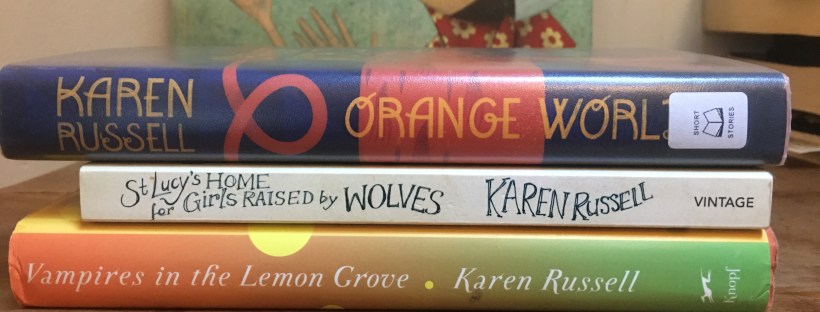
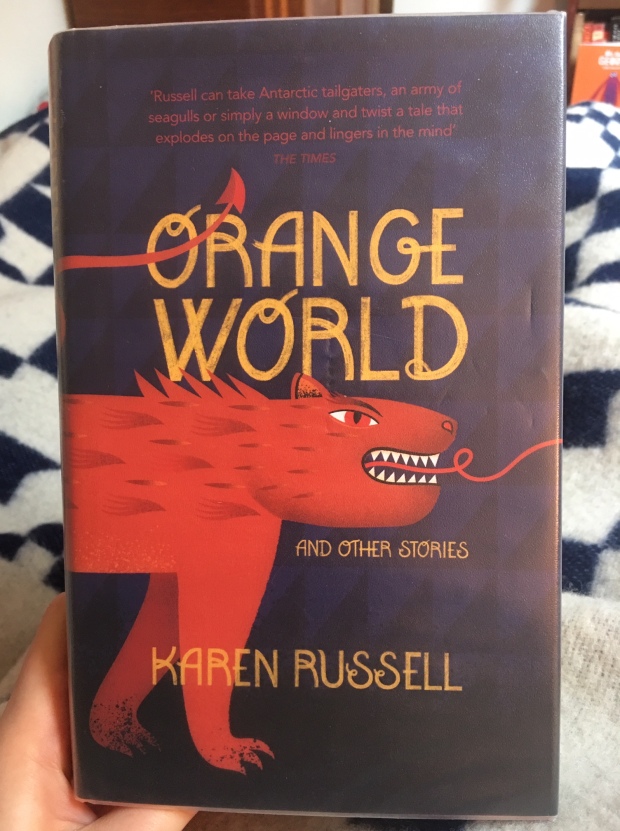
I was so excited to read her new collection last week – Orange World – and it exceeded my (very high!) expectations. So, for today’s ‘Madeira Mondays’, I wanted to point you towards some of my favorite, historical fiction stories by Karen Russell! Even though, regrettably, none of her short stories are set in 18th century America (Please write a story set in 18th century America, Karen! Please!!), lots of them explore other periods of American history and the American landscape. Here are four of her stories that I recommend reading ASAP.

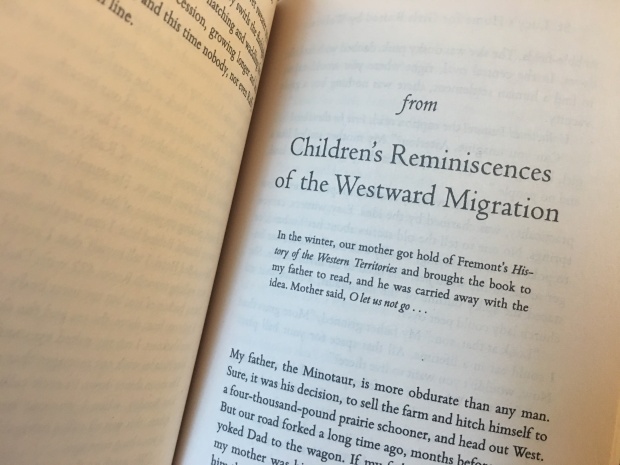
1 – ‘from Children’s Reminiscences of the Westward Migration‘, in St Lucy’s Home for Girls Raised by Wolves

Russell is an American writer originally from Florida, and many of the stories in her first collection, St Lucy’s Home for Girls Raised by Wolves, take place in a weird, heightened version of a Florida swamp. But she’s also clearly interested in the landscape of the American West and one of my favorite stories from that collection is titled: ‘from Children’s Reminiscences of the Westward Migration‘.  The title suggests a historical document, that the story we’re about to read is one from a larger collection of children looking back on their experience moving out west. But this expectation is playfully subverted in the very first line when we release that our boy narrator has a father who is a MINOTAUR. Yup. A Minotaur. Half-man, half-bull.

Thus begins a story that is really about myths: the myth of the American West (versus the harsh reality of life there), the myth of the Minotaur, the myth of this particular Minotaur character who, our narrator tells us, was once a famous rodeo star, AND about how parents seem like myths to their children, until we start to see their flaws.

You can hear Russell reading the beginning of the story here, to see if it might be your cup of tea!

IMG_0216

2 – ‘Proving Up’ from Vampires in the Lemon Grove

Russell’s second collection, Vampires in the Lemon Grove, is my personal favorite and there’s another story about the American West in it, although this one is much darker than ‘Westward Migration’. It is about the rapacious desire for land and ownership, and this dark greed manifests itself as a very dark force that threatens the characters, who are settlers on the American frontier. The ending is so sinister it took my breath away! Apparently it has also been turned into an opera.

3 – ‘The Barn at the End of Our Term’ from Vampires in the Lemon Grove

This is a goofy story which is dear to my heart, about US Presidents reincarnated as horses. Yes. Horses.

I actually wrote about it for part of my PhD thesis, which looked at different iterations of John Adams in fiction, because Adams the horse is a central character in the story. He tries to lead the other Presidents-turned-horses to rebel and break out of the barn. Sure, it’s a silly and fun concept, but it’s really about legacy and what kind of ‘afterlife’ these Presidents have in our imaginations. So it’s not so much ‘historical fiction’ as fiction ABOUT history. It’s also funny as hell and insightful.

4 – ‘Black Corfu’ from Orange World and other stories

Okay, so this story is definitely historical, but not set in America. The setting is the island of Corfu, 1620. I included it on this list because it is my favorite story from her latest collection and I’ve read it twice already. This story is about an ambitious, intellectual physician whose job it is to cut the hamstrings of corpses so that they do not rise from the dead and become zombies. He once aspired to be a great doctor, but his dark skin color and his class have prevented him from rising in his profession. When rumors start to spread that a dead woman has been seen roaming the island, the doctor is blamed and chaos ensues.

This story, like all of her stories, is about many things at once. Its themes are super relevant to us today, although they are explored in a historical context: class, race, science, superstition, ambition and the power of fear.

*

Have I convinced you to read her yet? I hope so! And I hope that you will enjoy these strange historical stories as much as I do.

Recommended Reading:

Orange World and Other Stories; Vampires in the Lemon Grove and St Lucy’s Home for Girls Raised by Wolves by Karen Russell (obviously!)

Voices Against the Wall: The Hilarious Terror of Karen Russell’s “Orange World and Other Stories” (in-depth review of Orange World and other stories) from the LA Times

‘Bog Girl’ by Karen Russell in The New Yorker (also featured in Orange World)

‘Madeira Mondays’ is a series of blog posts exploring Early American history and historical fiction. I’m not a historian, but an author and poet who is endlessly fascinated by this time period. I am also currently writing/researching a novel set during the American Revolution and recently finished a Doctorate of Fine Art looking at how creative writers access America’s eighteenth-century past. Follow the blog for a new post every Monday and thanks for reading!


Madeira Mondays: Yearly Wrap-Up

Three months ago, I started a series of blog posts all about early American history and historical fiction. I am currently researching and writing a novel set during the American Revolution and, as fiction writers out there will know, writing can be a bit of a lonely and solitary process. You spend a lot of time in your own brain and sometimes it’s nice to reach out and chat to actual people with similar interests! During the research process, you also stumble across all sorts of interesting historical tidbits that don’t really have a place in the book, but are fun to share and discuss!

So that is why I started this blog series. To connect with people who might also be interested in, for instance, the history of Christmas in America or how to make a whipped syllabub. Or people who love historical books and novels as much as I do and want to swap recommendations! I started it to meet those who already had an interest in 18th century America, but also to talk with people who just simply love learning and are curious to explore the past with me.

So thanks to everyone who has read any of these blog posts! I plan on continuing this series into the new year, so any recommendations would be most welcome. You can see a wrap-up below of the posts that I’ve done thus far, but if there’s a particular topic you’re curious about, do let me know! Would you like to see more recipes for early American food and drinks? More book and film reviews? I wrote part of my PhD on the musical Hamilton, so I’d be happy to talk about that! Or perhaps more about my experience as a re-enactor in Edinburgh? Anything to do with early American history or historical fiction, I’d be up for discussing.

I hope that you have enjoyed reading ‘Madeira Mondays’ thus far and have a wonderful start to 2020! x

Processed with VSCO with 5 preset

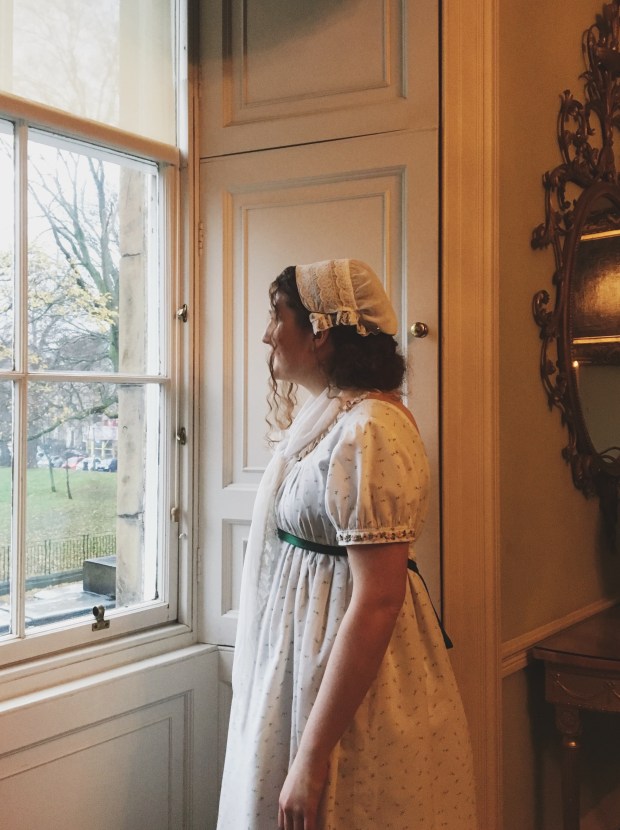
Me in costume at The Georgian House in Edinburgh. Photo by Melissa Stirling Reid.

Madeira Mondays 2019

Film and TV Reviews

The John Adams Miniseries Part I (This post goes into the reasons why I think you should watch HBO’s miniseries John Adams, based on the life of America’s 2nd president and his role in the American Revolution!)

The John Adams Miniseries Part II

John and abby

Photo from John Adams, featuring Laura Linney as Abigail Adams and Paul Giamatti as John Adams

The Witch Film Review (In this Halloween-themed post, I analyze the atmospheric horror film The Witch, which is about isolation, superstition and fear in colonial New England!)

The Patriot Film Review Part I (I discuss the good things in Roland Emmerich’s melodramatic but fun film about the Revolution in South Carolina.)

The Patriot Film Review Part II (I talk about the things which do not work in The Patriot! I have some issues with this movie…)

Book Reviews

Johnny Tremain by Esther Forbes Book Review (For this post, I revisited a childhood favorite book about a teenage spy in Revolutionary Boston! This book really withstood the test of time.)

Mistress by Chet’la Sebree (An analysis of a beautiful new poetry collection published this year and inspired by the life of Jefferson’s enslaved mistress, Sally Hemings. The collection was written by Chet’la Sebree, who was a Visiting Fellow the same year as me at Thomas Jefferson’s home: Monticello. This collection is perfect if you want to learn about this mysterious and fascinating woman from American history.)

IMG_9790

Recipes

Syllabub Recipe (Delicious recipe for a colonial era drink, basically like an alcoholic frappuccino!)

History

Christmas in a Georgian Townhouse (All about my experiences as a re-enactor in Scotland and how the Georgians celebrated Christmas.)

Christmas in Colonial America (A very brief history of how Christmas was celebrated in the colonies. Want to learn about the origins of Santa Claus? Or how many of our modern Christmas traditions came to be? This post is for you!)

Visits to Historic Sites or Events

A Visit to the Museum of the American Revolution in Philadelphia, USA (My trip to the recently opened museum of the American Revolution and recommendations of what to see there if you visit!)

Trinity HistoryCon in Dublin, Ireland (A re-cap of an academic conference at Trinity College Dublin on the intersections of history and pop culture. I presented there on representations of John Adams in pop media!)

IMG_9441

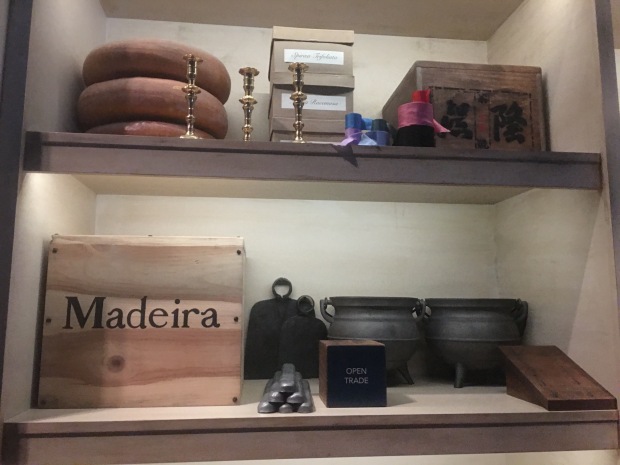
Display of recreated 18th century objects you might find in a colonial shop, at The Museum of the American Revolution in Philadelphia

Thanks for reading and see you next year! x

PS Why is it called ‘Madeira Mondays’?

Madeira is a fortified wine from Portugal and it was hugely popular with the American colonists. George Washington in particular really loved it, but it was also enjoyed by Alexander Hamilton, Benjamin Franklin and Thomas Jefferson. AND it was the wine drunk by the Continental Congress to celebrate the signing of the Declaration of Independence. Cheers!


Madeira Mondays: Mistress by Chet’la Sebree

Who was Sally Hemings?

One short, and incomplete, answer is that she was Thomas Jefferson’s enslaved mistress, with whom he fathered several children. But of course Sally Hemings was much more than that one fact. As it says on the website for Thomas Jefferson’s Monticello, she was a ‘Daughter, mother, sister, aunt. Inherited as property. Seamstress. World traveler. Enslaved woman…Liberator. Mystery.’ The page goes on to describe her as ‘one of the most famous-and least known-African American women in US history’.
IMG_4993

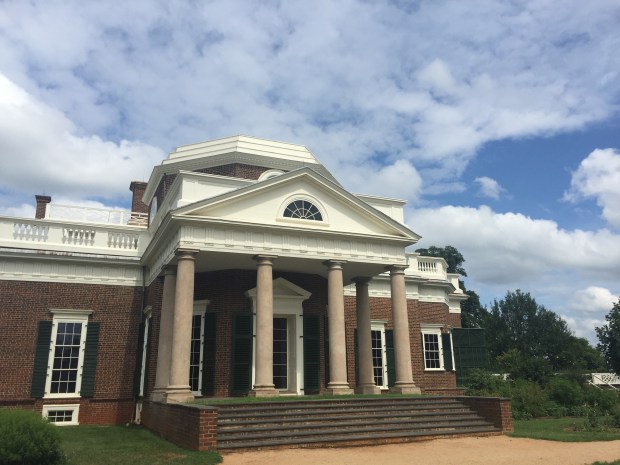
Thomas Jefferson’s home Monticello in Virginia. Taken during my fellowship there in 2016.

Although I’d heard her name before, I first learned about Sally’s story during my residential fellowship at Thomas Jefferson’s Monticello three years ago. When I was living there in Summer 2016, they had not yet set up the new exhibition displaying some of Hemings’ artifacts, in what would have been her living quarters, but I still learned about her through the Slavery at Monticello Tour and even more so through another fellow who was also living at Monticello at the time: author Chet’la Sebree.

Chet’la was at Monticello researching a collection of poetry inspired by Sally’s life. Chet’la’s work would imaginatively explore and grapple with Sally’s internal struggles and deliberations, her loves and losses, the complex nature of her relationship with Jefferson. In doing so, these poems would imbue this often missing or maligned historical figure with something of the multi-dimensional humanity the real, historical Sally had in life. The poems that Chet’la was working on would eventually become part of her debut collection, Mistress, released last month from New Issues Press.

IMG_9790

Having just finished reading Mistress, I can recommend it for several reasons (and not just because Chet’la is a friend!). Firstly, this book really brings to life the internal and external world of Sally Hemings. It is absolutely crackling with vivid historical details that evoke the lost, material world that Sally lived in. In ‘Dusky Sally, February 1817’, the persona of Sally reflects:

In star-latticed sky, I hear my niece’s cries, feel my mother’s hand on

my fire-warm face, smell the lavender she used in her vase, taste

everything James once made: fried potatoes, pasta with cheese, ice

cream. (…)

The collection dramatizes and imagines Sally’s internal life as well, in a way that traditional non-fiction history could not do. Sally did not leave any diaries or written accounts in the first person, and much of what we know about her comes to us from her son Madison Hemings (who was freed in Jefferson’s will and ended up in Ohio where he owned a farm). So we are left to imagine how she might have felt as her eventful life unfolded.

IMG_5103

The kitchens at Monticello

Perhaps most significantly, Mistress explores her conflicted feelings about returning to Monticello from Paris. In the late 1780’s, Sally went to Paris to be Jefferson’s daughter’s maid, and it was there that she began a sexual relationship with Jefferson. Slavery was illegal in France, so she could have stayed on there and remained free, but she chose to return to Virginia with Jefferson and to her life of slavery. In return, she was promised ‘extraordinary privileges’ at Monticello and that her children would be freed. But why did she return? Did she ever regret that choice? These are things that we can never know, but through Sebree’s rendering of Sally’s life, we can picture her grappling with this choice and many others. We see her back at Monticello, circling a fishpond, ‘thick summer wind/prickling fair hair on skin’, pacing and ‘wonder(ing) if my decision was right.’

But, crucially, the persona of Sally is not the only voice that we meet in Mistress. Sally’s imagined voice is in dialogue with a contemporary speaker (or perhaps several speakers) who reflect on their experiences of sex, relationships and racism in modern America. At times this modern voice explores the erasure of black female sexuality, in particular in the poem ‘At a Dinner Party for White (Wo)men’. This poem is a response to Judy Chicago’s art exhibition The Dinner Party (1979) in which the only black woman featured in the exhibit, Sojourner Truth, is (as Sebree explains in the end notes) ‘rendered without a vagina: she is instead, depicted by three faces.’ The poem begins:

Everyone else is invited to meet their vaginas-

different denominations and colors-


except me, the magical negress. My box

always absent because desire is not a privilege


for disenfranchised women

descendant from slaves-


we, still, their dark continent.

At times the poems also delve into the hyper sexualization of black women, reflecting on how in Alex Comfort’s The Joy of Sex (1972) the term for rear-entry intercourse is sex ‘a la negresse.’ The modern black speaker is conflicted by her own sexual desires (‘I stifle myself, pretend I don’t/love shower sex a la negresse’) and is worried that her sexual partner might see her only as ‘kinks to get lost in’, instead of an individual. The poem I have just quoted from, ‘Dispatches from the Dark Continent’, follows a poem called ‘Paper Epithets, December 1802’ which is told in Sally’s voice. ‘Paper Epithets’ lists out some of the pejorative terms that were used to described Sally in newspapers, after her relationship with Jefferson became public knowledge: ‘an instrument of Cupid’ ‘yellow strumpet’ ‘wench Sally’. But, Sally says in the poem’s powerful final line, she is always described in reductive ways, but she is never seen as ‘the woman that I am.’

By positioning these two poems next to each other, ‘Dark Continent’ and ‘Paper Epithets’, we see a parallel emerging between these two personas, past and present. We see how they are both reduced in the eyes of others – whether a contemporary lover or turn of the century journalists – to so much less than what they really are. Throughout the collection, these two voices, contemporary and historical, are always in dialogue with each other. We come to see how racism, and in particular degrading attitudes towards black female sexuality, lives on in modern America. Towards the start of the book, Chet’la quotes from historian Annette Gordon-Reed who writes: ‘The portrayal of black female sexuality as inherently degraded is a product of slavery and white supremacy, and it lives on as one of slavery’s chief legacies and one of white supremacy’s continuing projects.’

IMG_4996

The gardens at Monticello where enslaved people would have labored.

Mistress is the sort of book that you could read in one or two sittings, getting immersed in the sensuous and troubling worlds of the various, intermingling speakers. OR you could return to it again and again with a ‘scholarly’ eye and see how Sebree has used the various, often sparse, facts of Sally’s life to shape Mistress. There is a timeline provided at the back and you could easily spend time seeing where each poem fits into that timeline, what historical events are being referenced or alluded to. There are also detailed Notes where you can learn more about what works of art or historical materials are being referenced in each of the poems. This is a book that is layered with allusions to other texts.

This is also a book that deeply understands the limitations of the ‘persona poem’ (a literary term for poems that adopt the voice of a speaker who is not one’s self) and how Sally Hemings cannot ever truly be understood or rendered by a modern writer. Sebree acknowledges this, yet this book is still a powerful resurrection of a historical figure. In many ways, it is a restoration of the humanity that Sally Hemings was denied both in life, as an enslaved woman, and in history, as someone who was often reduced to nothing more than a pejorative epithet by her contemporaries or ignored entirely by some modern historians. The story of Sally Hemings is painful and complex, and poetry is the perfect form (in my opinion) to explore painful and complex emotions. Poems do not seek to provide answers, but to ask questions. Poems are not built around argumentation; they are built around emotions and ambivalence.

Mistress is a powerful testament to how art can help us to carry and hold the painful legacy of slavery in America and how poetry especially can help us to recover and access those whose lives were, and continued to be, affected by that legacy. These poems ‘sever the silence’ around Sally’s life and allow us into her world. Her loves, her desires, her choices, and her regrets. In short, her humanity.
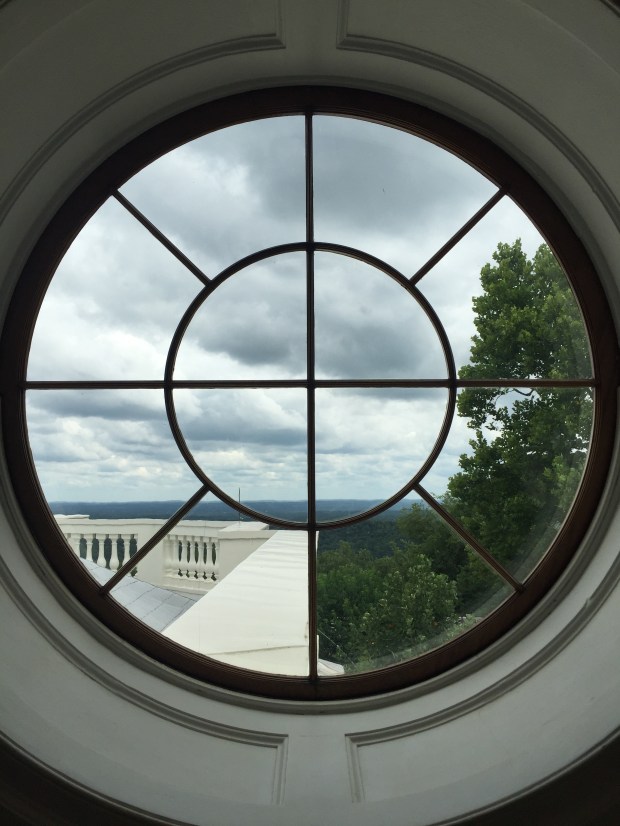
IMG_4989

Window at Monticello

Recommended Reading

Non-Fiction:

The Hemingses of Monticello: An American Family by Annette Gordon-Reed

Thomas Jefferson and Sally Hemings: An American Controversy by Annette Gordon-Reed

Jefferson’s Daughters: Three Sisters, Black and White, in a Young America by Catherine Kerrison

‘Jefferson’s Monticello Makes Room for Sally Hemings’ from National Public Radio, June 2018

– Monticello itself has many resources online which are a great place to start learning more about Sally and her family. You can start with their ‘Slavery at Monticello’ general page or check out ‘The Life of Sally Hemings’. I’d of course recommend a trip to Monticello as well, if you’re anywhere nearby.

Getting Word Oral History Project (Monticello’s oral history project for collecting stories and interviews with descendants of Monticello’s African American community)

Fiction exploring experiences of enslaved characters:

Beloved by Toni Morrison

Chains by Laurie Halse Anderson (and her entire Seeds of America trilogy, which are all for Young Adult readers)

The Underground Railroad by Colson Whitehead

Related posts on this blog:

Notes from Monticello II: Trying on Stays (blog about the experience of trying on replica 18th century corsets with Chet’la Sebree during my fellowship at Monticello)

‘Madeira Mondays’ is a series of blog posts exploring Early American history and historical fiction. I’m not a historian, but an author and poet who is endlessly fascinated by this time period. I am also currently writing/researching a novel set during the American Revolution and recently finished a Doctorate of Fine Art looking at how creative writers access America’s eighteenth-century past. Follow the blog for a new post every Monday.

Madeira Mondays: The John Adams Miniseries (Part II)

Last week, I delved into my reasons (#1-3) why you should watch HBO’s John Adams. I touched on the acting, the cinematography and why I liked the somewhat gruesome depictions of small pox.

This week I’ve listed reasons #4-6 of why I think it’s worth a watch. I’ll talk about how they use primary sources and why now would be the perfect time to pour yourself a pint of cider (John Adams’ favorite), or a glass of Madeira, and watch this show.

john adams

John (Paul Giamatti) and Abigail Adams (Laura Linney)

#4 The show incorporates historical documents in interesting ways

A lot of lines from John and Abigail’s letters to one another are woven into the show. As a side note: these letters are well worth a read and, in my opinion, a lot more vivid, engaging and romantic than some fiction that I have read, simply because John and Abigail were both such excellent writers living through such interesting and turbulent times! It’s a shame for them that they had to spend so much time apart, but it’s a good thing for us because we have all these letters! And quotes from their letters are woven into the dialogue in this show in fairly naturalistic ways.

One of my favorite quotes that they use comes from an exasperated letter John sent to Abigail from Philadelphia on October 9, 1774. He bemoans the slow moving Continental Congress, which he thinks is all talk and no action. He writes:

‘I believe if it was moved and seconded that We should come to a Resolution that Three and two make five We should be entertained with Logick and Rhetorick Law, History, Politicks and Mathematicks, concerning the subject for two whole Days, and then We should pass the Resolution in the Affirmative.’

It’s a funny quote (Adams was funny) and I’m glad they figured out a fun way to incorporate it into the show about his life. In John Adams, the character of John says something very similar when he is lamenting Congress’ inaction at a dinner one evening. I was delighted to see that they’d managed to weave in lots of other lines as well from their letters. It gives you a clearer sense of their real personalities, their sense of humor, and the way people spoke back then.

#5 It showcases a different kind of leading man

I enjoy the fact that neither Adams (nor Paul Giamatti) is classically attractive or charming in an obvious way. Giamatti’s Adams is short, grumpy, belligerent, vain, but also principled, decent, honest and loving. Most big budget film and television shows, not just about the Revolution but more generally, feature much more conventionally attractive leads, both in temperament and in appearance, and I personally enjoyed seeing this harsh, grumpy little man as our main character. There’s something that feels fresh about it.

John Adams pic 1

John Adams being grumpy as he defends the British soldiers accused of itentionally murdering civilians during the Boston Massacre. Adams really did this in life. He believed everyone should get a fair trial and successfully got them acquitted. When reflecting on his life, he considered it ‘one of the most gallant, generous, manly and disinterested actions of my whole life, and one of the best pieces of service I ever rendered my country.’

And this series is about Abigail almost as much as John, which is also really cool to see and their relationship (in real life and in this series) is/was incredibly loving and supportive and dynamic and endlessly interesting to learn about.

Also we see that while John was away practicing politics, Abigail was living out the consequences of those political decisions, as she tries to keep her family safe and alive throughout the war – fighting off diseases, dealing with food shortages. The real Abigail was deeply invested and informed about politics, but she often had to focus on her family. She wrote to John on Sep 8, 1775:

‘As to politicks I know nothing about them. The distresses of my own family are so great that I have not thought about them.’

#6 It conveys the chaos and uncertainty of this time period

One of the things that truly makes me giggle when I hear people talking about the founders in glowing and overly idealized ways is that these dudes were questioning themselves at every turn and were making it all up as they went along. Declaring Independence (and the war that followed) was chaotic, fraught, messy and the outcome was uncertain. The real Adams was full of self-doubt. He wrote in his diary in 1774, as war loomed:

‘We have not men fit for the times. We are deficient in genius, education, in travel, fortune – in everything. I feel unutterable anxiety.’

‘Unutterable anxiety’! That quote gives me a lot of hope when I think about the turbulent political times we’re in now (as I write this, we’re in the middle of an impeachment inquiry of President Trump). There has always been animosity and upheaval in American politics and these fellows, the founders, were just doing the best that they could. We never have individuals ‘fit for the times’. We just have people who do the best they can. But America’s founders were full of questions, worries and self-doubt – as smart people usually are. I love how the show captures this and even includes Adams saying a very similar line to the one I quoted above, about not feeling adequate enough for what this historical moment requires.

adams men walking

Adams and some of his fellow Continental Congress members walking down the street in Philadelphia

And it’s probably worth mentioning here that one of the reasons I think this time period is so fascinating to learn about is that these are the men who wrote the U.S constitution, who created the political system that Americans are still living under right now. In this way, their lives touch our own every day.

*

Like I said above, I could go on about the series and Adams himself, but I think I’ll leave it there for now! I hope that you will consider giving the series a try if you’re looking for a unique and well-acted piece of historical fiction, or a sort of companion piece to Hamilton.

Have you see the John Adams miniseries? Or do you have another favorite film or TV show about this period or about the American Revolution?

If you want to hear more about any of this and happen to live in Dublin, do come along to my talk at Trinity College in November. It’s an academic conference, but geared towards the public and all the presentations will be very accessible. My presentation is titled: ‘Obnoxious and Disliked’: John Adams’ Legacy in Popular Media, from 1776 to Hamilton.

Til then I remain your humble and obedient servant,

C. Brown

‘Madeira Mondays’ is a series of blog posts exploring Early American history and historical fiction. I’m not a historian, but an author and poet who is endlessly fascinated by this time period. I am also currently writing/researching a novel set during the American Revolution and recently finished a Doctorate of Fine Art looking at how creative writers access America’s eighteenth-century past. Follow the blog for a new post each week and any questions or suggestions feel free to get in touch.

Madeira Mondays: Johnny Tremain Review

‘Madeira Mondays’ is a series of blog posts exploring Early American history and historical fiction. I’m not a historian, but an author and poet who is endlessly fascinated by this time period. I am also currently writing/researching a novel set during the American Revolution and recently finished a Doctorate of Fine Art looking at how creative writers access America’s eighteenth-century past.

The first ‘Madeira Mondays’ post is a review of one of my childhood favorite books set during the Revolutionary War: Johnny Tremain! 

Johnny Tremain by Esther Forbes: Book Review

There’s something emotionally vulnerable about re-visiting a book you really liked as a kid. There’s always the chance that the story you found moving and engrossing back then will not, for whatever reason, have withstood the test of time. Stories that seemed fresh and exciting to you at that age might be riddled with tropes or clichés you’d spot easily now. Things that were horrifying and nightmare inducing might seem laughably goofy when viewed through adult eyes etc. etc.

So when I decided to reread a childhood favorite, Johnny Tremain, a novel about a young silversmith in Revolutionary War era Boston, my expectations were fairly low. I remember enjoying it a lot as a kid and even renting the 1957 Disney film adaptation of it (and not liking that at all). But, after rereading this book last week, I can confidently say that Johnny Tremain lived up to my fond memories of it.

IMG_9339

My copy of Johnny Tremain. I love that it features not one but TWO horses: Johnny’s and then the ‘Yearling’ logo haha.

So I’ll start with some of the strengths of this book and then get into where I think it falls somewhat short.

Firstly, the characterization is excellent throughout. Our titular character of Johnny Tremain is a generally unpleasant (in my opinion) but wholly believable young man. He is prideful, sullen, self-pitying, as well as being talented, clever, and generally well-liked by those around him. His whole sense of self is shattered at the beginning of the book when a life altering injury means that he can no longer pursue his chosen career path as a silversmith and the rest of the novel – which is definitely a bildungsroman – can be seen as Johnny’s search for purpose. It’s a classic premise featuring a hero with a classic flaw (hubris) who must redeem himself. But what really brings it to life are the characters.

Johnny becomes enamored with his cool, older, died-hard Whig friend Rab, who offers him a job at a ‘seditious’ rebel printing press. I loved little moments like when Johnny walks in on Rab chatting with Johnny’s close friend/potential love interest Cilla:

‘As (Johnny) came in, booted and spurred, sunburned and hatless, Cilla glanced at him. Her eyes were happy (…) she had been having such a good time with Rab; and unconsciously and unreasonably Johnny stiffened. He couldn’t see why she and Rab should have been having such a good time.’

Moments like this, of completely believable teenage rivalries and petty jealousies, were so vivid and helped me understand why this book has become such a classic. It actually won the Newbery Medal in 1944, the highest prize for children’s lit in the US. Johnny comes across as a realistic teenage boy and an engaging character; we see the revolution through his eyes.

Another other huge strength of the book is the vividness of the historical setting. The depth of Forbes’ knowledge of the period is evident, but never intrusive, and overall there’s a sharp, dangerous edge to her depiction of Boston. In the first paragraph we see gulls in Boston Harbour, with ‘icy eyes’ spying ‘the first dead fish, first bits of garbage around the ships and wharves, they began to scream and quarrel.’ The threat of impending violence is often subtly woven into the descriptions of place, like when Johnny and Rab see a cow on the Boston Common walking through autumn leaves: ‘a white cow was plodding, seemingly up to her belly in blood’. Later, in the same paragraph, the clouds are described as hurrying across the sky like ‘sheep before invisible wolves.’

Violence does, of course, arrive, in the last third of the book, when the Shot Heard Round the World is fired in Lexington and the Revolution starts in earnest. But, for me, this is the part where the book falls down. The focus shifts from Johnny’s relationships and personal development to the movements of the British troops in Boston and their plans to seize the patriot militia’s gunpowder. It’s all accurate but just not as interesting.

This is perhaps a personal preference, but I would have liked to have seen more focus, at the end of the book, on how Johnny had grown as a person (I mean, this is a coming of age story after all, right? It’s sort of what we’re conditioned to expect!). Yet it doesn’t seem like he’s grown that much at all and the whole thing becomes too focused on the war. Rather than Johnny simply finding A Purpose externally at the end (spoiler alert: it’s ‘Fighting for Independence’), I wanted to see evidence of how he had changed internally as well. Has he become more self-aware, or less prideful, or…something?

I felt that the first half of the book – a quiet, character study of a young boy ejected from his old life who is forced to build a new one – was at odds with the second half – the story of a boy who gets to meet all the cool Revolutionary heroes and be a bystander at famous events (And there are many cameos here: Paul Revere, James Otis, Samuel Adams…basically if they were a famous Whig in Boston during this time, Johnny hung out with them). So the ending overall was too much Revolution, not enough Johnny Tremain.

BUT, that being said, the teenage characters were vivid, the prose was excellent, and I liked how it emphasized that Johnny thinks of himself as a young Englishman, as a young boy in Boston probably would have at the time. He also forges friendships with various British soldiers and officers stationed in Boston (including a young man called ‘Pumpkin’ who wants to desert the army and whose tragic storyline provides one of the most emotionally impactful moments in Johnny’s life and in the book).

So overall, I’d recommend it. Especially to young readers (this would probably be considered Middle Grade now, although Johnny does reach the age of 16 by the end, which would make it more YA). If you enjoy Boy Goes on an Adventure with some Colorful Characters books, like Treasure Island or Huck Finn, you’ll probably enjoy Johnny Tremain. Other Middle Grade/YA books about this period that I’d recommend (and might very well do separate posts on later) are Chains by Laurie Halse Anderson, The Astonishing Life of Octavian Nothing by MT Anderson, and, of course, anything by Ann Rinaldi.

IMG_9340

Johnny Tremain himself. The illustrations in my edition (which I think are the original illustrations from the 1940’s) are lovely.

Let me know what you think of Johnny Tremain, if you’ve ever read it (as a kid or adult!) or any experience you have of re-visiting a childhood favorite book, movie, TV show etc. I hope it went as well for you as re-reading Johnny did for me. Til then, I remain

Your humble and obedient servant,

C. Brown

PS Why have I called this new series ‘Madeira Mondays?’ Well, people in early America drank Madeira, a fortified Portuguese wine, by the truckloads. George Washington had a particular affinity for it, but it was also enjoyed by Thomas Jefferson, Alexander Hamilton, and Benjamin Franklin. And, when the Continental Congress signed of the Declaration of Independence, what wine did they toast to celebrate? Yup, you guessed it: Madeira. Basically, if you imagine a founding father, you might want to imagine him holding a glass of this wine. Cheers!