Friday Finds: Five Christmas Book recommendations

Regular readers of the blog will know that I’ve written about Christmas a lot! I’ve shouted from the rooftops about my love for A Christmas Carol (more on that in a moment). I’ve delved into how Christmas was celebrated in 18th century Scotland. Today, I felt like recommending a couple of my favorite Christmas/winter books. These are books that talk about Christmas and/or the season and that I think would make great gifts.

You’ll probably be familiar with some, but I also tried to pick a few that were more off-the-beaten-track. As always, I hope you enjoy.

Continue reading

Madeira Mondays: A period film about periods?

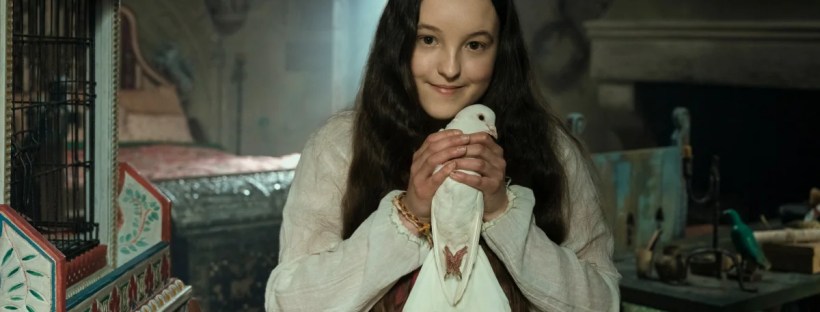
A couple weeks ago, a friend of mine came to Edinburgh for a visit and suggested that we watch Lena Dunham’s movie Catherine Called Birdy. She knew I’d enjoy the movie because a) it’s historical fiction b) it’s a comedy c ) it’s about sassy young ladies. She was right, of course. I did like the movie. But not just because it ticked all of those boxes. I liked the film because it was actually funny and warm and kind of quietly transgressive in a way I wasn’t expecting.

Continue reading

Madeira Mondays: Ridley Scott’s Napoleon (Movie Review)

What you think about a historical figure often depends on where you were educated. Take Napoleon. Growing up in the US, Napoleon was described in my schools (if he was mentioned at all) as a kind of over-ambitious conquerer. People even say ‘Napoleon complex’ for a small man who tries to overcompensate for his size. But I recently learned from my partner, who is Italian, that in Italy he’s a more positive (if still complex) figure. He conquered Italy, yes, but Italy was sort of in shambles anyway at the time and he paved the way for future revolution and the democratic ideals that would unify Italy a century later. In France I understand him to be a divisive, complex figure too, especially considering his decision to reinstate slavery after it had been abolished in France.

I personally don’t claim to know a lot about Napoleon. He’s not a person I’ve ever studied, and, beyond Waterloo, I couldn’t name one of his famous battles. My main associations with Waterloo are the ABBA song and also that it features in Vanity Fair (brilliant book btw). So I went into Ridley Scott’s Napoleon with an open heart and an open mind. I wasn’t looking for historical inaccuracies (though I’ve heard there are many). I was looking for entertainment.

I did not get it.

Continue reading

Madeira Mondays: My new historical short story ‘Feminine Absurdities’

“It wasn’t until my fourth or fifth sip of tea this morning that I noticed Miss Nancy Carson was missing her eyebrows. I promptly set the cup down and stared at her across the breakfast table. I wanted to make certain she had not simply hidden her brows under too much white pomade. The girl is at an age where she has begun to prepare her toilette, and painting takes practice to master. But her brows were not covered up. They were gone.”

That’s the opening paragraph from my new historical short story – ‘Feminine Absurdities’! It was published last month in CALYX magazine. You can listen to an audio recording of the full story right here.

‘Feminine Absurdities’ is set in 18th century New York City during America’s Revolutionary War. As many of you will know, that’s the war when the American colonies fought for independence from Great Britain. But that’s not what my story is about. My story is about a schoolteacher who notices that something is wrong with one of her pupils. Her eyebrows are gone! But what’s actually wrong with the girl might be deeper and darker than it first appears…

Continue reading

Madeira Mondays: Last Dance on the Starlight Pier by Sarah Bird (Book Review)

The only thing I knew about ‘dance marathons‘, prior to reading Sarah Bird’s new novel, was that Lorelai and Rory took part in one during that episode of Gilmore Girls. Turns out, they were all the rage in the 1930’s during the depression in the USA. It was a time when people were down on their luck and wanted something to root for, someone to cheer for, and ultimately something loud, ridiculous, chaotic and fun to distract them from their troubles.

This is the world that Bird’s heroine – Evie Grace – finds herself swept up in. Although Evie dreams of becoming a nurse, when her previous life in vaudeville catches up with her, it’s through dance marathons that she finds a glimmer of hope to regain the future that she lost. This book was fun, picaresque and full of adventure in a way that perfectly suits this glitzy, turbulent time period.

Continue reading

Madeira Mondays: Marie Antoinette (2006) revisited

It’s hard for me to describe how excited I was when I first saw the trailer for Marie Antoinette directed by Sofia Coppola. I was about 15 when the trailer came out and I was riveted: cool punky modern music mixed with 18th century fashion and this glamorous story about a doomed queen in revolutionary France. Sign me up!! Remember, this was many years before Hamilton and while I totally found the 18th century cool and exciting and hip, I don’t think that was the consensus and a lot of period pieces I’d seen felt really staid and kind of stodgy. The idea of a fun, edgy, period film with a rock-and-roll vibe about, and presumably for, young people was really, really exciting.

When I saw the film though, I was disappointed. Assuming my expectations might have been too high, I watched it again a few years later: still didn’t like it. Now, when I was at home sick with a cold (not Covid btw if you’re wondering. I tested a lot), I decided that I’d give it a THIRD try, over 15 years after its original release, to see if the film, which had failed to win over fifteen-year-old Carly could win over thirty-year-old Carly. The answer was, sadly, no. It didn’t.

Continue reading

Madeira Mondays: Mercury 13

‘Floating among the stars, that is my objective.’ – Wally Funk

I didn’t know about the Mercury 13 until recently, when I read the sci fi thriller Goldilocks and saw that the book was dedicated to them. I looked them up and learned that they were a group of 13 women in the 1960s who wanted to become astronauts. They aced the same grueling physical tests as the male astronauts, but their careers were cut short before they even began when it was decided (in the USA, at least) that women shouldn’t be astronauts at all. What a tragic story, and equally more tragic when I watched this documentary, Mercury 13, and saw how qualified, capable and enthusiastic these women were.

Continue reading

Friday Finds: The Pull of the Stars by Emma Donoghue

The Spanish Flu pandemic of 1918 killed more people than the First World War – about 3 to 6 % of the entire human race died from the disease.

When Emma Donoghue began writing a novel about this pandemic in 2018, inspired by its 100-year anniversary, she didn’t have any clue that, in just a few years time, a modern pandemic of our own would hit. How could she have known that another disease would similarly cripple the world’s health systems, bring economies to their knees and rapidly change the world? So it really was quite spooky that the year her book – The Pull of the Stars – came out, in 2020, we were in the midst of a health crisis of our own! And while I do think that there are some striking parallels between then and now in the novel, in terms of the uncertainties and fear associated with pandemics, the strongest part of the book is actually not its depiction of flu but of birth and birthing practices. It’s set in an early 20th century maternity ward in Dublin, a dangerous and precarious place where, even at the best of times, life and health are fragile things.

Continue reading

Friday Finds: Ghost: 100 Stories to Read with the Lights On, edited by Louise Welsh

‘in a story, which is a kind of dreaming, the dead sometimes smile and sit up and return to the world.’ – Tim O’Brien, in ‘The Lives of the Dead’

I love a good ghost story. While I’m a bit of a scaredy-cat when it comes to scary movies, I feel like ghost stories are perfect reading material for this time of year (or, really, every time of year). And I think books are the perfect place to encounter ghosts. As the quote above says, stories are a ‘kind of dreaming’. They are like the ghosts of either the writer, or the characters, or some combination of the two coming to life in our minds, even if that writer is long gone. We resurrect them.

Continue reading