Stay in and Read: The Girls by Emma Cline

‘Poor girls. The world fattens them on the promise of love. How badly they need it, and how little most of them will ever get.’
Emma Cline, The Girls

Last week, I promised to recommend a few books that would be perfect reading material during these upcoming weeks of ‘self-isolation.’ Today I wanted to recommend to you one of my favorite books: The Girls by Emma Cline!

This book was all the rage a few summers ago. It has a splashy, sensational premise – a fictionalized retelling of the Manson murders, from the perspective of one of the girls in the cult – but this book is SO much more than that. It is, at its core, an exploration of teenage loneliness and longing, and specifically the extraordinary lengths that young women will go to to feel loved, appreciated, seen. It’s a heartbreaking book, but one that is so exceptionally well written and so evocative of late 1960’s California – the oppressive heat, the ‘drowsy willows, the hot wind gusting over the picnic blankets’, and ‘the sweet drone of honeysuckle thickening the August air’.

IMG_0318

My copy of The Girls. I love the developing polaroid cover image!

The Girls tells the story of Evie Boyd, a middle aged woman reflecting back on the summer of 1969 when, bored and alone, she fell in with a wild group of girls. They are teenage runaways, living on a ranch outside of town which is presided over by a manipulative and charismatic man called Russell. The book alternates between the past and present, as young Evie falls in deeper and deeper with these girls and their actions escalate from petty vandalism to something much, much darker.

This narrative distance from the summer of ’69 is absolutely essential, because it lets older Evie ruminate on why she became involved with these girls and gives her a level of self-awareness, maturity and insight that she wouldn’t have had as an early teen. I remember seeing an interview with Cline where she mentioned that the 1960’s was kind of a metaphor for teenage-hood itself in the book (Is ‘teenage-hood’ a word? Let’s make it a word!). When you’re a teenager, everything is heightened, extreme, exciting, full of promise.

I should say that I know nothing about the real Manson murders, except for the fact that our culture seems to be obsessed with them. Just last year, Tarantino’s Once Upon a Time in Hollywood came out! But I’m not interested in the details of the real murders and the book isn’t either, so if you’re looking for a grizzly story – this isn’t the one. Without giving anything away, the book REALLY isn’t about the murders at all, but rather about Evie’s coming of age and her relationship with one of the girls in the cult, Suzannah, who she becomes infatuated with. In fact, one of Cline’s major strengths is that she is able to really capture the nuances of teenage girl behavior and friendship:

Girls are the only ones who can really give each other close attention, the kind we equate with being loved. They noticed what we want noticed.

It’s also full of achingly insightful one-liners about the difference between growing up male and female. Evie, like so many real young woman, is taught that her value lies in how others perceive her, and throughout her childhood she ‘wait(s) to be told what was good about me.’ She waits to be noticed:

All that time I had spent readying myself, the articles that taught me life was really just a waiting room until someone noticed you- the boys had spent that time becoming themselves.

The Girls isn’t for everyone, but it is one of my top 10 favorite books and I think it would be the perfect, immersive reading experience for these slow, indoor days of ‘self-isolation’ and quarentine. It’s an inherently exciting premise: Cults! Murders! 1960s! But the quiet, cutting observations are what really stick with you, as they have stuck with me in the years since I’ve read it.

Do let me know if you give The Girls a try, and also feel free to recommend books to me as well! I love historical fiction (of course), coming of age stories and books with lyrical and lovely writing. But I’m a pretty omnivorous reader and read across lots of different genres and styles, so feel free to toss any recommendations my way. And be sure to check out last week’s post where I talked about another favorite book, Dracula!

Thanks for reading, and I hope that you are keeping well in these strange times.
Madeira Mondays: Thomas Jefferson, James Hemings and French Cooking

Thomas Jefferson is known for several things.

He is considered one of America’s ‘Founding Fathers’ and is probably most famous for writing The Declaration of Independence in 1776, a list of grievances that the American colonies sent to King George III which kicked off the American Revolution.  He’s also been in the press recently as Monticello, his home (which is now a museum and research center), grapples with how to represent the more uncomfortable truths about Jefferson’s life: namely that he kept hundreds of slaves (despite expressing a belief that slavery was morally repugnant) and fathered several children with an enslaved mistress, Sally Hemings.

So, he was a complicated man. And an endlessly interesting one.

I was actually fortunate enough to live at Monticello for a month in 2016 as a visiting research fellow while I was working on my PhD. During that time, I got to know Jefferson pretty well. And one of the most interesting aspects of his life that very few people know about is that he was a major foodie. This guy LOVED his wine and his culinary experimentation; he tried growing all kinds of things at his home in Virginia.  So it is no surprise that when he went to France in 1784, as an Ambassador of the new United States of America, he was keen that one of his slaves, James Hemings, go with him and be trained up as a French chef. So Jefferson and Hemings struck a bargain. If Hemings learned how to become a French chef in Paris and returned to Virginia to teach another slave the skills of French cookery, then Jefferson would free him. Hemings agreed.

This story, of James Hemings and Thomas Jefferson, their intertwined lives and culinary journeys, forms the basis of Thomas J. Craughwell‘s book Thomas Jefferson’s Creme Brûlée: How a Founding Father and His Slave James Hemings Introduced French Cuisine to America

book cover

It’s a fascinating story and Craughwell’s short, entertaining book covers their time in France as well as their return to the early Republic, when Jefferson became President and attempted to introduce French cuisine to the United States. Some of the foods that Jefferson and Hemings brought back included things we consider staples now, like macaroni and cheese and ice cream. Although they can’t be solely credited with introducing these to America, these foods certainly weren’t popular at the time, so Hemings and Jefferson were some of the first.

IMG_5103

Photo taken in the kitchens at Monticello in Virginia

One of the best things about Craughwell’s book is its informal, highly-readable style, from a non-fiction author who apparently wrote about many different historical subjects (from President Lincoln to Urban Legends). It’s an easy and accessible overview for those who aren’t too familiar with the time period. As someone who studies this period, I also learned some new things too, namely about the origins of modern French cooking (good and simple sauces, fresh ingredients sourced daily) and how its emphasis on simplicity was actually a reaction to the excesses of the Court of Versailles.

IMG_9361

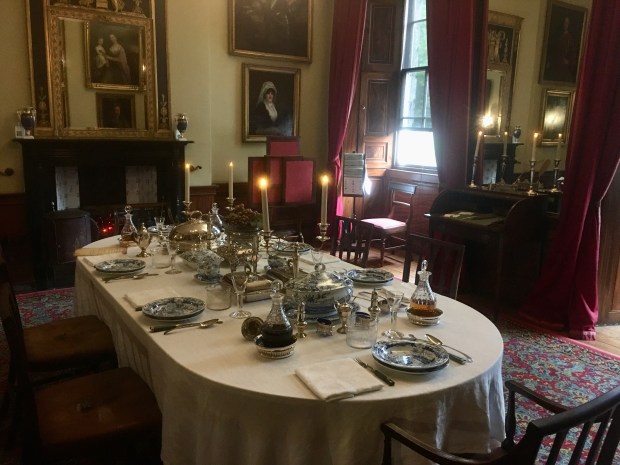
From The Georgian House, recreated 18th century townhouse where I volunteer in Edinburgh

But as a whole the book felt a little too short and superficial. I wanted more description of the food James learned to prepare in Paris, and more about James in general as a person. Craughwell isn’t a historian and he does acknowledge that it’s difficult to find information about James, who did become a chef de cuisine, a master of French cooking, in Paris and was eventually freed by Jefferson. His story has a tragic end however: he committed suicide while drinking at the age of just 36.

Of course it’s significantly harder to learn about James’ character than about Jefferson. Jefferson was a U.S President and a wealthy white landowner who left an enormous amount of documents behind him: things he bought, letters he wrote, etc. James was born into slavery and although he ended up being free and self-employed as a cook in Baltimore, his life is, understandably, much harder to trace. I talk about this in my post about Juan San Malo from New Orleans, but it is a challenge trying to uncover the lives of those like James who don’t leave behind the paper trail of men like Jefferson.

Yet perhaps more information about how other French chefs were trained at the time in Paris (What their daily rituals were like? What sort of recipes they were learning?) would have given more insight into James’ situation. This would have been a good way to bulk out the James sections and wouldn’t have required gaining more information about him specifically. I just felt that there wasn’t enough about his life, or enough about the food he made, honestly. A lot of it focused on Jefferson’s life and his family, which is fine but there are other books which cover this and in much greater depth. With this book, I wanted to learn about French cooking and James Hemings.

That being said, Craughwell has clearly hit on a fascinating story and if you’re looking for a fun and fast-paced read about food and Early American history, then this wouldn’t be a bad one to choose. I’m a sucker for stories about food and am of the firm belief that someone should make a movie about James and his culinary adventures in Paris, his complicated relationship with Jefferson, his bringing French cuisine to America etc. It’s an interesting and unusual story. So get cracking, Hollywood!

Recommended Further Reading/Watching

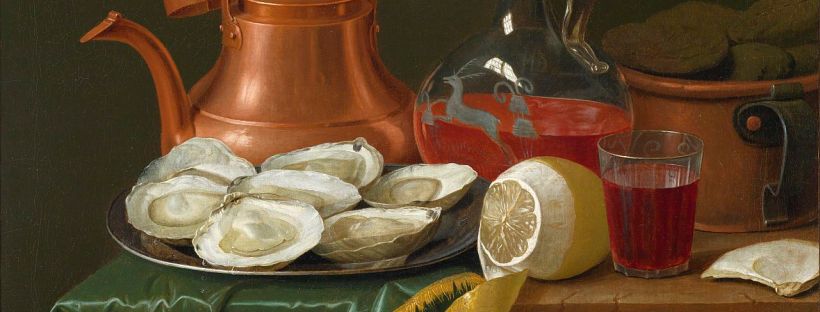
The Featured Image of today’s post is a still-life painting with oysters and wine from Flemish painter Peter Jacob Horemans, c. 1769, accessed via the Wikipedia Commons.

‘Madeira Mondays’ is a series of blog posts exploring Early American history and historical fiction. I’m not a historian, but an author and poet who is endlessly fascinated by this time period. I am also currently writing/researching a novel set during the American Revolution and recently finished a Doctorate of Fine Art looking at how creative writers access America’s eighteenth-century past. Follow the blog for a new post every Monday and thanks for reading!


Madeira Mondays: Dictionary of the Vulgar Tongue (Letters G to P)

I used to think that the Elizabethans had the best swear words. Shakespeare in particular really knew how to pen a vivid and hilarious insult: ‘Beetle-Headed, Flap Ear’d Knave’ ‘Canker-Blossom’ ‘A Fusty Nut with No Kernel’! But after reading The Dictionary of the Vulgar Tongue by Francis Grose (1811), I’m now convinced that the Georgians might very well have had the best slang words and insults.

If you missed my first blog post about The Dictionary of the Vulgar Tongue, this book is basically a compendium of 18th century slang, which ranges from the mild to the extremely crude. In that post, I went through some of my favorite words, from Letters A-F. This time, I’ll be choosing ones from G-M, with some added commentary from me in italics for good measure.

vulgar tongue

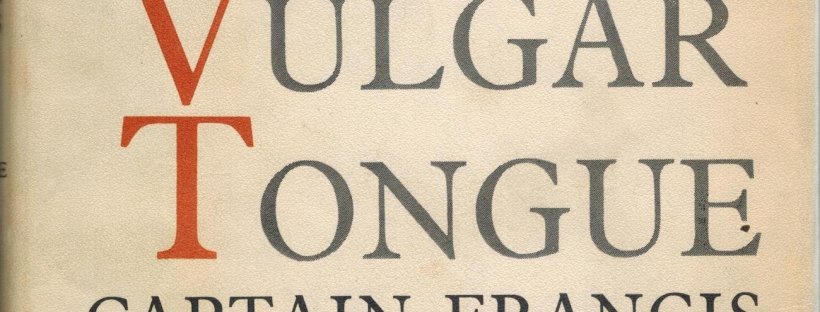
Cover from recent (1980’s) edition of Dictionary of the Vulgar Tongue

The book is an entertaining read for those who want a peek at the saltier side of life for our 18th, and early 19th, century pals. So I hope that you enjoy these words from Grose’s peculiar ‘dictionary’ and special points to you if you manage to work any of them into conversation:

GALIMAUFREY. A hodgepodge made up of the remnants and scraps of the larder. (In all honesty, I just added this one because I like the look of the word and we don’t really have a word for this now, although we still do it, throwing together scraps/leftovers into a hodgepodge sort of meal.)

GAPESEED. Sights; any thing to feed the eye. I am come abroad for a little gapeseed. (I liked this one because the idea of ‘feed(ing) the eye’ is an interesting and bizarre mix of the two different senses…)

GIFTS. Small white specks under the finger nails, said to portend gifts or presents. (Okay, what?! Not only had I never really taken notice of those ‘small white specks’ under fingernails, although I think I know what they mean, but I had no idea they used to be thought good luck!)

GINGERBREAD. A cake made of treacle, flour, and grated ginger; also money. He has the gingerbread; he is rich. (‘He has the gingerbread!’)

GREEN. Doctor Green; i.e. grass: a physician, or rather medicine, found very successful in curing most disorders to which horses are liable. My horse is not well, I shall send him to Doctor Green. (There was something charming and kind of sassy about this one. ‘This horse looks pretty bad, Bill. Should we send for a physician?’ ‘Nah, let’s just send him to Doctor Green.’)

GRUMBLETONIAN. A discontented person; one who is always railing at the times or ministry.

HALF SEAS OVER. Almost drunk. (This book contains SO many words for different states of inebriation. It has words to describe being a little drunk, somewhat drunk, and entirely drunk. No matter what your state of drunkenness, don’t worry, there was a word for that!)

HICKENBOTHOM. Mr. Hickenbothom; a ludicrous name for an unknown person, similar to that of Mr. Thingambob.

MONKS AND FRIARS. Terms used by printers: monks are sheets where the letters are blotted, or printed too black; friars, those letters where the ink has failed touching the type, which are therefore white or faint. (This one was just interesting and kind of enlightening about problems that early modern printers had getting their print exactly right.)

POMPKIN. A man or woman of Boston in America: from, the number of pompkins raised and eaten by the people of that country. Pompkinshire; Boston and its dependencies. (I have a hard time telling if this is pejorative or not? I guess mildly so? But I just like the idea that there were so many pumpkins (which was a New World food) in America that people from Boston were called ‘pumpkin’! I also like the fact that it’s a term of endearment now.)

IMG_9623

Taken on a recent trip to Boston where there were, in fact, many pumpkins!

*

Thanks for reading and stayed tuned for future posts when more silly, confusing, and fascinating historical slang words will be revealed!

PS Who is the dashing gentleman pictured in the Featured Image? He is 18th century English explorer James Cook, painted onto the wall of the bar at Brew York Beer Hall in York, England. (At least, that’s what I remember the bar staff telling me. I visited a few months ago and I may have been ‘half seas over’ when I spotted him!)

Madeira Mondays is a series of blog posts exploring Early American history and historical fiction. I’m not a historian, but an author and poet who is endlessly fascinated by this time period. I am also currently writing/researching a novel set during the American Revolution and recently finished a Doctorate of Fine Art looking at how creative writers access America’s eighteenth-century past. Follow the blog for a new post every Monday and thanks for reading!


Madeira Mondays: Dictionary of the Vulgar Tongue (A to F)

Do you know what it means to be a ‘dog in a doublet’? Or how you can become ‘The Admiral of the Narrow Seas’? If not – you’re not alone! These are obscure late 18th and early 19th century slang words that I discovered in Francis Grose’s 1811 Dictionary of the Vulgar Tongue!

So what is The Dictionary of the Vulgar Tongue?

The British Library explains it thus:

Francis Grose’s ‘Classical Dictionary of the Vulgar Tongue’ was first published in 1785, and is a dictionary of slang words. Grose was one of the first lexicographers to collect slang words from all corners of society, not just from the professional underworld of pickpockets and bandits.

The words in this ‘dictionary’ range from the obscene to the mild. Some are creative and colorful, some are nonsensical (to us and perhaps even to people at the time!). Some are derogatory and cruel (especially many of the words describing women) and some are kind of sweet. Many of the phrases in it have to do with men’s leisure activities (e.g. drinking and card playing) or they are about sex. But there are various terms to do with practical jokes, games and a whole host of other topics too.

I found this book an entertaining read and have picked out a few choice words to share with you! But you can also have a read through the entire thing yourself here! It’s definitely NOT a suitable read for children (these are swear words, after all!) but for the adults who want a glimpse behind the curtain of propriety into the rowdier reality of 18th century language and life, it’s worth a look!

dictionary of the vulgar tongue

There were so many great words that I’ve had to split this up into several different posts, so these are my favorite slang words from The Dictionary of the Vulgar Tongue, Letters A through F! I’ve included a few of my own comments (in italics) as well, because I could not resist.

So how do you swear like an 18th century person? Read on…

ADMIRAL OF THE NARROW SEAS. one who from drunkenness vomits into the lap of the person sitting opposite him. SEA PHRASE.

AMBASSADOR. A trick to duck some ignorant fellow or landsman, frequently played on board ships in the warm latitudes. It is thus managed: A large tub is filled with water, and two stools placed on each side of it. Over the whole is thrown a tarpaulin, or old sail: this is kept tight by two persons, who are to represent the king and queen of a foreign country, and are seated on the stools. The person intended to be ducked plays the Ambassador, and after repeating a ridiculous speech dictated to him, is led in great form up to the throne, and seated between the king and queen, who rising suddenly as soon as he is seated, he falls backwards into the tub of water. (Something I learned from reading this book was that men at sea had a lot of time on their hands and loved playing tricks on each other. There were other sea games listed and they were all just as silly.)

TO AMUSE. To fling dust or snuff in the eyes of the person intended to be robbed; also to invent some plausible tale, to delude shop-keepers and others, thereby to put them off their guard.

ANKLE. A girl who is got with child, is said to have sprained her ankle.

APRIL FOOL. Any one imposed on, or sent on a bootless errand, on the first of April; which day it is the custom among the lower people, children, and servants, by dropping empty papers carefully doubled up, sending persons on absurd messages, and such like contrivances, to impose on every one they can, and then to salute them with the title of April Fool. This is also practised in Scotland under the title of Hunting the Gowke. (So they had April Fools’ Day!)

ARSY YARSEY. To fall arsy varsey, i.e. head over heels.

BEDFORDSHIRE. I am for Bedfordshire, i.e. for going to bed. (This one was perhaps my favorite phrase I encountered. I am going to start saying this.)

BOTTLE-HEADED. Void of wit.

CAT CALL. A kind of whistle, chiefly used at theatres, to interrupt the actors, and damn a new piece. It derives its name from one of its sounds, which greatly resembles the modulation of an intriguing boar cat. (So this word was already around, but its meaning has shifted in the last few centuries. Also, what is an ‘intriguing boar cat’?)

DEVIL DRAWER. A miserable painter. (How often was this used?)

DOG IN A DOUBLET. A daring, resolute fellow. In Germany and Flanders the boldest dogs used to hunt the boar, having a kind of buff doublet buttoned on their bodies, Rubens has represented several so equipped, so has Sneyders.

DOODLE. A silly fellow, or noodle. (More on this word in a later blog post about the history of the song ‘Yankee Doodle’.)

FIRING A GUN. Introducing a story by head and shoulders. A man wanting to tell a particular story, said to the company, ‘Hark! did you not hear a gun?—but now we are talking of a gun, I will tell you the story of one.’ (I love that there used to be a phrase for this, when someone brings up a topic only so that they can talk about it more e.g. ‘Did I smell food? Speaking of food, when are we going to have dinner?’)

*

I hope that you enjoyed these antiquated slang words, and let me know if you manage to squeeze any of them into conversation! Be on the lookout for the next round of ‘vulgar’ phrases in a future post.

Madeira Mondays is a series of blog posts exploring Early American history and historical fiction. I’m not a historian, but an author and poet who is endlessly fascinated by this time period. I am also currently writing/researching a novel set during the American Revolution and recently finished a Doctorate of Fine Art looking at how creative writers access America’s eighteenth-century past. Follow the blog for a new post every Monday and thanks for reading!