Madeira Mondays: Mistress by Chet’la Sebree

Who was Sally Hemings?

One short, and incomplete, answer is that she was Thomas Jefferson’s enslaved mistress, with whom he fathered several children. But of course Sally Hemings was much more than that one fact. As it says on the website for Thomas Jefferson’s Monticello, she was a ‘Daughter, mother, sister, aunt. Inherited as property. Seamstress. World traveler. Enslaved woman…Liberator. Mystery.’ The page goes on to describe her as ‘one of the most famous-and least known-African American women in US history’.
IMG_4993

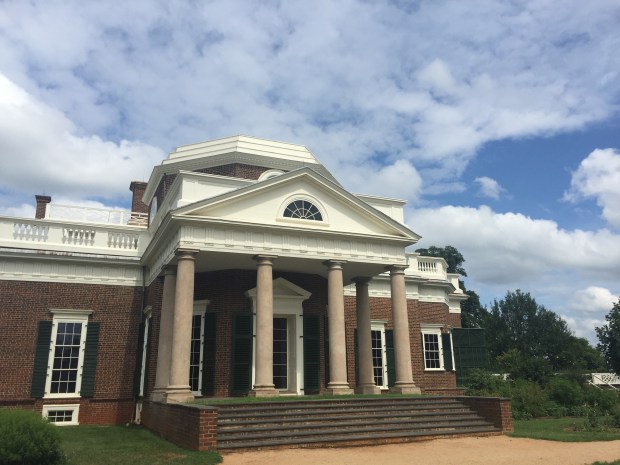
Thomas Jefferson’s home Monticello in Virginia. Taken during my fellowship there in 2016.

Although I’d heard her name before, I first learned about Sally’s story during my residential fellowship at Thomas Jefferson’s Monticello three years ago. When I was living there in Summer 2016, they had not yet set up the new exhibition displaying some of Hemings’ artifacts, in what would have been her living quarters, but I still learned about her through the Slavery at Monticello Tour and even more so through another fellow who was also living at Monticello at the time: author Chet’la Sebree.

Chet’la was at Monticello researching a collection of poetry inspired by Sally’s life. Chet’la’s work would imaginatively explore and grapple with Sally’s internal struggles and deliberations, her loves and losses, the complex nature of her relationship with Jefferson. In doing so, these poems would imbue this often missing or maligned historical figure with something of the multi-dimensional humanity the real, historical Sally had in life. The poems that Chet’la was working on would eventually become part of her debut collection, Mistress, released last month from New Issues Press.

IMG_9790

Having just finished reading Mistress, I can recommend it for several reasons (and not just because Chet’la is a friend!). Firstly, this book really brings to life the internal and external world of Sally Hemings. It is absolutely crackling with vivid historical details that evoke the lost, material world that Sally lived in. In ‘Dusky Sally, February 1817’, the persona of Sally reflects:

In star-latticed sky, I hear my niece’s cries, feel my mother’s hand on

my fire-warm face, smell the lavender she used in her vase, taste

everything James once made: fried potatoes, pasta with cheese, ice

cream. (…)

The collection dramatizes and imagines Sally’s internal life as well, in a way that traditional non-fiction history could not do. Sally did not leave any diaries or written accounts in the first person, and much of what we know about her comes to us from her son Madison Hemings (who was freed in Jefferson’s will and ended up in Ohio where he owned a farm). So we are left to imagine how she might have felt as her eventful life unfolded.

IMG_5103

The kitchens at Monticello

Perhaps most significantly, Mistress explores her conflicted feelings about returning to Monticello from Paris. In the late 1780’s, Sally went to Paris to be Jefferson’s daughter’s maid, and it was there that she began a sexual relationship with Jefferson. Slavery was illegal in France, so she could have stayed on there and remained free, but she chose to return to Virginia with Jefferson and to her life of slavery. In return, she was promised ‘extraordinary privileges’ at Monticello and that her children would be freed. But why did she return? Did she ever regret that choice? These are things that we can never know, but through Sebree’s rendering of Sally’s life, we can picture her grappling with this choice and many others. We see her back at Monticello, circling a fishpond, ‘thick summer wind/prickling fair hair on skin’, pacing and ‘wonder(ing) if my decision was right.’

But, crucially, the persona of Sally is not the only voice that we meet in Mistress. Sally’s imagined voice is in dialogue with a contemporary speaker (or perhaps several speakers) who reflect on their experiences of sex, relationships and racism in modern America. At times this modern voice explores the erasure of black female sexuality, in particular in the poem ‘At a Dinner Party for White (Wo)men’. This poem is a response to Judy Chicago’s art exhibition The Dinner Party (1979) in which the only black woman featured in the exhibit, Sojourner Truth, is (as Sebree explains in the end notes) ‘rendered without a vagina: she is instead, depicted by three faces.’ The poem begins:

Everyone else is invited to meet their vaginas-

different denominations and colors-


except me, the magical negress. My box

always absent because desire is not a privilege


for disenfranchised women

descendant from slaves-


we, still, their dark continent.

At times the poems also delve into the hyper sexualization of black women, reflecting on how in Alex Comfort’s The Joy of Sex (1972) the term for rear-entry intercourse is sex ‘a la negresse.’ The modern black speaker is conflicted by her own sexual desires (‘I stifle myself, pretend I don’t/love shower sex a la negresse’) and is worried that her sexual partner might see her only as ‘kinks to get lost in’, instead of an individual. The poem I have just quoted from, ‘Dispatches from the Dark Continent’, follows a poem called ‘Paper Epithets, December 1802’ which is told in Sally’s voice. ‘Paper Epithets’ lists out some of the pejorative terms that were used to described Sally in newspapers, after her relationship with Jefferson became public knowledge: ‘an instrument of Cupid’ ‘yellow strumpet’ ‘wench Sally’. But, Sally says in the poem’s powerful final line, she is always described in reductive ways, but she is never seen as ‘the woman that I am.’

By positioning these two poems next to each other, ‘Dark Continent’ and ‘Paper Epithets’, we see a parallel emerging between these two personas, past and present. We see how they are both reduced in the eyes of others – whether a contemporary lover or turn of the century journalists – to so much less than what they really are. Throughout the collection, these two voices, contemporary and historical, are always in dialogue with each other. We come to see how racism, and in particular degrading attitudes towards black female sexuality, lives on in modern America. Towards the start of the book, Chet’la quotes from historian Annette Gordon-Reed who writes: ‘The portrayal of black female sexuality as inherently degraded is a product of slavery and white supremacy, and it lives on as one of slavery’s chief legacies and one of white supremacy’s continuing projects.’

IMG_4996

The gardens at Monticello where enslaved people would have labored.

Mistress is the sort of book that you could read in one or two sittings, getting immersed in the sensuous and troubling worlds of the various, intermingling speakers. OR you could return to it again and again with a ‘scholarly’ eye and see how Sebree has used the various, often sparse, facts of Sally’s life to shape Mistress. There is a timeline provided at the back and you could easily spend time seeing where each poem fits into that timeline, what historical events are being referenced or alluded to. There are also detailed Notes where you can learn more about what works of art or historical materials are being referenced in each of the poems. This is a book that is layered with allusions to other texts.

This is also a book that deeply understands the limitations of the ‘persona poem’ (a literary term for poems that adopt the voice of a speaker who is not one’s self) and how Sally Hemings cannot ever truly be understood or rendered by a modern writer. Sebree acknowledges this, yet this book is still a powerful resurrection of a historical figure. In many ways, it is a restoration of the humanity that Sally Hemings was denied both in life, as an enslaved woman, and in history, as someone who was often reduced to nothing more than a pejorative epithet by her contemporaries or ignored entirely by some modern historians. The story of Sally Hemings is painful and complex, and poetry is the perfect form (in my opinion) to explore painful and complex emotions. Poems do not seek to provide answers, but to ask questions. Poems are not built around argumentation; they are built around emotions and ambivalence.

Mistress is a powerful testament to how art can help us to carry and hold the painful legacy of slavery in America and how poetry especially can help us to recover and access those whose lives were, and continued to be, affected by that legacy. These poems ‘sever the silence’ around Sally’s life and allow us into her world. Her loves, her desires, her choices, and her regrets. In short, her humanity.
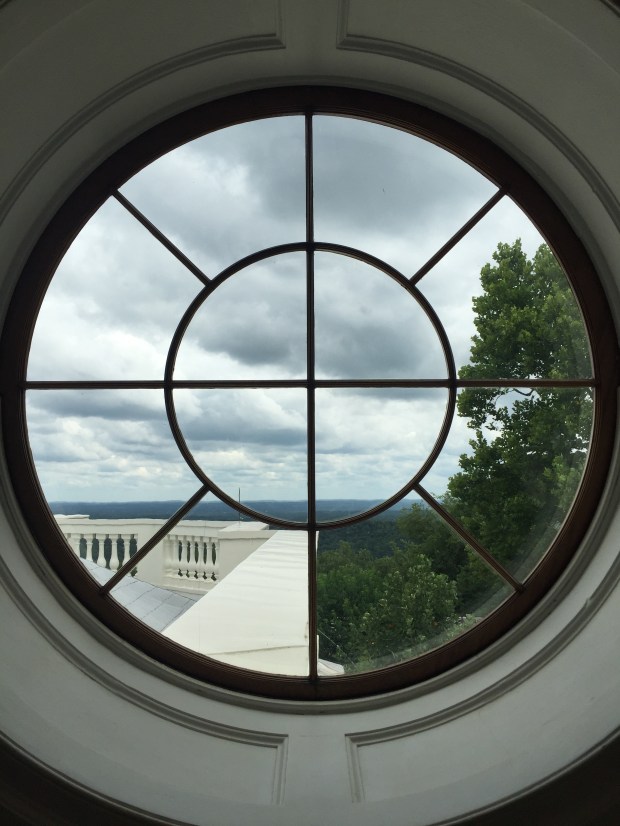
IMG_4989

Window at Monticello

Recommended Reading

Non-Fiction:

The Hemingses of Monticello: An American Family by Annette Gordon-Reed

Thomas Jefferson and Sally Hemings: An American Controversy by Annette Gordon-Reed

Jefferson’s Daughters: Three Sisters, Black and White, in a Young America by Catherine Kerrison

‘Jefferson’s Monticello Makes Room for Sally Hemings’ from National Public Radio, June 2018

– Monticello itself has many resources online which are a great place to start learning more about Sally and her family. You can start with their ‘Slavery at Monticello’ general page or check out ‘The Life of Sally Hemings’. I’d of course recommend a trip to Monticello as well, if you’re anywhere nearby.

Getting Word Oral History Project (Monticello’s oral history project for collecting stories and interviews with descendants of Monticello’s African American community)

Fiction exploring experiences of enslaved characters:

Beloved by Toni Morrison

Chains by Laurie Halse Anderson (and her entire Seeds of America trilogy, which are all for Young Adult readers)

The Underground Railroad by Colson Whitehead

Related posts on this blog:

Notes from Monticello II: Trying on Stays (blog about the experience of trying on replica 18th century corsets with Chet’la Sebree during my fellowship at Monticello)

‘Madeira Mondays’ is a series of blog posts exploring Early American history and historical fiction. I’m not a historian, but an author and poet who is endlessly fascinated by this time period. I am also currently writing/researching a novel set during the American Revolution and recently finished a Doctorate of Fine Art looking at how creative writers access America’s eighteenth-century past. Follow the blog for a new post every Monday.
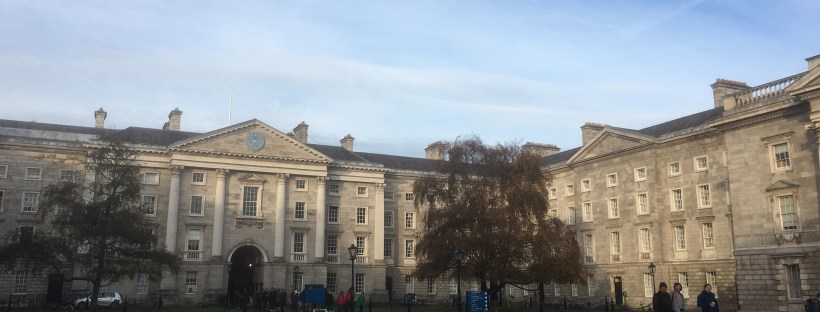
Madeira Mondays: Trinity HistoryCon

‘Most of us began our love of history from something we saw on TV, in movies or other pop media.’

This was one of the opening remarks at Trinity History Con 2019, a two day long conference in Dublin at Trinity College, all about the intersections of pop culture and history. And that remark really stood out to me because I think it’s so true! Often the first time that we encounter history is through historical fiction – be that books, TV, films etc. For me it was reading books like Johnny Tremain about the Revolutionary War that ignited my curiosity in that whole time period. I know from speaking to other historical fiction writers, historians, and lovers of history that pop culture media often sparks a love or curiosity in a period that leads to academic research or just a lifelong fascination with a particular place and time.

In one panel at the conference, ‘How We Remember Her’, featuring actress Lotte Verbeek (from TV shows like Outlander and The Borgias), she discussed some of the different reasons someone might watch a historical fiction TV show like The Borgias: to get a sense of the past, to understand a bit, but also (perhaps primarily) to be entertained. Yet a show like that can also ‘open up a world for people’ who might otherwise know nothing at all about the time period and might now be encouraged to seek out further information.

The Borgias was one of dozens of pieces of pop media that were discussed at HistoryCon. While I was there, I saw talks on (to name a few!): Star Wars, Games of Thrones, Star Trek, and the Christmas film It’s a Wonderful Life. There were presentations on Kate Bush’s song ‘Wuthering Heights’ and its relationship to the novel, as well as discussions on Charles Manson and American film. There was even a presentation from two St Andrews researchers, Christin Simons and Elena Romero-Passerin, who research 18th century mercantilism and botany respectively, on the history-inspired board game they have designed based on their research called ‘Mer-plant-ilism’. Basically, this conference was a dream event for a history nerd (and all around nerd, let’s be honest!) like me.

IMG_9746

Conference organizer and presenter Dawn Seymour Klos giving her talk on Leia Organa and 13th century English Women

But in addition to academic talks from researchers from all over the world there was also a brilliant sword fighting demonstration in a college square and a costume contest!

IMG_9766

Sword fight demonstration from Medieval Armoured Combat of Ireland in Fellows’ Square, Trinity College

I was encouraged to enter the costume contest and actually won third place for my John Adams costume. What do you think of the outfit? (We actually had to walk down an aisle and pose in front of a panel of judges and I imagined RuPaul there and calling out, ‘Category is: Revolutionary Realness’).

IMG_9715

My John Adams costume for Trinity HistoryCon

And what I loved in particular about the concept of HistoryCon was that it was free, fun and open to the public. We were told to structure our talks more like Ted Talks, so that the general public (and several people did just wander in on the day) could engage with the material and have something to take away. Academic researchers are often encouraged to do public engagement and to disseminate their research with the wider community, and that is built in to the whole ethos of this event. Breaking down those barriers between the academy and the general public, and hopefully sparking curiosity about the past and the various ways to study and interact with it, was the name of the game.

I, for one, had a brilliant time presenting on representations of John Adams in pop culture. I delivered my talk ‘Obnoxious and Disliked’: John Adams’ Legacy in Popular Media, from 1776 to Hamilton, dressed as Adams and I’m not sure when I’ll ever have the opportunity to do that again!

I learned a lot throughout the busy two days and made so many new nerdy, academic friends. So I’d like to thank the organizers at Trinity College for creating such a fun and accessible conference and for inviting us all to Dublin. Thank you! Live long and prosper.

‘Madeira Mondays’ is a series of blog posts exploring Early American history and historical fiction. I’m not a historian, but an author and poet who is endlessly fascinated by this time period. I am also currently writing/researching a novel set during the American Revolution and recently finished a Doctorate of Fine Art looking at how creative writers access America’s eighteenth-century past. Follow the blog for a new post every Monday!


Madeira Mondays: A Visit to the Museum of the American Revolution

I have wanted to visit the Museum of the American Revolution ever since I saw this CBS special about it. The museum opened very recently (2017) and last month, during my first ever visit to Philadelphia, I finally managed to stop in and see it for myself!

IMG_9426

It’s an enormous undertaking, trying to present the entire Revolutionary War (plus its lead up and its aftermath) to visitors. Some of those visitors (like myself) might know a fair amount about this period already, but some might be learning about it for the first time. From the look of it during my visit, it seems to be a popular place to take school groups, but it’s also right by Independence Hall and all the other major Revolutionary War sites in Philly so I imagine it attracts all sorts of tourists and visitors, both local and international. Overall I think the museum does a really great job of presenting the war from various different perspectives (political, racial, geographical, etc.) and conveying that this was a complex conflict and not matter of ‘good guys’ and ‘bad guys’. I actually heard one of the tour guides saying to a group of what looked like eight or nine-year-old school kids, ‘Now what did I say at the beginning of the tour? The Revolution was nuanced.’ Even using the word nuanced with kids of that age made me smile and made it clear just how committed the museum was to trying to tell a multifaceted a story of the Revolution.

IMG_9428

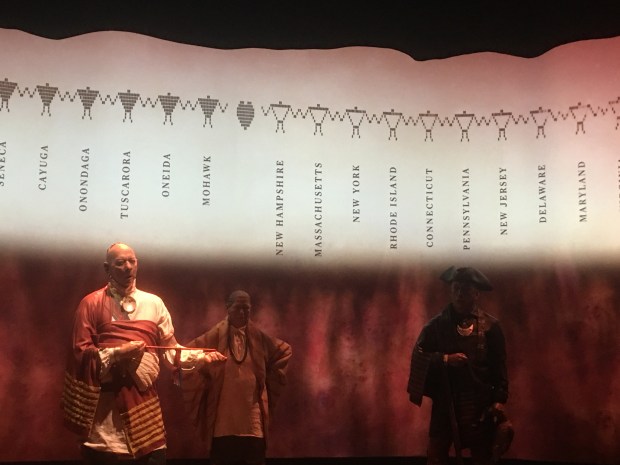
Of course the Revolutionary War was experienced differently by everyone who was alive during that time, but I think they did a relatively good job of exploring some underrepresented perspectives that I certainly wasn’t taught at school: the dilemmas of the people of the Iroquois nations deciding which side of the conflict to align themselves with, for instance. There is also some exploration of how many enslaved men ran away to join the British army in exchange for their freedom.

IMG_9459

Dramatic display inside the museum about the people of the Oneida nation deciding who to ally themselves with

Overall it is a very battle centered museum – the rooms are basically arranged to explore chronologically the different military campaigns. Since I’m more interested in social history (a fancy way of saying ‘how people lived’) and day to day life for women at home during this period, it didn’t appeal to me as much. But I also recognize that those are my particular interests. The Revolutionary war was a war, after all, so I imagine many people are primarily curious about the different battles and military engagements. It’s just not my cup of tea.

That being said, there was still lots for me to see and enjoy there. Here are a couple of things that stood out to me as particular favorites from my visit.

Phillis Wheatley book: They had a signed first edition of the first published book of poetry written by an African American woman, Phillis Wheatley. Wheatley is a fascinating historical figure in American history and literature (a blog post about her is forthcoming!). She was born in West Africa, but forced into slavery as a child and transported to North America. She learned to read and write from the Boston family she served and ended up becoming a famous, celebrated poet in her day.

IMG_9434

Phillis Wheatley’s book Poems on Various Subjects, Religious and Moral, 1773

George III statue fragments: The book that I’m working on is set in colonial New York, so it was really cool to see two original fragments of the statue of King George III that was pulled down in NYC on July 9, 1776. I also learned that based on the fragments, it’s been concluded that the statue featured George III in a Roman-style toga, which I had not known before and actually impacted a scene in my book! (Fun fact: Most of the lead from the statue was melted down into musket balls by the Continental army during the war).

Toy broom and toy platter: I liked seeing the itty-bitty toys excavated from British Revolutionary Campsites around New York City, reminders that the children of British soldiers were going around with the army in North America. I’ve never seen little pewter toys like this before and it was a charming sight.

‘Women’s Property and War’ display: Something that a lot of people don’t know is that after the Revolution, there were ‘confiscation’ laws passed and the new government started seizing the property of those who had remained loyal to the King. A lot of my PhD was looking at the experiences of women in South Carolina who suffered during and after the war because of their husbands’ politics and who lost their property due to these laws. This display featured furniture pieces similar to the furniture that was confiscated from the Drinker family (Philadelphia Quakers who tried to remain neutral during the war). I’ve read Elizabeth Drinker’s diary, and obviously have a lot of personal interest in this topic, so I was happy to see this particular display, although I would have been happy with even more about it.

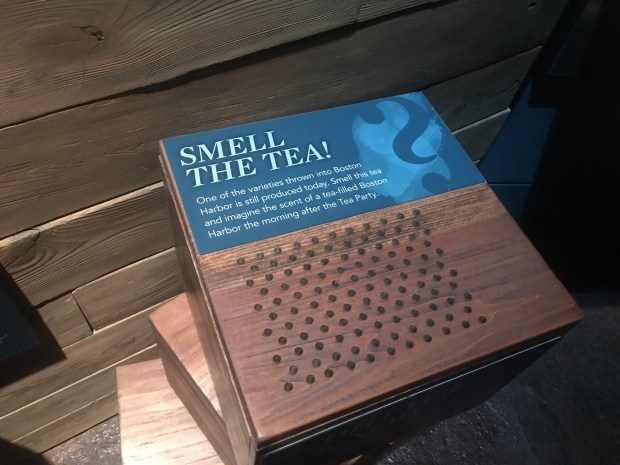
Tea: I’m a big fan of incorporating multisensory displays at museums and there was a box where you could smell one of the varieties of tea that was thrown into the Boston Harbor during the tea party. (It was black and green tea thrown overboard).

IMG_9438

The mirrors at the end: When you’re leaving the exhibition there’s a big mirror and it says ‘Meet the future of the American Revolution’ at the top. It’s a very sweet visual reminder of our connection with the past and I really like the idea of school kids peering up at themselves and seeing themselves as part of this story. (Did I tear up a bit? Yes. Yes I did).

So overall it was absolutely worth a visit and if you’re in Philly you could quite easily tie it in with a visit to Independence Hall and the Liberty Bell. You’ll leave with a really clear sense of what led to the Revolutionary War, as well as the key moments and battles. There’s also a rotating exhibition on the ground floor, so do have a look at what is on there when you visit.

Thanks for reading and I hope that it’s helpful for anyone considering a visit! Museums like this always make me think of the tremendous challenge of communicating such a sprawling conflict to people and this museum did a good job. And let me know, if you’ve been already, what you thought of the Museum of the American Revolution – I’d be very curious.

See you next Monday!

‘Madeira Mondays’ is a series of blog posts exploring Early American history and historical fiction. I’m not a historian, but an author and poet who is endlessly fascinated by this time period. I am also currently writing/researching a novel set during the American Revolution and recently finished a Doctorate of Fine Art looking at how creative writers access America’s eighteenth-century past. Follow the blog for a new post every Monday and any questions or suggestions feel free to get in touch.


Madeira Mondays: Syllabub Recipe

You probably already know that people in early America were drinking alcohol. But you might be surprised to know just how much of it they were drinking. Water wasn’t sanitary to drink, so they were boozing it up big time in the thirteen colonies with ales, ciders, wines (like Madeira!) and strong rum punches. What you drank and where you drank it varied by gender and class (an elite lady, for instance, wouldn’t be swigging pints of ale in a tavern), but alcohol was flowing very freely during this time. As food writer Corin Hirsch says in Forgotten Drinks of Colonial New England:

‘From the mid-1600s on, a New England rota looked like this: At breakfast, wash down some brown bread and sliced cheese with a pewter tankard of hard cider, the equivalent of two pints of beer. Work didn’t proceed far before a late-morning break (…) an occasion for a glass of beer or another of cider. Lunch necessitated more booze, as did the afternoon break, supper and evening socializing in the local ordinary (aka tavern). A birth? Drink. A wedding. Drink some more.’

You get the idea.

Now, as a writer and as a person, I am deeply interested in food and drink, so for the last few months I’ve been trying to recreate some 18th century recipes and that includes drink recipes. And one of the easiest and most fun drinks that I’ve made is syllabub.

IMG_8799

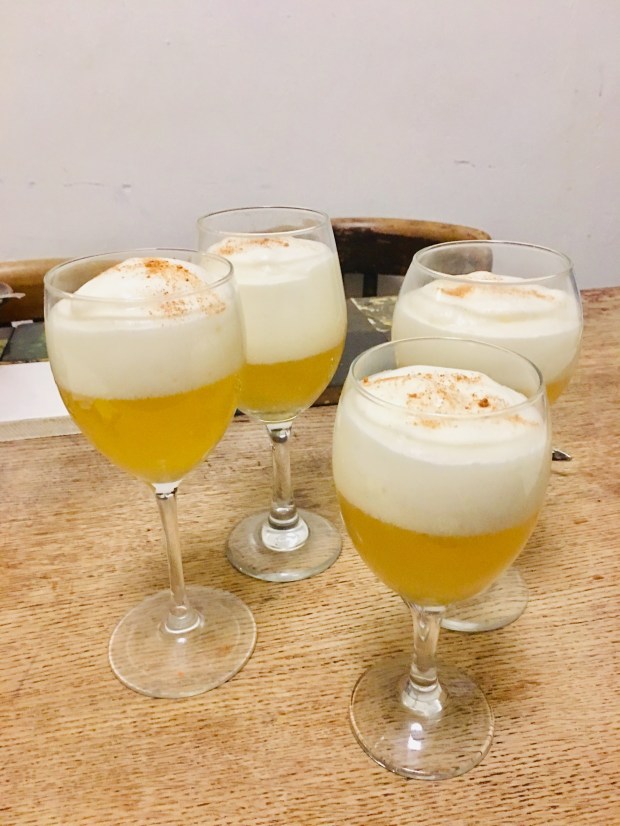
Homemade syllabub! Check out those cool layers.

If you’re living in the UK you might be familiar with this drink (which I’ve heard is still served occasionally at restaurants and I actually found this Nigella Lawson recipe for an Amaretto syllabub, bringing an Italian spin on this English drink), but if you’re in the USA or elsewhere chances are you probably haven’t. But it was a very popular drink in 18th century America and the best way that I can describe it is that it’s basically like an alcoholic Frappuccino. And as someone who personally doesn’t always love super creamy beverages, I am a huge fan of this particular drink and have made it at several parties now and it’s always a crowd pleaser. It also looks impressive but is easy to prepare and I wanted to share my recipe with you.

I think recipes are sort of like fairy tales in that there isn’t really an ‘original’, just many different iterations, but it’s useful to think about where your version comes from. The way I like to make syllabub is inspired by this video from brilliant re-enactor/YouTuber Jas Townsend on his YouTube Channel. Really worth a watch if you’re into history or cooking or both. They make 18th century recipes! He was following a recipe (or ‘receipt’, as it would have been called back then) from Eliza Smith’s The Compleat Housewife, 1739. But I have also seen a short recipe for it in Mary Randolph’s The Virginia Housewife or, Methodical Cook, 1860. As I mentioned, it was a pretty common drink/dessert.

IMG_9646

Recipe for syllabub from The Virginian Housewife

So I took those as inspiration, but slightly modernized it to use Prosecco instead of white wine. The reason for that is that I think the bubbles bring a nice lightness to the drink (contrasting with the heavy cream) and also it’s much easier to whip by hand if you’re using something with bubbles in it (like cider or Prosecco). Also because I love Prosecco.

Syllabub Recipe

Ingredients (for 4 glasses of syllabub):

– 1 bottle of Prosecco (or white wine or cider)

– 2 lemons

– 1/2 cup sugar

– 2 cups heavy cream

– nutmeg

Note on the measurements: these are very approximate and if you don’t have a measuring cup, you could always just use a mug for coffee or tea to measure things out.

How to make it:

  1. Fill glasses up halfway with Prosecco (or white wine or cider)
  2. In a separate mixing bowl, add one cup of Prosecco, the juice of both lemons, ½ cup of sugar and stir until dissolved together.
  3. Add the 2 cups of heavy cream to the mixing bowl and whip together until it becomes thickened like whipped cream! (NB This might take a while if you’re doing it by hand. Maybe 10-15 minutes. You could also use an electric mixer if you have one and want to save time).
  4. Spoon the foamy whipped cream topping into the glasses over the top of the Prosecco. It should float on top. If it sinks, you haven’t whipped it long enough.
  5. Add a sprinkle of nutmeg and a squirt of lemon over the top of each drink.
  6. Serve!

A great non-alcoholic version could also be made with grape juice or apple juice.

As you drink it, you can stir it up together and eat it with a spoon, more like a custard, or eat the foam and then drink the wine after – it’s entirely up to you.

I’ve heard of other ways of making this, including using egg whites, but this is my favorite way. The lemon makes everything taste bright and fresh, not too heavy, and balances out nicely with the cream. The nutmeg on top also looks cool but adds an unusual and very authentic 18th century taste to it (it was a very popular spice in the 18thcentury kitchen).

I’d serve this as a dessert drink after dinner because it’s quite sweet. Another cool thing about it is that it would be good in the winter, a bit like eggnog, or summer, like a Frappuccino. In The Compleat Housewife, 18th century writer Eliza Smith suggests it for June, but I think it would be fun for a winter holiday party too.

IMG_8801

Syllabub! Apologies for the slightly blurry image. Blame it on the Prosecco I was sipping as I made the drink.

Let me know if you’ve had this before or if you end up making it, I’d love to see! It really is a crowd pleaser because of its striking, layered look and is super simple to prepare. You can impress people with your knowledge of historic drinks and then booze it up like it’s 1770.

Cheers!

‘Madeira Mondays’ is a series of blog posts exploring Early American history and historical fiction. I’m not a historian, but an author and poet who is endlessly fascinated by this time period. I am also currently writing/researching a novel set during the American Revolution and recently finished a Doctorate of Fine Art looking at how creative writers access America’s eighteenth-century past. Follow the blog for a new post every Monday and any questions or suggestions feel free to get in touch.

Madeira Mondays: The Witch

One of the trickiest things to capture, when writing fiction set in early America, is the fervent religiosity of that time. God was so much a part of people’s lives and everyday thoughts in ways that many of us (certainly me!) have difficulty even conceptualizing, let alone capturing in fiction. I’m not religious at all. Christianity has never been a part of my life in any overt way. Yet, back in the 17th century, Christianity created a system of beliefs that touched every aspect of life – your conduct, your marriage, your sense of right and wrong. It was something that people just believed in, the way that we now believe in scientific laws like gravity. (Of course, not everyone in early America was Christian, or the same type of Christian. Religions varied regionally and culturally etc. I’m thinking here mostly about the Puritan settlers in early New England).

So how do you capture, in modern books and film, the importance of Christianity and Christian belief back then? I think a lot of historical fiction writers just DON’T address it that much in their fiction, which is fine, but it is a major omission. And I like how sometimes novels and films, instead of avoiding or skirting around the religiousness of these historical people, dive headfirst into it, making faith, doubt and religious belief a major topic of the work itself. And no film does that better, in my opinion, than Robert Eggers’ The Witch: A New England Folktale!

Set in Puritan New England, this is a ‘horror’ film (more on that below) about a family that is banished from the village and has to make their way on their own in the wilderness. Now there are lots of things to appreciate about The Witch – from the 17th century language the characters speak (top tip: if you’re struggling at all to understand the dialogue, throw on the subtitles and that might help), to the creepy use of sound (notice how it cuts out at key moments and creates moments of eerie absence), to the cold color scheme of greys, blues and milky whites. All of these things are great.

But what struck me as I was re-watching this ‘New England Folktale’ recently – on a train travelling up the New England countryside from Philadelphia to Boston, no less – was that while ostensibly it is an evil witch in the woods who threatens this family throughout the film (a monster who, you could argue, does or does not exist literally), it’s really more about the very real physical and spiritual threats that faced settlers in early New England.

The_Witch_still

The family sits down for a prayer before dinner

Isolation is a threat for the family – the first scene shows the village community literally shutting the village gates on them. Then, as the family leaves the village, their cart is slowly swallowed up by the dark trees. Communities provided joint resources, protection and safety, and also opportunities for companionship. Community kept you alive and to be cut off from it would have been horrifying.

But the woods themselves are also the threat in this film, they are the monster, which is made clear from the cinematography. It’s shot in a way which makes the woods look slightly taller and narrower. Looming. (Mark Kermode explains more about the filming here). But the threat of the woods is also clear from the dialogue. ‘We will conquer this wilderness. It will not consume us,’ the father, William (Ralph Ineson), tells the son, Caleb (Harvey Scrimshaw), when their crop of corn fails and they have to go out in search of animals in the woods, to eat or to trade the fur. Which brings me to yet another threat that the family is facing and that is the threat of starvation. Their crops have all died – the husks of the blackened corn are strung around the house to remind the viewer of this and to add a sense of withered, eeriness to the house – and the increasing tensions in the family are certainly due in part to their lack of food.

But there are other threats too that are less material. The son is hitting puberty and having sexual urges – finding himself gazing at his sister’s chest (the only young woman around for miles) – and the daughter, Thomasin (Anya Taylor-Joy) is fearful that she is wicked and sinful, that she has been ‘idle of (her) work’ and ‘disobedient of (her) parents’. She has played on the Sabbath and ‘broken every one of thy commandments in thought.’ ‘I know I deserve all misery and shame in this life and everlasting Hellfire,’ she confesses to God at the beginning of the film.

Thomasin’s confession felt so reflective to me of the real young girls who lived at this time and place, and who had a constant fear of being wicked, sinful and idle pumped into them. They had few outlets for their imagination other than to conjure up devils and spirits in their heads. There weren’t any entertaining fun or silly books to read, few avenues for personal expression. Thomasin is a threat to herself – her desire to play, her disobedience, and her friction with her parents condemns her to ‘Hellfire.’

thomasin

Thomasin (Anya Taylor-Joy) in prayer

All of these threats come together in a sort of witches brew of complexity which feels both very reminiscent of the time, but also familiar to a modern viewer in terms of the tensions and rivalries within the family: the father’s feeling of guilt at not being able to provide for his family, Caleb’s excitement and fear over his own budding sexuality, the strained relationship between husband and wife after the loss of a child. And throughout all of this they are trying to make sense of their sorrows and feelings through their relationship with God (Why is God punishing them? Has he deserted them? Is he testing them?).

The Witch is a ‘horror’ film in the sense that it is frightening and concerned with fears, but, as someone who doesn’t usually enjoy horror films, I would say to check it out even if you don’t like horror films generally. There are few jump scares, little to no body horror, and I did not find it particularly disturbing. It’s not about a big scary monster. It’s about all of those internal and external threats I described. So I’d recommend it even if you don’t love horror films but want to see something eerie and atmospheric about the pain and difficulty of early New England life. And also if you want to see the single creepiest goat that you will ever see. Black Phillip still haunts my dreams. If you’ve seen this film, you will know what I’m talking about!

black phillip

Black Phillip, the goat, smiling his creepy smile.


And if you liked The Witch, or just want more seasonal/witchy Halloween reading, here are some recommendations.

Fiction:

The Witch of Blackbird Pond by Elizabeth George Speare (novel set in late 17th century New England)

A Break with Charity by Ann Rinaldi (novel of the Salem Witch Trials)

– ‘Young Goodman Brown’ by Nathaniel Hawthorne (short story set in Salem about faith and sin)

The Crucible by Arthur Miller (the classic play about the Salem Witch Trials, kind of an obvious recommendation, but I had to include it!)

Non-Fiction:

A Delusion of Satan: The Full Story of the Salem Witch Trials by Frances Hill (non-fiction,  a very engrossing historical account)

– The Witch: A History of Fear from Ancient Times to Present by Ronald Hutton

Happy Halloween!

‘Madeira Mondays’ is a series of blog posts exploring Early American history and historical fiction. I’m not a historian, but an author and poet who is endlessly fascinated by this time period. I am also currently writing/researching a novel set during the American Revolution and recently finished a Doctorate of Fine Art looking at how creative writers access America’s eighteenth-century past. Follow the blog for a new post every Monday and any questions or suggestions feel free to get in touch.

Madeira Mondays: The John Adams Miniseries (Part II)

Last week, I delved into my reasons (#1-3) why you should watch HBO’s John Adams. I touched on the acting, the cinematography and why I liked the somewhat gruesome depictions of small pox.

This week I’ve listed reasons #4-6 of why I think it’s worth a watch. I’ll talk about how they use primary sources and why now would be the perfect time to pour yourself a pint of cider (John Adams’ favorite), or a glass of Madeira, and watch this show.

john adams

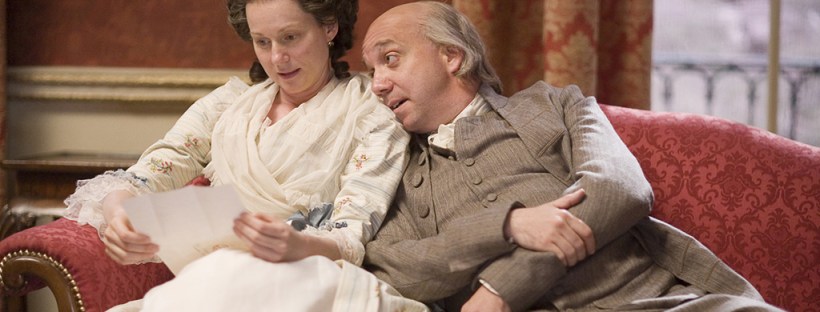
John (Paul Giamatti) and Abigail Adams (Laura Linney)

#4 The show incorporates historical documents in interesting ways

A lot of lines from John and Abigail’s letters to one another are woven into the show. As a side note: these letters are well worth a read and, in my opinion, a lot more vivid, engaging and romantic than some fiction that I have read, simply because John and Abigail were both such excellent writers living through such interesting and turbulent times! It’s a shame for them that they had to spend so much time apart, but it’s a good thing for us because we have all these letters! And quotes from their letters are woven into the dialogue in this show in fairly naturalistic ways.

One of my favorite quotes that they use comes from an exasperated letter John sent to Abigail from Philadelphia on October 9, 1774. He bemoans the slow moving Continental Congress, which he thinks is all talk and no action. He writes:

‘I believe if it was moved and seconded that We should come to a Resolution that Three and two make five We should be entertained with Logick and Rhetorick Law, History, Politicks and Mathematicks, concerning the subject for two whole Days, and then We should pass the Resolution in the Affirmative.’

It’s a funny quote (Adams was funny) and I’m glad they figured out a fun way to incorporate it into the show about his life. In John Adams, the character of John says something very similar when he is lamenting Congress’ inaction at a dinner one evening. I was delighted to see that they’d managed to weave in lots of other lines as well from their letters. It gives you a clearer sense of their real personalities, their sense of humor, and the way people spoke back then.

#5 It showcases a different kind of leading man

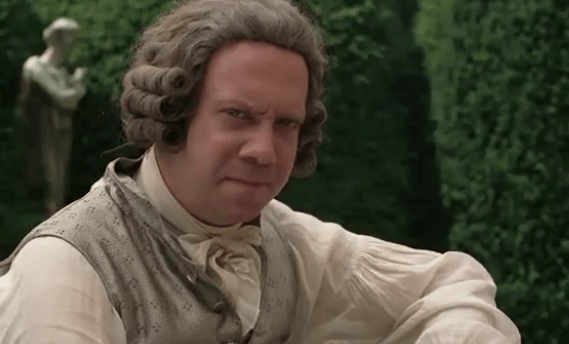
I enjoy the fact that neither Adams (nor Paul Giamatti) is classically attractive or charming in an obvious way. Giamatti’s Adams is short, grumpy, belligerent, vain, but also principled, decent, honest and loving. Most big budget film and television shows, not just about the Revolution but more generally, feature much more conventionally attractive leads, both in temperament and in appearance, and I personally enjoyed seeing this harsh, grumpy little man as our main character. There’s something that feels fresh about it.

John Adams pic 1

John Adams being grumpy as he defends the British soldiers accused of itentionally murdering civilians during the Boston Massacre. Adams really did this in life. He believed everyone should get a fair trial and successfully got them acquitted. When reflecting on his life, he considered it ‘one of the most gallant, generous, manly and disinterested actions of my whole life, and one of the best pieces of service I ever rendered my country.’

And this series is about Abigail almost as much as John, which is also really cool to see and their relationship (in real life and in this series) is/was incredibly loving and supportive and dynamic and endlessly interesting to learn about.

Also we see that while John was away practicing politics, Abigail was living out the consequences of those political decisions, as she tries to keep her family safe and alive throughout the war – fighting off diseases, dealing with food shortages. The real Abigail was deeply invested and informed about politics, but she often had to focus on her family. She wrote to John on Sep 8, 1775:

‘As to politicks I know nothing about them. The distresses of my own family are so great that I have not thought about them.’

#6 It conveys the chaos and uncertainty of this time period

One of the things that truly makes me giggle when I hear people talking about the founders in glowing and overly idealized ways is that these dudes were questioning themselves at every turn and were making it all up as they went along. Declaring Independence (and the war that followed) was chaotic, fraught, messy and the outcome was uncertain. The real Adams was full of self-doubt. He wrote in his diary in 1774, as war loomed:

‘We have not men fit for the times. We are deficient in genius, education, in travel, fortune – in everything. I feel unutterable anxiety.’

‘Unutterable anxiety’! That quote gives me a lot of hope when I think about the turbulent political times we’re in now (as I write this, we’re in the middle of an impeachment inquiry of President Trump). There has always been animosity and upheaval in American politics and these fellows, the founders, were just doing the best that they could. We never have individuals ‘fit for the times’. We just have people who do the best they can. But America’s founders were full of questions, worries and self-doubt – as smart people usually are. I love how the show captures this and even includes Adams saying a very similar line to the one I quoted above, about not feeling adequate enough for what this historical moment requires.

adams men walking

Adams and some of his fellow Continental Congress members walking down the street in Philadelphia

And it’s probably worth mentioning here that one of the reasons I think this time period is so fascinating to learn about is that these are the men who wrote the U.S constitution, who created the political system that Americans are still living under right now. In this way, their lives touch our own every day.

*

Like I said above, I could go on about the series and Adams himself, but I think I’ll leave it there for now! I hope that you will consider giving the series a try if you’re looking for a unique and well-acted piece of historical fiction, or a sort of companion piece to Hamilton.

Have you see the John Adams miniseries? Or do you have another favorite film or TV show about this period or about the American Revolution?

If you want to hear more about any of this and happen to live in Dublin, do come along to my talk at Trinity College in November. It’s an academic conference, but geared towards the public and all the presentations will be very accessible. My presentation is titled: ‘Obnoxious and Disliked’: John Adams’ Legacy in Popular Media, from 1776 to Hamilton.

Til then I remain your humble and obedient servant,

C. Brown

‘Madeira Mondays’ is a series of blog posts exploring Early American history and historical fiction. I’m not a historian, but an author and poet who is endlessly fascinated by this time period. I am also currently writing/researching a novel set during the American Revolution and recently finished a Doctorate of Fine Art looking at how creative writers access America’s eighteenth-century past. Follow the blog for a new post each week and any questions or suggestions feel free to get in touch.

Madeira Mondays: The John Adams Miniseries

Last week, for my first Madeira Mondays post, I reread a childhood favorite book set during the American Revolution: Johnny Tremain. For this week’s post, I thought I’d recommend a favorite TV series. This is the show that I consistently recommend to friends who enjoyed Hamilton: An American Musical and are looking for another story about this time period. And I actually think that John Adams pairs really well with Hamilton because these two historical men (John Adams and Alexander Hamilton) did not get along in real life. So the John Adams series is a nice counter-point to Hamilton. It’s the ‘other side’ of the story, if you will. In Hamilton, John Adams is lampooned as the villain (he doesn’t even appear onstage at all!), but in this show, Alexander Hamilton is the antagonist (which kind of confirms the refrain of Hamilton’s last song, right? It’s all about ‘who tells your story’).

Now I could go on about the historical figure of John Adams (and I will in future posts!) because his life is a particular interest of mine. Part of my PhD research was actually looking at different representations of Adams in popular culture and I’ll be delivering a talk all about this at Trinity College Dublin’s HistoryCon in November this year!

But this post is only going to focus on why I think John Adams (the HBO miniseries) is worth a watch. Do stay tuned for more Adams related content in the future though, including discussions of the musical 1776 (another recommendation if you like Hamilton!), of the Pulitzer Prize-winning David McCullough biography of Adams that this miniseries series is based on, and more about Adams’ badass wife, Abigail (I have already started a document with a bullet point list titled ‘Why Abigail Adams was amazing’). I had so much to say about this miniseries alone that I even had to split this up into TWO posts, so that gives you an indication of how much I love talking about John Adams and his life and times.

john adams

John Adams (Paul Giamatti) looking characteristically quizzical and cranky.

The John Adams miniseries was released by HBO in 2008 and directed by Tom Hooper. It follows the life of Adams from 1770 (the time of the Boston Massacre) through his fight for independence from Great Britain, his rocky presidential term (from 1797-1801), and his death in 1826. (Fun Fact: Adams and Thomas Jefferson both died on July 4th, 1826, the 50th anniversary of the signing of the Declaration of Independence!). The series stars Paul Giamatti as Adams, Laura Linney as Abigail Adams and even a small appearance by the guy that everyone seems to be obsessed with at the minute: Andrew Scott, the ‘Hot Priest’ on Fleabag. He’s not a ‘hot priest’ in this one, but he’s a hot soldier. Have I convinced you to watch this series yet?

But aside from the brilliant cast, here are some reasons why John Adams is worth watching!

#1 The acting is excellent throughout

As an actor myself, I have to say that one of my favorite scenes in any film ever happens in this show. It is the moment when John Adams, who is the Ambassador for the (newly free) United States of America and has to pay a visit to King George III. Imagine the awkwardness of that visit!! Actually, you do not have to imagine because it’s all in Paul Giamatti’s expressive face as he meets King George (Tom Hollander). In this magnificent scene, Adams is humble yet proud, intimidated but self-assured. I love the creative choice not to have any score in the background of the scene. It’s just silence. It’s just awkward. It’s just magnificent. You can watch it here.

But there are so many moments of excellent acting throughout, particularly of the nonverbal kind. The 18th century was a time when people were often less direct with their speech than we are nowadays, so a lot (I would imagine) of communication probably was nonverbal. And it is truly heartbreaking every time that John Adams has to leave his farm in Massachusetts to go and serve in the Continental Congress, or overseas in Versailles to beg the French for money to help the American War of Independence, and we have to see his wife Abigail (Laura Linney) react to the prospect of being left alone. Again. She’s stern, stalwart, someone who is used to bearing both physical and emotional discomfort (as many early New England women were), yet she’s just going to crack on with stuff and continue managing her farm. Laura Linney is great in this.

Laura Linney Adams

Abigail Adams (Laura Linney) looks after her children while Adams is in Philadelphia.

As another example: take a look at the solemnity on the faces of the Continental Congress, who just pledged their ‘lives, fortunes and our sacred honor’ to independence and who will surely be executed if the rebellion does not succeed. It’s a powerful and aptly solemn moment. And incredibly well acted.

#2 The series is kind of gross

This is not a series that shies away from the uncomfortable physical realities of life in the 18th century. And I’m not just talking about how everyone in this show has bad teeth and looks so haggard and sweaty all the time.

I’m talking about the unflinching depiction of small pox – we see diseased pustules and children covered in boils. It’s upsetting, yes, but it was a part of life. A lack of dirt and disease is usually one of the main criticisms that I have of period dramas, and I never like that everyone in them always looks so healthy and recently showered (I’m thinking especially of shows like Poldark, which I like for other reasons, but everyone just looks way too clean). I tend to prefer historical dramas that are either gritty and ‘realistic’, like this one, or hyper stylized and exaggerated (i.e. The Favorite). I think ones in the middle often fall flat, but that’s perhaps a post for another time!

One of the most upsetting scenes in John Adams actually is in the first episode when they show a man being tarred and feathered. The man (a British customs official) is stripped naked and paraded around town on a wooden beam. This, again, is tough to watch but stuff like that did happen. I think it’s included in the miniseries in part to illustrate the barbarism that both rebels and loyalists resorted to during this time and it works well. Jill Lepore has also suggested in this review in The New Yorker that this scene was included to help ‘explain the future President’s enduring fear of democracy.’ Adams didn’t hold a high view of human nature and believed in strong government, so perhaps the filmmakers were trying to give evidence of why he felt this way by having Adams look on in horror at the gruesome sight.

#3 It’s well shot

This is a show that makes great use of tilted, ‘Dutch’ camera angles. It’s a very interesting choice, given the aesthetic preference of this time period for symmetry. A neat, symmetrical, Wes Anderson style of shooting and composition would be more in keeping with the Georgian taste, but I think all of these weird angles are meant to visually convey that this isn’t the pretty, staid historical fiction that you might be used to.

Adams Dutch Angle

These are the tilted camera angles that I’m talking about. In this scene John Adams is ill and light-headed from just being bled by a physician, so the angle works well to illustrate his disorientation.

I think director Tom Hooper sometimes goes overboard with these angles, but often they work really well, especially when used to highlight moments when Adams feels unstable, unsure and out of his depth. Which is a lot of the time! One example of this is after the Declaration is signed, and he writes home to Abigail of what they have just done. He says in the voice over that ‘the break is made’ and then it cuts to Adams looking out the window, framed in this odd, tilted angle, so it looks like he’s on a ship that is pitching in the current. He’s unsettled. Unsure. Wholly aware of the ‘toil and blood and treasure that it will cost us to maintain this declaration’.

But then, when he says to her that ‘through all the gloom’ he can ‘see the rays of ravishing light and glory’ (these are all real quotes from him, by the way), the angle changes and is no longer titled. He is in the middle of the frame, still standing in a darkened room, but between two bright windows. No weird, unsettling angle. Just a man looking outwards at a bright future, symbolized by the open windows before him. You can see this sequence at around 6 minutes into this clip. This is smart visual storytelling. And it’s continued throughout the show.

*

I’ll be posting Part II next Monday, where I’ll talk a bit more about how the show uses historical sources and why I think now is the perfect time to re-watch it (or watch it for the first time!). But I’ll leave it there for the time being and see you next Monday.

Your humble and obedient servant,

C. Brown

‘Madeira Mondays’ is a series of blog posts exploring Early American history and historical fiction. I’m not a historian, but an author and poet who is endlessly fascinated by this time period. I am also currently writing/researching a novel set during the American Revolution and recently finished a Doctorate of Fine Art looking at how creative writers access America’s eighteenth-century past. You can follow this blog for posts every week and any questions or suggestions feel free to get in touch.

Madeira Mondays: Johnny Tremain Review

‘Madeira Mondays’ is a series of blog posts exploring Early American history and historical fiction. I’m not a historian, but an author and poet who is endlessly fascinated by this time period. I am also currently writing/researching a novel set during the American Revolution and recently finished a Doctorate of Fine Art looking at how creative writers access America’s eighteenth-century past.

The first ‘Madeira Mondays’ post is a review of one of my childhood favorite books set during the Revolutionary War: Johnny Tremain! 

Johnny Tremain by Esther Forbes: Book Review

There’s something emotionally vulnerable about re-visiting a book you really liked as a kid. There’s always the chance that the story you found moving and engrossing back then will not, for whatever reason, have withstood the test of time. Stories that seemed fresh and exciting to you at that age might be riddled with tropes or clichés you’d spot easily now. Things that were horrifying and nightmare inducing might seem laughably goofy when viewed through adult eyes etc. etc.

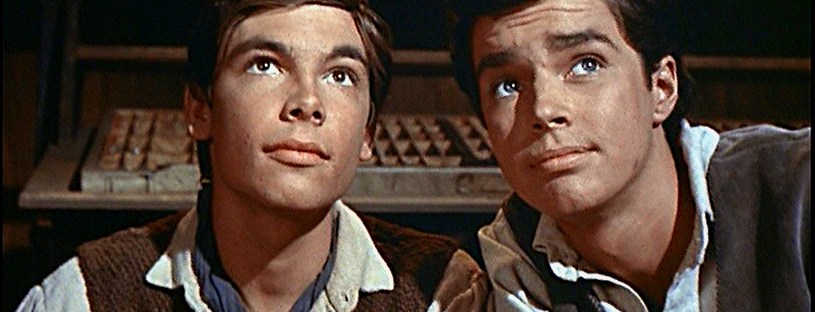
So when I decided to reread a childhood favorite, Johnny Tremain, a novel about a young silversmith in Revolutionary War era Boston, my expectations were fairly low. I remember enjoying it a lot as a kid and even renting the 1957 Disney film adaptation of it (and not liking that at all). But, after rereading this book last week, I can confidently say that Johnny Tremain lived up to my fond memories of it.

IMG_9339

My copy of Johnny Tremain. I love that it features not one but TWO horses: Johnny’s and then the ‘Yearling’ logo haha.

So I’ll start with some of the strengths of this book and then get into where I think it falls somewhat short.

Firstly, the characterization is excellent throughout. Our titular character of Johnny Tremain is a generally unpleasant (in my opinion) but wholly believable young man. He is prideful, sullen, self-pitying, as well as being talented, clever, and generally well-liked by those around him. His whole sense of self is shattered at the beginning of the book when a life altering injury means that he can no longer pursue his chosen career path as a silversmith and the rest of the novel – which is definitely a bildungsroman – can be seen as Johnny’s search for purpose. It’s a classic premise featuring a hero with a classic flaw (hubris) who must redeem himself. But what really brings it to life are the characters.

Johnny becomes enamored with his cool, older, died-hard Whig friend Rab, who offers him a job at a ‘seditious’ rebel printing press. I loved little moments like when Johnny walks in on Rab chatting with Johnny’s close friend/potential love interest Cilla:

‘As (Johnny) came in, booted and spurred, sunburned and hatless, Cilla glanced at him. Her eyes were happy (…) she had been having such a good time with Rab; and unconsciously and unreasonably Johnny stiffened. He couldn’t see why she and Rab should have been having such a good time.’

Moments like this, of completely believable teenage rivalries and petty jealousies, were so vivid and helped me understand why this book has become such a classic. It actually won the Newbery Medal in 1944, the highest prize for children’s lit in the US. Johnny comes across as a realistic teenage boy and an engaging character; we see the revolution through his eyes.

Another other huge strength of the book is the vividness of the historical setting. The depth of Forbes’ knowledge of the period is evident, but never intrusive, and overall there’s a sharp, dangerous edge to her depiction of Boston. In the first paragraph we see gulls in Boston Harbour, with ‘icy eyes’ spying ‘the first dead fish, first bits of garbage around the ships and wharves, they began to scream and quarrel.’ The threat of impending violence is often subtly woven into the descriptions of place, like when Johnny and Rab see a cow on the Boston Common walking through autumn leaves: ‘a white cow was plodding, seemingly up to her belly in blood’. Later, in the same paragraph, the clouds are described as hurrying across the sky like ‘sheep before invisible wolves.’

Violence does, of course, arrive, in the last third of the book, when the Shot Heard Round the World is fired in Lexington and the Revolution starts in earnest. But, for me, this is the part where the book falls down. The focus shifts from Johnny’s relationships and personal development to the movements of the British troops in Boston and their plans to seize the patriot militia’s gunpowder. It’s all accurate but just not as interesting.

This is perhaps a personal preference, but I would have liked to have seen more focus, at the end of the book, on how Johnny had grown as a person (I mean, this is a coming of age story after all, right? It’s sort of what we’re conditioned to expect!). Yet it doesn’t seem like he’s grown that much at all and the whole thing becomes too focused on the war. Rather than Johnny simply finding A Purpose externally at the end (spoiler alert: it’s ‘Fighting for Independence’), I wanted to see evidence of how he had changed internally as well. Has he become more self-aware, or less prideful, or…something?

I felt that the first half of the book – a quiet, character study of a young boy ejected from his old life who is forced to build a new one – was at odds with the second half – the story of a boy who gets to meet all the cool Revolutionary heroes and be a bystander at famous events (And there are many cameos here: Paul Revere, James Otis, Samuel Adams…basically if they were a famous Whig in Boston during this time, Johnny hung out with them). So the ending overall was too much Revolution, not enough Johnny Tremain.

BUT, that being said, the teenage characters were vivid, the prose was excellent, and I liked how it emphasized that Johnny thinks of himself as a young Englishman, as a young boy in Boston probably would have at the time. He also forges friendships with various British soldiers and officers stationed in Boston (including a young man called ‘Pumpkin’ who wants to desert the army and whose tragic storyline provides one of the most emotionally impactful moments in Johnny’s life and in the book).

So overall, I’d recommend it. Especially to young readers (this would probably be considered Middle Grade now, although Johnny does reach the age of 16 by the end, which would make it more YA). If you enjoy Boy Goes on an Adventure with some Colorful Characters books, like Treasure Island or Huck Finn, you’ll probably enjoy Johnny Tremain. Other Middle Grade/YA books about this period that I’d recommend (and might very well do separate posts on later) are Chains by Laurie Halse Anderson, The Astonishing Life of Octavian Nothing by MT Anderson, and, of course, anything by Ann Rinaldi.

IMG_9340

Johnny Tremain himself. The illustrations in my edition (which I think are the original illustrations from the 1940’s) are lovely.

Let me know what you think of Johnny Tremain, if you’ve ever read it (as a kid or adult!) or any experience you have of re-visiting a childhood favorite book, movie, TV show etc. I hope it went as well for you as re-reading Johnny did for me. Til then, I remain

Your humble and obedient servant,

C. Brown

PS Why have I called this new series ‘Madeira Mondays?’ Well, people in early America drank Madeira, a fortified Portuguese wine, by the truckloads. George Washington had a particular affinity for it, but it was also enjoyed by Thomas Jefferson, Alexander Hamilton, and Benjamin Franklin. And, when the Continental Congress signed of the Declaration of Independence, what wine did they toast to celebrate? Yup, you guessed it: Madeira. Basically, if you imagine a founding father, you might want to imagine him holding a glass of this wine. Cheers!

2018: My Year in Review

Why hello there! It’s been a while!

2018 has been a busy year for me and in particular the last few months of it, when I was finishing up and handing in my PhD. Blogging, sadly, had to take a backseat during this incredibly jam-packed (somewhat frantic, let’s be honest) time. BUT, I wanted to start off this blog post, and the year itself, with a bit of exciting news: I did indeed submit my PhD and I passed my viva with minor corrections. AKA I’m NOW A DOCTOR.

It feels almost surreal to write these words. DOCTOR Carly Brown (Or perhaps Doc Brown? Like in Back to the Future?). After three years of working on the same project, for it to have finally come to a close feels strange but also fantastic. This was my major achievement in 2018 and I am really looking forward to the next form that I have to fill in when I get to put that I am not ‘Miss’ ‘Ms’ or ‘Mrs’ but rather ‘Dr.’

So what exactly was this PhD? For those who may not have read this blog before (hello!), my project was a Doctorate of Fine Arts in Creative Writing at the University of Glasgow.  It is titled, ‘A Matter of Loyalty: Engaging with America’s Revolutionary Past as a Creative Writer.’ Like many creative writing PhDs, there was a critical and a creative component. The creative component was a full-length historical fiction novel about three women in South Carolina during America’s Revolutionary War. Based on various journals and letters from the period, it aims to illuminate perspectives of the Revolution not often explored in historical fiction (in particular, the precarious lives of Loyalist wives and widows). I’ve been describing it to people as: ‘Hamilton from the Schuyler Sisters point of view’.

The critical element was a collection of personal essays exploring different ways that creative writers seek to access the 18th century past. Some of you may remember when I tried on the 18th century corset during a residential fellowship at Monticello? Well I wrote about that in one of the essays!

In addition to completing the PhD (which, let’s be honest, was the highlight of 2018 for me!), my year was also full of travels, conferences, performances, and publications, both in the UK and elsewhere. Here is a brief digest of the year that was and what is to come in 2019…

January/February 

Snow was blanketing the ground in Edinburgh and I was editing the novel (the second draft). I was also invited to perform as the featured poet at the God Damn Debut Slam at the Scottish Poetry Library and it was great fun to break out of my editing cocoon and see some invigorating spoken word poetry.

March

In March I was delighted to be asked again to be In-House Blogger for StAnza Poetry Festival, a role I shared with the fabulous poet and author Katie Hale. I was also asked to judge the StAnza Poetry Slam! This meant a return to St Andrews, where I did my undergraduate degree, and I had the opportunity stop into the lovely bookshops, like Toppings and Co., while I was there to sign copies of my bestselling children’s picture book – I Love St Andrews.

I have no words for how happy I am that I Love St Andrews has resonated with so many people. We’ve sold thousands of copies at this point and I love knowing that people who – like me – don’t live in St Andrews anymore can still have a piece of it with them, through this book.

In March, I also found out that my poem ‘Nothing of Floods’ was commended in the British Army’s Poetry competition, Writing Armistice, and would be published in a pamphlet with the other winning entries.

My cousin, a medieval historian, also came to visit me and it was nice to play tourist a bit and explore some of my favorite Edinburgh sites like Calton Hill.

April

More good poetry needs came in April, when I found out that I was shortlisted for the Jane Martin Poetry Prize!

April was also a month of travel, when I went to colorful, cobblestoned, gorgeous Lisbon, Portugal for a close friend’s wedding. I ate plenty of fish, drank wine and enjoyed a much needed break from working on my PhD essays at the National Library.

May

May was full of performances and more travel. I was invited to perform at the St Andrews Alumni Ball down in London, which was held at a swanky hotel in Mayfair. It was a great opportunity not only to connect with other grads from various generations but also to catch up with uni friends based in London who I dearly miss.

I also performed at the Glasgow University Zine Fair, where I sold copies of my debut pamphlet, Grown Up Poetry Needs to Leave Me Alone.

June

June was a big month for me. I travelled back to the USA to see my family in Austin, Texas and for a conference in Williamsburg, Virginia. I was on a panel about Creative Writing and Early American History at the annual Omohundro Institute’s conference, where I got to join such literary and historical titans as John Demos (Yale University) and New York Times bestseller Deborah Harkness. My friend, the poet Chet’la Sebree (who held a fellowship at the International Centre for Jefferson Studies at the same time as me) was also on the panel. It was chaired by Jane Kamensky and we had a lively discussion (in front of around 200 people, mostly historians) about the intersections between creative writing and traditional academic history. I was so honored to be on a panel with such esteemed company and to have the chance to discuss two of my favorite topics: creative writing and early America!


June was also when I heard back the best news of my year (besides passing the PhD!). I learned that I had been awarded a special visa to live in the UK for the next five years, as an author and spoken word poet. Applying for this visa involved literally months of bureaucracy and it had been a long, stressful road, as any who have applied for visas will know. I will always be grateful to my partner, and my mom, who helped me through all of it. Receiving this visa, which means that I can continue living in the UK, was a huge, huge achievement.

July/August

You may recall that this is when I effectively dropped off the edge of the earth virtually (there were no more blog posts for the rest of the year!), but in my personal life too, I rarely went out and spent most of July and August in Edinburgh, finishing the thesis and trying to say cool in the heat wave. But I did find some joy in the peaceful moments when I was housesitting for a friend and tending to her garden, naming all of the plants, fending away bugs and making delicious summer salads with snap peas and sweet, crunchy lettuce.

In July, I also marched in protest against President Trump. My grandparents were huge advocates of social justice and both marched for Civil Rights in the 1960’s. Whenever I take part in things like this (which has been more frequent, of late), I think of them.

September/October

In September, I finally handed in the whole thesis, which was kind of surreal. It would be another few months before my defense, but I dove headfirst into teaching in the meantime. I was teaching once again at the University of Strathclyde on their undergraduate Creative Writing and Journalism program. I had two groups of bright and thoughtful students, who I already miss now that the course is over. I was also asked to teach a little on the University of Glasgow’s MLitt in Creative Writing program, when one of their staff fell ill. It was great to work with masters students and to discuss their work in depth, on the very program I graduated from a few years ago!

I was also invited to read at a symposium at the University of Glasgow, The Occult Turn, about magic and occult practice. I presented an original short story about 19th century spiritual mediums in the USA and discussed the research behind it.

To celebrate my 27th birthday, my partner and I also went to York, England – where we have been several times before. We love to visit all the old bookshops, coffeeshops and the fantastic museums. In particular, the National Railway Museum is a favorite of ours, as well as the Castle Museum, a social history museum with a recreated Victorian street!

November/December

These months both involved more teaching and more travel. In November, I hopped on a train to visit my cousin’s wife, who is doing a post-doc at Cambridge University, and spent a sunny weekend strolling around the campus and visiting with family. Then, it was straight back up to Scotland when I had my viva (or ‘defense’ for those in the US) in early December which thankfully went great. Both of my examiners, Dr. Carolyn Jess-Cooke and Dr. Allyson Stack, were so generous and helpful with their feedback and I passed with minor corrections (only typos!). So I’ll hand in the final version in late January and will be graduating in the spring. Yay!

In November, I was also invited to perform at the Radical Book Fair in Edinburgh. I read as the opening act before a fascinating discussion from two sex workers about their new (and gloriously titled) book exploring sex worker rights: Revolting Prostitutes. In December, I was also commissioned by the Scottish Poetry Library to write a poem in response to part of the classic holiday film: It’s a Wonderful Life. Myself and four other poets then all performed our poems together and it was a great evening of mince pies, mulled wine and hugely entertaining and varied poetry.

My partner and I then took a long awaited trip to Stockholm, Sweden (only about 2 hours by plane from Edinburgh!) to visit his brother who works there. It was an amazing week (even if I did have to grade papers while I was there) filled with gingerbread, Christmas markets, saffron buns, and seeing reindeer and moose for the first time (I grew up in Texas, remember, so these animals are like mythical creatures for me).

In particular, we enjoyed The Vasa Museum, where you can see an entire excavated 17th century ship (see picture below). For history nerds like me, this is a must. And we were also lucky enough to be in Stockholm for St. Lucia Day and we got to see a choir and procession.

*

So what is next? Well…somehow in the midst of all that I was doing towards the end of 2018, I managed (perhaps as a PhD avoidance strategy!) to write an entire draft of a DIFFERENT historical novel, also set during the American Revolution. Even though I vowed that the next thing I wrote would NOT be a novel and would CERTAINLY not be historical. I just find this period endlessly interesting and simply couldn’t help myself.

So I’ll be starting off this year researching and editing that manuscript, while sending the PhD novel and essays off to agents, contests and magazines. The manuscript has been requested by a few agents already, so please wish me luck while I embark on the exciting (yet somewhat daunting!) process of finally sending it off into the world. I’ll also be teaching, performing and working on a variety of other projects as well.

I’m wishing you a very happy start to the year. And, if you’re in the middle of a PhD (or any long project, for that matter), let me remind you that you CAN do this, even when it feels impossible. I am rooting for you! Happy 2019.

x Carly


(Really Good) News: June 2018

Here are the things I miss most about Austin, Texas (besides my family and friends, of course): margaritas and avocados. Maybe it sounds silly, but I feel the most homesick back in Scotland when I am hankering for an ice cold frozen margarita (with salt) from Gueros, or a breakfast taco with tons of guacamole and sautéed Portobello mushrooms from Taco Deli. Which is why I was so delighted, on my first night back in Austin, when I was invited to a friend’s retirement party, and upon arriving, found there were jalapeño margaritas to drink and an entire avocado bar, where you could pile a ripe avocado high with cilantro, red onions, salsas, tomatoes. Anything your heart desired. Sheer bliss for this ex-pat!

IMG_1227

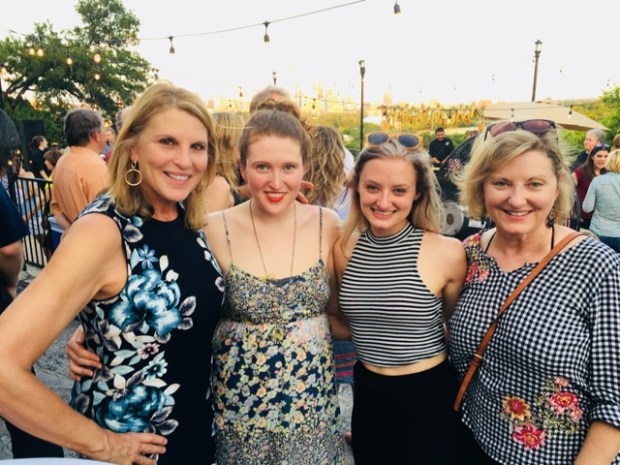
(Left to Right) My mom, me, my friend Marjorie and her mom Laurie on my first evening back in Texas

I’ve been back in Austin for about three weeks now and while the sky high temperatures (100 F = 37 C!!) have been unpleasant, I’ve had a nice time seeing family and friends and also meeting my parent’s new dog: Ruth Bader Ginsburg (Ruthie). Isn’t she adorable?

IMG_7714

Ruth (‘Ruthie’) Bader Ginsburg

However, I didn’t exactly come here for vacation. I came back to Texas for a number of reasons. One of those reasons being – and I can finally talk about this now – I’ve been given a special UK visa which means that I can continue living in Scotland for another five years as an author and poet. I’ve been working on the application for many months and part of the process required me to come back to America for a few weeks. I am thrilled beyond words (and I do words for a living!) to have finally gotten it. I’m so excited that I can continue living and working in the country that I love so very much.

And I have also learned a valuable lesson (which I keep learning again and again): if you want something, apply for it. Do not ‘self reject’. Do not shy away, just because you think you are not good enough. Especially women. As my friends and I often say: ‘Have the confidence of a mediocre white man.’ Put yourself out there and ask for what you want. All the best things in my life have happened when I did this, so ASK. APPLY. SUBMIT. TRY! You never know what might happen. (Okay, min-pep talk done).

In other news, there are some other things I’ve gotten up to while in the USA.

Travel

I went to Williamsburg, Virginia for annual Omohundro Institute’s conference on Early American History. I was on a panel about Creative Writing and Early American History, where I got to join such literary and historical titans as John Demos (Yale University) and New York Times bestseller and all-around lovely human Deborah Harkness. My friend Chet’la Sebree (who held a fellowship at the International Centre for Jefferson Studies at the same time as me. Check us out trying on 18th century corsets!) and has a poetry collection coming out next year, was also on the panel.

It was chaired by Jane Kamensky and we had a lively discussion (in front of around 200 people!) about the intersections between creative writing and traditional academic history, and how novels and fiction can explore truths about the past that perhaps non-fiction cannot. I read aloud a very brief extract from my novel and talked a bit about my PhD too. It was fascinating and I was so thrilled to be part of it.

IMG_7746

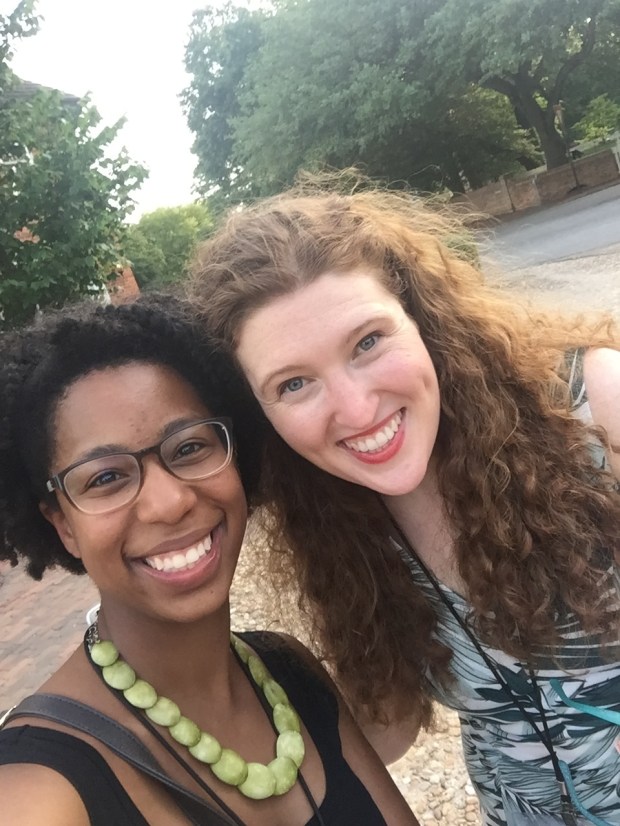
Me and Chet’la after our panel at the Omohundro Institute conference: ‘Creative Writing and Early America’

On our final night of the conference, we were bused out to Jamestown Island (site of the first permanent English settlement in the Americas, where John Smith met Pocahontas etc.). There was an insanely beautiful purple sunset over the river that night and historical interpreters bringing to life the 17th century.

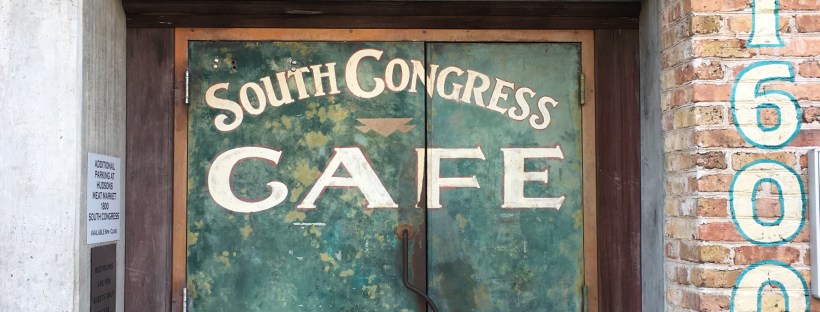
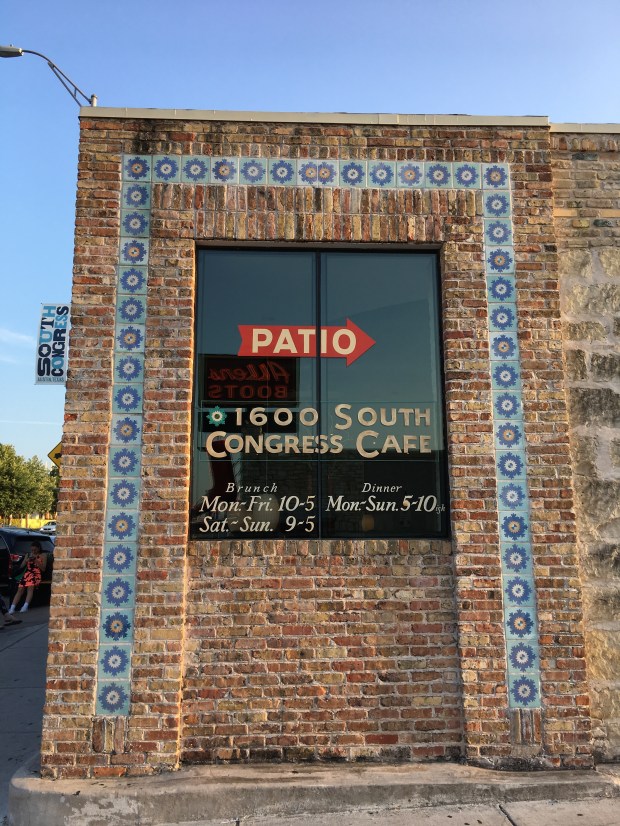
While back in Austin, I’ve been hitting up some of my favorite haunts, including South Congress and the ever delicious South Congress Café (South Congress is a great area to stroll around if you’re visiting Austin).

IMG_7843

PhD

My Doctorate of Fine Arts is due by the end of September and I’m currently editing the third draft of the novel, which will be finished soon. But July and August will be nose-to-the-grindstone time, putting finishing touches on the novel and the essays. Wish me luck!

*

I will leave you with a photo of Ruth Bader Ginsburg (the beagle), because she’s so darn cute. I have learned that it’s a good thing I don’t have a dog of my own because like 80% of the pictures I’ve taken on this trip have just been of Ruthie. If I had a dog, I wouldn’t photograph anything else!

IMG_7712

Happy start to the summer. Let me know what you’ve been up to!

X Carly