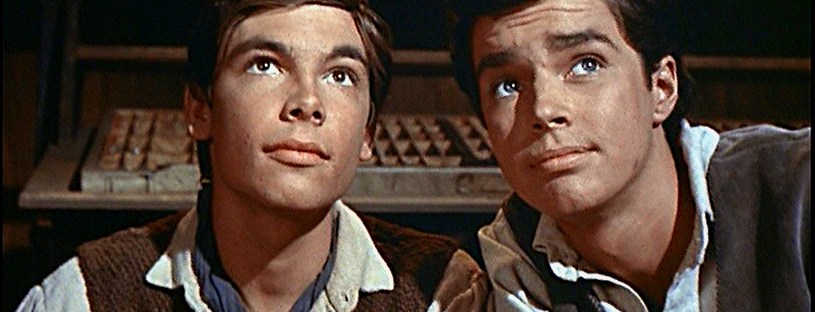
Last week, for my first Madeira Mondays post, I reread a childhood favorite book set during the American Revolution: Johnny Tremain. For this week’s post, I thought I’d recommend a favorite TV series. This is the show that I consistently recommend to friends who enjoyed Hamilton: An American Musical and are looking for another story about this time period. And I actually think that John Adams pairs really well with Hamilton because these two historical men (John Adams and Alexander Hamilton) did not get along in real life. So the John Adams series is a nice counter-point to Hamilton. It’s the ‘other side’ of the story, if you will. In Hamilton, John Adams is lampooned as the villain (he doesn’t even appear onstage at all!), but in this show, Alexander Hamilton is the antagonist (which kind of confirms the refrain of Hamilton’s last song, right? It’s all about ‘who tells your story’).
Now I could go on about the historical figure of John Adams (and I will in future posts!) because his life is a particular interest of mine. Part of my PhD research was actually looking at different representations of Adams in popular culture and I’ll be delivering a talk all about this at Trinity College Dublin’s HistoryCon in November this year!
But this post is only going to focus on why I think John Adams (the HBO miniseries) is worth a watch. Do stay tuned for more Adams related content in the future though, including discussions of the musical 1776 (another recommendation if you like Hamilton!), of the Pulitzer Prize-winning David McCullough biography of Adams that this miniseries series is based on, and more about Adams’ badass wife, Abigail (I have already started a document with a bullet point list titled ‘Why Abigail Adams was amazing’). I had so much to say about this miniseries alone that I even had to split this up into TWO posts, so that gives you an indication of how much I love talking about John Adams and his life and times.
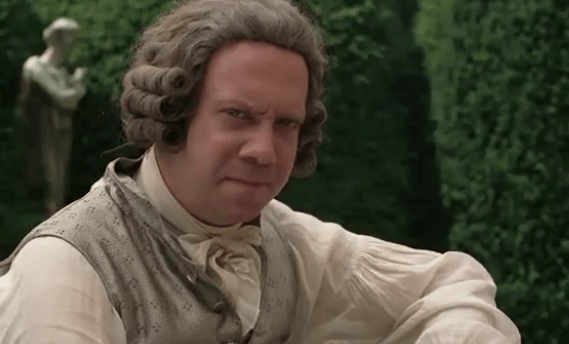
John Adams (Paul Giamatti) looking characteristically quizzical and cranky.
The John Adams miniseries was released by HBO in 2008 and directed by Tom Hooper. It follows the life of Adams from 1770 (the time of the Boston Massacre) through his fight for independence from Great Britain, his rocky presidential term (from 1797-1801), and his death in 1826. (Fun Fact: Adams and Thomas Jefferson both died on July 4th, 1826, the 50th anniversary of the signing of the Declaration of Independence!). The series stars Paul Giamatti as Adams, Laura Linney as Abigail Adams and even a small appearance by the guy that everyone seems to be obsessed with at the minute: Andrew Scott, the ‘Hot Priest’ on Fleabag. He’s not a ‘hot priest’ in this one, but he’s a hot soldier. Have I convinced you to watch this series yet?
But aside from the brilliant cast, here are some reasons why John Adams is worth watching!
#1 The acting is excellent throughout
As an actor myself, I have to say that one of my favorite scenes in any film ever happens in this show. It is the moment when John Adams, who is the Ambassador for the (newly free) United States of America and has to pay a visit to King George III. Imagine the awkwardness of that visit!! Actually, you do not have to imagine because it’s all in Paul Giamatti’s expressive face as he meets King George (Tom Hollander). In this magnificent scene, Adams is humble yet proud, intimidated but self-assured. I love the creative choice not to have any score in the background of the scene. It’s just silence. It’s just awkward. It’s just magnificent. You can watch it here.
But there are so many moments of excellent acting throughout, particularly of the nonverbal kind. The 18th century was a time when people were often less direct with their speech than we are nowadays, so a lot (I would imagine) of communication probably was nonverbal. And it is truly heartbreaking every time that John Adams has to leave his farm in Massachusetts to go and serve in the Continental Congress, or overseas in Versailles to beg the French for money to help the American War of Independence, and we have to see his wife Abigail (Laura Linney) react to the prospect of being left alone. Again. She’s stern, stalwart, someone who is used to bearing both physical and emotional discomfort (as many early New England women were), yet she’s just going to crack on with stuff and continue managing her farm. Laura Linney is great in this.

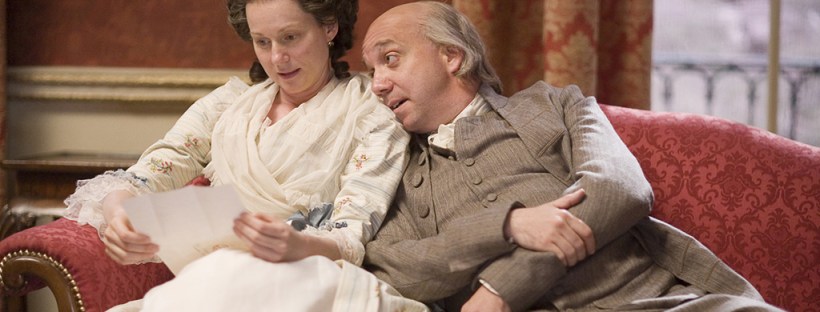
Abigail Adams (Laura Linney) looks after her children while Adams is in Philadelphia.
As another example: take a look at the solemnity on the faces of the Continental Congress, who just pledged their ‘lives, fortunes and our sacred honor’ to independence and who will surely be executed if the rebellion does not succeed. It’s a powerful and aptly solemn moment. And incredibly well acted.
#2 The series is kind of gross
This is not a series that shies away from the uncomfortable physical realities of life in the 18th century. And I’m not just talking about how everyone in this show has bad teeth and looks so haggard and sweaty all the time.
I’m talking about the unflinching depiction of small pox – we see diseased pustules and children covered in boils. It’s upsetting, yes, but it was a part of life. A lack of dirt and disease is usually one of the main criticisms that I have of period dramas, and I never like that everyone in them always looks so healthy and recently showered (I’m thinking especially of shows like Poldark, which I like for other reasons, but everyone just looks way too clean). I tend to prefer historical dramas that are either gritty and ‘realistic’, like this one, or hyper stylized and exaggerated (i.e. The Favorite). I think ones in the middle often fall flat, but that’s perhaps a post for another time!
One of the most upsetting scenes in John Adams actually is in the first episode when they show a man being tarred and feathered. The man (a British customs official) is stripped naked and paraded around town on a wooden beam. This, again, is tough to watch but stuff like that did happen. I think it’s included in the miniseries in part to illustrate the barbarism that both rebels and loyalists resorted to during this time and it works well. Jill Lepore has also suggested in this review in The New Yorker that this scene was included to help ‘explain the future President’s enduring fear of democracy.’ Adams didn’t hold a high view of human nature and believed in strong government, so perhaps the filmmakers were trying to give evidence of why he felt this way by having Adams look on in horror at the gruesome sight.
#3 It’s well shot
This is a show that makes great use of tilted, ‘Dutch’ camera angles. It’s a very interesting choice, given the aesthetic preference of this time period for symmetry. A neat, symmetrical, Wes Anderson style of shooting and composition would be more in keeping with the Georgian taste, but I think all of these weird angles are meant to visually convey that this isn’t the pretty, staid historical fiction that you might be used to.

These are the tilted camera angles that I’m talking about. In this scene John Adams is ill and light-headed from just being bled by a physician, so the angle works well to illustrate his disorientation.
I think director Tom Hooper sometimes goes overboard with these angles, but often they work really well, especially when used to highlight moments when Adams feels unstable, unsure and out of his depth. Which is a lot of the time! One example of this is after the Declaration is signed, and he writes home to Abigail of what they have just done. He says in the voice over that ‘the break is made’ and then it cuts to Adams looking out the window, framed in this odd, tilted angle, so it looks like he’s on a ship that is pitching in the current. He’s unsettled. Unsure. Wholly aware of the ‘toil and blood and treasure that it will cost us to maintain this declaration’.
But then, when he says to her that ‘through all the gloom’ he can ‘see the rays of ravishing light and glory’ (these are all real quotes from him, by the way), the angle changes and is no longer titled. He is in the middle of the frame, still standing in a darkened room, but between two bright windows. No weird, unsettling angle. Just a man looking outwards at a bright future, symbolized by the open windows before him. You can see this sequence at around 6 minutes into this clip. This is smart visual storytelling. And it’s continued throughout the show.
*
I’ll be posting Part II next Monday, where I’ll talk a bit more about how the show uses historical sources and why I think now is the perfect time to re-watch it (or watch it for the first time!). But I’ll leave it there for the time being and see you next Monday.
Your humble and obedient servant,
C. Brown
‘Madeira Mondays’ is a series of blog posts exploring Early American history and historical fiction. I’m not a historian, but an author and poet who is endlessly fascinated by this time period. I am also currently writing/researching a novel set during the American Revolution and recently finished a Doctorate of Fine Art looking at how creative writers access America’s eighteenth-century past. You can follow this blog for posts every week and any questions or suggestions feel free to get in touch.